

1. Attraction and Retraction
Usually, we would begin an analysis of black representation in Brazilian cinema by listing a group of films associated with the Cinema Novo movement: Aruanda (Linduarte Noronha, 1960), The Turning Wind (Barravento, Glauber Rocha, 1962), Five Times Favela (Cinco vezes favela, Carlos Diegues, Leon Hirszman, Marcos Farias, Miguel Borges and Joaquim Pedro de Andrade, 1962), Bahia of All Saints (Bahia de todos os santos, Trigueirinho Neto, 1961), The Big Market (A grande feira, Roberto Pires, 1961), Ganga Zumba (Carlos Diegues, 1964). One can disrupt this corpus by offering an expanded view, mentioning two films that do not adhere to the stereotypical, paternalistic or submissive portrayals of black people often found throughout Brazilian cinema. Closer to the filmic language of Cinema Novo, we have Compasso de Espera (Marking Time, Antunes Filho, 1972). Compasso is linked to the movement's second phase where urban themes and the contradictions of the middle class are present in films such as The Dare (O Desafio, Paulo César Saraceni, 1965) and Bebel, Advertisement Girl (Bebel, garota propaganda, Maurice Capovilla, 1968). Soul in the Eye (Alma no Olho, Zózimo Bulbul, 1973), on the other hand, the first film by black filmmaker Zózimo Bulbul (made with leftover film stock from Compasso de Espera), distances itself from the Cinema Novo films, finding its strength in John Coltrane’s jazz and performance elements. Zózimo Bulbul stars in Compasso and directs Soul, so these films form a diptych via an umbilical relationship. Inspired by Eldridge Cleaver’s book Soul on Ice (1968),1Soul in the Eye is Bulbul’s seminal work. It was made in the context of Cinema Novo but marks itself right from the start with an ambiguous distancing, an oscillation which would accompany the filmmaker throughout his oeuvre, both aesthetically and politically. Consequently, the films of Antunes Filho and Bulbul are simultaneously close and distant from the priorities that the Cinema Novo movement had delineated in the 1960s.
Despite eventual criticism towards black representation in the films of the Cinema Novo movement, Noel dos Santos Carvalho points out that the movement marked an important change of attitude in that respect:
Cinema Novo put black people front and center, away from the stereotypes spread in the past by the chanchadas, the films of the Vera Cruz Company and such. Its anti-racism was based on: 1) condemning racial stereotypes; 2) ignoring the concept of race in favor of the generalistic concept of people; 3) dealing with aspects of black history, religiosity and culture. (...) However, we want to emphasize the change of attitude, the disruption represented by a group of films that took black people away from stereotypical roles and made them the protagonists of their own stories.2
Applying cinema as a tool for thought and anti-racist political practice marks the common ground among Cinema Novo films. However, when considering the form and approach of the films, particularly those associated with black matters, Bulbul’s films appear distant from the Cinema Novo movement. In 1982, amid obscure transactions by Embrafilme,3 Bulbul harshly criticized Carlos Diegues and Walter Lima Jr., and even turned down an offer to work on King Chico (Chico Rei, Walter Lima Jr., 1985), because he considered it “historically abhorrent”, and “mild”, made to be shown “on Globo”.4 He opposed the film’s representation of black people but also the kind of filmic experience it provided, which to Zózimo was innocuous and lacking invention.
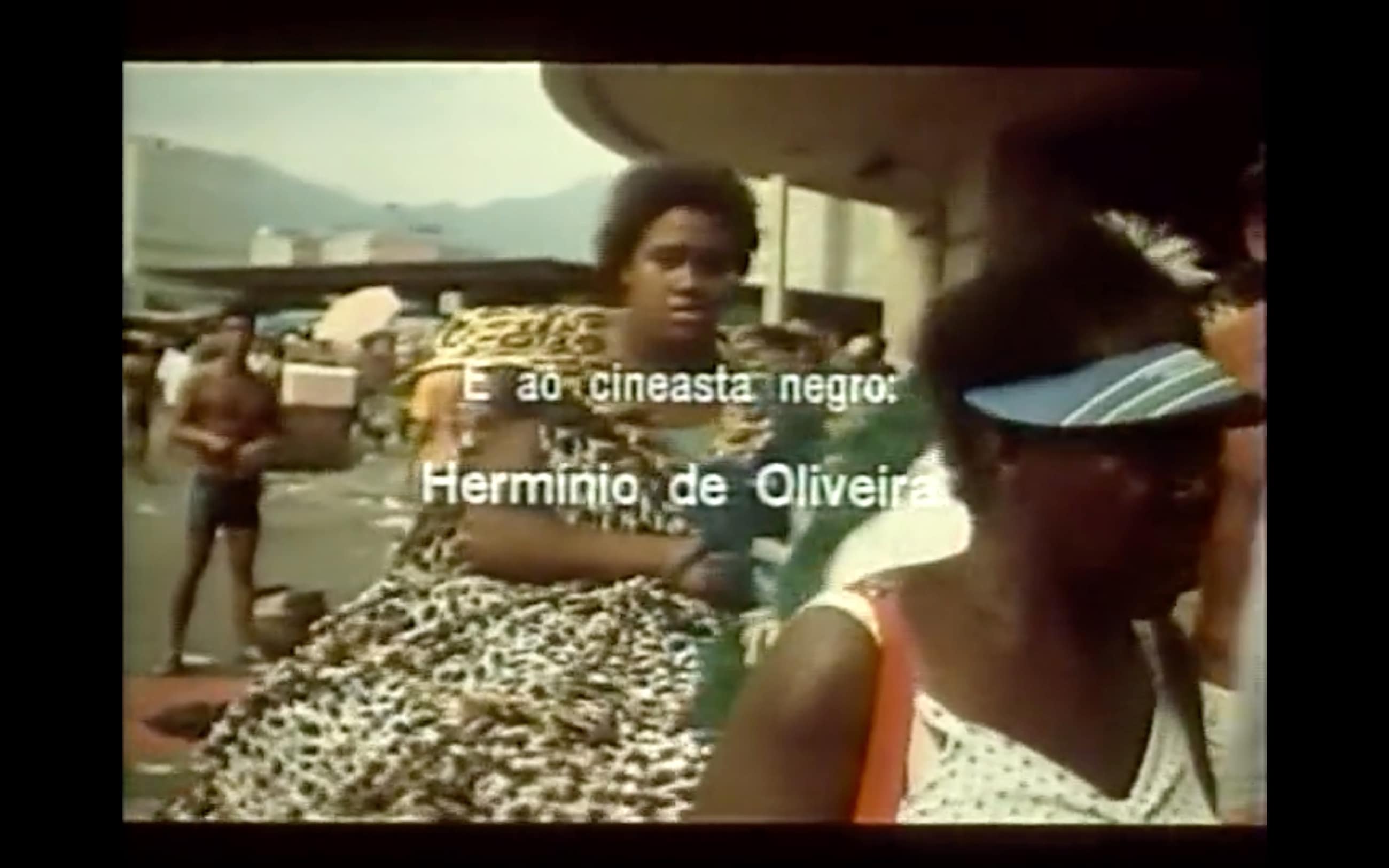
The plot thickens. Years later, in the epigraph of his first feature film, Abolition (Abolição, 1988), Bulbul inserts a dedication to two members of the Cinema Novo movement, Glauber Rocha and Leon Hirszman. It was a controversial move because, upon returning to Brazil after a self-imposed exile in Europe,5 it was noticeable how his relationship of attraction-retraction to Cinema Novo remained intact. In fact, today, it seems more accurate to evoke Bulbul as the filmmaker who worked with forms and themes that required an experimental style that no other Cinema Novo filmmaker had the tools to create. This dichotomy offers us a way to determine just how much of an alien Abolition is, be it in relation to Brazilian documentaries, to Cinema Novo or even to Bulbul’s own oeuvre. When considering the relations between cinema, Blackness and racism in Brazil, we identify in Abolition a sort of forcefield which indicates that, rather than integrating or not integrating hegemonic movements, Zózimo chose to follow his own path.
2. Atlantic Cinema
Abolition deals with filmic language within a specific technical and aesthetic dimension by extrapolating its documentary values and proposing a singular experience. Abolition is therefore linked to a group of films that deal with the relationship between documentary and fiction. It is organized in registers, interviews, archive footage and staged scenes in order to expose the opportunistic articulation between the historical lie of the abolition of slavery and the lived reality of black people in contemporary Brazil. Today, more than thirty years after its debut, Abolition seems less like “an expanded Alma no Olho”6 and more like an experience which resonates with these formally exploratory documentary and fiction works. It can accordingly be seen as an “Atlantic” film, i.e., a film made to bring forth a cosmos of free associations. Other examples include films such as The Age of Earth (A Idade da Terra, Glauber Rocha, 1980), Twenty Years Later (Cabra Marcado para Morrer, Eduardo Coutinho, 1984), Ôrí (Raquel Gerber, 1989), and The Thread of Memory (O Fio da Memória, Eduardo Coutinho, 1991). Atlantic Cinema is a cinema of crossing, a cinema pervaded by colonial and racial themes that are at the same time direct and indirect, objective and subjective. Atlantic Cinema contains a myriad of signs in movement through historical ages and facts, with a broad and dilated referential, in an audio-logo-visual polyphony embedded in the film’s form.
The film, with its unique approach, was not well-received by black filmmakers, black researchers or the black public — who, frankly, don’t usually have access to movie theaters. In a later essay on Bulbul, Noel dos Santos Carvalho reinforces the perception that Abolition’s experimentalism could not accomplish its intended effect, as it constituted “an inventory of speeches, performances and lectures regarding the abolition of slavery, which in part accounts for its irregular nature, its repetitions and excesses”. Carvalho also points out that “from the perspective of narrative structure, it’s the most didactic of these films, which adds to its irregular nature” and he adds: “Abolition, with a running time of 150 minutes, couldn't find acceptance from the audience. Not even among the black population. It was restricted to a small circle of intellectuals and activists of the black movement”. In his essay “Esboço para uma História do Negro no Cinema Brasileiro"7 Carvalho calls attention to the fact that the crew of the film was composed almost exclusively of black men and women (the exceptions being Miguel Rio Branco with his experimental cinematography and Severino Dadá with his precise editing), noting that “what we see is mediated by the gaze of this crew. So, it’s not only about telling the history of black people in Brazil, but having a black perspective of history”. In both cases, there seems to be a consensus that the eventual qualities of the film are present on a purely symbolic level, i.e., “out” of the film itself, whether due to the initial effort to try and problematize the abolition of slavery from a black gaze, or due to the representation of the ethnic composition of the crew. Ahead, I will propose some ideas based on the internal structure of the film, to affirm it as a major representation of Atlantic Cinema, the group of films that have formed a singular trajectory in Brazilian film.
3. Material and Treatment
In an interview with Peter Hessli in February 1994, American cinematographer Arthur Jafa makes a distinction between material and treatment. Not being able to choose the material with which to work, African diasporic creativity, self-affirmed by finding new uses, appropriates and deeply transforms the materials at hand: “So a lot of our creativity coalesced around the notion of treatment, that is, transforming in some meaningful fashion, given materials. (...)” Unlike photography and painting, in which the image, as a material product, is the point of arrival, the image produced by cinema is merely a point of departure. The equipment and materials needed to make a film are even more inaccessible to black populations, and so when black people appropriate it, it’s noticeable in very subtle ways. Jafa gives this example: John Coltrane taking My Favorite Things away from its original territory and, with a particular treatment, creating openings which were unthinkable until then, “African-American creativity has been shaped by the specific circumstances Black people found themselves in; we weren’t generally able to dictate the materials we were given to work with”. What makes Abolition extremely exceptional is that, unlike Bulbul’s first film, made with leftover film from Compasso de Espera, unlike the Cuban “archive cinema” of Nicolas Landrián and Santiago Álvarez or even Jafa himself, this film seems to be controlled both ways: in the style of its production and approach, there is a complete ownership of the creation and transformation of the material and the treatment. Said material and this treatment, coupled with the choice of a predominately black crew, indicate conscious aesthetic choices.
Besides all this, Abolition holds its place in the realm of “Atlantic Cinema” for the cosmic quality it possesses. In the film, a linear narrative and a propagandistic representation of reality give way to a field in which Bulbul articulates interviews, archive recordings and photos. Organized in a non-linear way, the film is an ample space without a center, a work in favor of orality, a trancelike sequence of shots, staged interviews, rhythmic editing and local energy. Abolition cannot be simply reduced to a film that features a black gaze on black history, because history for the diasporic is never an ends but a means, a strategy always aimed at the future, for survival in a tough environment. This strategy has one purpose: to make life in the present possible. This seems to me to be he most potent definition of “ancestry”: the ability to tell one’s own history with enough power to break it apart and retell it, to build a singular historicity. So, this is not about an absent or idealized blackness, nor an integrated and coherent resistance movement which unravels in the light of mistakes and conflict. This is about a black man’s gaze encompassed by a black and non-black cosmos which involves him and with which he negotiates his very existence.
4. “What about May 14th, 1888?”
The opening minutes of Abolition are crucial to understanding the way the film moves and develops. An intertitle with an historical marker exemplifies critical irreverence: May 12th, the day before the signing of the Lei Áurea, the documentation of Brazil’s official abolition of slavery. Further ahead, another intertitle: May 14th, 1888. In a text about the film, Bulbul asks: “how was May 14th, 1888?” Playing around with the dates moves the historical axis from the abolition as key event, in favor of relating its causes and consequences to the brutal, incomprehensible present, far from the grasp of history. Every image in the opening of the film is accompanied by the sound of the shutter cracking like a whip. We hear the voices of Clementina de Jesus, Tia Doca and Geraldo Filme singing "Canto I", from the 1982 album O Canto dos Escravos, part of the repertoire of work songs collected by philologist Aires da Mata Machado Filho in the late 1920s, in São João da Chapada, Diamantina, Minas Gerais. The shutter/whip accentuates each change of image — ultimately amassing a collection of photos and paintings that depict the horrors of slavery — in cuts that sometimes follow the rhythm perfectly and other times in a syncopated manner. The association between the shutter and the whip is meant to be in understood critically, signaling new and unexpected ways to think about racial issues in Brazil.
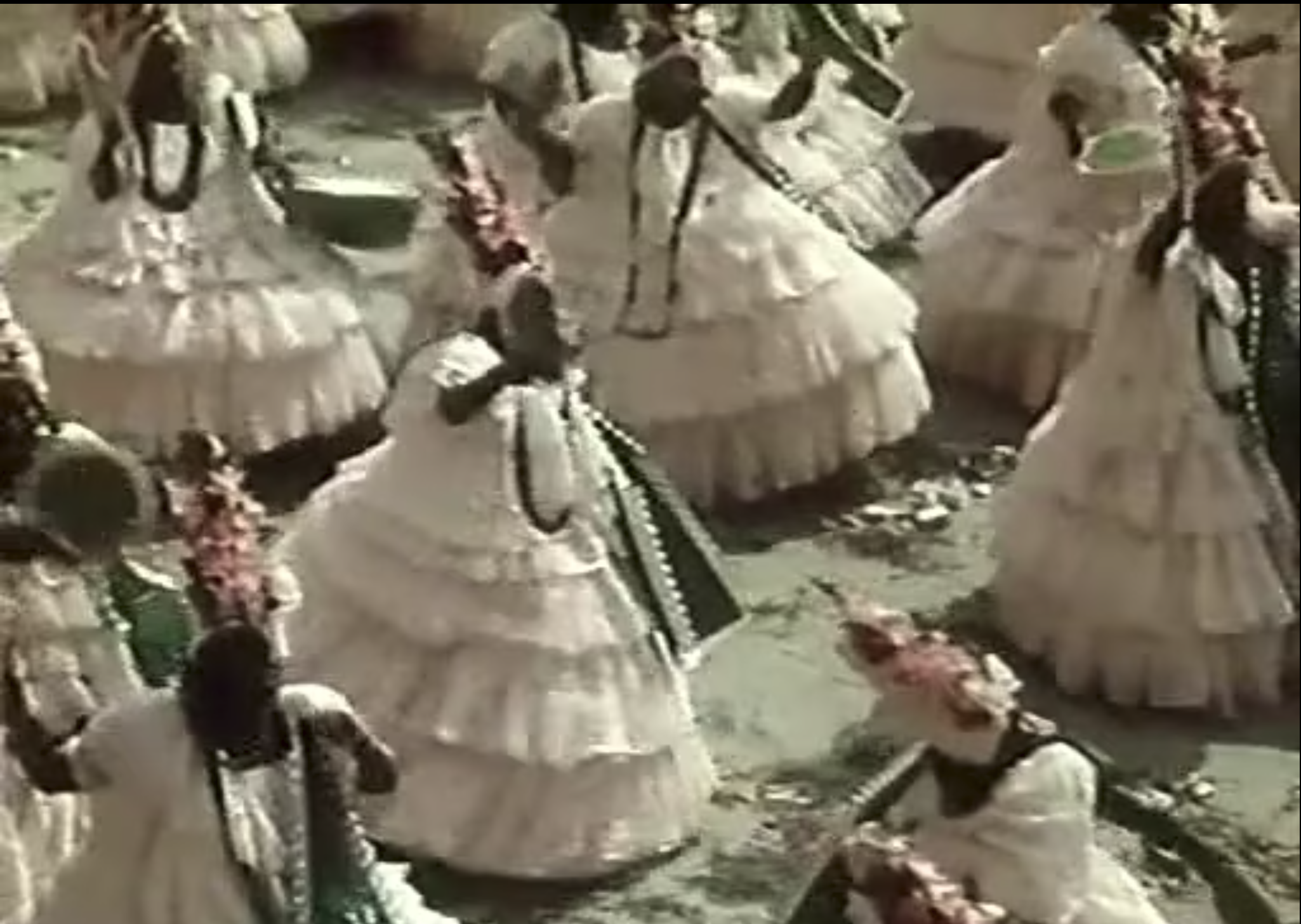
Finally, a third intertitle indicates: May 13th. “Dia de branco” (“day of the white [person]”), a once-common racist saying that was used to refer to the days of the work week in Brazil. A storm hits the city as the Abolition film crew arrives at the Imperial Palace, in Rio de Janeiro, where the shooting will take place. The key grip, a young black man, sets up a light. The lights are for the behind the scenes, there is no interview or any other reason for them. The film then proceeds to show a Congada8 coming into a church with banners. This elliptical manner of free associations, without explicit reason, is a prevalent structural element of the whole film. The variations in rhythm of editing and the interior lighting in the shot indicates a free conception of film form. All of the interviews in the film suggest a dramatic staging, contrary to the historical staging of the signing of the Lei Áurea. The über-fake feeling of this fictional signing of the Lei Áurea conveys to us that the law that freed the slaves was all an act. The purposefully idiotic intonation of actress Camila Amado, playing Princess Isabel, contrasts with the following scene, a long Carnaval parade in the Sambódromo,9 intercut with hilarious shots of the delirious Princess screaming from the balcony of her palace. From the portrayal of the colonial Princess who believed she was playing a key historical role, to the complex expression of Carnaval one hundred years later, an uncertain feeling stands out - something between beauty, discomfort and irony. In the Carnaval of Rio, Black bodies play instruments, dance, sing and work by pushing allegorical vehicles in the procession.10
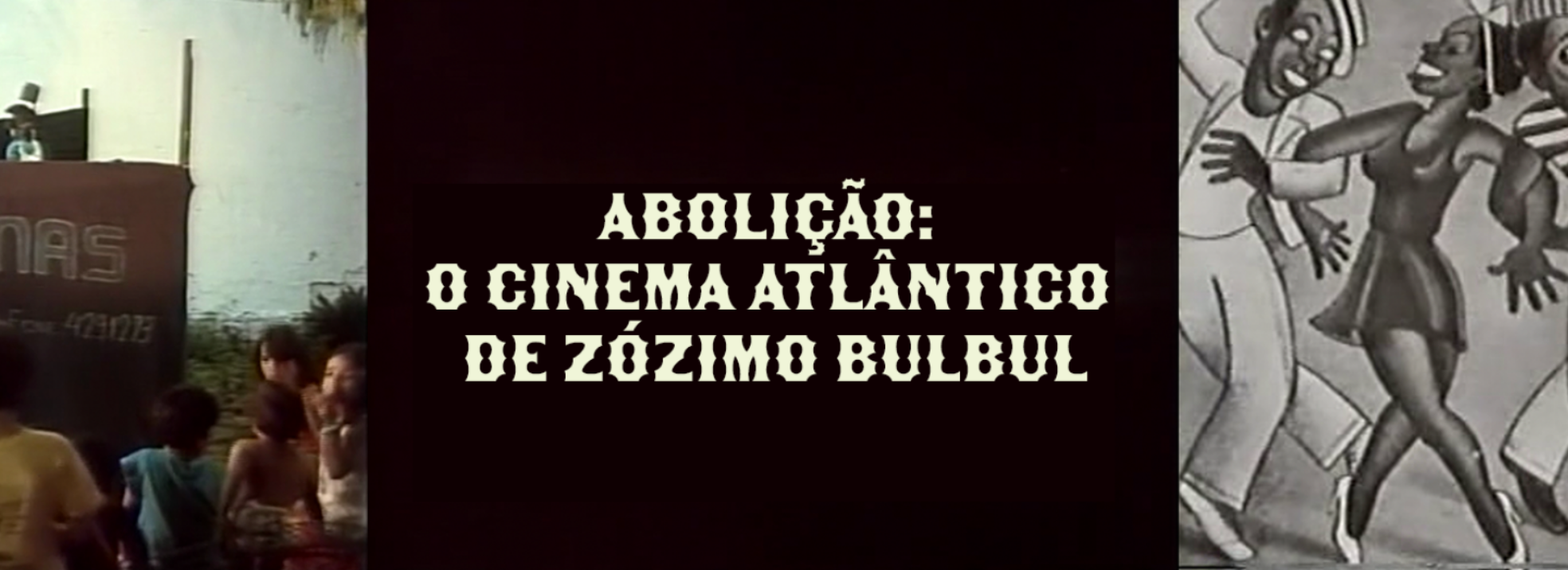
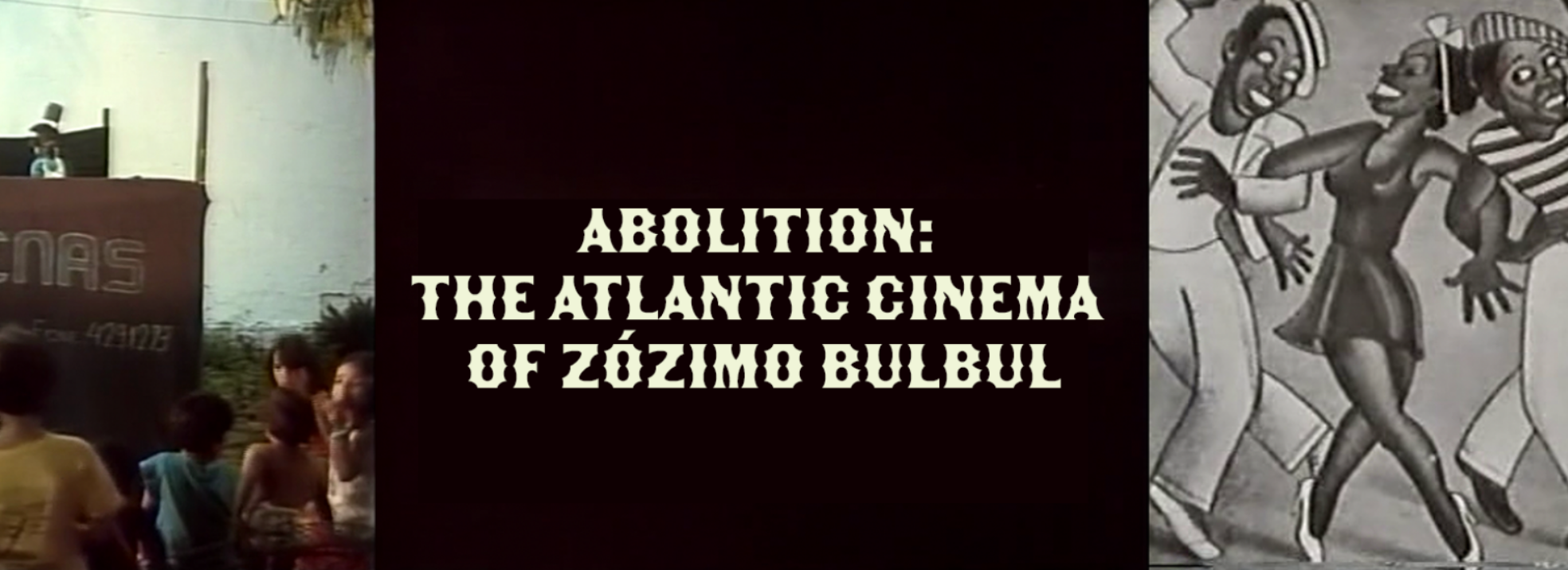
The sequence of dedications which come soon after is peculiar: “to the master Glauber Rocha”, to Leon Hirszman and "to black filmmaker Hermínio de Oliveira", followed by a mention of the Movimento Negro Unificado (Unified Black Movement) over the images of carnavalgoers leaving the Sambódromo and heading to the Central do Brasil station. This station is where people usually take the train to the Zona Norte and Zona Oeste neighborhoods, as well as to the municipalities in Baixada Fluminense. At this moment in the film, we spot the great samba composer Catoni among the passerbys. We leave the harmonious sounds and dancing bodies of the Carnaval for the Central do Brasil station, and then move into the trains that take the black carnivalgoers to their homes in the Rio suburbs. Cut to a puppet theater show for children which deals directly with racism. Then, shots of the crowded Rio-Niterói ferry feature a synthesizer-heavy soundtrack reminiscent of Krautrock. Black construction workers and shoeshiners, a dog taking a dump, a woman at work, as we go into her house. A baby, a birth certificate dated 1868, and, then we stumble upon an impressive interview with Mr. Manoel, a former slave who, at 120 years of age, gives the following statement: “today we live in bitterness, we didn’t get paid but we had satisfaction. We were satisfied with the food, everyone was satisfied”.
A tone of subtle irony can be detected when we cut from the interview with the grandson of Princess Isabel, João de Orleans e Bragança, to the crew of black technicians with their equipment in hand leaving the Imperial Palace in a hurry. Then, with a single statement, Maria Beatriz do Nascimento dismantles the official truths of the Royal family by demonstrating how the political pact which culminated in the abolition of slavery threw the lives of the black population into precariousness. The passage from a Monarchy to a Republic:11 “black people stopped obeying their masters and started being controlled by the State”.
Joel Rufino sitting on a curb on the idyllic Pedra do Sal, the original stronghold of Rio’s urban samba. Bulbul and his editor, Severino Dadá, make use of an Eisensteinian montage, intercutting the Rufino interview with shots of waves hitting rocks. The sound design allows the urban soundscape and the musical soundtrack to coexist within the interview. Joel Rufino presents Aunt Carmen as a bastion of the Praça Onze, a location in Rio which at the start of the 20th century was known as Little Africa. Writer and actress Thereza Santos makes the assertion, while standing in a storm, that after the abolition the living conditions of black women grew worse.
Abolition, in effect, sets itself far from Cinema Novo by posing a different set of questions. The film relates to Brazilian history by parodying its sociological rules, and its style is similar to that of Frederick Wiseman’s in its use of cinema to apprehend reality by capturing objective information as well as fragmentary and temporary aspects. Such seemingly random displacements accentuate the polyphony and allow for an ambiguous relationship, either emphasizing Bulbul’s very presence, or sharing a space with the spectator, the crew, and the characters. It is not just about black gaze or Bulbul’s gaze; he captures a reality in the film that extrapolates subjectivity, organizing it by fields of action: modulation, intersections, fragments, rhythm and cutting, symbols, posters and words shown on screen.
5. Atlantic Trance
In Abolition, Bulbul allows for sections of the film to modulate through and from subtle changes in themes, signs and elements. One example of this is the samba and the various forms in which it is presented. There are sections in crossing, marked by intersections of the central issue with other “presences”, fragments and details which make it unstable: Native Brazilians, Northeasterners,12 and even white people, aiming at a tridimensional black gaze, i.e., opening up to a cosmological and sociological assimilation that is broader than what white hegemony allows. There is a fragmented and incomplete field intercut by shining presences. This field is marked by a very peculiar use of talking heads, shaped by the interaction of the camera with the interviewee: the theatrically beat-down presence of Benedita da Silva; Lélia Gonzalez talking and gesticulating in the sunlight. The bishop Dom Hélder Câmara providing a critical analysis of beaches overflowing with white bodies while Jards Macalé sings Rio sem tom, a song he wrote to criticize the fact that Tom Jobim had sold a song to Coca-Cola.13 Perhaps due to the influence of orthodox Marxism, Zózimo noticeably devoted very little time to Afro-Brazilian religions, favoring Dom Hélder’s strange interview. Even so, there is a precious interview with Mãe Filhinha, the founder of the IIê Axé Itayle terreiro14, in Cachoeira, Bahia.
Some critics and researchers have commented that Abolition is repetitive. I think this repetition is a necessary asset in the film’s structure, organized by intertwining themes and treatments. There is a trace of repetition which, like the absence of a narrator, can be understood as an aesthetic choice. And, like in The Age of the Earth, the repetition aims to provoke a state of trance, of hallucination. To repeat in order to hallucinate. Repetition brings forth the Atlantic trance. The consensus regarding Glauberian expression as an allegory begets very particular ways of exploring dynamic stasis, the static progression of the dispute between antagonistic forces, which indicates that, when it comes to Brazilian racism, everything is transformed in order to keep the status quo intact. As a complement to that field, there is the written word, posters, watchwords, and intertitles to rectify and break open the shots.
A particularly dark moment in the film is that of the anti-interview with anthropologist Gilberto Freyre, author of the classic study Casa Grande & Senzala.15 Unable to speak due to his poor health condition, Freyre is represented by hisson, who limits himself to repeating platitudes from Freyre’s work regarding the value of the “afroblack” element (his words). The camera moves slowly out of the room, as if to indicate an abandonment, which is reinforced by the underexposed cinematography. Other particularly interesting moments: the presence of communist politician Luís Carlos Prestes just twenty minutes into the film indicates a movement towards the unexpected, as it allows for a white political leader to speak in its first few minutes. Black sociologist and journalist Muniz Sodré walks through the corridors of the Federal University of Rio de Janeiro (I have to note how weird it is to see black people inside a Brazilian university in 1988). Francisco Lucrécio and Correia Leite tell the story of how the Frente Negra16 was founded in the 1930s. The Revolt of the Lash gets a special mention in the interviews of historian Edmar Morel and of the daughter of João Cândido.17 Two repentistas18 sing about the Abolition and the situation of black people in the history of Brazil.The widow of black poet and cultural agitator Solano Trindade complains that her husband’s memory is being erased. Abdias do Nascimento, a playwright, activist and politician, talks about his experience with the Black Experimental Theater.19 Reminiscent of Kanye West, a current icon who has blamed black people for slavery, singer Agnaldo Timóteo insists that first and foremost black people have to change their mentality. Composer Nei Lopes drinks beer while Paulo Moura plays his saxophone, in contrast with the part of São Paulo which is inhabited by people from the Northeast, cornered between misery and the commodification of life itself. Then, Zózimo exposes the violence of the Military Regime on black bodies. Despite the reflexive tone usually attributed to this film, Abolição doesn’t only express the vision of its author. Simultaneously close and away from Bulbul, a cinema with a collective soul is born, in a panel of diffuse presences, always elusive.
6. The Party is Over
The price paid for being black in Brazil is huge. Zózimo Bulbul’s trajectory in Brazilian cinema is linked to a personal effort to conquer his own ground to work in, and to make it possible for a black filmography to arise. The generosity of Bulbul’s Atlantic aesthetics is contrasted at times by a collective tendency to reinforce militant watchwords and the demand for basic rights. When a black person fails to correspond to what minority groups, society and even his brothers and sistas expect of him, his walk is even harder. Just ask Albert Ayler, John Coltrane or Itamar Assumpção. The list of black men and women who were misunderstood by the black movement because they failed to follow what the community considered appropriate is a long one. These black people are usually unlucky. Bulbul’s name is on that list, and so Abolition might have been a huge disappointment to those who followed his work. Either way, the film bets on collective experimentalism as a way to survive, even though it doesn’t end on an optimistic note.

Amid images of streets filled with trash and the luxury of show houses, Grande Otelo calls on the black “taskforce”: “Nothing was ever abolished and today we have it even worse, because now black and white people are slaves.” Next, black street children impress us with their direct, political discourse: “We are still slaves. No work, no healthcare, no education…” The tragic symbolism is exacerbated. These crescendo signals the end is near, just as the mamulengo doll announces: “And thus, ladies and gentlemen, we end our tragicomedy in various acts, without ever reaching the ending! The abolition of slavery in Brazil. Or, to put it bluntly: black people can go fuck themselves.” An intertitle announces the ending: “the party is over”. The camera is pointed at the Central do Brasil station, then moves slowly down behind the grates of Campo de Santana. The last shot is the Central do Brasil station seen from behind iron bars, materializing, with the camera movement, the mutual imprisonment and the thin dialectics of oppression.

1. Published in Brazil in 1971 under the title Alma no Exílio.
2. Carvalho, 2005
3. Embrafilme is the main producer of Brazilian films since the company’s conception in 1969 until its implosion in 1990. Embrafilme provided a certain level of infrastructure and helped forge a new public interest in Brazilian cinema despite the fact that the market was dominated by foreign studios. However, Embrafilme’s practices were also met with criticism from filmmakers who made the accusation that they prioritized certain films while delaying the commercial release of others.
4. Rede Globo is Brazil’s largest TV network and the largest media conglomerate in Latin America.
5. Carvalho, 2005
6. Ibid.
7. Draft for a History of Black People in Brazilian Cinema, translated freely, 2005.
8. A popular street procession with song and dance that reenacts the coronation of a king in Congo.
9. A large construction in Rio de Janeiro where the samba school parades take place during Carnaval.
10. Tall vehicles designed in accordance with the theme of that year’s parade.
11. The Republic was installed on November 15th, 1889.
12. People from the Northeast of Brazil are historically subjected to prejudice from the richer regions of Brazil. Especially the South and Southeast.
13. The song was Águas de Março, which was used with new lyrics in many Coca-Cola TV spots during the 1980s.
14. Terreiros are the houses in which the Candomblé religion is practiced.
15. Published in English under the title The Masters and the Slaves.
16. Frente Negra Brasileira, or Brazilian Black Front, was the first black political party in Brazil.
17. The Revolt of the Lash (Revolta da Chibata) was a naval mutiny which took place in Rio de Janeiro in November, 1910. It was a response to the frequent whipping of black sailors by white naval officers. The Revolt was led by João Cândido Felisberto.
18. Repente is a kind of improvised poetry typical of the Northeast.
19. Teatro Experimental do Negro was a theater company founded in 1944 and ended in 1961.
REFERENCES
CARVALHO, Noel dos Santos. “Esboço para uma história do negro no cinema Brasileiro”. In: De, Jeferson. Dogma feijoada, o cinema negro brasileiro. São Paulo: Imprensa Oficial, 2005.
_____. O Produtor e Cineasta Zózimo Bulbul — O Inventor do Cinema Negro Brasileiro. Revista Crioula (USP), v. 12, p. 1-21, 2012.
DAVID, Marcell Carrasco. Abolição: escavações e memórias sobre o Cinema Negro de Zózimo Bulbul. Dissertação de Mestrado, PUC-Rio, 2020.
JAFA, Arthur. “The Notion of Treatment: Black Aesthetics and Film”. In Pearl Bowser, Jane Gaines and Charles Musser (eds.): Oscar Micheaux and His Circle, Bloomington: Indiana University Press, 2001, pp. 11-17.


