




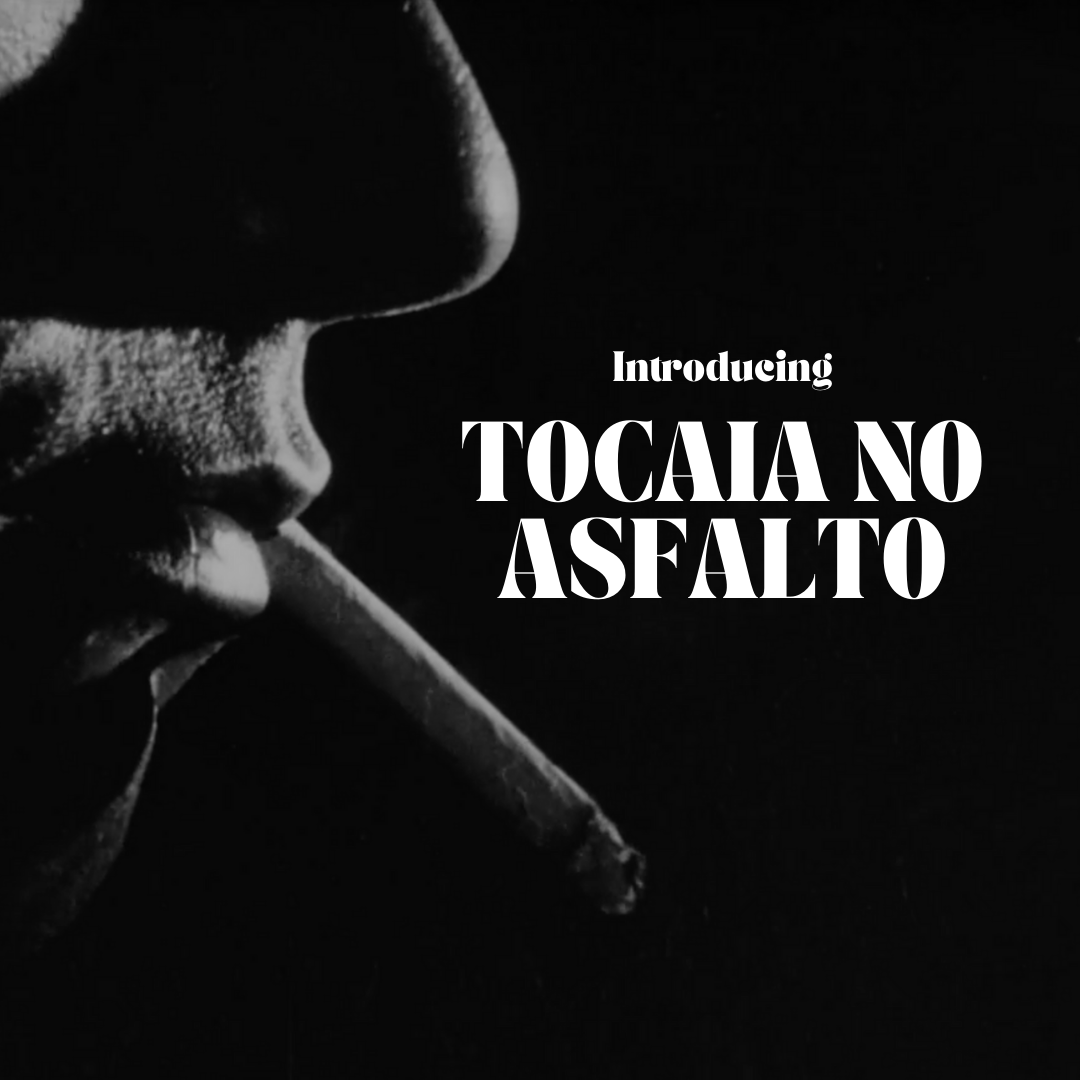
Tocaia no Asfalto is a malicious Bahian crime film, suspended within the history of Brazilian cinema. Its misalignment with the Cinema Novo canon has to do with its position at the end of the Bahian Cycle, a period of cinematic effervescence that ends with the lamented departure of its great director, Roberto Pires, to Rio de Janeiro. This, the filmmaker's third feature, clearly follows the path of what he had been building since he inaugurated the production of feature films in Bahia with the fast and somber Redenção (1959). But there is no precedent for what happens in Tocaia, just as there is no later filmography that encompasses the agility and malice projected by Pires in 1962.
The opening scene of Tocaia no Asfalto is indescribable. Suffice it to say that a revenge is realized in a chilling freeze frame once we have been led through a series of dark close-ups which sets the tone for the total stylization of Tocaia’s scenes. What follows after the opening credits is a concise variation of shots with busy mise-en-scene where action is continuously created in the foreground and background, shifting its narrative focus between them. The mishaps of a gunman from the state of Alagoas on a political hitjob in the city of Salvador, Bahia constitute the backbone of the narrative, which is tumultuously interrupted by an illustrious cast of detestable figures who live among political colonels1 and pimps. The film’s musical rhythm is not only dictated by Remo Usai's reverberant soundtrack, full of echoes and spaces, but mainly by the cynical tone of the dialog between this group of criminal characters who are full of evil intentions and endowed with a large repertoire of lies.
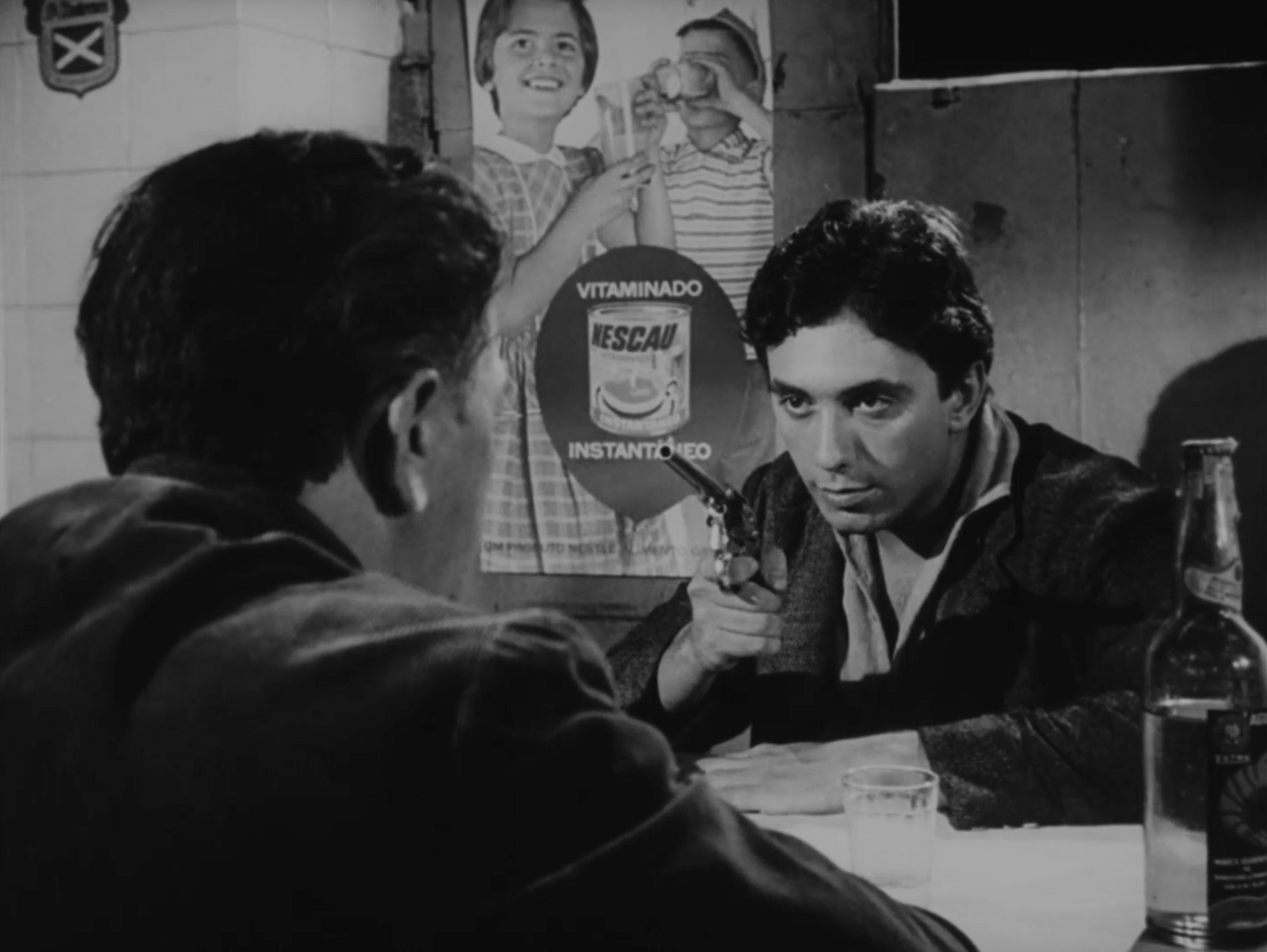
The crisis that generates the film’s crime subplot happens entirely in the domestic space. From the disputes between political colonels to the troubles faced by our gunman protagonist, power is constantly linked to the family space (the consequences of an archaic but persistent colonial model), where intimate dealings to maintain the status quo take place. These are ideological politicians who are carnal and paternalistic, playing a game of favors and duties which set them on a path of manipulation and murder. The characters want to save themselves from the conflicts that torment them, but their troubles arise from a situation so insurmountable, from problems so intrinsic to their existences, that it becomes clear their issues can’t be resolved. Unlike the codes of the Italian mafia or the community breakdown in the Western that provide the blueprint for shootouts, the disharmony of Tocaia no Asfalto refers to a deep Brazilian horror, to the permanence of the Casa Grande2 and its oligarchic lineages, and to the grotesque cynicism of the informal resolutions that take place between the crime boss’s living room couch and the brothel where prostitutes are subjected to torture.
In that sense, Tocaia no Asfalto is a film of a certain cinephilic constitution, conscious in its archetypal retelling of the great American genre films of the previous decade. One could mention, without much thought, a film like Fritz Lang's The Big Heat (1953), or even, the strong lighting and the speed of Robert Aldrich's Kiss Me Deadly (1955). But, actually, the features of Tocaia no Asfalto make the film devoid of obvious creative influences. No American filmmaker has filmed the Church of São Francisco, the wooden unfoldings of its converging architecture and its Baroque air of impending death.

On the other hand, there aren't many Brazilian filmmakers beyond Roberto Pires who have adopted crime cinema as their preferred space of national expression. It is more fitting to associate Tocaia no Asfalto with the black and white images of Flávio Colin's comic books or with the choppy sounds of radio soap operas of the time. The coarse tone of this feature film, stamped by its formal precision and concision, is why the filmmaker is associated with "craftsmanship" (which also applies to studio artists like Humberto Mauro or Roberto Farias), as it articulates his vision as being unavoidable to any spectator. From the decisive cuts of the shadows to the precise positions that intensify the actors, each moment of Tocaia no Asfalto is carved by the filmmaker's imprint. Pires’ busy mise-en-scene encompasses all kinds of villains and leave no room for contestation; at times they are reduced to convey the shock from gunshots, at other times a frame is deep enough to accommodate a dozen moving figures. What is constant is the shots’ concrete power of seduction, which spawns the finest compositions motivated by danger. From the truck in the opening scene to the train at the ending, there is no time to try and curb the film's cunning nature; all that's left is is the knowledge that salvation does not come for everyone.

1. Coronelismo, literally Coronelism, is a phenomenon in Brazil by which a rich and influential political leader rules over a community.
2. Brazilian plantations in colonial times consisted of a Casa Grande (where the masters lived) and the senzala (the slave quarters). This was theorized in Gilberto Freire's seminal book Casa Grande e Senzala, which was so influential that, to this day, whenever someone mentions "casa grande", "senzala" is always implied, and vice-versa. So "Casa Grande" refers to the colonial elite in that dichotomy.


