


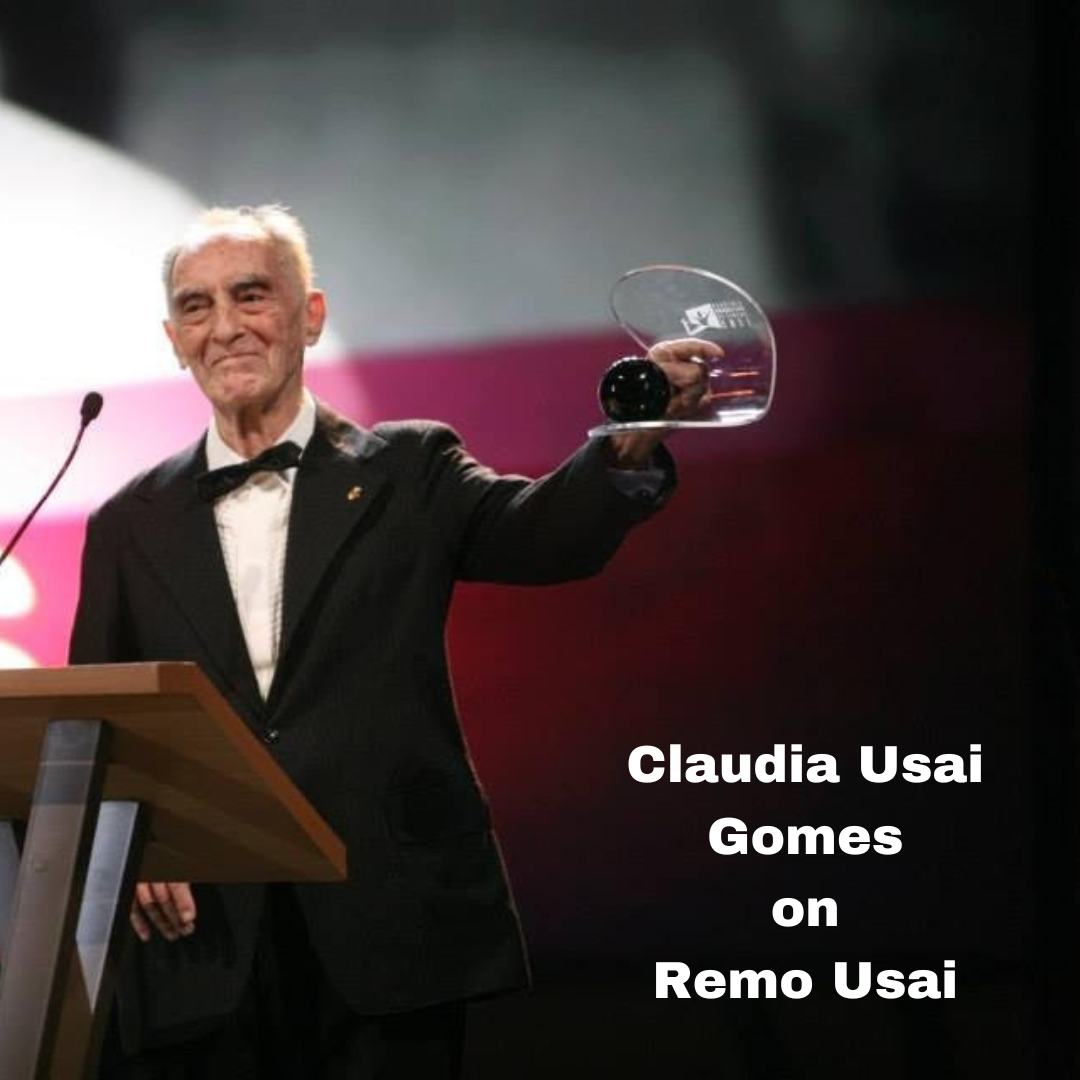

Antonio Remo Usai was born in Rio de Janeiro in 1928. The son of Italian immigrants Helena Spano Usai (1907–1990) and Heitor Usai (1899–1989), a sculptor, he developed an interest in music from an early age, beginning piano studies at around the age of seven. He studied piano with J. Octaviano (1892–1962), composition with the conductor and composer Claudio Santoro (1919–1989), orchestration with the conductor Léo Peracchi (1911–1993), and conducting with Eleazar de Carvalho (1912–1996). Like other composers of his generation, among them Antônio Carlos Jobim (1927–1994) and Newton Mendonça (1927–1960), he performed in nightclubs.

Usai graduated in agronomic engineering, though he worked in the field for only a few years. In 1957, given the lack of training programs in film scoring in Brazil, he enrolled in a postgraduate course at the University of Southern California in Los Angeles. There he studied with internationally renowned musicians: composition with Halsey Stevens (1908–1989), orchestration with Ingolf Dahl (1912–1970), the Schillinger System of Musical Composition with Francisco Argote, conducting with Herbert Weiskopf (1903–1970), and film scoring with Miklós Rózsa (1907–1995), his principal influence during his stay in the United States. Unfortunately, Remo had to return to Brazil without completing the program, which lasted two years.
Upon his return, he scored his first film, Pega Ladrão (1958), directed by Alberto Pieralisi (1911–2001), a commission arranged through his uncle, the filmmaker Arturo Usai. From then on, Usai was in high demand, scoring, in some years, four to five feature films, in addition to documentary shorts and television work. In total, he composed for more than 100 feature films and remains the most prolific Brazilian composer of film soundtracks. The 1960s stand out as his most productive decade, with 48 feature films. Between 1964 and 1966, he served as TV Globo’s first musical director, at that time and still today one of Brazil’s largest television networks. In 1975, he was named an honorary member (honoris causa) of the Brazilian Academy of Fine Arts. Usai’s music is frequently recognized for its “fusion of northeastern rhythms with orchestration techniques drawn from classical Hollywood cinema” (COSTA, 2010), among other styles of popular music.

Among the most important films he scored are Mandacaru Vermelho (1961) and Boca de Ouro (1963), by Nelson Pereira dos Santos; Assalto ao trem pagador (1962), by Roberto Farias; Maria Bonita, rainha do cangaço (1968) and O caso Claudia (1979), by Miguel Borges; the documentary Kuarup (1963), by Heinz Forthmann; Pantanal de sangue (1971), by Reynaldo Paes de Barros; the documentary Bola de meia (1971), by Carlos Couto; the documentary Amazônia, o grande desafio (1973), by Thomas Somlo; Escalada da violência (1982), by Milton Alencar Jr.; and As aventuras da Turma da Mônica (1982), by Maurício de Souza. He ended his career prematurely in the 1980s, due to the crisis in Brazilian cinema and the declining health of his parents. Remo received numerous awards and tributes for his film scores. In 2008, the documentary Remo Usai: Um músico para o cinema, directed by Bernardo Uzeda, was released and won awards at several festivals, and in 2017 a compilation featuring 19 tracks by the composer was released. In the final years of his life, living with dementia, he would still sit at the piano and play some of his most emblematic themes. Remo Usai died on February 9, 2022, in Rio de Janeiro, at the age of 93.

Bibliographic references:
Morais da Costa, F., 2010. Os estudos do som no cinema, da música e a lembrança dos músicos. Recine, [online] (7), pp.54-59. Available at: <https://issuu.com/revistarecine/docs/revista-recine-2010-ebook> [Accessed 20 November 2020].

Claudia Usai Gomes is a Rio based composer. She holds a BA in Composition from the School of Music at the Federal University of Rio de Janeiro and is currently pursuing a master’s degree at the same institution. Her research focuses on the work of her grandfather, the film score composer Antonio Remo Usai.


