

Even those most familiar with Sérgio Ricardo's filmography may not be familiar with the latest films directed by the multi-artist. With his last project of greater scope being A Noite do Espantalho, released in 1974, over the following decades Ricardo's incursions into cinema can be exemplified by lesser-known films. An example of this is the short film Zelão, an animation made in 1999 that was conceived as an accompaniment to his 1960 song of the same name. His last projects arrived in the 2010s, under very different circumstances from those that marked the previous stages of his work as a filmmaker.
Ricardo’s return to form came with with Pé Sem Chão, a short film made in 2014 and produced by Iracema Filmes. The film opens with the following words:
This film is the result of both a love for cinema and the central theme it addresses. It was crafted by all of its artists and technicians, who, at the invitation of the director, accepted the challenge of undertaking a production with no financial resources.
This brief preamble, in its honesty, almost sounds like a humble apology from the production crew for a poor film on which they nevertheless worked with all their heart. The warning is succeeded by a tragic narrative condensed into a few minutes: a family, composed of a mother and a son - a young man with a disability - are evicted from the house where they live, in Vidigal hill, south zone of Rio de Janeiro.

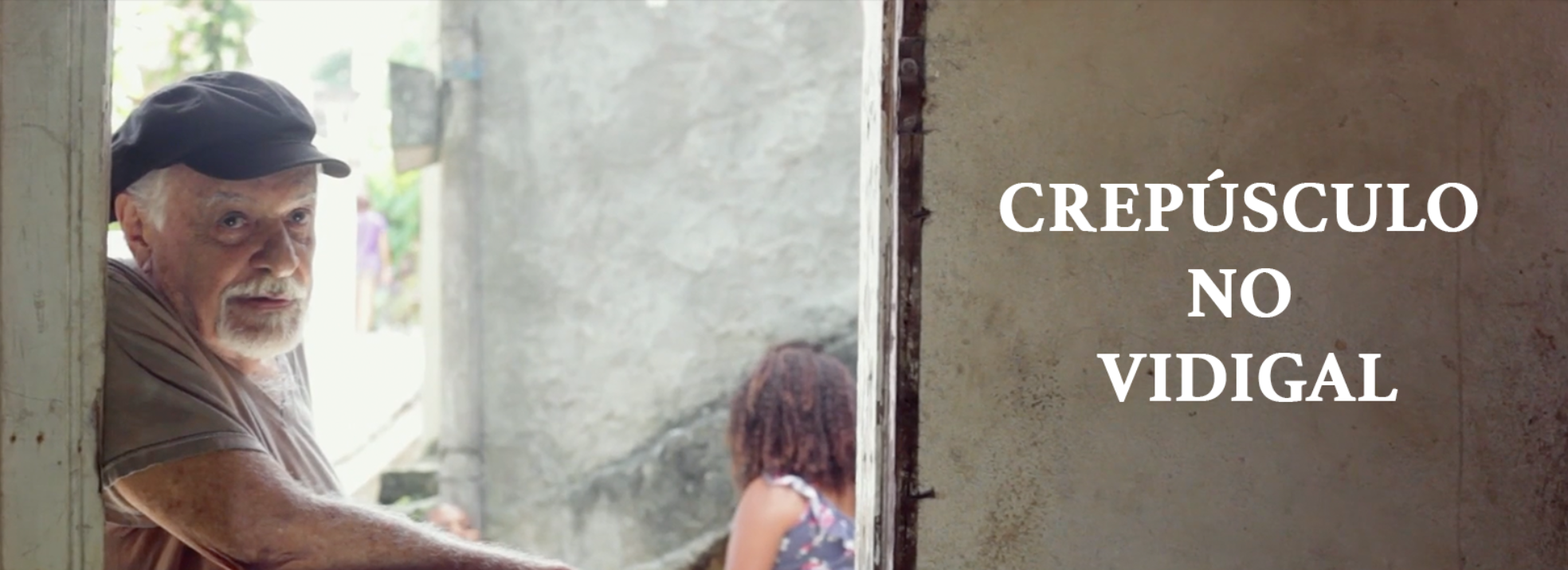
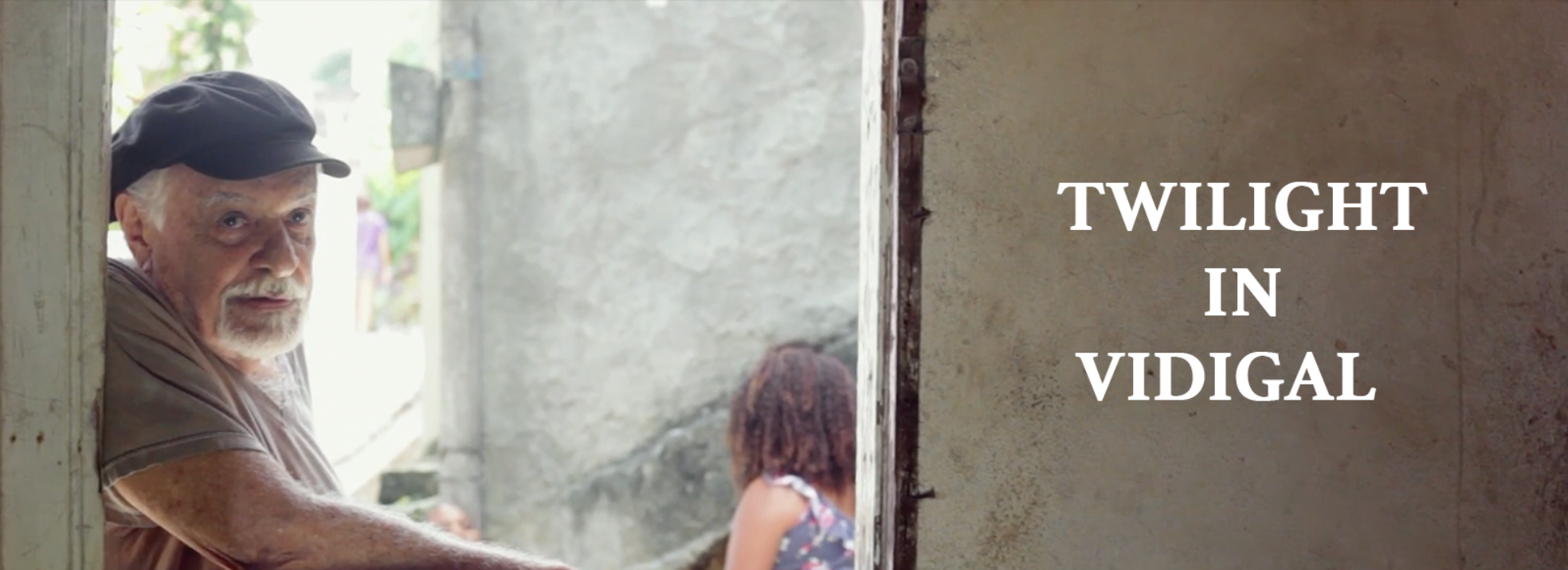
Vidigal is a key element towards building any basic understanding of Sérgio Ricardo's biography. The musician and filmmaker lived in the community for a considerable part of his life, until his final years. Both the short Pé Sem Chão and the feature Bandeira de Retalhos (his final film) are set in Vidigal. His filmic twilight took place in that community.
It is significant that in both films the presence of Ricardo hovers above the action. In Bandeira de Retalhos, he is present in the figure of an intellectual musician who visits the hill. In Pé Sem Chão, even more evidently. Ricardo plays a flâneur who passes by Vidigal and its local establishments, introducing the spectator to that microcosmic world as effectively as the tracking shots framing the slopes of the hill in the initial seconds of the film.

In the short film, the old flâneur is not merely allegorical, but also a provocative agent. While walking down alleys, his voice recites monologues that distill ideas and reflections (and there is a musical quality to the way these lines are delivered, which is no surprise for those familiar with Ricardo's work as a musician). When he witnesses a real estate inspector issue the aforementioned family their final summons, he pragmatically questions the inspector: "are you a slave?”
Bandeira de Retalhos came out four years after Pé Sem Chão, made possible by Cavídeo, an audiovisual production company headed by Cavi Borges. He deserves a brief moment of our attention in this piece. Throughout his career, both as producer and director, Borges' affinity for various filmmakers, actors and other figures in Brazilian cinema that have made a profound impact on him is visible. He aims to bring these people to light by creating new production opportunities, and introducing their work to new generations. "Rescue" is not the most appropriate term to be used (as it implies they had been forgotten). What Cavi does is work together with people he admires and gives them the means to accomplish or be the object of new works. Among the people contemplated by Cavi’s gesture are Otávio III, Luiz Rosemberg Filho, Sylvio Lanna and, naturally, Sérgio Ricardo.
At first glance, the feature film connects to Pé Sem Chão because of their common themes. The two films, in different scopes and ways, encompass narratives of characters being evicted from where they live, and both are set in Vidigal. Bandeira de Retalhos, however, is based on a theatre play by Ricardo, inspired by an attempt undertaken by the Rio de Janeiro City Hall to expropriate the community and evict its residents from that territory. The real intention behind the City Hall’s actions was to remove the residents from the area to build a group of hotels.

Being narratively more complex (as it centers around a trio of characters integrated in a community which is represented on screen through several of its members), Bandeira de Retalhos is also a more ambitious project, and not only for having a larger runtime. The musical dimensions that are always present throughout the filmmaker's work appear in Pé Sem Chão, both in the sung reflections of the flanêur and in Ricardo's songs (especially "Palmares", a partnership with José Carlos Capinan). However, the music appears differently in the later film, during moments that vary between the diegetic and the non-diegetic. Besides showing the versatility of Sérgio Ricardo as a composer, the use of music in Bandeira de Retalhos shows someone who effectively understands the diverse musicality of the people.
It would be anachronistic for a 2018 production, despite being set in the 1970s, to have songs in its soundtrack that are reminiscent of the musical themes present in the 1964 Black God, White Devil (just to mention Ricardo’s best-known musical work). Ricardo understands the need for variation. In this sense, Bandeira de Retalhos will surprise a spectator more accustomed to the filmmaker's previous works, as it opens with a hip-hop number. This "modernization", so to speak (obviously not equating "old" with backwards or inferior) works organically. Considering the historical moment in which Bandeira de Retalhos was made, after the Retomada, after advertisement techniques were incorporated by Brazilian cinema and after the international boom of favela movies, the opening scene, in fact, sounds like a natural choice for Ricardo.
In the feature film, Cavideo's production is present in the elaboration of well-prepared scenography which blends with the locations and the hiring of actors familiar to Brazilian cinema and television, such as Antônio Pitanga (who had previously collaborated with Sérgio Ricardo in the 1964 Esse Mundo É Meu and the 1970 Juliana do Amor Perdido), Bemvindo Sequeira, and Osmar Prado. The real focus, however, is on the characters played by members of the group Nós do Morro, who originally staged the theatre play. Among them, Babu Santana stands out, although he only plays a brief role.

Being a theater and cinema group founded in Vidigal, the inseparable relationship of Nós do Morro with the whole Bandeira de Retalhos project ends up exemplifying the affection for the community that Ricardo always had, and that is the essential pretext of his two final projects. They are the outcome of the filmic work of a multi-artist who has left a lasting mark on the history of Brazilian culture through music, theater and cinema.
Final works by artists who have an authorial control of what they do tend to be very personal, and Sérgio Ricardo doesn't escape this rule. His farewell project is a love letter to the community in which he lived for so many decades, to the resistance of the people, to their combativeness in the face of adversity, to their sensitivity, their plurality, their strengths and weaknesses. This twilight in Vidigal works for the beauty and sincerity of Sérgio Ricardo's farewell.


