

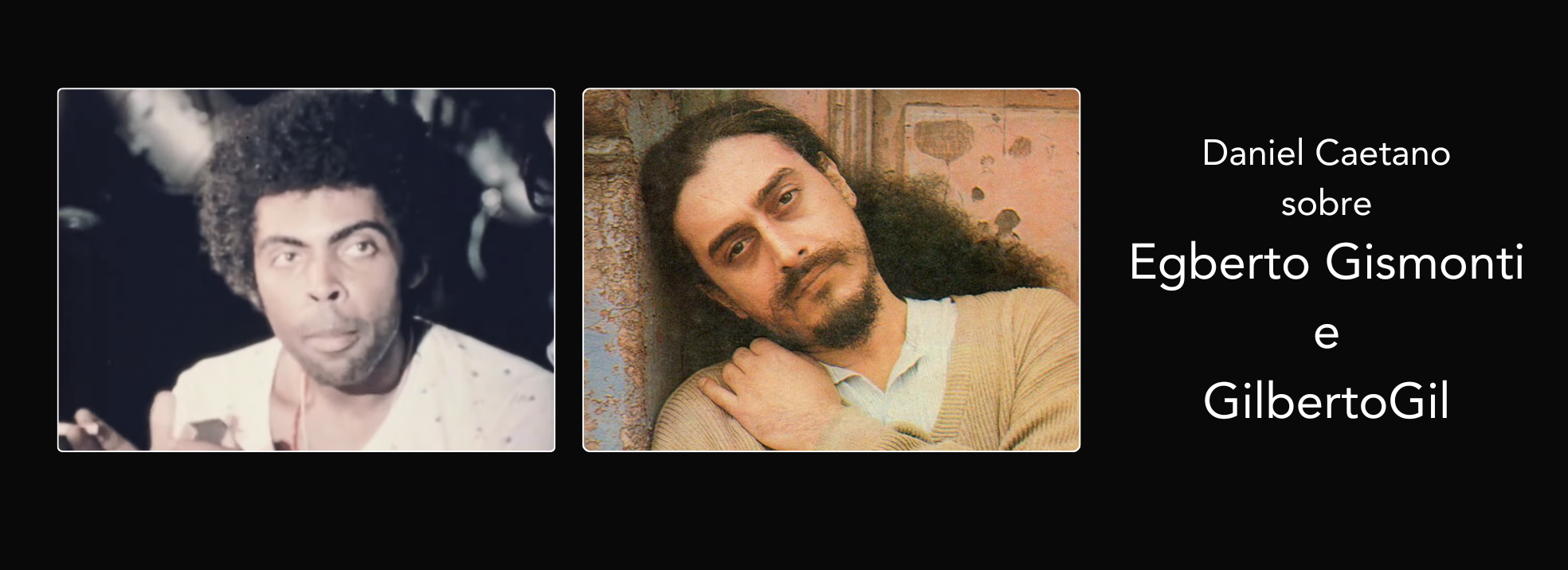
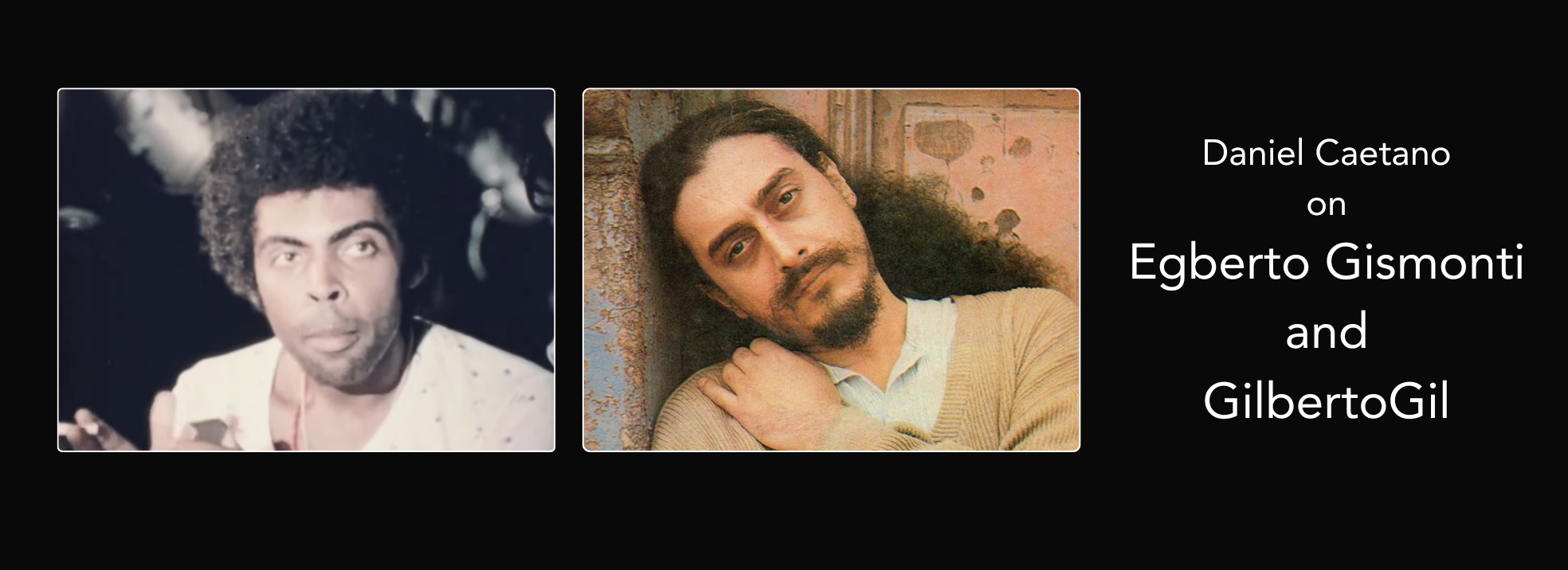
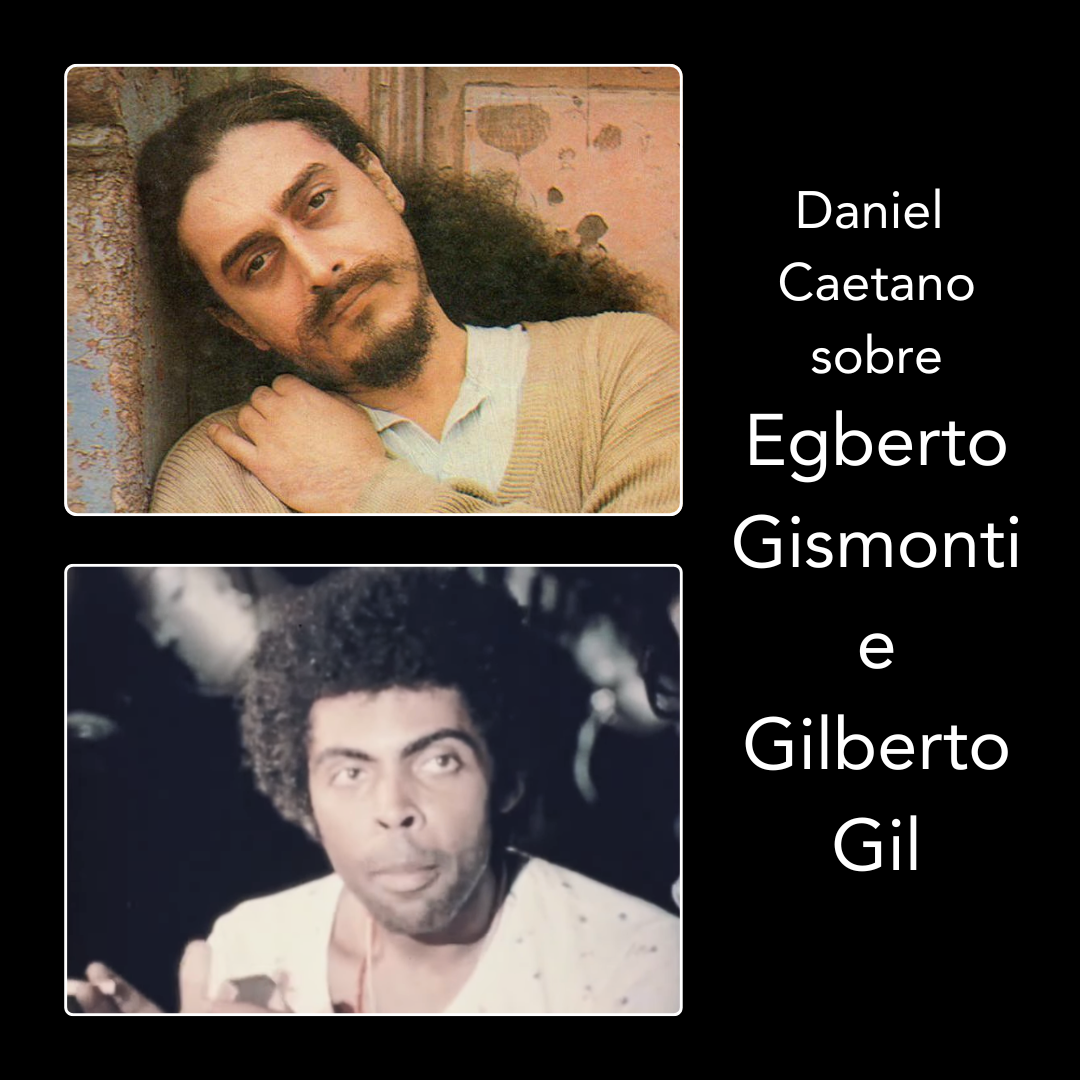
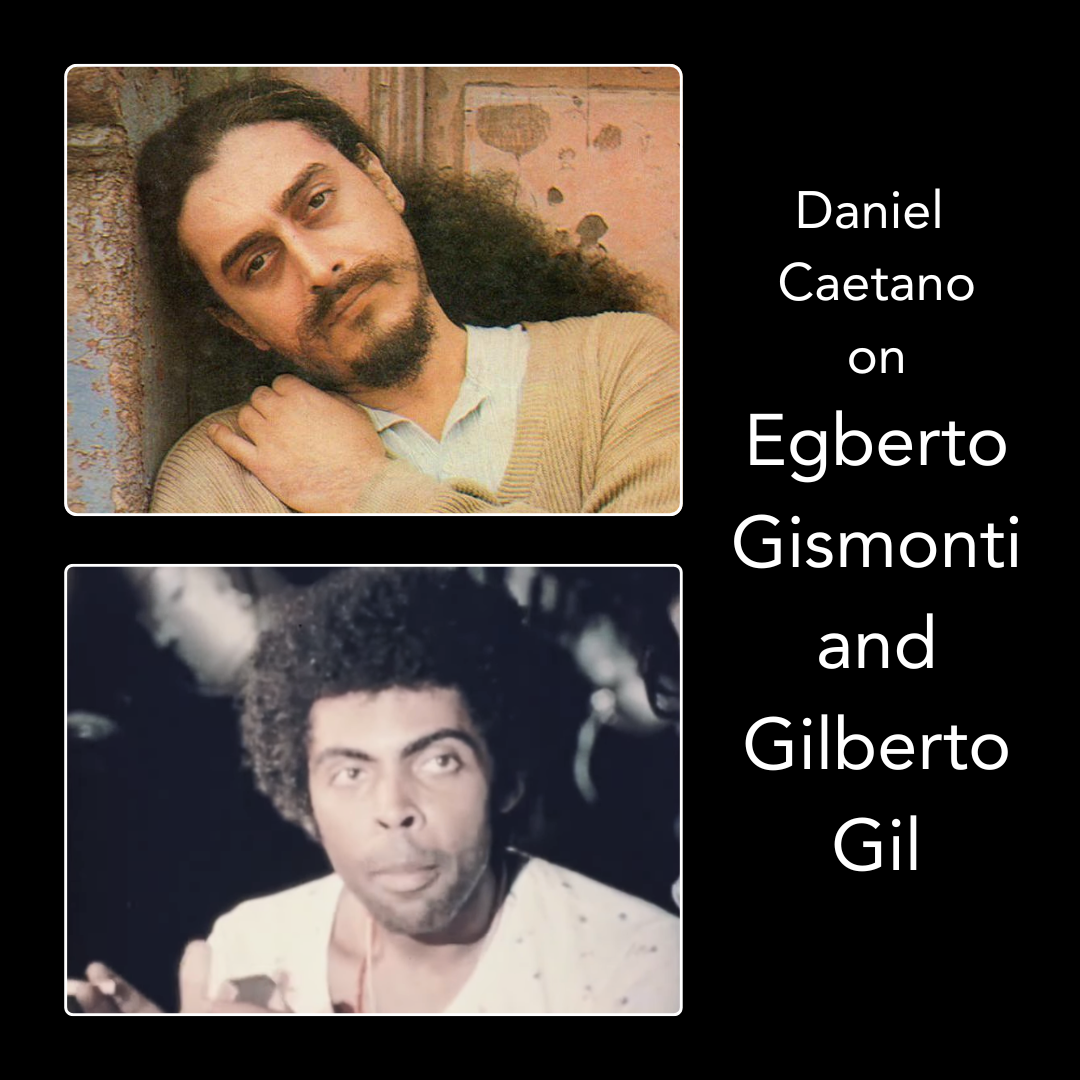
Gilberto Gil
From the first years of his career to the present day, Gilberto Gil occupies a place of great prominence in Brazilian music and culture. In partnership with Caetano Veloso, he was one of the leaders of Tropicalismo - an avant-garde musical movement of the late 1960s that, seeking to update the anthropophagic utopia of Oswald de Andrade and dialoguing with other avant-garde movements such as Cinema Novo, proposed a new perspective on the relations of Brazilian art with the mass media, the so-called cultural industry. Already at this initial moment of his career Gil became involved with work on soundtracks, composing for films such as Viramundo (1968), by Geraldo Sarno, Balada da Página Três (1969), by Luís Rosemberg Filho, and Brasil Ano 2000 (1969), by Walter Lima Júnior.
Still in late 1968, Gil and Caetano Veloso were arrested, accused by the military regime that commanded the country of having disrespected the Brazilian flag. After having been held in military barracks for about two months and remaining a further four months under house arrest in Salvador, without the right to a civil trial, the duo went into exile in London over the following years. In this period outside the country, Gil and Veloso continued to associate with some of the main filmmakers active in the country, such as the Cinema Novo filmmaker Glauber Rocha and the marginalists Rogério Sganzerla and Julio Bressane. For Sganzerla, using only voice and guitar, Gil made a contagious soundtrack for Copacabana Mon Amour (1970), a production of the legendary company Belair (which, created by Sganzerla and Bressane, shot six feature films in three months) – decades later, the recording of this soundtrack was recovered and released in full.
Gil was also an actor and a character in Corações a Mil (1981), a mix of fiction and a tour documentary made by Jom Tob Azulay. Already internationally acclaimed, Gil composed songs for various films such as Um trem para as estrelas (1987) and Veja esta canção (1994), both by Diegues, and Eu Tu Eles (2000), by Andrucha Waddington, in which his recording of the film’s main song reached the hit charts. Later, Waddington made a documentary entitled Viva São João! (2002) focusing on a trip by Gil through various cities in the Northeast with a show dedicated to recovering old forró songs, a rhythm typical of the region.
Egberto Gismonti
The dialogue between the elements of the so-called popular universe and those of the erudite is constant in the landscape of Brazilian music and has one of its high points in the career of Egberto Gismonti, whose work over the years moved freely among diverse rhythms and styles.
Born into a family of musicians in the year 1947 in the interior of the State of Rio de Janeiro, Gismonti began to study piano at the age of six. Over the course of his trajectory he became a notable multi-instrumentalist both on keyboards and on string instruments (making recordings on six-, eight-, ten-, twelve-, and fourteen-string guitars) and also on various types of flutes and kalimbas. Still young, he deepened his studies of composition and orchestration with teachers in Brazil and in France. Years later, he dedicated himself to studying the music of Indigenous communities, even residing for some months with the Yawalapitis, in the Brazilian Center-West.
Gismonti publicly presented one of his compositions for the first time at a music festival in 1968 and already in 1969 released his first record. In the same year he signed his first soundtrack made for cinema, that of the film A Penúltima Donzela (1969), a comedy directed by Fernando Amaral starring Adriana Prieto. Since then, in addition to releasing records regularly, he composed the soundtracks for more than two dozen films and also for a large number of TV series, ballets, and stage plays.
In this vast body of work - which moves from erudite and orchestral music to the jazz trio, passing through various Brazilian popular styles - the works on films such as the documentary Raoni (released in 1978, this film about the important Indigenous leader directed by Jean-Pierre Dutilleux and Luís Carlos Saldanha competed for the Oscar for best documentary of the year), Avaeté – semente da vingança (1985, directed by Zelito Viana) and Kuarup (1989, directed by Ruy Guerra) stand out – soundtracks that stand out for the sonority of instruments of Indigenous origin.
Also memorable was the soundtrack made for the TV series O Pagador de Promessas (1988, directed by Tizuka Yamasaki for Rede Globo), in which Gismonti used classical compositions by Heitor Villa-Lobos – which he had already recreated on the record Trem Caipira, released in 1985, whose recordings were partially used in the series. Also noteworthy is the partnership with the director Ruy Guerra, for whom he composed the music, in addition to the already cited Kuarup, also A Bela Palomera (1988) and Estorvo (2000).
More recently he composed the soundtracks for Tempos de Paz (2009) and Chico Xavier (2010), both directed by Daniel Filho. In addition to those already mentioned, he took part in soundtracks for films from various countries, such as the German Variation - oder Daß es Utopien gibt, weiß ich selber! (1983, directed by Michael Haneke still at the beginning of his career), the Danish Planetens spejle (1992, directed by Jytte Rex) and the Argentine El Viaje (1992, directed by Fernando Solanas).


