PT/ENG
PT/ENG
1/1/2021
By/Por:
Gustavo Menezes

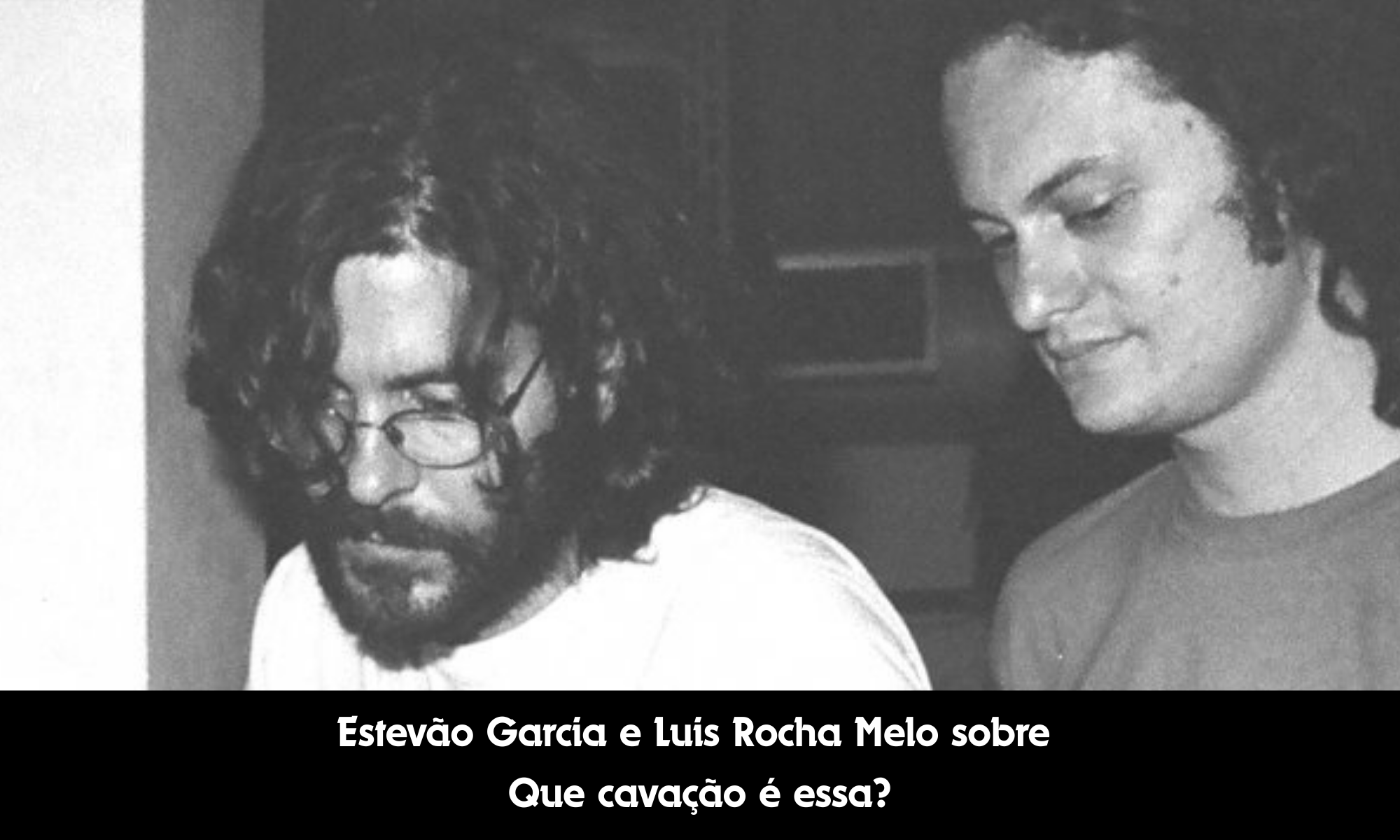
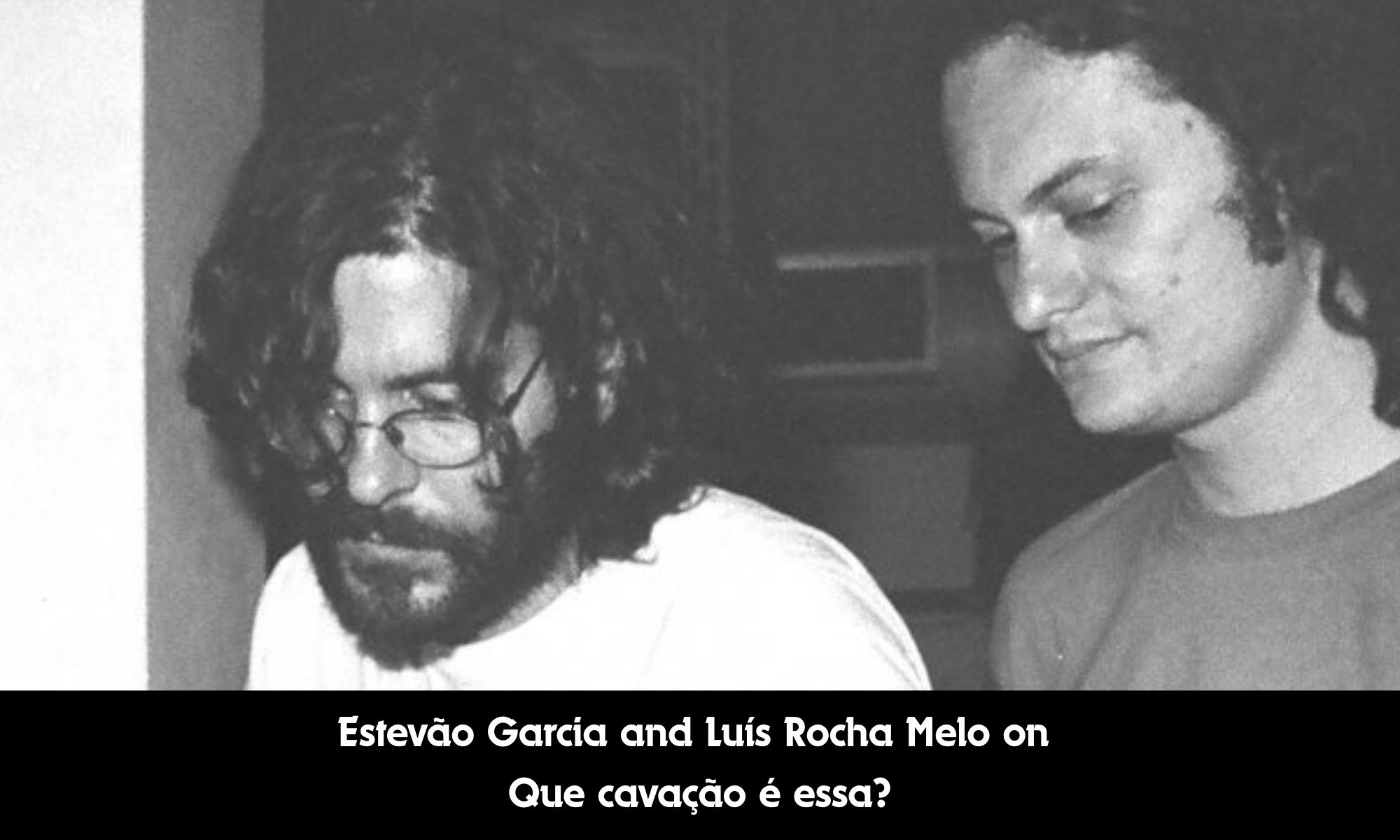
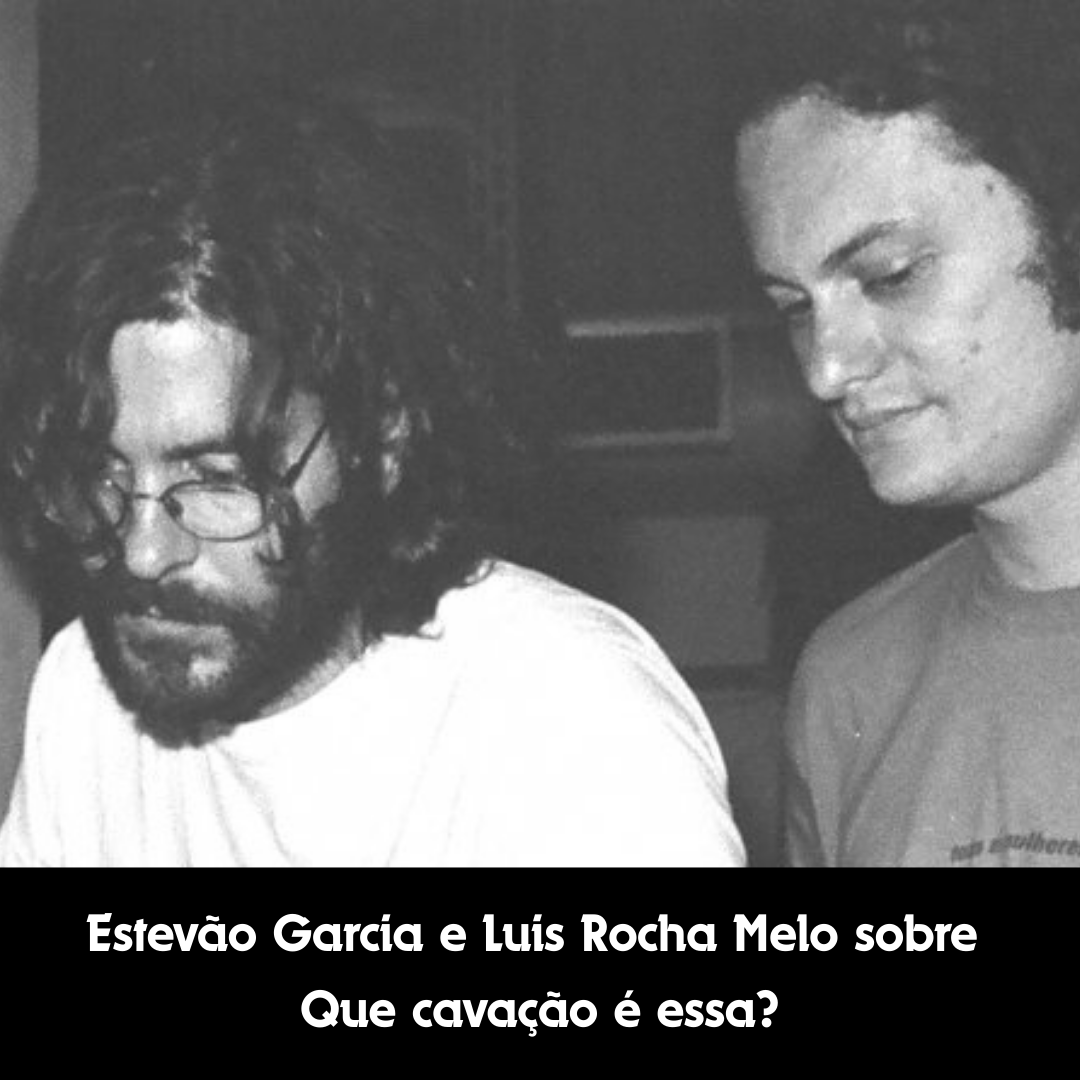
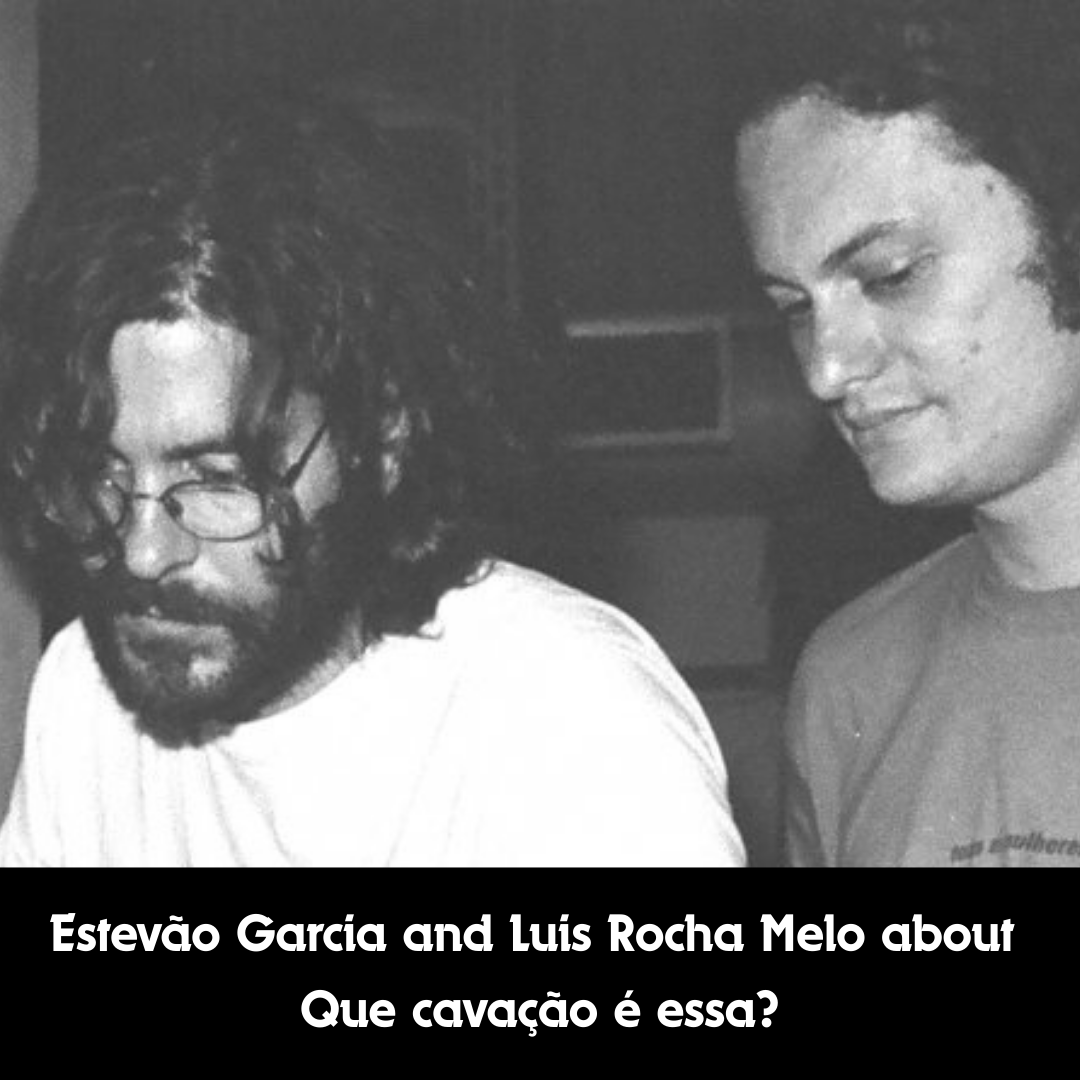
Cinelimite: A trajetória de vocês dois passa pela produção de filmes e pelas bolsas de estudo de cinema. Como vocês se conheceram e como começaram a trabalhar juntos?

Estevão Garcia: Eu e o Luís Alberto, vulgo “Morris Albert” para os mais íntimos”, nos conhecemos na época em erámos críticos e redatores da revista de cinema onlineContracampo. Os redatores dessa revista se reuniam todas as segundas-feiras em um bar no bairro de Botafogo, no Rio de Janeiro, para beber cerveja, discutir cinema e ajustar as pautas para o próximo número da revista. Depois da reunião, a gente ia para um outro bar e os dois últimos que ficavam até o final eram justamente eu e o Luís, assim, nos tornamos amigos e acabamos trabalhando juntos.

Luís Rocha Melo: A revista Contracampo foi de fato um ponto de união importante. A primeira década dos anos 2000 foi um período realmente atípico no Brasil, com um governo preocupado com a inclusão social, a defesa da educação pública e gratuita e as políticas de apoio à diversidade cultural. Havia muitas mostras de cinema, muitos editais de financiamento à produção e de apoio ao desenvolvimento de projetos. Era um clima realmente muito diverso da depressão atual em que nos afundamos desde 2016. Eu fui fazer mestrado em Comunicação, Imagem e Informação em 2004, na Universidade Federal Fluminense, onde o Estevão já era aluno de graduação. Estevão tinha feito um filme na UFF muito interessante, chamado O latido do cachorro altera o percurso das nuvens, que ele codirigiu com Rebecca Ramos, Camila Marquez e Raul Fernando. Se não me engano foi filmado em Super-8, e tinha influência do cinema dadaísta, de René Clair, de Entr’Acte. Já era um filme que tinha um diálogo forte com o cinema silencioso. Eu, por outro lado, tinha acabado de codirigir com o Alessandro Gamo o média documental O Galante rei da Boca, sobre o lendário produtor Antonio Polo Galante, que tinha o apelido de “Rei da Boca” e que foi um dos mais ativos produtores do cinema popular feito na Boca do Lixo de São Paulo, entre os anos 1960 e 1980. Eu sempre tive esse interesse de unir a pesquisa e a realização cinematográficas. A primeira década dos anos 2000 foi, para toda uma geração de cinéfilos, críticos e cineastas, um período de descoberta e de contato com filmes e diretores sobre os quais a gente ouvia falar ou lia muito sobre, mas que eram em sua maioria ainda inéditos para nós, circulavam muito pouco. A internet ainda não era o que é hoje, os filmes ainda eram exibidos em película nos centros culturais, nas cinematecas, nos cinemas alternativos. Fundamentais nesse processo foram as Mostras do Filme Livre, que desde 2002 aconteciam no Centro Cultural Banco do Brasil, as retrospectivas sobre o Cinema Marginal organizadas pelo Eugênio Puppo em São Paulo e no Rio, e sobretudo as mostras criadas pelo pesquisador e curador Remier Lion, notadamente “Cinema brasileiro: a vergonha de uma nação”, em 2004, e “Malditos filmes brasileiros!”, em 2005, que eu considero duas das mais importantes e deflagradoras releituras historiográficas já feitas até hoje no cinema brasileiro. Eu e o Estevão frequentávamos essas mostras e eventos, escrevíamos sobre elas, batíamos papo nos botecos, e nessa troca de ideias surgiu a possibilidade de fazermos um filme juntos.

CL: Quando tento explicar Que cavação é essa? a amigos meus, acham quase difícil de acreditar. O filme aborda os temas da preservação, da memória do cinema brasileiro e especificamente do cinema silencioso brasileiro com uma postura de ironia e humor. Como vocês chegaram a esta abordagem? Qual foi a concepção original e como ela se desenvolveu até o que vemos no filme?

EG: Na verdade, a nossa ideia original era fazer um outro filme cujo título provisório era Cidadão Quem??? Seria uma paródia ao filme do Orson Welles com o comediante Jorge Loredo(o criador do célebre e popular personagem Zé Bonitinho) interpretando o protagonista. O milionário Quem tinha em sua fazenda uma árvore de filmes e cada filme que caía desse pomar cinematográfico seria visto na tela e cada um deles seria uma paródia a um período da história do cinema brasileiro: os filmes de cavação, as chanchadas, etc… Seriam vários filmes dentro de um filme. Porém, o segmento dedicado aos filmes de cavação ficou tão interessante que adquiriu uma autonomia e uma independência própria. Assim, resolvemos abandonar o projeto do Cidadão Quem??? e decidimos desenvolver o roteiro cujo centro seria uma homenagem aos filmes de cavação dos anos 1910 e 1920. No entanto, durante o processo de escrita, percebemos que só ficar no cinema silencioso seria insuficiente e que poderíamos abordar a cavação como um fenômeno atemporal e estrutural na prática cinematográfica brasileira. Daí surgiu a ideia de fazer os dois filmes dentro do filme: o filme de cavação dos anos 1910 e o cinejornal institucional/ complemento nacional dos anos 1970. Este segundo se tornou um curta-metragem documental sobre o trabalho de restauração e preservação de filmes e tratava como um de seus tópicos exatamente a restauração do filme dos anos 1910 que registrava o churrasco na fazenda do coronel Alexandrão.

LRM: O projeto do Cidadão Quem??? nasce de uma entrevista que eu, o Estevão e o Remier Lion fizemos com o Jorge Loredo para a Contracampo, isso em 2004. O Jorge Loredo morava em um hotel no bairro do Flamengo, e a entrevista foi feita no hall desse hotel. O Cidadão Quem??? não foi feito mas acabou entrando no filme, em um dos cartazes pendurados na parede de uma sala da Cinemateca do MAM, na cena em que o Hernani surge dando um depoimento sobre o cinema mudo brasileiro. Mas além do projeto do Cidadão Quem??? (que tinha um subtítulo: “Memórias de um amnésico”) eu diria que o filme nasce diretamente do curso de História do Cinema Brasileiro que o professor, pesquisador e atual diretor da Cinemateca do MAM Hernani Heffner ministrou durante um ano (2005-2006) no cinema Odeon, na Cinelândia, Rio de Janeiro. Tenho a impressão de que esse curso, organizado pelo Tela Brasilis, foi um marco geracional para todos os que compareciam aos sábados de manhã, das nove horas ao meio-dia, para ver os filmes do acervo da Cinemateca, evidentemente projetados em 35 mm, e em seguida para assistir as aulas fantásticas do Hernani. Pra mim, pelo menos, foi uma experiência inesquecível. E não eram só estudantes de cinema. O Odeon, com seus quase 600 lugares, ficava lotado. Eram alunos de cinema, pesquisadores, cinéfilos, críticos, interessados em geral. De junho a dezembro de 2005, o primeiro módulo do curso foi em grande parte dedicado ao cinema silencioso, com ênfase nos chamados “ filmes naturais”, quer dizer, filmes que podemos identificar aos documentários, cinejornais, filmes de viagem, registros familiares, institucionais etc. Esses “naturais” (assim chamados por serem filmes “tirados do natural”) sempre foram desprezados pela historiografia tradicional do cinema brasileiro, aquela que se sedimenta entre os anos 1950-1980. Esses filmes eram chamados de “cavação”. Os “cavadores” eram os cinegrafistas que arranjavam dinheiro com figuras do poder público, com fazendeiros, industriais ou famílias ricas. Ou seja, “cavavam” recursos para filmar. A fama desses “cavadores” era a pior possível. O interesse dos historiadores e críticos de cinema, por outro lado, sempre foi o filme de ficção (ou “filme de enredo”, para usar a terminologia de época), quer dizer, o longa-metragem com atores, maquiagem, figurinos, roteiro, estúdio etc. Ocorre que, no Brasil, esses filmes ficcionais, durante muitos anos, sobretudo dos primórdios até meados dos anos 1940, sempre foi a exceção, e não a regra. A regra, justamente, era o filme “natural”, que inclusive mantinha em atividade produtores, cinegrafistas, laboratórios etc. Como eu disse antes, quando o projeto do Que cavação é essa? surge, estávamos vivendo um período inédito no país, com um governo democrático e inclusivo, voltado para políticas públicas de preservação e de fomento à cultura. Muitos filmes silenciosos foram restaurados e muitas pesquisas em torno do cinema brasileiro foram desenvolvidas, dentro e fora da academia. Todas essas iniciativas traziam novos enfoques historiográficos, metodológicos, e em grande parte já entendiam os filmes “naturais” como objetos privilegiados de estudo, rompendo com a tradição da historiografia clássica. A rigor, esse processo de revisão historiográfica tem seu início nos anos 1970, mas só a partir da segunda metade dos anos 1990 é que ele conhece de fato um momento de vigor extraordinário. Um exemplo disso é o livro Viagem ao cinema silencioso do Brasil, organizado por Samuel Paiva e Sheila Schvarzman e editado em 2011. O livro é resultado das atividades de um grupo de pesquisa que se reunia mensalmente na Cinemateca Brasileira desde 2002 para ver, estudar e discutir justamente... filmes silenciosos brasileiros. Que cavação é essa? foi lançado no Festival de Brasília em 2008, quer dizer, ele é contemporâneo desse reflorescimento do interesse pelo cinema antigo no Brasil. Só que, no nosso caso, em vez de o interesse pelo cinema brasileiro resultar em textos ou em mostras, resultou em filme – no caso, nesses “dois filmes em um” a que o Estevão se referiu. Aliás, essa referência que o filme faz aos anos 1970, com o complemento nacional Restaurare, remete justamente às origens desse processo de revisão historiográfica no Brasil. O “ano diegético” de Restaurare, segundo informa a cartela de censura logo no início da segunda parte, é 1974, mesmo ano em que Paulo Emilio Sales Gomes escreve a famosa comunicação “A expressão social dos filmes documentais no cinema mudo brasileiro (1989-1930)”, publicado nos Anais do I Simpósio do Filme Documental Brasileiro, no Recife (Pernambuco), texto em que ele elabora a célebre fórmula dos “filmes naturais” que têm como temas o “Berço Esplêndido” e os “Rituais do Poder”. 1974 também remete ao período de maior aproximação entre o Cinema Novo e o Estado militar, assim como o início das políticas de apoio ao setor cultural (que incluía a preservação de filmes), por parte da Embrafilme. Daí o tom “oficial” de Restaurare, que por sua vez faz uma dupla referência, isto é, à noção de “filme cultural” atrelado ao Estado (ou seja, à “cavação” culturalista) e aos cinejornais estatais realizados pela Agência Nacional. Se a gente saltar para os anos 2000, veremos a fórmula paulemiliana do “Berço Esplêndido” e dos “Rituais do Poder” sendo questionada por Hernani Heffner em seus cursos e em um texto como “Vagas impressões de um objeto fantasmático”, de 2006, contemporâneo à realização de Que cavação é essa?. Então, não é por acaso que o Hernani é um dos personagens principais do filme, fazendo o Arqueólogo Cinematográfico. Creio que o Que cavação é essa? se liga a todas essas referências, algumas mais explícitas, outras mais indiretas.  

CL: Se não estou enganado, Que cavação é essa? foi filmado em filme 35mm, algo incomum para um curta-metragem, mesmo em 2008. Como conseguiram apoio financeiro para um projeto tão ambicioso? A filmagem em 35mm foi uma decisão fácil de ser tomada, do ponto de vista financeiro e estético? Como era o acesso a este tipo de equipamento em 2008 e como isso mudou hoje?

EG: O filme foi finalizado em 2008, mas ele foi filmado entre o final de 2005 e o começo de2006. Em 2005 o roteiro do Que cavação é essa? ganhou o primeiro lugar em um edital do FORCINE (Fórum Brasileiro de Ensino de Cinema e Audiovisual) que contemplava somente filmes de conclusão de curso produzidos em escolas de cinema. Na ocasião, eu estava terminando o Bacharelado em Cinema e Audiovisual na Universidade Federal Fluminense (UFF)e inscrevi o Que cavação é essa? como o meu filme de conclusão e assim foi possível concorrer ao edital. Com a verba do prêmio conseguimos fazer o filme em 35mm.

LRM: Esse período em que filmamos o Que cavação é essa? foi um período de transição no campo do audiovisual. Ainda se filmava bastante em película, o digital ainda não havia se tornado hegemônico, mas muitas salas de exibição já estavam se “digitalizando”, e a maior parte dos cineastas jovens e estudantes de cinema filmavam em digital. Ainda existiam muitos projetos prevendo a passagem do vídeo para a película e da película para o vídeo. Esses momentos de transição são sempre muito interessantes, porque abrem múltiplas possibilidades de experimentação. Nesse sentido, termos filmado Que cavação é essa? em película 35mm foi um gesto radical de experimentação proporcionada pela estrutura institucional de uma universidade federal pública. Além de toda a infraestrutura de produção, os convênios mantidos pela UFF permitiram, por exemplo, contarmos também com o apoio da Kodak, da LaboCine (o antigo laboratório Líder), da locadora A pema e do CTAv (Centro Técnico Audiovisual), que entrou com câmera 35mm, material de elétrica e maquinária e Truca, para a realização dos table-tops, dos intertítulos da primeira parte e dos letreiros finais. Vale lembrar que o Hernani Heffner também foi fundamental para a finalização do trabalho, intermediando acordos com a LaboCine, com a Rob Digital, onde fizemos a mixagem, e com a Movedoll, que fez as cartelas iniciais dos apoios. A parte sonora também foi muito importante, pois contamos com o Luís Eduardo Carmo na edição de som e na mixagem, um inventor, um artista.

Mas voltando ao que eu estava falando sobre a experimentação, considero esse aspecto importante para falar do Que cavação é essa? sobretudo porque o desafio de fazer o filme em 35 mm implicava em uma pesquisa muito grande em termos técnicos e estéticos. Aí a gente não pode deixar de falar do fotógrafo do filme, o William Condé, que na época era também estudante de graduação de Cinema na UFF. O William foi absolutamente fundamental em todas as etapas do filme, desde as primeiras reuniões em que abandonamos a ideia do “Cidadão Quem?” e começamos a falar em fazer somente o “filme de cavação”, até a marcação de luz no laboratório para a cópia final. Cabe ao William todo o mérito da pesquisa em torno dos recursos fotográficos do filme, e nesse sentido o trabalho dele não apenas foi extremanente criativo, mas também foi um trabalho de pesquisa histórica, procurando emular os efeitos do negativo ortocromático a partir de emulsões muito mais sensíveis do que aquelas que existiam nos anos 1910-20. Acho que os testes de negativo feitos pelo William nesse processo de pesquisa são um capítulo à parte, mereceriam uma entrevista só com ele. Através de uma engenhosa combinação de tipos de emulsão, diferentes exposições, uso de filtros e tipos de revelação, o William conseguiu simular o halo nas altas luzes, a perda de definição nas áreas pretas, o contraste. Então, tudo o que hoje poderia ser feito com a maior facilidade usando dois ou três plugins, pro Que cavação é essa? o William conseguiu fazer artesanalmente nas filmagens, combinando exposição, filtros e sensibilidade dos negativos. Ele mesmo produziu uma íris, que usou na cena da orgia. Ou seja, o discurso sobre a preservação, no Que cavação é essa?, não está apenas no tema ou no que se vê e se ouve, mas na própria textura da imagem. E isso só foi possível porque trabalhamos com a película 35mm e porque contamos com um talento como o William Condé. Acho que dificilmente conseguiríamos repetir esse processo hoje. É quase impossível. O que importava, na época em que fizemos o filme, era vivenciar esse processo artesanal, mecânico, do cinema. Acho que inconscientemente sabíamos que seria talvez uma possibilidade única de rodarmos um filme assim. De fato, pouco depois, o digital revolucionou tudo. Hoje, se quisermos exibir o Que cavação é essa? em seu formato original, não conseguiremos encontrar uma sala de exibição com um projetor 35 mm, o que não deixa de ser irônico. Salvo raríssimas exceções – o CineArte UFF, por exemplo, ou a Cinemateca do MAM, onde, aliás, as duas cópias em 35 mm do filme estão depositadas. Por outro lado, é ótimo que hoje a gente possa difundir o filme em uma plataforma como o Cinelimite.

CL: Que cavação é essa? começa com a encenação de um filme da era do cinema silencioso chamado Um alegre churrasco na estância do Cel. Alexandrão, que, segundo somos informados, teria sido restaurado graças aos esforços conjuntos da Universidade Federal Fluminense, da Secretaria do Audiovisual do MinC e do Forcine. Ao assistir ao filme, percebemos que houve muito cuidado e atenção aos detalhes na caracterização dos cenários, personagens, circunstâncias e até a ortografia de um filme real daquela época. Quais filmes serviram de inspiração e referência para Um alegre churrasco na estância do Cel. Alexandrão?

EG: Serviram como referência alguns filmes de cavação que estão disponíveis no acervo da Cinemateca do Museu de Arte Moderna do Rio de Janeiro (MAM-RJ). Um deles, inclusive, era um churrasco oferecido por um coronel. A pesquisa feita em cima deste material foi uma grande inspiração.

LRM: Foram vários filmes. Dentre eles, Reminiscências, de Aristides Junqueira, um dos filmes mais antigos que sobreviveram, datado de 1909. É um filme de família, mas que mostrava logo no início o Coronel Junqueira e seus familiares. Outro filme marcante foi Cidade de Bebedouro (1911) da Campos Film, com suas panorâmicas sobre a cidade. Essas panorâmicas, como as de vários outros filmes de “cavação”, sempre apresentavam hesitações e solavancos, que nós buscamos emular apertando a cabeça do tripé da câmera. Também tivemos como referências As curas do professor Mozart (1924) e A catastrophe da Ilha do Caju (1925), ambos da Botelho Film. Achávamos sensacional, nesse último, o fato de as cartelas anunciarem a “catástrofe” mas as imagens mostrarem apenas uma janela com um vidro quebrado. Esse tipo de coisa também buscamos fazer na cena do “trágico incêndio nas terras do Coronel Alexandrão”, em que são vistos apenas fumaça, cinzas, um tronco chamuscado e um par de bota. Por outro lado, a personagem interpretada pelo Luiz Carlos Oliveira Júnior, o convidado do Coronel Alexandrão que paquera a “filha mais bonita” do Coronel, é influenciado pelo “estroina” de A filha do advogado (Jota Soares, 1927), um filme de ficção do chamado Ciclo do Recife.

CL: É ótimo ler as cartelas criadas para o filme, que em alguns pontos são bem-humoradas: "E viva a saudável atividade do ócio contemplante"! Como foi o processo de elaboração do texto dessas cartelas?

LRM: Existe toda uma pesquisa a ser feita em torno das cartelas de intertítulos nos filmes documentais mudos brasileiros. Elas possuem, muitas vezes, um humor involuntário, sobretudo quando tentam conferir seriedade e imponência a eventos absolutamente triviais e a autoridades medíocres – caso de muitos coronéis, políticos, industriais e latifundiários retratados nesses filmes. Nesse sentido, as cartelas de As curas do professor Mozart (1924) são exemplares. É um festival de frases rebuscadas e sensacionalistas. Quando surgem as imagens, elas imediatamente contradizem e desmascaram essas mesmas frases. Essa constante contradição entre o “literário” e o “visual” é reveladora de uma sociedade bacharelesca que procura se apresentar como “moderna”, mas que na verdade é profundamente atrasada, escravocrata, reacionária, conservadora. Essa subliteratura das cartelas é mais atual do que se imagina. Por outro lado, a questão dos intertítulos está vinculada à linguagem desses filmes, à narrativa, e, em última instância, à concepção de montagem. Por exemplo, se observarmos o tempo que leva cada cartela nos filmes da época, esse tempo influi na metragem total do filme. Existe um depoimento de um cinegrafista desse período do silencioso, que fazia cavação, chamado Tomás de Tullio, em que ele revela que essas cartelas eram fundamentais para a estratégia do cavador. Mais tempo de metragem significava um preço mais caro a ser pago por quem havia encomendado o filme. Assim, os cavadores enchiam os filmes de cartelas para aumentar a metragem dos filmes. Esse procedimento, é claro, impactava a própria montagem do filme, o próprio ritmo das sequências e a duração dos outros planos. Ao mesmo tempo, quando vemos esses filmes hoje, temos acesso apenas ao que sobrou dessas cópias. E, muitas vezes, cartelas com textos extensos aparecem e desaparecem rapidamente, não por escolha de quem realizou o filme, mas pela ação do tempo ou pela má conservação dos filmes. Também isso se tornou, no Que cavação é essa?, motivo para algumas gags, na medida em que às vezes uma cartela com uma informação absolutamente supérflua – como a da “saudável atividade do ócio contemplante” – se mantém durante um bom tempo, enquanto outra cartela, com frases mais extensas, some antes do tempo “normal” de leitura. As cartelas também são importantes fontes de informação. Por exemplo, é comum que elas informem a produtora e a cidade do filme. Isso para os pesquisadores é fundamental. Em Que cavação é essa? jogamos com isso nas cartelas que fazem referência ao incêndio na fazenda do Coronel Alexandrão. Nessas cartelas, ao contrário das anteriores, está indicada a procedência do filme – Prosopopeia Actualidades – L. A. Ramos. Ou seja, a primeira parte de Que cavação é essa? constitui-se então de materiais heterogêneos reunidos em um só. Desse ponto de vista, temos “três filmes em um”, e não apenas dois. É o que ocorre com um filme como Reminiscências (1909), também. O filme começa em 1909, mas reúne imagens de várias décadas depois. Então, usamos todas essas referências para criar os textos e as cartelas – a subliteratura típica de uma sociedade que está sempre bajulando quem tem poder; a falsa erudição que acredita que quantidade é qualidade; e os vestígios que esses intertítulos deixam para a posteridade.

CL: Como foi o processo de seleção de atores para Um alegre churrasco na estância do Cel. Alexandrão? Além disso, imagino que a maioria dos atores não tenha experiência atuando em outras encenações de filmes do período silencioso. Sabendo disso, como foi a direção da atuação deles?

EG: Na verdade, a maioria dos atores do filme não tinha experiência alguma em atuação, em nenhum tipo de encenação. A maior parte era nossos amigos e ou integrantes da equipe de. filmagem. Podemos citar como exemplo o crítico Gilberto Silva Júnior, que faz o Padre e o crítico e pesquisador Luís Carlos Oliveira Júnior, que interepreta o galã. O nosso diretor de produção Rodrigo Bouliett, encarnou a “filha mais bonita” do Coronel Alexandrão. Tivemos alguns atores profissionais, mas eram minoria. Queríamos captar essa espontaneidade própriados não-atores. Para habituar os atores fizemos o trabalho de leitura do roteiro e muito ensaio.O resultado final foi esse que saiu na tela.

LRM: Tenho uma visão bem diferente. Considero o trabalho com os atores do Que cavação é essa? uma das experiências mais estimulantes que já vivenciei. Houve sim esse período muito intenso de preparação, como o Estevão mencionou, e, se bem me lembro, pelo menos dois ou três ensaios foram feitos com uma câmera de vídeo, pois importava muito para o filme a expressão corporal. A relação entre o enquadramento e os personagens era, vamos dizer assim, a matéria-prima do trabalho de encenação. Eu me lembro que existia uma preocupação muito grande, nossa, de conduzir o trabalho dos atores não para uma concepção clichê de “comédia muda”, mas para o estilo “filme de cavação”, quer dizer, remetendo aos filmes que nós estávamos estudando. Aquilo que mais tarde o pesquisador José Inácio de Melo Souza, falando do cinema dos primórdios num texto publicado em 2018, vai chamar de “comprometimento do personagem filmado com a câmera”. O José Inácio fala disso a propósito justamente do Reminiscências, que nos serviu como uma das principais fontes de inspiração. Vimos e revimos esse filme várias vezes. Chegamos até a copiar algumas atitudes de personagens e enquadramentos, como um dos convidados que pula e faz palhaçadas diante da câmera. Então, era importante que os atores atuassem para a câmera, como no chamado “primeiro cinema”, um traço característico desse cinema de cavação. Isso por um lado.

Por outro, a ideia era justamente a de subverter essa “cópia”, rompendo com o respeito pelo aspecto documental através da evidência cada vez maior da ficção. Em termos diegéticos, essa “ficção” vai se tornando cada vez mais incontrolável na medida em que os convidados do churrasco oferecido pelo Coronel Alexandrão vão se embriagando. Aí, são os momentos em que os atores investem na comédia mais escrachada, no corre-corre, no pastelão etc. Os ensaios foram fundamentais na marcação desses gestos e na construção dessas passagens e oscilações entre o documental e o ficcional, mas foi na filmagem mesmo que os personagens cresceram, graças ao trabalho de figurino de Maíra Sala e Rebecca Ramos e à ambientação proporcionada pela fazenda centenária em que filmamos, na cidade de Rio das Flores, interior do estado do Rio. Tivemos a honra de contar com um ator como José Marinho, que atuou em clássicos do cinema brasileiro como Terra em transe (Glauber Rocha, 1967), O Bandido da Luz Vermelha (Rogério Sganzerla, 1968) e O amuleto de Ogum (Nelson Pereira dos Santos, 1975). Ele interpreta o Coronel Praxedes, rival político do Coronel Alexandrão. Marinho é uma grande figura e um fantástico contador de histórias. Outra participação especial é a do genial Godot Quincas, ator do grupo teatral Tá na Rua, de Amir Haddad, que faz um dos convidados, aquele que termina debaixo da mesa em cima de uma das filhas do Coronel. Godot é um ator maravilhoso, versátil, circense. Fundamentais também para o filme foram Cosme Monteiro (Coronel Alexandrão), Sílvia Carvalho (a mulher do Coronel), Érica Collares (a esposa do Cel. Praxedes), Lizandra Miotto (mulher de um dos convidados) e Otávio Reis (o repórter), atores com experiência no teatro e na televisão. Anna Karinne Ballalai, nossa assistente de produção, também já era atriz desde adolescente, em teatro e no cinema, e no filme interpreta a esposa do Godot. Nas cenas em que aparece, fica patente a preocupação com o trabalho de corpo, incorporando a postura das mulheres da época, com uma certa inclinação dos ombros muito característica. Para mim, portanto, foi um processo de enorme aprendizado em termos de direção de atores, de experimentação da comédia, de convivência e de entrega. O clima geral era de muita diversão. Além disso, como falou o Estevão, trabalhamos com muitos amigos queridos, como Gilberto Silva, Fabián Núñez, Rebecca Ramos, Luísa Marques, Thaís Barreto e Rodrigo Bouillet, sendo que alguns deles também faziam parte da equipe. E Luiz Carlos Oliveira Júnior, bom, esse é um ator nato!

Gostaria de falar também sobre a segunda parte. Embora muito diversa da primeira, também resulta de um trabalho de direção de atores que, ao menos para mim, me proporcionou um aprendizado muito grande, com muitos desafios, também. Assim como na primeira parte tivemos a figura icônica de José Marinho, na segunda parte temos o personagem-homenagem do Arqueólogo Cinematográfico, “auto-interpretado” por Hernani Heffner, e a participação especial de Severino Dadá. Montador e editor de som de mais de 300 filmes, Dadá é o responsável pela montagem de títulos como O amuleto de Ogum e Nem tudo é verdade (Rogério Sganzerla, 1987), e foi ator-personagem de Tenda dos Milagres (Nelson Pereira dos Santos, 1977), contracenando com Hugo Carvana. No Que cavação é essa? Dadá interpreta de forma bem debochada o historiador Abraão Aragão, especialista em coronelismo. Por fim, faço uma menção especial ao personagem do Matuto (Luiz Carlos dos Santos), na cena da reportagem em som direto. O senhor Luiz era um dos mais antigos funcionários da limpeza do Museu de Arte Moderna do Rio, e uma das figuras mais doces e amáveis de lá. Nunca havia atuado na vida. Pois foi um dos atores mais disciplinados do filme, com um rigor impecável para decorar o texto. A sua fala sobre o incêndio da fazenda do Coronel Alexandrão parece ter o peso dos incêndios já sofridos pelo MAM.

CL: No final de Um alegre churrasco na estância do Cel. Alexandrão, tudo sai de controle. O padre furioso, a luta, a orgia, e o anão montando uma mulher. É neste ponto que a autenticidade histórica do filme começa a ruir para o espectador. O caos completo da cena nos permite olhar para trás os filmes mudos daquela época sob uma luz diferente. Por que é importante que, na ausência da maioria dos registros do período, ainda olhemos para o período em busca de recursos e inspiração? E qual é o valor das revisões históricas, neste caso uma comédia, em nos permitir pensar sobre esta história de forma diferente.

LRM: Acredito que a pesquisa histórica é uma ferramenta fundamental para se combater a ignorância. Não é por acaso que hoje, quando o neofascismo assume uma posição proeminente em vários lugares do mundo, a História é a primeira coisa a ser atacada. A História é o campo das disputas de narrativas, mas também é o território das tensões entre vencedores e vencidos. As revisões são necessárias não para criar apagamentos e distorções, não para difundir mentiras, mas para questionar as versões oficiais. O cinema não foge à regra. Não é por acaso que o personagem do historiador especialista em coronelismo, interpretado por Severino Dadá, afirma que “desde os primórdios existe uma cumplicidade entre o coronelismo e o cinema brasileiro”. Sendo Dadá um veterano montador e editor de som, ele conhece perfeitamente o que é isso. É evidente que as disputas por verbas e pelo “prestígio cultural” elegeu alguns poucos representantes e deixou no limbo uma grande parcela do conjunto de produções cinematográficas feitas no país. O resultado disso é, na melhor das hipóteses, a “recuperação” desse ativo pela academia ou pelo poder público, gerando o processo de “museificação” do passado – e consequentemente sua “domesticação” –; e, na pior das hipóteses, a marginalização de tudo aquilo que não se torna “objeto de interesse” de intelectuais, pesquisadores, estudantes etc. Que cavação é essa? fala também desse “coronelismo cultural”, que esconde o comprometimento do poder com o verniz da cultura.

CL: Voltando a Restaurare, o mockumentário que segue Um alegre churrasco na estância do Cel. Alexandrão, notamos imediatamente que o tom de cor do filme reflete um filme com cor deteriorada. Tal detalhe é muito específico, especialmente quando se trata de preservação. Como esse efeito foi criado? A sequência foi filmada com película já desbotada? O que o uso da cor desbotada nessa sequência diz sobre a preservação do audiovisual brasileiro?

EG: Aquela coloração foi alcançada através das pesquisas e dos recursos utilizados pelo nossoDiretor de fotografia, pela orientação que foi dada ao laboratório e pela ação manual de“estregar” o filme. Não queríamos fazer esse efeito de deterioração digitalmente, então, fizemos tudo manualmente. Este trecho foi manualmente arranhado ao ser passado diversas vezes na moviola e ao ser projetado inúmeras vezes no projetor da Cinemateca do MAM.

LRM: Isso aconteceu já durante a fase de montagem. A edição de imagem e som e a mixagem foram etapas em que trabalhamos mais com o digital. Mas o trabalho com a textura da imagem foi feita totalmente dessa forma artesanal. A parte em preto-e-branco, como a gente já comentou, foi em grande parte criada e executada na pré-produção e durante as filmagens. Enquanto o filme estava sendo montado, fizemos um copião em 35 mm. Esse copião, o Estevão, o William e eu ficávamos “estragando” manualmente, projetando, arranhando o filme em uma velha mesa de montagem na Cinemateca do MAM, arrancando sulcos na emulsão ao passar a película entre dois batoques, e outras atrocidades. Desse positivo geramos um internegativo, incorporando todos esses defeitos. A ideia era copiar sem janela molhada, mas isso foi impossível pela padronização dos processos técnicos da LaboCine, o que atenuou bastante a sujeira e os riscos na imagem. Em relação à parte colorida, o esmaecimento das cores foi feito através do processo de marcação de luz. Sendo que tudo isso teria que ser depois reequilibrado na cópia final, e a dificuldade era justamente manter as características do preto e branco contrastado e das cores esmaecidas em uma única cópia colorida. Toda essa “experiência ontológica” com a imagem fotográfica acabou sendo um tanto paradoxal. Utilizamos a película 35 mm para detonar com tudo aquilo que ela poderia nos fornecer – uma imagem impecável, limpa, de altíssima qualidade, que nenhuma imagem digital naquela época poderia nos dar. Usamos o 35 mm, portanto, para inscrever nele mesmo, no próprio suporte, a denúncia do que realmente acontecia e continua a acontecer com o nosso acervo fílmico: a perda, a deterioração, a tragédia da ausência quase total de meios para a conservação. Como diegeticamente o complemento nacional “Restaurare” é de 1974, o esmaecimento das cores denuncia também o descaso com acervos relativamente recentes. Quantos filmes dos anos 1970 e 1980 se perderam ou já estão em processo de desaparecimento? Inclusive, dentro das ondas de destruição do audiovisual analógico (a passagem dos curtas para os longas-metragens, a chegada do som, a substituição do nitrato pelo acetato), os filmes coloridos sofrem mais do que os filmes em preto-e-branco, as suas cores somem, se deterioram. Quando se trata de obras consideradas importantes pela historiografia, ainda existem esperanças de recuperação. Mas e quanto aos filmes desprezados por essa historiografia, pelos acadêmicos, pelos críticos de cinema, pelos setores oficiais da cultura? A cor desbotada do segmento “Restaurare” chama a atenção para esse aspecto contraditório das políticas públicas de apoio à cultura: falam em nome de uma totalidade, mas só conseguem agir sobre um recorte muito seletivo. A ironia de “Restaurare” é que um filme sobre a restauração apresenta-se em estado de deterioração, ou seja, ele mesmo precisaria ser restaurado! Mas por ser uma típica “cavação” dos anos 1970 – a meio caminho de um cinejornal oficial e de um filme cultural – não terá muita chance. Hoje vivemos um momento ainda mais trágico: a própria noção de “cultura” está sob ataque. Nessa conjuntura, tudo está sob o risco de desaparecimento.

CL: A narração em Restaurare, na famosa voz de Jorgeh Ramos, chama atenção porque trata de assuntos sérios (a preservação do cinema brasileiro e os profissionais que fazem esse trabalho) com uma cadência humorística e de forma um tanto exagerada. É claro que, devido aos eventos recentes, a preservação do cinema brasileiro é um tema que tem sido discutido com total seriedade, mas qual é a importância de olhar para esse caos com humor, e o que a comédia pode nos ensinar neste momento?

EG: O humor é uma das coisas mais revolucionárias que existe. A comédia e a paródia são excelentes armas e acionam, de maneira eficaz, o pensamento crítico e a reflexão. Foi mais oumenos nesse sentido que esses procedimentos foram articulados em Que cavação é essa?

LRM: Concordo inteiramente com o Estevão. A tragédia e a comédia andam de braços dados. Como lidar com o que está acontecendo no mundo hoje, com essa extrema-direita histriônica e canalha, difundindo as teorias mais absurdas de conspiração, espalhando que a terra é plana? O bufonismo ganhou escala mundial, a farsa democrática dos discursos anticorrupção são pretextos para promoverem golpes de Estado. Tudo isso é uma tragédia, e essa tragédia tem também um lado imensamente ridículo. Nós somos hoje alvos desse enorme golpe publicitário chamado neofascismo, que serve para esconder a verdadeira tragédia, essa sim perene, que é a espoliação praticada por 1% de bilionários em cima dos 99% restantes da população mundial, sobretudo no sul global. Um roubo planetário que resulta no extermínio de populações inteiras pela fome, pela miséria, pela ignorância. A arte mais subversiva e inteligente se manifestou através do humor e do escracho em diversos períodos igualmente ou ainda mais trágicos. Humor não significa ausência de seriedade ou de responsabilidade. Ao contrário. Nada mais ridículo que o pseudo-sério que se leva a sério.

CL: O filme faz muitas referências à história do audiovisual brasileiro em geral, desde as cavações, os cinejornais, as reportagens de TV, as cartelas da censura federal do período da ditadura militar e as pornochanchadas aludidas pelo nome Coronel Alexandrão, personagem interpretado por Carlos Imperial em A Viúva Virgem. São referências muito específicas e até de nicho, o que nos faz pensar que o público-alvo do seu filme seja aficionados, pesquisadores e preservacionistas do cinema brasileiro. Essa impressão é correta?

EG: Certamente os cinéfilos, pesquisadores e críticos conhecedores do cinema brasileiro terão um pouco mais de facilidade para reconhecer todas as referências e citações. Mas, penso que eles não foram previamente projetados para serem o público-alvo ou o principal público do filme. A intenção era chegar ao maior número de espectadores possível e despertar o interesse pela restauração e preservação de filmes e, é claro, pelo cinema brasileiro.

LRM: Exatamente. Acho que o filme pode ser lido “em camadas”. Ele pode interessar às pessoas independentemente de possuírem essas referências. Uma prova disso é que, em sua estreia no Festival de Brasília, o público do cinema – claro, um público específico, de festival, mas não necessariamente “erudito” em termos de referências historiográficas sobre o cinema brasileiro – riu do princípio ao fim e aplaudiu longamente no final. Os estudiosos também se divertem – quando foi exibido no Chile, no Centro Cultural La Moneda, a pesquisadora e diretora da Cineteca Nacional, Mónica Villarroel, que estuda o cinema silencioso brasileiro e chileno, não parava de rir –, mas podem se relacionar com outras camadas do filme, justamente as que fazem referências a gêneros, personagens, estilos, filmes e cenas específicas do cinema brasileiro. Nesse sentido, o filme possui mesmo muitas “piadas internas” - mas não é necessário entendê-las ou captá-las, para compreender o filme.

Cinelimite: A trajetória de vocês dois passa pela produção de filmes e pelas bolsas de estudo de cinema. Como vocês se conheceram e como começaram a trabalhar juntos?

Estevão Garcia: Eu e o Luís Alberto, vulgo “Morris Albert” para os mais íntimos”, nos conhecemos na época em erámos críticos e redatores da revista de cinema onlineContracampo. Os redatores dessa revista se reuniam todas as segundas-feiras em um bar no bairro de Botafogo, no Rio de Janeiro, para beber cerveja, discutir cinema e ajustar as pautas para o próximo número da revista. Depois da reunião, a gente ia para um outro bar e os dois últimos que ficavam até o final eram justamente eu e o Luís, assim, nos tornamos amigos e acabamos trabalhando juntos.

Luís Rocha Melo: A revista Contracampo foi de fato um ponto de união importante. A primeira década dos anos 2000 foi um período realmente atípico no Brasil, com um governo preocupado com a inclusão social, a defesa da educação pública e gratuita e as políticas de apoio à diversidade cultural. Havia muitas mostras de cinema, muitos editais de financiamento à produção e de apoio ao desenvolvimento de projetos. Era um clima realmente muito diverso da depressão atual em que nos afundamos desde 2016. Eu fui fazer mestrado em Comunicação, Imagem e Informação em 2004, na Universidade Federal Fluminense, onde o Estevão já era aluno de graduação. Estevão tinha feito um filme na UFF muito interessante, chamado O latido do cachorro altera o percurso das nuvens, que ele codirigiu com Rebecca Ramos, Camila Marquez e Raul Fernando. Se não me engano foi filmado em Super-8, e tinha influência do cinema dadaísta, de René Clair, de Entr’Acte. Já era um filme que tinha um diálogo forte com o cinema silencioso. Eu, por outro lado, tinha acabado de codirigir com o Alessandro Gamo o média documental O Galante rei da Boca, sobre o lendário produtor Antonio Polo Galante, que tinha o apelido de “Rei da Boca” e que foi um dos mais ativos produtores do cinema popular feito na Boca do Lixo de São Paulo, entre os anos 1960 e 1980. Eu sempre tive esse interesse de unir a pesquisa e a realização cinematográficas. A primeira década dos anos 2000 foi, para toda uma geração de cinéfilos, críticos e cineastas, um período de descoberta e de contato com filmes e diretores sobre os quais a gente ouvia falar ou lia muito sobre, mas que eram em sua maioria ainda inéditos para nós, circulavam muito pouco. A internet ainda não era o que é hoje, os filmes ainda eram exibidos em película nos centros culturais, nas cinematecas, nos cinemas alternativos. Fundamentais nesse processo foram as Mostras do Filme Livre, que desde 2002 aconteciam no Centro Cultural Banco do Brasil, as retrospectivas sobre o Cinema Marginal organizadas pelo Eugênio Puppo em São Paulo e no Rio, e sobretudo as mostras criadas pelo pesquisador e curador Remier Lion, notadamente “Cinema brasileiro: a vergonha de uma nação”, em 2004, e “Malditos filmes brasileiros!”, em 2005, que eu considero duas das mais importantes e deflagradoras releituras historiográficas já feitas até hoje no cinema brasileiro. Eu e o Estevão frequentávamos essas mostras e eventos, escrevíamos sobre elas, batíamos papo nos botecos, e nessa troca de ideias surgiu a possibilidade de fazermos um filme juntos.

CL: Quando tento explicar Que cavação é essa? a amigos meus, acham quase difícil de acreditar. O filme aborda os temas da preservação, da memória do cinema brasileiro e especificamente do cinema silencioso brasileiro com uma postura de ironia e humor. Como vocês chegaram a esta abordagem? Qual foi a concepção original e como ela se desenvolveu até o que vemos no filme?

EG: Na verdade, a nossa ideia original era fazer um outro filme cujo título provisório era Cidadão Quem??? Seria uma paródia ao filme do Orson Welles com o comediante Jorge Loredo(o criador do célebre e popular personagem Zé Bonitinho) interpretando o protagonista. O milionário Quem tinha em sua fazenda uma árvore de filmes e cada filme que caía desse pomar cinematográfico seria visto na tela e cada um deles seria uma paródia a um período da história do cinema brasileiro: os filmes de cavação, as chanchadas, etc… Seriam vários filmes dentro de um filme. Porém, o segmento dedicado aos filmes de cavação ficou tão interessante que adquiriu uma autonomia e uma independência própria. Assim, resolvemos abandonar o projeto do Cidadão Quem??? e decidimos desenvolver o roteiro cujo centro seria uma homenagem aos filmes de cavação dos anos 1910 e 1920. No entanto, durante o processo de escrita, percebemos que só ficar no cinema silencioso seria insuficiente e que poderíamos abordar a cavação como um fenômeno atemporal e estrutural na prática cinematográfica brasileira. Daí surgiu a ideia de fazer os dois filmes dentro do filme: o filme de cavação dos anos 1910 e o cinejornal institucional/ complemento nacional dos anos 1970. Este segundo se tornou um curta-metragem documental sobre o trabalho de restauração e preservação de filmes e tratava como um de seus tópicos exatamente a restauração do filme dos anos 1910 que registrava o churrasco na fazenda do coronel Alexandrão.

LRM: O projeto do Cidadão Quem??? nasce de uma entrevista que eu, o Estevão e o Remier Lion fizemos com o Jorge Loredo para a Contracampo, isso em 2004. O Jorge Loredo morava em um hotel no bairro do Flamengo, e a entrevista foi feita no hall desse hotel. O Cidadão Quem??? não foi feito mas acabou entrando no filme, em um dos cartazes pendurados na parede de uma sala da Cinemateca do MAM, na cena em que o Hernani surge dando um depoimento sobre o cinema mudo brasileiro. Mas além do projeto do Cidadão Quem??? (que tinha um subtítulo: “Memórias de um amnésico”) eu diria que o filme nasce diretamente do curso de História do Cinema Brasileiro que o professor, pesquisador e atual diretor da Cinemateca do MAM Hernani Heffner ministrou durante um ano (2005-2006) no cinema Odeon, na Cinelândia, Rio de Janeiro. Tenho a impressão de que esse curso, organizado pelo Tela Brasilis, foi um marco geracional para todos os que compareciam aos sábados de manhã, das nove horas ao meio-dia, para ver os filmes do acervo da Cinemateca, evidentemente projetados em 35 mm, e em seguida para assistir as aulas fantásticas do Hernani. Pra mim, pelo menos, foi uma experiência inesquecível. E não eram só estudantes de cinema. O Odeon, com seus quase 600 lugares, ficava lotado. Eram alunos de cinema, pesquisadores, cinéfilos, críticos, interessados em geral. De junho a dezembro de 2005, o primeiro módulo do curso foi em grande parte dedicado ao cinema silencioso, com ênfase nos chamados “ filmes naturais”, quer dizer, filmes que podemos identificar aos documentários, cinejornais, filmes de viagem, registros familiares, institucionais etc. Esses “naturais” (assim chamados por serem filmes “tirados do natural”) sempre foram desprezados pela historiografia tradicional do cinema brasileiro, aquela que se sedimenta entre os anos 1950-1980. Esses filmes eram chamados de “cavação”. Os “cavadores” eram os cinegrafistas que arranjavam dinheiro com figuras do poder público, com fazendeiros, industriais ou famílias ricas. Ou seja, “cavavam” recursos para filmar. A fama desses “cavadores” era a pior possível. O interesse dos historiadores e críticos de cinema, por outro lado, sempre foi o filme de ficção (ou “filme de enredo”, para usar a terminologia de época), quer dizer, o longa-metragem com atores, maquiagem, figurinos, roteiro, estúdio etc. Ocorre que, no Brasil, esses filmes ficcionais, durante muitos anos, sobretudo dos primórdios até meados dos anos 1940, sempre foi a exceção, e não a regra. A regra, justamente, era o filme “natural”, que inclusive mantinha em atividade produtores, cinegrafistas, laboratórios etc. Como eu disse antes, quando o projeto do Que cavação é essa? surge, estávamos vivendo um período inédito no país, com um governo democrático e inclusivo, voltado para políticas públicas de preservação e de fomento à cultura. Muitos filmes silenciosos foram restaurados e muitas pesquisas em torno do cinema brasileiro foram desenvolvidas, dentro e fora da academia. Todas essas iniciativas traziam novos enfoques historiográficos, metodológicos, e em grande parte já entendiam os filmes “naturais” como objetos privilegiados de estudo, rompendo com a tradição da historiografia clássica. A rigor, esse processo de revisão historiográfica tem seu início nos anos 1970, mas só a partir da segunda metade dos anos 1990 é que ele conhece de fato um momento de vigor extraordinário. Um exemplo disso é o livro Viagem ao cinema silencioso do Brasil, organizado por Samuel Paiva e Sheila Schvarzman e editado em 2011. O livro é resultado das atividades de um grupo de pesquisa que se reunia mensalmente na Cinemateca Brasileira desde 2002 para ver, estudar e discutir justamente... filmes silenciosos brasileiros. Que cavação é essa? foi lançado no Festival de Brasília em 2008, quer dizer, ele é contemporâneo desse reflorescimento do interesse pelo cinema antigo no Brasil. Só que, no nosso caso, em vez de o interesse pelo cinema brasileiro resultar em textos ou em mostras, resultou em filme – no caso, nesses “dois filmes em um” a que o Estevão se referiu. Aliás, essa referência que o filme faz aos anos 1970, com o complemento nacional Restaurare, remete justamente às origens desse processo de revisão historiográfica no Brasil. O “ano diegético” de Restaurare, segundo informa a cartela de censura logo no início da segunda parte, é 1974, mesmo ano em que Paulo Emilio Sales Gomes escreve a famosa comunicação “A expressão social dos filmes documentais no cinema mudo brasileiro (1989-1930)”, publicado nos Anais do I Simpósio do Filme Documental Brasileiro, no Recife (Pernambuco), texto em que ele elabora a célebre fórmula dos “filmes naturais” que têm como temas o “Berço Esplêndido” e os “Rituais do Poder”. 1974 também remete ao período de maior aproximação entre o Cinema Novo e o Estado militar, assim como o início das políticas de apoio ao setor cultural (que incluía a preservação de filmes), por parte da Embrafilme. Daí o tom “oficial” de Restaurare, que por sua vez faz uma dupla referência, isto é, à noção de “filme cultural” atrelado ao Estado (ou seja, à “cavação” culturalista) e aos cinejornais estatais realizados pela Agência Nacional. Se a gente saltar para os anos 2000, veremos a fórmula paulemiliana do “Berço Esplêndido” e dos “Rituais do Poder” sendo questionada por Hernani Heffner em seus cursos e em um texto como “Vagas impressões de um objeto fantasmático”, de 2006, contemporâneo à realização de Que cavação é essa?. Então, não é por acaso que o Hernani é um dos personagens principais do filme, fazendo o Arqueólogo Cinematográfico. Creio que o Que cavação é essa? se liga a todas essas referências, algumas mais explícitas, outras mais indiretas.  

CL: Se não estou enganado, Que cavação é essa? foi filmado em filme 35mm, algo incomum para um curta-metragem, mesmo em 2008. Como conseguiram apoio financeiro para um projeto tão ambicioso? A filmagem em 35mm foi uma decisão fácil de ser tomada, do ponto de vista financeiro e estético? Como era o acesso a este tipo de equipamento em 2008 e como isso mudou hoje?

EG: O filme foi finalizado em 2008, mas ele foi filmado entre o final de 2005 e o começo de2006. Em 2005 o roteiro do Que cavação é essa? ganhou o primeiro lugar em um edital do FORCINE (Fórum Brasileiro de Ensino de Cinema e Audiovisual) que contemplava somente filmes de conclusão de curso produzidos em escolas de cinema. Na ocasião, eu estava terminando o Bacharelado em Cinema e Audiovisual na Universidade Federal Fluminense (UFF)e inscrevi o Que cavação é essa? como o meu filme de conclusão e assim foi possível concorrer ao edital. Com a verba do prêmio conseguimos fazer o filme em 35mm.

LRM: Esse período em que filmamos o Que cavação é essa? foi um período de transição no campo do audiovisual. Ainda se filmava bastante em película, o digital ainda não havia se tornado hegemônico, mas muitas salas de exibição já estavam se “digitalizando”, e a maior parte dos cineastas jovens e estudantes de cinema filmavam em digital. Ainda existiam muitos projetos prevendo a passagem do vídeo para a película e da película para o vídeo. Esses momentos de transição são sempre muito interessantes, porque abrem múltiplas possibilidades de experimentação. Nesse sentido, termos filmado Que cavação é essa? em película 35mm foi um gesto radical de experimentação proporcionada pela estrutura institucional de uma universidade federal pública. Além de toda a infraestrutura de produção, os convênios mantidos pela UFF permitiram, por exemplo, contarmos também com o apoio da Kodak, da LaboCine (o antigo laboratório Líder), da locadora A pema e do CTAv (Centro Técnico Audiovisual), que entrou com câmera 35mm, material de elétrica e maquinária e Truca, para a realização dos table-tops, dos intertítulos da primeira parte e dos letreiros finais. Vale lembrar que o Hernani Heffner também foi fundamental para a finalização do trabalho, intermediando acordos com a LaboCine, com a Rob Digital, onde fizemos a mixagem, e com a Movedoll, que fez as cartelas iniciais dos apoios. A parte sonora também foi muito importante, pois contamos com o Luís Eduardo Carmo na edição de som e na mixagem, um inventor, um artista.

Mas voltando ao que eu estava falando sobre a experimentação, considero esse aspecto importante para falar do Que cavação é essa? sobretudo porque o desafio de fazer o filme em 35 mm implicava em uma pesquisa muito grande em termos técnicos e estéticos. Aí a gente não pode deixar de falar do fotógrafo do filme, o William Condé, que na época era também estudante de graduação de Cinema na UFF. O William foi absolutamente fundamental em todas as etapas do filme, desde as primeiras reuniões em que abandonamos a ideia do “Cidadão Quem?” e começamos a falar em fazer somente o “filme de cavação”, até a marcação de luz no laboratório para a cópia final. Cabe ao William todo o mérito da pesquisa em torno dos recursos fotográficos do filme, e nesse sentido o trabalho dele não apenas foi extremanente criativo, mas também foi um trabalho de pesquisa histórica, procurando emular os efeitos do negativo ortocromático a partir de emulsões muito mais sensíveis do que aquelas que existiam nos anos 1910-20. Acho que os testes de negativo feitos pelo William nesse processo de pesquisa são um capítulo à parte, mereceriam uma entrevista só com ele. Através de uma engenhosa combinação de tipos de emulsão, diferentes exposições, uso de filtros e tipos de revelação, o William conseguiu simular o halo nas altas luzes, a perda de definição nas áreas pretas, o contraste. Então, tudo o que hoje poderia ser feito com a maior facilidade usando dois ou três plugins, pro Que cavação é essa? o William conseguiu fazer artesanalmente nas filmagens, combinando exposição, filtros e sensibilidade dos negativos. Ele mesmo produziu uma íris, que usou na cena da orgia. Ou seja, o discurso sobre a preservação, no Que cavação é essa?, não está apenas no tema ou no que se vê e se ouve, mas na própria textura da imagem. E isso só foi possível porque trabalhamos com a película 35mm e porque contamos com um talento como o William Condé. Acho que dificilmente conseguiríamos repetir esse processo hoje. É quase impossível. O que importava, na época em que fizemos o filme, era vivenciar esse processo artesanal, mecânico, do cinema. Acho que inconscientemente sabíamos que seria talvez uma possibilidade única de rodarmos um filme assim. De fato, pouco depois, o digital revolucionou tudo. Hoje, se quisermos exibir o Que cavação é essa? em seu formato original, não conseguiremos encontrar uma sala de exibição com um projetor 35 mm, o que não deixa de ser irônico. Salvo raríssimas exceções – o CineArte UFF, por exemplo, ou a Cinemateca do MAM, onde, aliás, as duas cópias em 35 mm do filme estão depositadas. Por outro lado, é ótimo que hoje a gente possa difundir o filme em uma plataforma como o Cinelimite.

CL: Que cavação é essa? começa com a encenação de um filme da era do cinema silencioso chamado Um alegre churrasco na estância do Cel. Alexandrão, que, segundo somos informados, teria sido restaurado graças aos esforços conjuntos da Universidade Federal Fluminense, da Secretaria do Audiovisual do MinC e do Forcine. Ao assistir ao filme, percebemos que houve muito cuidado e atenção aos detalhes na caracterização dos cenários, personagens, circunstâncias e até a ortografia de um filme real daquela época. Quais filmes serviram de inspiração e referência para Um alegre churrasco na estância do Cel. Alexandrão?

EG: Serviram como referência alguns filmes de cavação que estão disponíveis no acervo da Cinemateca do Museu de Arte Moderna do Rio de Janeiro (MAM-RJ). Um deles, inclusive, era um churrasco oferecido por um coronel. A pesquisa feita em cima deste material foi uma grande inspiração.

LRM: Foram vários filmes. Dentre eles, Reminiscências, de Aristides Junqueira, um dos filmes mais antigos que sobreviveram, datado de 1909. É um filme de família, mas que mostrava logo no início o Coronel Junqueira e seus familiares. Outro filme marcante foi Cidade de Bebedouro (1911) da Campos Film, com suas panorâmicas sobre a cidade. Essas panorâmicas, como as de vários outros filmes de “cavação”, sempre apresentavam hesitações e solavancos, que nós buscamos emular apertando a cabeça do tripé da câmera. Também tivemos como referências As curas do professor Mozart (1924) e A catastrophe da Ilha do Caju (1925), ambos da Botelho Film. Achávamos sensacional, nesse último, o fato de as cartelas anunciarem a “catástrofe” mas as imagens mostrarem apenas uma janela com um vidro quebrado. Esse tipo de coisa também buscamos fazer na cena do “trágico incêndio nas terras do Coronel Alexandrão”, em que são vistos apenas fumaça, cinzas, um tronco chamuscado e um par de bota. Por outro lado, a personagem interpretada pelo Luiz Carlos Oliveira Júnior, o convidado do Coronel Alexandrão que paquera a “filha mais bonita” do Coronel, é influenciado pelo “estroina” de A filha do advogado (Jota Soares, 1927), um filme de ficção do chamado Ciclo do Recife.

CL: É ótimo ler as cartelas criadas para o filme, que em alguns pontos são bem-humoradas: "E viva a saudável atividade do ócio contemplante"! Como foi o processo de elaboração do texto dessas cartelas?

LRM: Existe toda uma pesquisa a ser feita em torno das cartelas de intertítulos nos filmes documentais mudos brasileiros. Elas possuem, muitas vezes, um humor involuntário, sobretudo quando tentam conferir seriedade e imponência a eventos absolutamente triviais e a autoridades medíocres – caso de muitos coronéis, políticos, industriais e latifundiários retratados nesses filmes. Nesse sentido, as cartelas de As curas do professor Mozart (1924) são exemplares. É um festival de frases rebuscadas e sensacionalistas. Quando surgem as imagens, elas imediatamente contradizem e desmascaram essas mesmas frases. Essa constante contradição entre o “literário” e o “visual” é reveladora de uma sociedade bacharelesca que procura se apresentar como “moderna”, mas que na verdade é profundamente atrasada, escravocrata, reacionária, conservadora. Essa subliteratura das cartelas é mais atual do que se imagina. Por outro lado, a questão dos intertítulos está vinculada à linguagem desses filmes, à narrativa, e, em última instância, à concepção de montagem. Por exemplo, se observarmos o tempo que leva cada cartela nos filmes da época, esse tempo influi na metragem total do filme. Existe um depoimento de um cinegrafista desse período do silencioso, que fazia cavação, chamado Tomás de Tullio, em que ele revela que essas cartelas eram fundamentais para a estratégia do cavador. Mais tempo de metragem significava um preço mais caro a ser pago por quem havia encomendado o filme. Assim, os cavadores enchiam os filmes de cartelas para aumentar a metragem dos filmes. Esse procedimento, é claro, impactava a própria montagem do filme, o próprio ritmo das sequências e a duração dos outros planos. Ao mesmo tempo, quando vemos esses filmes hoje, temos acesso apenas ao que sobrou dessas cópias. E, muitas vezes, cartelas com textos extensos aparecem e desaparecem rapidamente, não por escolha de quem realizou o filme, mas pela ação do tempo ou pela má conservação dos filmes. Também isso se tornou, no Que cavação é essa?, motivo para algumas gags, na medida em que às vezes uma cartela com uma informação absolutamente supérflua – como a da “saudável atividade do ócio contemplante” – se mantém durante um bom tempo, enquanto outra cartela, com frases mais extensas, some antes do tempo “normal” de leitura. As cartelas também são importantes fontes de informação. Por exemplo, é comum que elas informem a produtora e a cidade do filme. Isso para os pesquisadores é fundamental. Em Que cavação é essa? jogamos com isso nas cartelas que fazem referência ao incêndio na fazenda do Coronel Alexandrão. Nessas cartelas, ao contrário das anteriores, está indicada a procedência do filme – Prosopopeia Actualidades – L. A. Ramos. Ou seja, a primeira parte de Que cavação é essa? constitui-se então de materiais heterogêneos reunidos em um só. Desse ponto de vista, temos “três filmes em um”, e não apenas dois. É o que ocorre com um filme como Reminiscências (1909), também. O filme começa em 1909, mas reúne imagens de várias décadas depois. Então, usamos todas essas referências para criar os textos e as cartelas – a subliteratura típica de uma sociedade que está sempre bajulando quem tem poder; a falsa erudição que acredita que quantidade é qualidade; e os vestígios que esses intertítulos deixam para a posteridade.

CL: Como foi o processo de seleção de atores para Um alegre churrasco na estância do Cel. Alexandrão? Além disso, imagino que a maioria dos atores não tenha experiência atuando em outras encenações de filmes do período silencioso. Sabendo disso, como foi a direção da atuação deles?

EG: Na verdade, a maioria dos atores do filme não tinha experiência alguma em atuação, em nenhum tipo de encenação. A maior parte era nossos amigos e ou integrantes da equipe de. filmagem. Podemos citar como exemplo o crítico Gilberto Silva Júnior, que faz o Padre e o crítico e pesquisador Luís Carlos Oliveira Júnior, que interepreta o galã. O nosso diretor de produção Rodrigo Bouliett, encarnou a “filha mais bonita” do Coronel Alexandrão. Tivemos alguns atores profissionais, mas eram minoria. Queríamos captar essa espontaneidade própriados não-atores. Para habituar os atores fizemos o trabalho de leitura do roteiro e muito ensaio.O resultado final foi esse que saiu na tela.

LRM: Tenho uma visão bem diferente. Considero o trabalho com os atores do Que cavação é essa? uma das experiências mais estimulantes que já vivenciei. Houve sim esse período muito intenso de preparação, como o Estevão mencionou, e, se bem me lembro, pelo menos dois ou três ensaios foram feitos com uma câmera de vídeo, pois importava muito para o filme a expressão corporal. A relação entre o enquadramento e os personagens era, vamos dizer assim, a matéria-prima do trabalho de encenação. Eu me lembro que existia uma preocupação muito grande, nossa, de conduzir o trabalho dos atores não para uma concepção clichê de “comédia muda”, mas para o estilo “filme de cavação”, quer dizer, remetendo aos filmes que nós estávamos estudando. Aquilo que mais tarde o pesquisador José Inácio de Melo Souza, falando do cinema dos primórdios num texto publicado em 2018, vai chamar de “comprometimento do personagem filmado com a câmera”. O José Inácio fala disso a propósito justamente do Reminiscências, que nos serviu como uma das principais fontes de inspiração. Vimos e revimos esse filme várias vezes. Chegamos até a copiar algumas atitudes de personagens e enquadramentos, como um dos convidados que pula e faz palhaçadas diante da câmera. Então, era importante que os atores atuassem para a câmera, como no chamado “primeiro cinema”, um traço característico desse cinema de cavação. Isso por um lado.

Por outro, a ideia era justamente a de subverter essa “cópia”, rompendo com o respeito pelo aspecto documental através da evidência cada vez maior da ficção. Em termos diegéticos, essa “ficção” vai se tornando cada vez mais incontrolável na medida em que os convidados do churrasco oferecido pelo Coronel Alexandrão vão se embriagando. Aí, são os momentos em que os atores investem na comédia mais escrachada, no corre-corre, no pastelão etc. Os ensaios foram fundamentais na marcação desses gestos e na construção dessas passagens e oscilações entre o documental e o ficcional, mas foi na filmagem mesmo que os personagens cresceram, graças ao trabalho de figurino de Maíra Sala e Rebecca Ramos e à ambientação proporcionada pela fazenda centenária em que filmamos, na cidade de Rio das Flores, interior do estado do Rio. Tivemos a honra de contar com um ator como José Marinho, que atuou em clássicos do cinema brasileiro como Terra em transe (Glauber Rocha, 1967), O Bandido da Luz Vermelha (Rogério Sganzerla, 1968) e O amuleto de Ogum (Nelson Pereira dos Santos, 1975). Ele interpreta o Coronel Praxedes, rival político do Coronel Alexandrão. Marinho é uma grande figura e um fantástico contador de histórias. Outra participação especial é a do genial Godot Quincas, ator do grupo teatral Tá na Rua, de Amir Haddad, que faz um dos convidados, aquele que termina debaixo da mesa em cima de uma das filhas do Coronel. Godot é um ator maravilhoso, versátil, circense. Fundamentais também para o filme foram Cosme Monteiro (Coronel Alexandrão), Sílvia Carvalho (a mulher do Coronel), Érica Collares (a esposa do Cel. Praxedes), Lizandra Miotto (mulher de um dos convidados) e Otávio Reis (o repórter), atores com experiência no teatro e na televisão. Anna Karinne Ballalai, nossa assistente de produção, também já era atriz desde adolescente, em teatro e no cinema, e no filme interpreta a esposa do Godot. Nas cenas em que aparece, fica patente a preocupação com o trabalho de corpo, incorporando a postura das mulheres da época, com uma certa inclinação dos ombros muito característica. Para mim, portanto, foi um processo de enorme aprendizado em termos de direção de atores, de experimentação da comédia, de convivência e de entrega. O clima geral era de muita diversão. Além disso, como falou o Estevão, trabalhamos com muitos amigos queridos, como Gilberto Silva, Fabián Núñez, Rebecca Ramos, Luísa Marques, Thaís Barreto e Rodrigo Bouillet, sendo que alguns deles também faziam parte da equipe. E Luiz Carlos Oliveira Júnior, bom, esse é um ator nato!

Gostaria de falar também sobre a segunda parte. Embora muito diversa da primeira, também resulta de um trabalho de direção de atores que, ao menos para mim, me proporcionou um aprendizado muito grande, com muitos desafios, também. Assim como na primeira parte tivemos a figura icônica de José Marinho, na segunda parte temos o personagem-homenagem do Arqueólogo Cinematográfico, “auto-interpretado” por Hernani Heffner, e a participação especial de Severino Dadá. Montador e editor de som de mais de 300 filmes, Dadá é o responsável pela montagem de títulos como O amuleto de Ogum e Nem tudo é verdade (Rogério Sganzerla, 1987), e foi ator-personagem de Tenda dos Milagres (Nelson Pereira dos Santos, 1977), contracenando com Hugo Carvana. No Que cavação é essa? Dadá interpreta de forma bem debochada o historiador Abraão Aragão, especialista em coronelismo. Por fim, faço uma menção especial ao personagem do Matuto (Luiz Carlos dos Santos), na cena da reportagem em som direto. O senhor Luiz era um dos mais antigos funcionários da limpeza do Museu de Arte Moderna do Rio, e uma das figuras mais doces e amáveis de lá. Nunca havia atuado na vida. Pois foi um dos atores mais disciplinados do filme, com um rigor impecável para decorar o texto. A sua fala sobre o incêndio da fazenda do Coronel Alexandrão parece ter o peso dos incêndios já sofridos pelo MAM.

CL: No final de Um alegre churrasco na estância do Cel. Alexandrão, tudo sai de controle. O padre furioso, a luta, a orgia, e o anão montando uma mulher. É neste ponto que a autenticidade histórica do filme começa a ruir para o espectador. O caos completo da cena nos permite olhar para trás os filmes mudos daquela época sob uma luz diferente. Por que é importante que, na ausência da maioria dos registros do período, ainda olhemos para o período em busca de recursos e inspiração? E qual é o valor das revisões históricas, neste caso uma comédia, em nos permitir pensar sobre esta história de forma diferente.

LRM: Acredito que a pesquisa histórica é uma ferramenta fundamental para se combater a ignorância. Não é por acaso que hoje, quando o neofascismo assume uma posição proeminente em vários lugares do mundo, a História é a primeira coisa a ser atacada. A História é o campo das disputas de narrativas, mas também é o território das tensões entre vencedores e vencidos. As revisões são necessárias não para criar apagamentos e distorções, não para difundir mentiras, mas para questionar as versões oficiais. O cinema não foge à regra. Não é por acaso que o personagem do historiador especialista em coronelismo, interpretado por Severino Dadá, afirma que “desde os primórdios existe uma cumplicidade entre o coronelismo e o cinema brasileiro”. Sendo Dadá um veterano montador e editor de som, ele conhece perfeitamente o que é isso. É evidente que as disputas por verbas e pelo “prestígio cultural” elegeu alguns poucos representantes e deixou no limbo uma grande parcela do conjunto de produções cinematográficas feitas no país. O resultado disso é, na melhor das hipóteses, a “recuperação” desse ativo pela academia ou pelo poder público, gerando o processo de “museificação” do passado – e consequentemente sua “domesticação” –; e, na pior das hipóteses, a marginalização de tudo aquilo que não se torna “objeto de interesse” de intelectuais, pesquisadores, estudantes etc. Que cavação é essa? fala também desse “coronelismo cultural”, que esconde o comprometimento do poder com o verniz da cultura.

CL: Voltando a Restaurare, o mockumentário que segue Um alegre churrasco na estância do Cel. Alexandrão, notamos imediatamente que o tom de cor do filme reflete um filme com cor deteriorada. Tal detalhe é muito específico, especialmente quando se trata de preservação. Como esse efeito foi criado? A sequência foi filmada com película já desbotada? O que o uso da cor desbotada nessa sequência diz sobre a preservação do audiovisual brasileiro?

EG: Aquela coloração foi alcançada através das pesquisas e dos recursos utilizados pelo nossoDiretor de fotografia, pela orientação que foi dada ao laboratório e pela ação manual de“estregar” o filme. Não queríamos fazer esse efeito de deterioração digitalmente, então, fizemos tudo manualmente. Este trecho foi manualmente arranhado ao ser passado diversas vezes na moviola e ao ser projetado inúmeras vezes no projetor da Cinemateca do MAM.

LRM: Isso aconteceu já durante a fase de montagem. A edição de imagem e som e a mixagem foram etapas em que trabalhamos mais com o digital. Mas o trabalho com a textura da imagem foi feita totalmente dessa forma artesanal. A parte em preto-e-branco, como a gente já comentou, foi em grande parte criada e executada na pré-produção e durante as filmagens. Enquanto o filme estava sendo montado, fizemos um copião em 35 mm. Esse copião, o Estevão, o William e eu ficávamos “estragando” manualmente, projetando, arranhando o filme em uma velha mesa de montagem na Cinemateca do MAM, arrancando sulcos na emulsão ao passar a película entre dois batoques, e outras atrocidades. Desse positivo geramos um internegativo, incorporando todos esses defeitos. A ideia era copiar sem janela molhada, mas isso foi impossível pela padronização dos processos técnicos da LaboCine, o que atenuou bastante a sujeira e os riscos na imagem. Em relação à parte colorida, o esmaecimento das cores foi feito através do processo de marcação de luz. Sendo que tudo isso teria que ser depois reequilibrado na cópia final, e a dificuldade era justamente manter as características do preto e branco contrastado e das cores esmaecidas em uma única cópia colorida. Toda essa “experiência ontológica” com a imagem fotográfica acabou sendo um tanto paradoxal. Utilizamos a película 35 mm para detonar com tudo aquilo que ela poderia nos fornecer – uma imagem impecável, limpa, de altíssima qualidade, que nenhuma imagem digital naquela época poderia nos dar. Usamos o 35 mm, portanto, para inscrever nele mesmo, no próprio suporte, a denúncia do que realmente acontecia e continua a acontecer com o nosso acervo fílmico: a perda, a deterioração, a tragédia da ausência quase total de meios para a conservação. Como diegeticamente o complemento nacional “Restaurare” é de 1974, o esmaecimento das cores denuncia também o descaso com acervos relativamente recentes. Quantos filmes dos anos 1970 e 1980 se perderam ou já estão em processo de desaparecimento? Inclusive, dentro das ondas de destruição do audiovisual analógico (a passagem dos curtas para os longas-metragens, a chegada do som, a substituição do nitrato pelo acetato), os filmes coloridos sofrem mais do que os filmes em preto-e-branco, as suas cores somem, se deterioram. Quando se trata de obras consideradas importantes pela historiografia, ainda existem esperanças de recuperação. Mas e quanto aos filmes desprezados por essa historiografia, pelos acadêmicos, pelos críticos de cinema, pelos setores oficiais da cultura? A cor desbotada do segmento “Restaurare” chama a atenção para esse aspecto contraditório das políticas públicas de apoio à cultura: falam em nome de uma totalidade, mas só conseguem agir sobre um recorte muito seletivo. A ironia de “Restaurare” é que um filme sobre a restauração apresenta-se em estado de deterioração, ou seja, ele mesmo precisaria ser restaurado! Mas por ser uma típica “cavação” dos anos 1970 – a meio caminho de um cinejornal oficial e de um filme cultural – não terá muita chance. Hoje vivemos um momento ainda mais trágico: a própria noção de “cultura” está sob ataque. Nessa conjuntura, tudo está sob o risco de desaparecimento.

CL: A narração em Restaurare, na famosa voz de Jorgeh Ramos, chama atenção porque trata de assuntos sérios (a preservação do cinema brasileiro e os profissionais que fazem esse trabalho) com uma cadência humorística e de forma um tanto exagerada. É claro que, devido aos eventos recentes, a preservação do cinema brasileiro é um tema que tem sido discutido com total seriedade, mas qual é a importância de olhar para esse caos com humor, e o que a comédia pode nos ensinar neste momento?

EG: O humor é uma das coisas mais revolucionárias que existe. A comédia e a paródia são excelentes armas e acionam, de maneira eficaz, o pensamento crítico e a reflexão. Foi mais oumenos nesse sentido que esses procedimentos foram articulados em Que cavação é essa?

LRM: Concordo inteiramente com o Estevão. A tragédia e a comédia andam de braços dados. Como lidar com o que está acontecendo no mundo hoje, com essa extrema-direita histriônica e canalha, difundindo as teorias mais absurdas de conspiração, espalhando que a terra é plana? O bufonismo ganhou escala mundial, a farsa democrática dos discursos anticorrupção são pretextos para promoverem golpes de Estado. Tudo isso é uma tragédia, e essa tragédia tem também um lado imensamente ridículo. Nós somos hoje alvos desse enorme golpe publicitário chamado neofascismo, que serve para esconder a verdadeira tragédia, essa sim perene, que é a espoliação praticada por 1% de bilionários em cima dos 99% restantes da população mundial, sobretudo no sul global. Um roubo planetário que resulta no extermínio de populações inteiras pela fome, pela miséria, pela ignorância. A arte mais subversiva e inteligente se manifestou através do humor e do escracho em diversos períodos igualmente ou ainda mais trágicos. Humor não significa ausência de seriedade ou de responsabilidade. Ao contrário. Nada mais ridículo que o pseudo-sério que se leva a sério.

CL: O filme faz muitas referências à história do audiovisual brasileiro em geral, desde as cavações, os cinejornais, as reportagens de TV, as cartelas da censura federal do período da ditadura militar e as pornochanchadas aludidas pelo nome Coronel Alexandrão, personagem interpretado por Carlos Imperial em A Viúva Virgem. São referências muito específicas e até de nicho, o que nos faz pensar que o público-alvo do seu filme seja aficionados, pesquisadores e preservacionistas do cinema brasileiro. Essa impressão é correta?

EG: Certamente os cinéfilos, pesquisadores e críticos conhecedores do cinema brasileiro terão um pouco mais de facilidade para reconhecer todas as referências e citações. Mas, penso que eles não foram previamente projetados para serem o público-alvo ou o principal público do filme. A intenção era chegar ao maior número de espectadores possível e despertar o interesse pela restauração e preservação de filmes e, é claro, pelo cinema brasileiro.

LRM: Exatamente. Acho que o filme pode ser lido “em camadas”. Ele pode interessar às pessoas independentemente de possuírem essas referências. Uma prova disso é que, em sua estreia no Festival de Brasília, o público do cinema – claro, um público específico, de festival, mas não necessariamente “erudito” em termos de referências historiográficas sobre o cinema brasileiro – riu do princípio ao fim e aplaudiu longamente no final. Os estudiosos também se divertem – quando foi exibido no Chile, no Centro Cultural La Moneda, a pesquisadora e diretora da Cineteca Nacional, Mónica Villarroel, que estuda o cinema silencioso brasileiro e chileno, não parava de rir –, mas podem se relacionar com outras camadas do filme, justamente as que fazem referências a gêneros, personagens, estilos, filmes e cenas específicas do cinema brasileiro. Nesse sentido, o filme possui mesmo muitas “piadas internas” - mas não é necessário entendê-las ou captá-las, para compreender o filme.

Cinelimite: Your careers intersect between filmmaking and film scholarship. How did you meet and how did you start working together?

Estevão Garcia: Luís Alberto, aka ‘Morris Albert’ to his close friends”, and I first met when we were critics and writers for Contracampo, an online film magazine. Every Monday the writers would gather at a bar in the Botafogo neighborhood in Rio de Janeiro to drink beer, talk films and set up the next edition of the magazine. After the meeting, we’d go to another bar and the last two guys remaining were always Luís and myself. This is how we became friends and ended up working together.

Luís Rocha Melo: Contracampo magazine was truly an important gathering point. The first decade of the 21st century was really atypical for Brazil. We had a government that was concerned with social inclusion, defending public and free education, and policies in favor of cultural diversity. There were many film festivals, many grants and stimuli to finance and develop projects. The mood was very different than the current depression we’ve sunk into since 2016. I got a master’s degree in Communication, Image and Information in 2004, from the Universidade Federal Fluminense (UFF), where Estevão was an undergraduate student. Estevão had made a very interesting film, O latido do cachorro altera o percurso das nuvens, co-directed with Rebecca Ramos, Camila Marquez and Raul Fernando. If I’m not mistaken, it was shot on super-8mm, and it was influenced by dadaist cinema, by René Clair’s Entr’Acte. It proposed a strong dialogue with silent cinema. I, on the other hand, had just co-directed with Alessandro Gamo the medium length documentary O Galante Rei da Boca, about the legendary producer Antonio Polo Galante, whose nickname was “king of the Boca”,1 and was one of the most prolific film producers of the popular cinema made in São Paulo, in the Boca do Lixo region between the 1960s and 1980s. I’d always wanted to combine research and filmmaking. The 2000s were, for a whole generation of cinephiles, critics and filmmakers, a time of discovery and contact with films and filmmakers we had only heard or read about, but whose work wasn’t available to us. The internet hadn’t yet become what it is today, film prints were still shown in cultural centers, cinematheques, and alternative movie theaters. The Mostra do Filme Livre was fundamental for this, as since 2002 they were held at the Banco do Brasil Cultural Center, as well as the Cinema Marginal retrospectives organized by Eugênio Puppo in São Paulo and Rio, and above all the retrospectives curated by researcher and curator Remier Lion, especially Cinema Brasileiro: a vergonha de uma nação,2 in 2004, and Malditos filmes brasileiros!,3 in 2005, which I consider two of the most important and triggering historiographic revisitings in the history of Brazilian cinema. Estevão and I would attend these screenings and events, write about them, talk in bars, and from that exchange of ideas came the possibility of us making a film together.

CL: When I try to explain Que cavação é essa? to friends, they find it almost hard to believe. The film approaches the themes of preservation, memory of Brazilian cinema and specifically silent Brazilian cinema with irony and humor. How did you come to this approach? What was the original conception and how did it develop into what we see in the film?

EG: Actually, our original idea was to make another film whose temporary title was Cidadão Quem??? (Citizen Who???).4 It would be a spoof of the Orson Welles film [Citizen Kane] starring comedian Jorge Loredo (who created the famous character Zé Bonitinho). The plot was that the millionaire Quem had a “film tree” in his farm, and every film to fall on this cinematographic orchard would be seen onscreen. Each film would be a spoof of an era of Brazilian cinema: cavação, chanchadas, etc. Various films inside a film. However, the cavação segment turned out so interesting that it became our main focus. So, we scrapped the Cidadão Quem??? project and decided to develop the script for a film that would make homage to cavação films of the 1910s and 1920s. But, during the writing process, we realized that restricting it to the silent era wouldn’t be enough and we could frame the cavação as a timeless, structural phenomenon of Brazilian filmmaking. Then came the idea to make two films inside the film: the cavação from the 1910s and the institutional newsreel or “complemento nacional”5 from the 1970s. The second one became a short documentary on film restoration and preservation, and it deals, among other things, with the restoration of the film from the 1910s that covered the barbecue at Colonel Alexandrão’s farm.
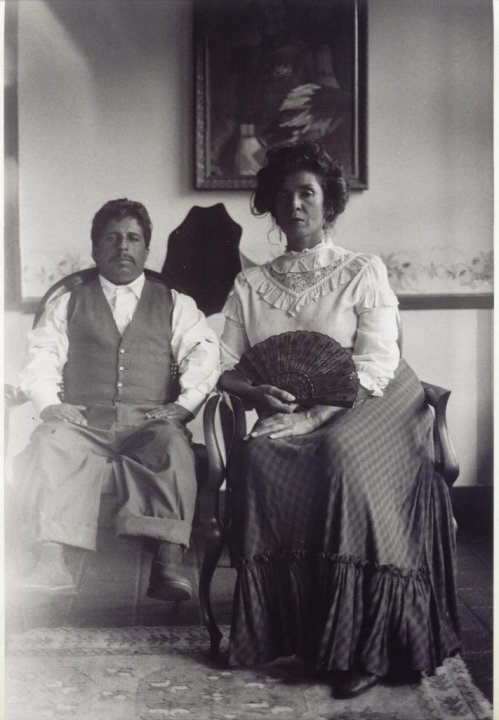
LRM: The Cidadão Quem??? project was conceived from an interview that Estevão, Remier Lion and I did with Jorge Loredo for Contracampo in 2004. Jorge Loredo lived in a hotel in the Flamengo neighborhood, and we interviewed him in the lobby. Cidadão Quem??? was never filmed, but it made its way into Que cavação é essa?. You can see it as one of the posters on the wall of a room at the Cinemateca do MAM, during the scene where Hernani talks about silent Brazilian cinema. But besides the Cidadão Quem project (it had another title: Memórias de um amnésico),6 I would say Que cavação é essa? spawned directly from the Brazilian cinema history course taught for a year (2005-2006) by professor, researcher and current director of the Cinemateca do MAM Hernani Heffner at the Cinema Odeon movie theater, in the Cinelândia district of Rio de Janeiro. I think that course, organized by Tela Brasilis, was an event that defined a generation. All who went there every Saturday morning from 9 AM to 12 PM to watch films from the archive of the Cinemateca do MAM in 35mm and to attend Hernani’s fantastic classes afterwards received an immense Brazilian film education. At least to me it was an unforgettable experience. And it wasn’t just film students who attended. The Odeon, with almost 600 seats, would be packed by film students, researchers, cinephiles, critics, and people with general interest in Brazilian cinema. From June to December 2005, the first module of the course was mostly dedicated to silent cinema, especially the so-called “filmes naturais”, i.e. films that could be identified as documentaries, newsreels, travelogues, family home movies, institutional films, etc. Those “naturais” (which earned the name because they were shot “in nature”) had been despised by traditional historical researchers of Brazilian cinema from the 1950s to the 1980s. Those were the so-called “filmes de cavação”.7 The “cavadores”8 were cameramen who sought financial sponsors among politicians, rural landowners, industrialists or rich families. That is, they “dug up” resources with which to film. They were very badly regarded. Film historians and film critics, in turn, were always interested in fictional films (or “filme de enredo”,9 in the terminology of the time), that is, feature films with actors, make-up, costumes, scripts, studios, etc. In Brazil, however, fictional films were, for many years, especially from the early days until the 1940s, the exception, not the rule. The rule was precisely the “natural” films, which kept producers, cameramen, laboratories, etc. at work.

As I said before, when we came up with the project for Que cavação é essa? Brazil was going through a unique moment, as it had a democratic and inclusive government that focused on public policies for preserving and stimulating cultural activities. Many silent films were restored and new research about Brazilian cinema was conducted inside and outside universities. All of these initiatives brought new perspectives in their historical and methodological analyses, and mostly took “natural” films to a privileged position in their study, breaking with tradition of classical historical research. Strictly speaking, this process of historical revision started in the 1970s, but it was only in the late 1990s that it gained tremendous momentum. One example is the book Viagem ao cinema silencioso do Brasil, organized by Samuel Paiva and Sheila Schvartzman, and edited in 2011. This book is the outcome of a research group that, beginning in 2002, met once a month at the Cinemateca Brasileira to watch, study and discuss silent Brazilian films. Que cavação é essa? debuted at the 2008 Brasília Festival. So, it was contemporary to this new wave of interest in old Brazilian cinema. However, in this case, rather than our interest materializing in articles or retrospectives, it did so in the form of a film - or in “two films inside a film”, as Estevão put it. Actually, that reference to the 1970s in our film, with the “complemento nacional” Restaurare, is reminiscent of the origins of this process of historical revision in Brazil. The “diegetic year” of Restaurare, as the censorship card10 at the start of the second part tells us, is 1974. This was the same year in which Paulo Emilio Salles Gomes wrote the famous piece “A expressão social dos filmes documentais no cinema mudo brasileiro (1989-1930)”, published in the annals of the I symposium of Brazilian Documentary Film, in Recife, Pernambuco. In this essay, he coined the notorious formula of the “filmes naturais” whose themes are “Splendid Cradle”11 and “Rituals of Power”.12 1974 is also a call back to the time when Cinema Novo and the military regime were closer than ever, as well as the start of state policies to help the cultural sector (which included film preservation), by Embrafilme. That’s where the “official” tone comes from in Restaurare, which makes two references, both to the notion of “cultural film” with links to the State (a cultural form of “cavação”) and newsreels made by the National Agency. Skipping ahead to the 2000s, we see Paulo Emilio’s formula of “Splendid Cradle” and “Rituals of Power” questioned by Hernani Heffner in his courses and in his 2006 piece “Vagas impressões de um objeto fantasmático”, which was released at the same time as the production of Que cavação é essa?. So, it’s not a coincidence that Hernani is one of the main characters in our film, where he plays the Film Archaeologist. I believe Que cavação é essa? is linked to all of those references; some more explicitly and some indirectly.
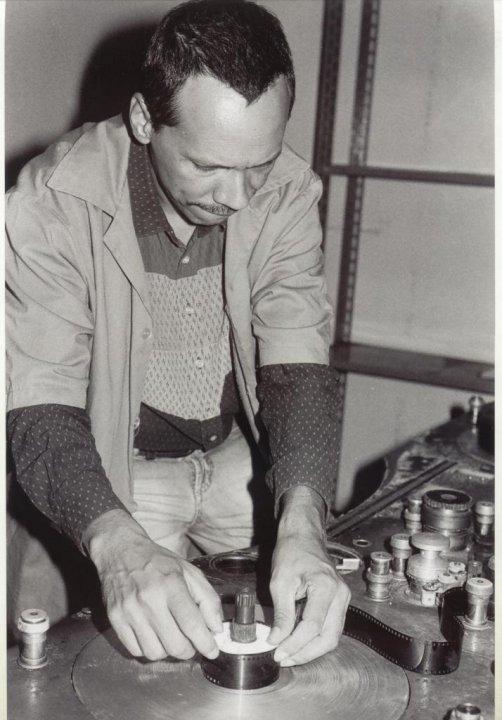
CL: If I'm not mistaken, Que cavação é essa? was shot on 35mm film, something unusual for a short film, even in 2008. How did you get financial support for such an ambitious project? Was filming on 35mm an easy decision to make from a financial and aesthetic point of view? What was access to this type of equipment in Brazil like in 2008?

EG: The film’s postproduction was in 2008 but it was shot between the end of 2005 and the start of 2006. In 2005, its script won the first prize in a FORCINE grant intended only for final projects at film schools. By then, I was finishing my bachelor’s degree in Cinema and Audiovisual studies at UFF, and I submitted Que cavação é essa? as my concluding project. With the prize money we were able to shoot it on 35mm.

LRM: We were shooting Que cavação é essa? during a period of transition for the audiovisual sector. A lot of things were still being shot on film. Digital hadn’t become the norm yet, but many theaters were being equipped for digital projection and most of the young filmmakers and film students were shooting on digital. Many projects were still being made using the transition of video to film and vice-versa. These moments of transition are always very interesting, as they open up multiple possibilities for experimentation. In that sense, the fact that we shot Que cavação é essa? on 35mm film represented a radical gesture of experimentation made possible by the institutional structure of a public federal university. In addition to the infrastructure provided by the university, we had the support of Kodak, LaboCine (previously named Líder laboratory), Apema video rental store, and CTAv (Audiovisual Technical Center). Apema and CTAv lent us a 35mm camera, electrical and technical equipment, and an optical printer to make table-top effects, the intertitles in the first section of the film, and end credits. It’s worth noting that Hernani Heffner was fundamental during postproduction, as he mediated our business with LaboCine, Rob Digital, where the sound was mixed, and Movedoll, where the title cards for the sponsors and supporters were made. The sound was also vital, and we worked with Luís Eduardo Carmo in sound editing and mixing. He’s an inventor and an artist.

But going back to what I was saying about experimentation: I consider that to be an important aspect when discussing Que cavação é essa?, especially because the challenge of shooting it in 35mm required deep technical and aesthetic research. So, we can’t forget to mention the cinematographer, William Condé, who was also an undergraduate film student at UFF. William played a crucial role in every part of the production. He was involved since the initial meetings when we agreed to drop the Cidadão Quem??? project and started discussing making only the “cavação” film, up until the laboratory color grading process for the final copy. William did all the research on the photographic resources used in the film, and in that sense his work was not only extremely creative, but also a work of historical research, in which he tried to emulate the effects of orthochromatic negatives with emulsions that are much more sensitive than those used in the 1910s and 1920s. To me, the experimentations with negative film conducted by William during that research period would warrant an exclusive interview with him. Through the ingenious combination of various kinds of emulsions, different expositions, filters and development processes, William was able to simulate the halo of bright lights, the loss of definition in black areas, and the contrast. So, everything that could be done very easily today using two or three plug-ins, William did with his own resources during shooting, by combining exposition, filters, and negative sensibility. He handcrafted an iris, which he used in the orgy scene. So, the preservation discourse in Que cavação é essa? isn’t just in the theme or in what is seen and heard, but also in the very texture of the images. That was only possible because we shot it on 35mm film and because we had the talents of William Condé. I think we wouldn’t be able to repeat that feat today. It's almost impossible. What mattered when we made the film was the handcraft mechanical process of filmmaking. I think that we unconsciously knew it was a unique opportunity to shoot a film under those conditions. Indeed, a few years later, the digital revolution happened. If we want to show Que cavação é essa? today, in the original format, we won’t be able to find a screening room with a 35mm projector, which is actually ironic. There are few exceptions - the CineArte UFF theater, for instance, or the Cinemateca do MAM; where, by the way, the two 35mm copies of the film are stored. On the other hand, it’s great that today we’re able to share our film on a platform like Cinelimite.

CL: Que cavação é essa? starts with the staging of a film from the silent film era called Um alegre churrasco na estância do Cel. Alexandrão (A Joyful Barbecue in Col. Alexandrão's resort), which, according to the information in the film, would have been restored thanks to the joint efforts of the Fluminense Federal University, the Audiovisual Secretariat of MinC, and Forcine. When watching the film, we realized that there was great care and attention to detail in the recreation of the settings, characters, circumstances and even the spelling of a real film of that time. Which films served as inspiration and reference for Um alegre churrasco na estância do Cel. Alexandrão?

EG: We watched some “cavação” films from the Cinemateca do MAM archive. One of them was actually a barbecue hosted by a colonel. The research of that kind of material was a great inspiration.

LRM: Yes, we had the opportunity to see many films. Among them, Aristides Junqueira’s Reminiscências, one of the oldest surviving Brazilian films, from 1909. It’s a family film, where Colonel Junqueira and family appear from the start. Another remarkable film was Cidade de Bebedouro (1911), a Campos Film production, which featured panoramic shots of the titular municipality. Those panoramas, as was common with “cavação” films, were always unsteady and shaky, which we sought to emulate by tightening the head of the tripod. Other references include As curas do professor Mozart (1924) and A catastrophe da Ilha do Caju (1925), both produced by Botelho Film. We really liked the fact that, in the second film, the intertitles mentioned a “catastrophe” but all that was shown was a broken window. We also tried to emulate that with the scene of the “tragic fire in Colonel Alexandrão’s land”, where all you can see is smoke, ashes, a burnt tree trunk and a pair of boots. On the other hand, the character played by Luiz Carlos Oliveira Júnior, the guest who woos the Colonel’s “prettiest daughter”, was influenced by the “squanderer” character in A Filha do Advogado (Jota Soares, 1927), a fictional film of the Recife Cycle.

CL: The intertitle cards created for the first part of the film are often very humorous: "Bravo to the healthy activity of contemplative leisure"! What was the process like of drafting the text for these title cards?
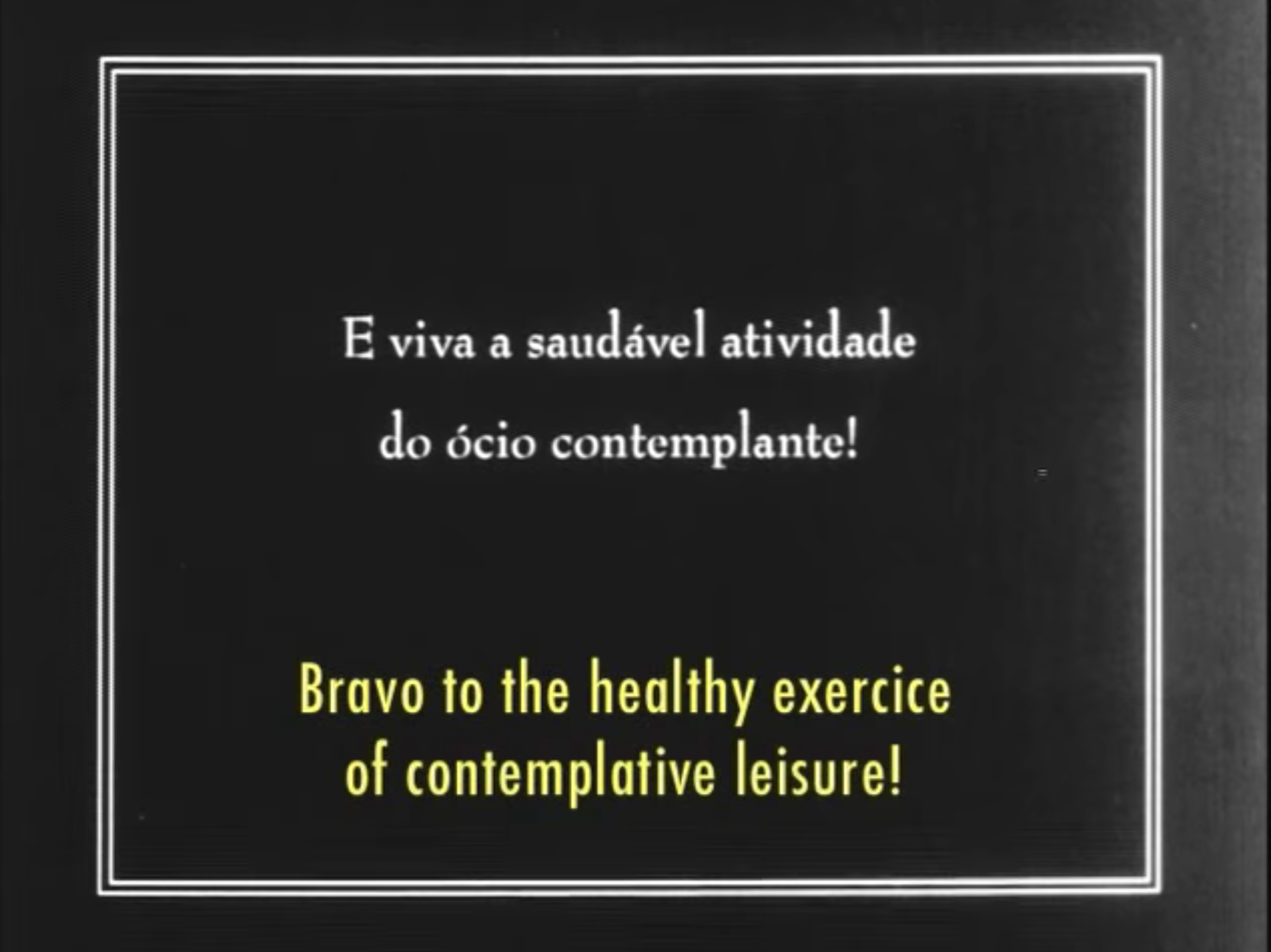
LRM: Brazilian silent documentary intertitles have yet to be properly researched. Very often they contain involuntary humor, especially when they try to convey a serious or majestic tone to trivial events and mediocre authorities - as was the case with many colonels, politicians, industrialists and rural landowners portrayed in those films. The intertitles in As curas do professor Mozart (1924) are a good example. That film is a festival of complicated, sensationalist sentences. When the images appear, they immediately contradict and expose the fraud in those sentences. That constant contradiction between literary and visual reveals a society eager to present itself as “modern” when it was in fact deeply backward, reactionary, conservative, preserving the mentality of a slave society. The subliterary quality of those intertitles is more in tune with modern times than it seems at first. On the other hand, the intertitles are part of the grammar of those films. They’re linked to the narrative, and, ultimately, to their idea of editing. For example: the duration of each intertitle in the films from that time period interfere with the length of the films as a whole. A cameraman from the silent era who worked in “cavação” films called Tomás de Tullio once stated in an interview that the intertitles were a fundamental part of the cavador’s strategy. The more length a film had, the more money they would earn from those who had hired them to shoot it. So, the cavadores would stuff their films with intertitles in order to make them longer. That procedure obviously had an impact on the editing process, the rhythm of the sequences, and the duration of the other shots. But, when we look at those films today, we only have access to what was left of those copies. Many times, there are intertitles with long texts but very short durations, not by choice of the filmmaker, but due to the passage of time and poor storage conditions. In Que cavação é essa? that inspired some gags, when an intertitle containing some absolutely useless information - such as the one about “the healthy exercise of contemplative leisure” - has a lot more screen time than other intertitles with longer sentences, which go away before you can read the whole thing. The intertitles also provide important information. For instance, they’ll often include the names of the production company and the place where the film was shot. To researchers, that’s vital. In Que cavação é essa? we used that in the intertitles about the fire at the property of Colonel Alexandrão. In those intertitles, unlike the previous ones, both the production company and the filmmaker are named - Prosopopeia Actualidades - L. A. Ramos. This indicates that the first section of Que cavação é essa? is made up from different materials edited together. From that perspective, we have “three films in one”, instead of just two. That’s what happens in a film like Reminiscências (1909) too. It begins in 1909, but some shots were filmed decades later. So, we used all of those references to make the text and the intertitles - the sub-literature typical of a society accustomed to sucking up to powerful people, the phony erudition that mistakes quantity for quality, and the traces of information preserved for posterity in those intertitles.

CL: Can you describe the selection process of actors for Um alegre churrasco na estância do Cel. Alexandrão? Also, I imagine that most of the actors did not have experience acting in other works that emulated the silent period. Knowing this, what was your approach to directing them?

EG: Actually, most of the actors in the film had no experience in acting whatsoever. Most of them were our friends and/or part of the film crew. For instance, the priest was played by critic Gilberto Silva Jr., and the star is played by critic and researcher Luís Carlos Oliveira Jr. The production director, Rodrigo Bouliett, played the “prettiest daughter” of Colonel Alexandrão. Very few were professional actors. We wanted to capture the spontaneity that is typical of non-actors. We did table-reads and lots of rehearsing and ended up with what’s in the film.

LRM: I remember things somewhat differently. Yes, there was an intense period of preparation as Estevão mentioned, and if I recall correctly, at least two or three rehearsals on video, because body language was crucial to the film. I remember we were very concerned about directing the actors in a way that did not emulate a cliché style of silent comedy. Rather, we attempted to emulate “cavação” films, that is, a style reminiscent of the films we had been studying, a style which researcher José Inácio de Melo Souza, when discussing early cinema in a piece published in 2018, called “the commitment of the character being shot on the camera”. José Inácio says that when discussing Reminiscências, the very film that had been one of our major inspirations. We watched it countless times. We even started imitating certain frames and character actions, such as a guest who starts jumping and goofing around for the camera. So, it was important that the actors acted for the camera as they used to in early cinema, and as was characteristic of “cavação” cinema.

On the other hand, our idea was to subvert this “copy” we were crafting, breaking away from the reverence for the documental aspects and making the fictional aspects increasingly evident. In diegetic terms, that “fiction” becomes more and more uncontrollable as the barbecue guests get drunker. From then on, the actors go full slapstick comedy. The rehearsals were crucial to define their gestures and to establish the switching between documentary and fiction, but it was during the shooting that the characters developed, thanks to the costumes designed by Maíra Sala and Rebecca Ramos and to the set where the shooting took place, a century-old farm in Rio das Flores, Rio de Janeiro. We had the honor of working with José Marinho, an actor who worked in such classics of Brazilian cinema as Entranced Earth (Glauber Rocha, 1967), The Red Light Bandit (Rogério Sganzerla, 1968) and The Amulet of Ogum (Nelson Pereira dos Santos, 1975). He plays Colonel Praxedes, Colonel Alexandrão’s political rival. Marinho is a great guy and a fantastic storyteller. Another great actor in the film is the amazing Godot Quincas, of Amir Haddad’s Tá na Rua theatre group, who plays the guest that ends up below the table with one of the daughters of the Colonel. Godot is a wonderful, versatile, circus actor. Other fundamental cast members include Cosme Monteiro (Colonel Alexandrão), Sílvia Carvalho (the Colonel’s wife), Érica Collares (Cel. Praxedes’ wife), Lizandra Miotto (the wife of one of the guests) and Otávio Reis (the reporter), who had previously worked in theatre and television. Anna Karinne Ballalai, the production assistant, who has been an actress in theatre and film since her teenage years, plays Godot’s wife. In her scenes, it’s clear how she cared about body language, incorporating the posture of women of that period with a specific, very characteristic way of positioning the shoulders. So, to me, it was a huge learning process in directing actors, experimenting with comedy, working together and dedication. We all had so much fun. Besides, as Estevão mentioned, we worked with many of our dear friends, like Gilberto Silva, Fabián Núñez, Rebecca Ramos, Luísa Marques, Thaís Barreto and Rodrigo Bouillet, some being part of both cast and crew. And Luiz Carlos Oliveira Júnior is a born actor!

I also want to discuss the second part of the film. Although very different from the first half, the performances you see in the second half was very challenging to direct as well. Similar to how the first half of the film featured the iconic José Marinho, in the second part we had the character/homage of the Film Archaeologist, “self-played” by Hernani Heffner, and a special appearance by Severino Dadá. Severino Dadá is a film and sound editor with over 300 films under his belt. He worked on classics such as The Amulet of Ogum and It’s Not All True (Rogério Sganzerla, 1987), and appeared as himself in Tent of Miracles (Nelson Pereira dos Santos, 1977), where he shared the screen with Hugo Carvana. In Que cavação é essa?, Dadá offers a very tongue-in-cheek performance as historian Abraão Aragão, an expert in coronelismo.13 Lastly, I want to give a special mention to the character of the “hillbilly” (Luiz Carlos dos Santos) in the scene of the news report. Mr. Luiz was one of the longest serving cleaners at Rio’s Museum of Modern Art, and one of the sweetest, kindest people there. He had no prior acting experience. Yet he was one of our most disciplined actors, very rigorous when memorizing his lines. His line about the fire at Colonel Alexandrão’s place feels like he’s talking about the MAM fires.

CL: At the end of Um alegre churrasco na estância do Cel. Alexandrão, everything gets out of control. There is an angry priest, a big fight breaks out, an orgy, and a dwarf riding the back of a woman. It is at this point that the historical authenticity of the film begins to collapse for the viewer. The complete chaos of the scene allows us to look back at the silent films from that time in a different light. Why is it important that, in the absence of most of the records of the period, we still look to the silent period for inspiration? And what is the value of historical revisions, in this case a comedy, in allowing us to think about this differently?

LRM: I believe historical research is a crucial tool to fight ignorance. It’s no coincidence that today, when neofascism rises in many countries around the world, history is its first target. History is the field where narrative disputes happen, but also the territory for tensions between winners and losers. Revisions are necessary, not to erase or distort, not to spread lies, but to question official versions. This also applies to cinema. It’s not by chance that the historian who is an expert in coronelismo, played by Severino Dadá, states that “Since the beginning, there has always been a complicity between coronelismo and Brazilian cinema”. Since Dadá is a veteran film and sound editor, he knows very well what he’s talking about. Evidently, the dispute over funds and “cultural prestige” chose a few representatives and relegated a large number of films produced in this country to limbo. In the best-case scenario, the outcome is that heritage is “recovered” either by academia or by public authorities, resulting in the “museification” of the past and consequently its “domestication”. And, in the worst-case scenario, the result is the marginalization of everything that doesn’t interest intellectuals, researchers, students, etc. Que cavação é essa? is also about this “cultural colonialism”, which hides the commitment of power to a cultural stratum.

CL: Returning to Restaurare, the mockumentary that follows Um alegre churrasco na estância do Cel. Alexandrão, we immediately noticed that the color tone of the film mirrors a film with deteriorated color. This detail is very important, especially when it comes to a film about preservation. How was this effect created? Was the sequence filmed with already-faded film? What does the use of faded color in this sequence say about the preservation of Brazilian cinema?

EG: That color was achieved via the research and resourcefulness of our cinematographer, the orientation given to the laboratory, and via “ruining” the film by hand. We didn’t want to deteriorate it digitally, so we did it all manually. That section was scratched by running it through the moviola and projecting it countless times on the projector at the Cinemateca do MAM.

LRM: That was during the editing phase. Image and sound editing, and sound mixing were mostly done digitally. But the work on the texture of the film was created by hand. The black-and-white section, as we said before, was mostly designed and executed during pre-production and shooting. While the film was being edited, we made a rough cut in 35mm. Estevão, William and I “ruined” that rough cut manually, by projecting and scratching it on an old moviola at the Cinemateca do MAM, making grooves in the emulsion by passing the film through two “coils”, among other atrocities. From that positive we made an internegative which incorporated all of those defects. The idea was to copy it without doing a wet gate,14 but this was impossible due to the pattern of the technical process at LaboCine, which reduced a lot the dirt and scratches on the film. For the color section, the faded tones were achieved by color grading. All of that had to be balanced for the definitive copy, and the hard part was exactly preserving the characteristics of the contrasted black and white and faded colors in the same color copy. After our post-production process, the “ontological experience” commonly associated with the photographic image ended up feeling very paradoxical. We shot on 35mm film, then we did away with everything it had to offer, including the impeccable, clean, and high-quality image that was superior to digital images at the time. We used 35mm to carve into the film material itself what actually happened and still happens to our filmic heritage: the loss, the deterioration, and the tragedy of having almost no means to preserve it. And since, diegetically, the “complemento nacional” Restaurare was made in 1974, the fading of the color denounces the neglect towards relatively recent material as well. How many films from the 1970s and 1980s have been lost or are in the process of being lost? By the way, in the waves of destruction of analogical audiovisual material (the transition from short films to feature films, the advent of sound, the replacement of nitrate by acetate), color films suffer more than black and white films; their colors fade away and deteriorate. When it comes to works deemed important by popular historiography, there is still hope of recovering them. But what about those films despised by historians, academics, film critics and official cultural sectors? The faded color in Restaurare calls attention to that contradictory aspect of public policies in support of culture: they speak on behalf of the totality, but only reach a selected group. The irony in Restaurare is that a film about restoration is presented in a state of deterioration, i.e., that film itself needs to be restored! But as it is a typical “cavação” of the 1970s - halfway between an official newsreel and a cultural film - it doesn’t stand a chance. Today, we live in a much more tragic situation: the very notion of “culture” is under attack. In that scenario, everything faces the risk of disappearing.
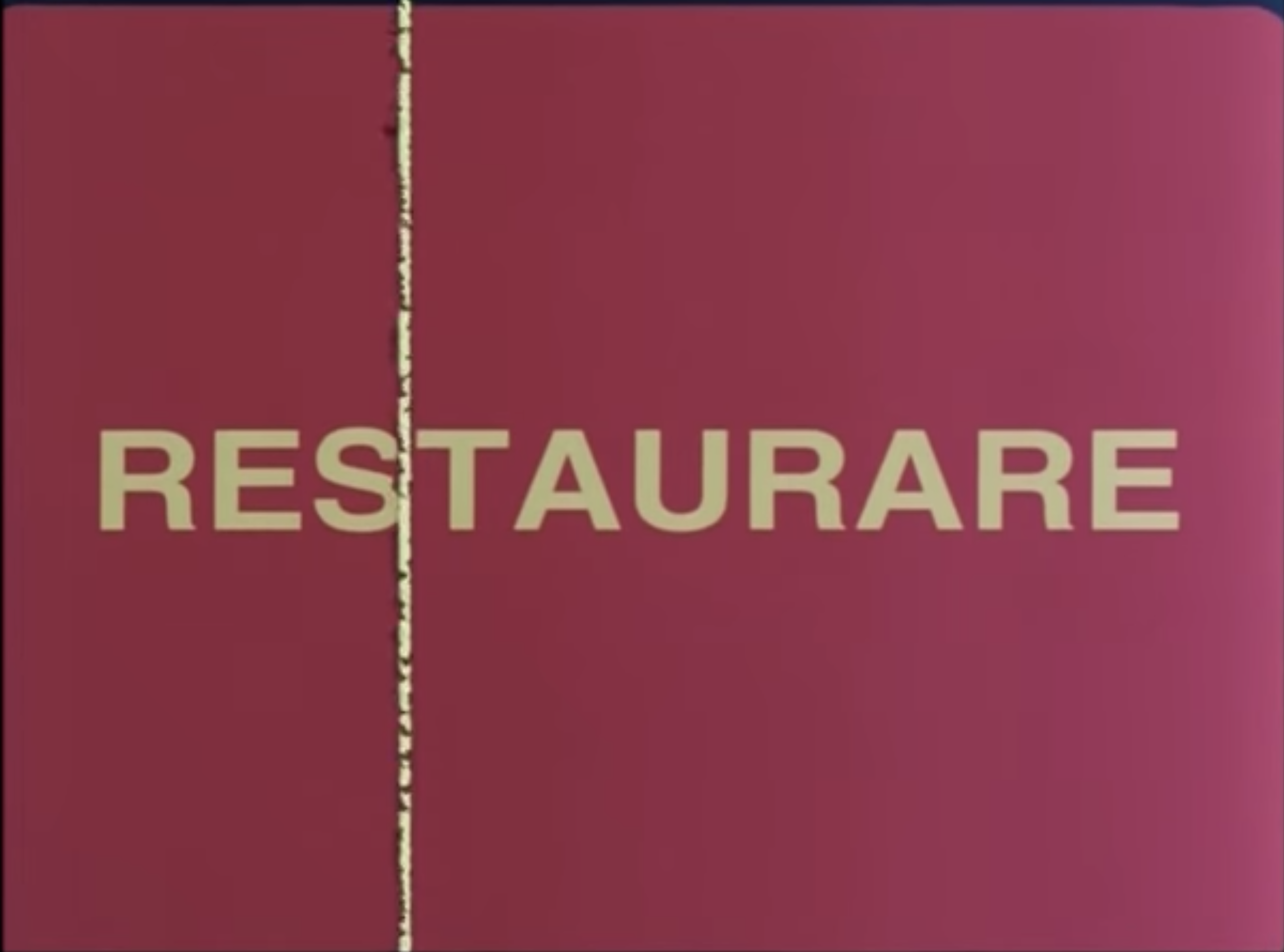
CL: The spoken narration in Restaurare, in the famous voice of Jorgeh Ramos, is surprising for the viewer because it deals with serious issues (the preservation of Brazilian cinema and the professionals who do this work) with a humorous and somewhat exaggerated cadence. Of course, due to recent events, the preservation of Brazilian cinema is a subject that has been discussed with total seriousness, but what is the importance of looking at these recent events with a tone of humor, and how can comedy be a useful tool during this moment?

EG: Humor is one of the most revolutionary things. Comedy and parody are excellent weapons, as they efficiently trigger critical thinking and reflection. That’s kind of what we did in Que cavação é essa?

LRM: I agree with Estevão completely. Tragedy and comedy walk hand in hand. How can we deal with what is happening in the world today, with this histrionic, cheating far-right spreading absurd conspiracy theories, saying the Earth is flat? Buffoons have risen on a global scale, the democratic fraud of anti-corruption stances is a pretext to promote coups d’etat. All of this is a tragedy, and there’s a deeply ridiculous aspect to that tragedy. We are the targets of that huge publicity stunt called neofascism, which serves to mask the real, eternal tragedy; the plundering by the 1% of billionaires on 99% of the world’s population, especially on the global south. A planetary theft resulting in the extermination of entire populations due to hunger, extreme poverty, and ignorance. The most subversive and intelligent brand of art has always manifested itself through humor and mockery in many other periods which were equally or even more tragic than this one. Humor doesn’t mean lack of seriousness or responsibility. On the contrary. There is nothing more ridiculous than the pseudo-serious taking itself seriously.

CL: The film makes many references to the history of Brazilian cinema in general, from the cavações, the newsreels, the TV reports, the federal censorship cards from the period of the military dictatorship and the pornochanchadas, which are alluded to by the name “Colonel Alexandrão”, a character played by Carlos Imperial in A Viúva Virgem (1972). These references are very specific and even niche, which makes us think that the target audience of your film is aficionados, researchers and preservationists of Brazilian cinema. Is this impression correct?

EG: Certainly cinephiles, researchers and critics who are familiar with Brazilian cinema will catch all the references and quotes more easily. But I think they weren’t intended as our target or main audience. Our intention was to reach as many viewers as possible, and generate interest in film restoration and preservation, and obviously in Brazilian cinema.

LRM: Exactly. I think our film can be read “in layers”. People may find it interesting even if they don’t spot those references. One proof of that is, during the premiere at the Festival de Brasília, the audience in the theater - of course, it was a festival audience, but not necessarily an “erudite” audience in references to the history of Brazilian cinema - laughed from start to finish and gave a long round of applause at the end. Scholars have fun too, as when it was shown in Chile, at the La Moneda Cultural Center, Mónica Villarroel, a researcher on silent Brazilian and Chilean cinemas, and who was the director of the Cineteca Nacional, couldn’t stop laughing. But they can relate to other layers of the film, namely the references to specific genres, characters, styles, films and scenes of Brazilian cinema. In that sense, the film does have a large share of “inside jokes” - but you don’t have to spot or get them to understand the film.

1. Boca do Lixo was an important center of film production in São Paulo from the 1960s up until the late 1980s. Generally, the films produced there were low-budget and of a wide variety of genres. Although usually classified as exploitation, these works had remarkable commercial success among Brazil’s lower classes.

2. “Brazilian Cinema: The Shame of a Nation”

3. “Damned Brazilian Films!”

4. Cidadão Quem? (Citizen Who?) is a pun with Citizen Kane. “Quem” in Portuguese sounds almost like “Kane”.

5.  Newsreels produced in Brazil which movie theaters were legally obligated to screen before the main attraction.

6. Memories of an Amnesiac.

7. Literally, “films of digging”.

8. Literally, “diggers”.

9. Literally, “films with plot”.

10. Every film during the military dictatorship opened with the image of a document from the censorship department authorizing the film’s exhibition and informing its age restriction.

11. Documentaries praising Brazil’s natural resources and natural beauty. Splendid cradle, or berço esplêndido in Portuguese, refers to a line in the National Anthem, which states Brazil is “eternally laying in a splendid cradle”.

12. Documentaries focusing mainly on the President of Brazil, as well as national celebrations such as the military parades on Brazil’s Independence Day (September 7th).

13. Coronelismo, literally colonelism, is a phenomenon in Brazil by which a rich political leader rules over a community.

14.  EN: Wet gate is a technique used in film restoration to remove scratches.

Cinelimite: Your careers intersect between filmmaking and film scholarship. How did you meet and how did you start working together?

Estevão Garcia: Luís Alberto, aka ‘Morris Albert’ to his close friends”, and I first met when we were critics and writers for Contracampo, an online film magazine. Every Monday the writers would gather at a bar in the Botafogo neighborhood in Rio de Janeiro to drink beer, talk films and set up the next edition of the magazine. After the meeting, we’d go to another bar and the last two guys remaining were always Luís and myself. This is how we became friends and ended up working together.

Luís Rocha Melo: Contracampo magazine was truly an important gathering point. The first decade of the 21st century was really atypical for Brazil. We had a government that was concerned with social inclusion, defending public and free education, and policies in favor of cultural diversity. There were many film festivals, many grants and stimuli to finance and develop projects. The mood was very different than the current depression we’ve sunk into since 2016. I got a master’s degree in Communication, Image and Information in 2004, from the Universidade Federal Fluminense (UFF), where Estevão was an undergraduate student. Estevão had made a very interesting film, O latido do cachorro altera o percurso das nuvens, co-directed with Rebecca Ramos, Camila Marquez and Raul Fernando. If I’m not mistaken, it was shot on super-8mm, and it was influenced by dadaist cinema, by René Clair’s Entr’Acte. It proposed a strong dialogue with silent cinema. I, on the other hand, had just co-directed with Alessandro Gamo the medium length documentary O Galante Rei da Boca, about the legendary producer Antonio Polo Galante, whose nickname was “king of the Boca”,1 and was one of the most prolific film producers of the popular cinema made in São Paulo, in the Boca do Lixo region between the 1960s and 1980s. I’d always wanted to combine research and filmmaking. The 2000s were, for a whole generation of cinephiles, critics and filmmakers, a time of discovery and contact with films and filmmakers we had only heard or read about, but whose work wasn’t available to us. The internet hadn’t yet become what it is today, film prints were still shown in cultural centers, cinematheques, and alternative movie theaters. The Mostra do Filme Livre was fundamental for this, as since 2002 they were held at the Banco do Brasil Cultural Center, as well as the Cinema Marginal retrospectives organized by Eugênio Puppo in São Paulo and Rio, and above all the retrospectives curated by researcher and curator Remier Lion, especially Cinema Brasileiro: a vergonha de uma nação,2 in 2004, and Malditos filmes brasileiros!,3 in 2005, which I consider two of the most important and triggering historiographic revisitings in the history of Brazilian cinema. Estevão and I would attend these screenings and events, write about them, talk in bars, and from that exchange of ideas came the possibility of us making a film together.

CL: When I try to explain Que cavação é essa? to friends, they find it almost hard to believe. The film approaches the themes of preservation, memory of Brazilian cinema and specifically silent Brazilian cinema with irony and humor. How did you come to this approach? What was the original conception and how did it develop into what we see in the film?

EG: Actually, our original idea was to make another film whose temporary title was Cidadão Quem??? (Citizen Who???).4 It would be a spoof of the Orson Welles film [Citizen Kane] starring comedian Jorge Loredo (who created the famous character Zé Bonitinho). The plot was that the millionaire Quem had a “film tree” in his farm, and every film to fall on this cinematographic orchard would be seen onscreen. Each film would be a spoof of an era of Brazilian cinema: cavação, chanchadas, etc. Various films inside a film. However, the cavação segment turned out so interesting that it became our main focus. So, we scrapped the Cidadão Quem??? project and decided to develop the script for a film that would make homage to cavação films of the 1910s and 1920s. But, during the writing process, we realized that restricting it to the silent era wouldn’t be enough and we could frame the cavação as a timeless, structural phenomenon of Brazilian filmmaking. Then came the idea to make two films inside the film: the cavação from the 1910s and the institutional newsreel or “complemento nacional”5 from the 1970s. The second one became a short documentary on film restoration and preservation, and it deals, among other things, with the restoration of the film from the 1910s that covered the barbecue at Colonel Alexandrão’s farm.

LRM: The Cidadão Quem??? project was conceived from an interview that Estevão, Remier Lion and I did with Jorge Loredo for Contracampo in 2004. Jorge Loredo lived in a hotel in the Flamengo neighborhood, and we interviewed him in the lobby. Cidadão Quem??? was never filmed, but it made its way into Que cavação é essa?. You can see it as one of the posters on the wall of a room at the Cinemateca do MAM, during the scene where Hernani talks about silent Brazilian cinema. But besides the Cidadão Quem project (it had another title: Memórias de um amnésico),6 I would say Que cavação é essa? spawned directly from the Brazilian cinema history course taught for a year (2005-2006) by professor, researcher and current director of the Cinemateca do MAM Hernani Heffner at the Cinema Odeon movie theater, in the Cinelândia district of Rio de Janeiro. I think that course, organized by Tela Brasilis, was an event that defined a generation. All who went there every Saturday morning from 9 AM to 12 PM to watch films from the archive of the Cinemateca do MAM in 35mm and to attend Hernani’s fantastic classes afterwards received an immense Brazilian film education. At least to me it was an unforgettable experience. And it wasn’t just film students who attended. The Odeon, with almost 600 seats, would be packed by film students, researchers, cinephiles, critics, and people with general interest in Brazilian cinema. From June to December 2005, the first module of the course was mostly dedicated to silent cinema, especially the so-called “filmes naturais”, i.e. films that could be identified as documentaries, newsreels, travelogues, family home movies, institutional films, etc. Those “naturais” (which earned the name because they were shot “in nature”) had been despised by traditional historical researchers of Brazilian cinema from the 1950s to the 1980s. Those were the so-called “filmes de cavação”.7 The “cavadores”8 were cameramen who sought financial sponsors among politicians, rural landowners, industrialists or rich families. That is, they “dug up” resources with which to film. They were very badly regarded. Film historians and film critics, in turn, were always interested in fictional films (or “filme de enredo”,9 in the terminology of the time), that is, feature films with actors, make-up, costumes, scripts, studios, etc. In Brazil, however, fictional films were, for many years, especially from the early days until the 1940s, the exception, not the rule. The rule was precisely the “natural” films, which kept producers, cameramen, laboratories, etc. at work.

As I said before, when we came up with the project for Que cavação é essa? Brazil was going through a unique moment, as it had a democratic and inclusive government that focused on public policies for preserving and stimulating cultural activities. Many silent films were restored and new research about Brazilian cinema was conducted inside and outside universities. All of these initiatives brought new perspectives in their historical and methodological analyses, and mostly took “natural” films to a privileged position in their study, breaking with tradition of classical historical research. Strictly speaking, this process of historical revision started in the 1970s, but it was only in the late 1990s that it gained tremendous momentum. One example is the book Viagem ao cinema silencioso do Brasil, organized by Samuel Paiva and Sheila Schvartzman, and edited in 2011. This book is the outcome of a research group that, beginning in 2002, met once a month at the Cinemateca Brasileira to watch, study and discuss silent Brazilian films. Que cavação é essa? debuted at the 2008 Brasília Festival. So, it was contemporary to this new wave of interest in old Brazilian cinema. However, in this case, rather than our interest materializing in articles or retrospectives, it did so in the form of a film - or in “two films inside a film”, as Estevão put it. Actually, that reference to the 1970s in our film, with the “complemento nacional” Restaurare, is reminiscent of the origins of this process of historical revision in Brazil. The “diegetic year” of Restaurare, as the censorship card10 at the start of the second part tells us, is 1974. This was the same year in which Paulo Emilio Salles Gomes wrote the famous piece “A expressão social dos filmes documentais no cinema mudo brasileiro (1989-1930)”, published in the annals of the I symposium of Brazilian Documentary Film, in Recife, Pernambuco. In this essay, he coined the notorious formula of the “filmes naturais” whose themes are “Splendid Cradle”11 and “Rituals of Power”.12 1974 is also a call back to the time when Cinema Novo and the military regime were closer than ever, as well as the start of state policies to help the cultural sector (which included film preservation), by Embrafilme. That’s where the “official” tone comes from in Restaurare, which makes two references, both to the notion of “cultural film” with links to the State (a cultural form of “cavação”) and newsreels made by the National Agency. Skipping ahead to the 2000s, we see Paulo Emilio’s formula of “Splendid Cradle” and “Rituals of Power” questioned by Hernani Heffner in his courses and in his 2006 piece “Vagas impressões de um objeto fantasmático”, which was released at the same time as the production of Que cavação é essa?. So, it’s not a coincidence that Hernani is one of the main characters in our film, where he plays the Film Archaeologist. I believe Que cavação é essa? is linked to all of those references; some more explicitly and some indirectly.

CL: If I'm not mistaken, Que cavação é essa? was shot on 35mm film, something unusual for a short film, even in 2008. How did you get financial support for such an ambitious project? Was filming on 35mm an easy decision to make from a financial and aesthetic point of view? What was access to this type of equipment in Brazil like in 2008?

EG: The film’s postproduction was in 2008 but it was shot between the end of 2005 and the start of 2006. In 2005, its script won the first prize in a FORCINE grant intended only for final projects at film schools. By then, I was finishing my bachelor’s degree in Cinema and Audiovisual studies at UFF, and I submitted Que cavação é essa? as my concluding project. With the prize money we were able to shoot it on 35mm.

LRM: We were shooting Que cavação é essa? during a period of transition for the audiovisual sector. A lot of things were still being shot on film. Digital hadn’t become the norm yet, but many theaters were being equipped for digital projection and most of the young filmmakers and film students were shooting on digital. Many projects were still being made using the transition of video to film and vice-versa. These moments of transition are always very interesting, as they open up multiple possibilities for experimentation. In that sense, the fact that we shot Que cavação é essa? on 35mm film represented a radical gesture of experimentation made possible by the institutional structure of a public federal university. In addition to the infrastructure provided by the university, we had the support of Kodak, LaboCine (previously named Líder laboratory), Apema video rental store, and CTAv (Audiovisual Technical Center). Apema and CTAv lent us a 35mm camera, electrical and technical equipment, and an optical printer to make table-top effects, the intertitles in the first section of the film, and end credits. It’s worth noting that Hernani Heffner was fundamental during postproduction, as he mediated our business with LaboCine, Rob Digital, where the sound was mixed, and Movedoll, where the title cards for the sponsors and supporters were made. The sound was also vital, and we worked with Luís Eduardo Carmo in sound editing and mixing. He’s an inventor and an artist.

But going back to what I was saying about experimentation: I consider that to be an important aspect when discussing Que cavação é essa?, especially because the challenge of shooting it in 35mm required deep technical and aesthetic research. So, we can’t forget to mention the cinematographer, William Condé, who was also an undergraduate film student at UFF. William played a crucial role in every part of the production. He was involved since the initial meetings when we agreed to drop the Cidadão Quem??? project and started discussing making only the “cavação” film, up until the laboratory color grading process for the final copy. William did all the research on the photographic resources used in the film, and in that sense his work was not only extremely creative, but also a work of historical research, in which he tried to emulate the effects of orthochromatic negatives with emulsions that are much more sensitive than those used in the 1910s and 1920s. To me, the experimentations with negative film conducted by William during that research period would warrant an exclusive interview with him. Through the ingenious combination of various kinds of emulsions, different expositions, filters and development processes, William was able to simulate the halo of bright lights, the loss of definition in black areas, and the contrast. So, everything that could be done very easily today using two or three plug-ins, William did with his own resources during shooting, by combining exposition, filters, and negative sensibility. He handcrafted an iris, which he used in the orgy scene. So, the preservation discourse in Que cavação é essa? isn’t just in the theme or in what is seen and heard, but also in the very texture of the images. That was only possible because we shot it on 35mm film and because we had the talents of William Condé. I think we wouldn’t be able to repeat that feat today. It's almost impossible. What mattered when we made the film was the handcraft mechanical process of filmmaking. I think that we unconsciously knew it was a unique opportunity to shoot a film under those conditions. Indeed, a few years later, the digital revolution happened. If we want to show Que cavação é essa? today, in the original format, we won’t be able to find a screening room with a 35mm projector, which is actually ironic. There are few exceptions - the CineArte UFF theater, for instance, or the Cinemateca do MAM; where, by the way, the two 35mm copies of the film are stored. On the other hand, it’s great that today we’re able to share our film on a platform like Cinelimite.

CL: Que cavação é essa? starts with the staging of a film from the silent film era called Um alegre churrasco na estância do Cel. Alexandrão (A Joyful Barbecue in Col. Alexandrão's resort), which, according to the information in the film, would have been restored thanks to the joint efforts of the Fluminense Federal University, the Audiovisual Secretariat of MinC, and Forcine. When watching the film, we realized that there was great care and attention to detail in the recreation of the settings, characters, circumstances and even the spelling of a real film of that time. Which films served as inspiration and reference for Um alegre churrasco na estância do Cel. Alexandrão?

EG: We watched some “cavação” films from the Cinemateca do MAM archive. One of them was actually a barbecue hosted by a colonel. The research of that kind of material was a great inspiration.

LRM: Yes, we had the opportunity to see many films. Among them, Aristides Junqueira’s Reminiscências, one of the oldest surviving Brazilian films, from 1909. It’s a family film, where Colonel Junqueira and family appear from the start. Another remarkable film was Cidade de Bebedouro (1911), a Campos Film production, which featured panoramic shots of the titular municipality. Those panoramas, as was common with “cavação” films, were always unsteady and shaky, which we sought to emulate by tightening the head of the tripod. Other references include As curas do professor Mozart (1924) and A catastrophe da Ilha do Caju (1925), both produced by Botelho Film. We really liked the fact that, in the second film, the intertitles mentioned a “catastrophe” but all that was shown was a broken window. We also tried to emulate that with the scene of the “tragic fire in Colonel Alexandrão’s land”, where all you can see is smoke, ashes, a burnt tree trunk and a pair of boots. On the other hand, the character played by Luiz Carlos Oliveira Júnior, the guest who woos the Colonel’s “prettiest daughter”, was influenced by the “squanderer” character in A Filha do Advogado (Jota Soares, 1927), a fictional film of the Recife Cycle.

CL: The intertitle cards created for the first part of the film are often very humorous: "Bravo to the healthy activity of contemplative leisure"! What was the process like of drafting the text for these title cards?

LRM: Brazilian silent documentary intertitles have yet to be properly researched. Very often they contain involuntary humor, especially when they try to convey a serious or majestic tone to trivial events and mediocre authorities - as was the case with many colonels, politicians, industrialists and rural landowners portrayed in those films. The intertitles in As curas do professor Mozart (1924) are a good example. That film is a festival of complicated, sensationalist sentences. When the images appear, they immediately contradict and expose the fraud in those sentences. That constant contradiction between literary and visual reveals a society eager to present itself as “modern” when it was in fact deeply backward, reactionary, conservative, preserving the mentality of a slave society. The subliterary quality of those intertitles is more in tune with modern times than it seems at first. On the other hand, the intertitles are part of the grammar of those films. They’re linked to the narrative, and, ultimately, to their idea of editing. For example: the duration of each intertitle in the films from that time period interfere with the length of the films as a whole. A cameraman from the silent era who worked in “cavação” films called Tomás de Tullio once stated in an interview that the intertitles were a fundamental part of the cavador’s strategy. The more length a film had, the more money they would earn from those who had hired them to shoot it. So, the cavadores would stuff their films with intertitles in order to make them longer. That procedure obviously had an impact on the editing process, the rhythm of the sequences, and the duration of the other shots. But, when we look at those films today, we only have access to what was left of those copies. Many times, there are intertitles with long texts but very short durations, not by choice of the filmmaker, but due to the passage of time and poor storage conditions. In Que cavação é essa? that inspired some gags, when an intertitle containing some absolutely useless information - such as the one about “the healthy exercise of contemplative leisure” - has a lot more screen time than other intertitles with longer sentences, which go away before you can read the whole thing. The intertitles also provide important information. For instance, they’ll often include the names of the production company and the place where the film was shot. To researchers, that’s vital. In Que cavação é essa? we used that in the intertitles about the fire at the property of Colonel Alexandrão. In those intertitles, unlike the previous ones, both the production company and the filmmaker are named - Prosopopeia Actualidades - L. A. Ramos. This indicates that the first section of Que cavação é essa? is made up from different materials edited together. From that perspective, we have “three films in one”, instead of just two. That’s what happens in a film like Reminiscências (1909) too. It begins in 1909, but some shots were filmed decades later. So, we used all of those references to make the text and the intertitles - the sub-literature typical of a society accustomed to sucking up to powerful people, the phony erudition that mistakes quantity for quality, and the traces of information preserved for posterity in those intertitles.

CL: Can you describe the selection process of actors for Um alegre churrasco na estância do Cel. Alexandrão? Also, I imagine that most of the actors did not have experience acting in other works that emulated the silent period. Knowing this, what was your approach to directing them?

EG: Actually, most of the actors in the film had no experience in acting whatsoever. Most of them were our friends and/or part of the film crew. For instance, the priest was played by critic Gilberto Silva Jr., and the star is played by critic and researcher Luís Carlos Oliveira Jr. The production director, Rodrigo Bouliett, played the “prettiest daughter” of Colonel Alexandrão. Very few were professional actors. We wanted to capture the spontaneity that is typical of non-actors. We did table-reads and lots of rehearsing and ended up with what’s in the film.

LRM: I remember things somewhat differently. Yes, there was an intense period of preparation as Estevão mentioned, and if I recall correctly, at least two or three rehearsals on video, because body language was crucial to the film. I remember we were very concerned about directing the actors in a way that did not emulate a cliché style of silent comedy. Rather, we attempted to emulate “cavação” films, that is, a style reminiscent of the films we had been studying, a style which researcher José Inácio de Melo Souza, when discussing early cinema in a piece published in 2018, called “the commitment of the character being shot on the camera”. José Inácio says that when discussing Reminiscências, the very film that had been one of our major inspirations. We watched it countless times. We even started imitating certain frames and character actions, such as a guest who starts jumping and goofing around for the camera. So, it was important that the actors acted for the camera as they used to in early cinema, and as was characteristic of “cavação” cinema.

On the other hand, our idea was to subvert this “copy” we were crafting, breaking away from the reverence for the documental aspects and making the fictional aspects increasingly evident. In diegetic terms, that “fiction” becomes more and more uncontrollable as the barbecue guests get drunker. From then on, the actors go full slapstick comedy. The rehearsals were crucial to define their gestures and to establish the switching between documentary and fiction, but it was during the shooting that the characters developed, thanks to the costumes designed by Maíra Sala and Rebecca Ramos and to the set where the shooting took place, a century-old farm in Rio das Flores, Rio de Janeiro. We had the honor of working with José Marinho, an actor who worked in such classics of Brazilian cinema as Entranced Earth (Glauber Rocha, 1967), The Red Light Bandit (Rogério Sganzerla, 1968) and The Amulet of Ogum (Nelson Pereira dos Santos, 1975). He plays Colonel Praxedes, Colonel Alexandrão’s political rival. Marinho is a great guy and a fantastic storyteller. Another great actor in the film is the amazing Godot Quincas, of Amir Haddad’s Tá na Rua theatre group, who plays the guest that ends up below the table with one of the daughters of the Colonel. Godot is a wonderful, versatile, circus actor. Other fundamental cast members include Cosme Monteiro (Colonel Alexandrão), Sílvia Carvalho (the Colonel’s wife), Érica Collares (Cel. Praxedes’ wife), Lizandra Miotto (the wife of one of the guests) and Otávio Reis (the reporter), who had previously worked in theatre and television. Anna Karinne Ballalai, the production assistant, who has been an actress in theatre and film since her teenage years, plays Godot’s wife. In her scenes, it’s clear how she cared about body language, incorporating the posture of women of that period with a specific, very characteristic way of positioning the shoulders. So, to me, it was a huge learning process in directing actors, experimenting with comedy, working together and dedication. We all had so much fun. Besides, as Estevão mentioned, we worked with many of our dear friends, like Gilberto Silva, Fabián Núñez, Rebecca Ramos, Luísa Marques, Thaís Barreto and Rodrigo Bouillet, some being part of both cast and crew. And Luiz Carlos Oliveira Júnior is a born actor!

I also want to discuss the second part of the film. Although very different from the first half, the performances you see in the second half was very challenging to direct as well. Similar to how the first half of the film featured the iconic José Marinho, in the second part we had the character/homage of the Film Archaeologist, “self-played” by Hernani Heffner, and a special appearance by Severino Dadá. Severino Dadá is a film and sound editor with over 300 films under his belt. He worked on classics such as The Amulet of Ogum and It’s Not All True (Rogério Sganzerla, 1987), and appeared as himself in Tent of Miracles (Nelson Pereira dos Santos, 1977), where he shared the screen with Hugo Carvana. In Que cavação é essa?, Dadá offers a very tongue-in-cheek performance as historian Abraão Aragão, an expert in coronelismo.13 Lastly, I want to give a special mention to the character of the “hillbilly” (Luiz Carlos dos Santos) in the scene of the news report. Mr. Luiz was one of the longest serving cleaners at Rio’s Museum of Modern Art, and one of the sweetest, kindest people there. He had no prior acting experience. Yet he was one of our most disciplined actors, very rigorous when memorizing his lines. His line about the fire at Colonel Alexandrão’s place feels like he’s talking about the MAM fires.

CL: At the end of Um alegre churrasco na estância do Cel. Alexandrão, everything gets out of control. There is an angry priest, a big fight breaks out, an orgy, and a dwarf riding the back of a woman. It is at this point that the historical authenticity of the film begins to collapse for the viewer. The complete chaos of the scene allows us to look back at the silent films from that time in a different light. Why is it important that, in the absence of most of the records of the period, we still look to the silent period for inspiration? And what is the value of historical revisions, in this case a comedy, in allowing us to think about this differently?

LRM: I believe historical research is a crucial tool to fight ignorance. It’s no coincidence that today, when neofascism rises in many countries around the world, history is its first target. History is the field where narrative disputes happen, but also the territory for tensions between winners and losers. Revisions are necessary, not to erase or distort, not to spread lies, but to question official versions. This also applies to cinema. It’s not by chance that the historian who is an expert in coronelismo, played by Severino Dadá, states that “Since the beginning, there has always been a complicity between coronelismo and Brazilian cinema”. Since Dadá is a veteran film and sound editor, he knows very well what he’s talking about. Evidently, the dispute over funds and “cultural prestige” chose a few representatives and relegated a large number of films produced in this country to limbo. In the best-case scenario, the outcome is that heritage is “recovered” either by academia or by public authorities, resulting in the “museification” of the past and consequently its “domestication”. And, in the worst-case scenario, the result is the marginalization of everything that doesn’t interest intellectuals, researchers, students, etc. Que cavação é essa? is also about this “cultural colonialism”, which hides the commitment of power to a cultural stratum.

CL: Returning to Restaurare, the mockumentary that follows Um alegre churrasco na estância do Cel. Alexandrão, we immediately noticed that the color tone of the film mirrors a film with deteriorated color. This detail is very important, especially when it comes to a film about preservation. How was this effect created? Was the sequence filmed with already-faded film? What does the use of faded color in this sequence say about the preservation of Brazilian cinema?

EG: That color was achieved via the research and resourcefulness of our cinematographer, the orientation given to the laboratory, and via “ruining” the film by hand. We didn’t want to deteriorate it digitally, so we did it all manually. That section was scratched by running it through the moviola and projecting it countless times on the projector at the Cinemateca do MAM.

LRM: That was during the editing phase. Image and sound editing, and sound mixing were mostly done digitally. But the work on the texture of the film was created by hand. The black-and-white section, as we said before, was mostly designed and executed during pre-production and shooting. While the film was being edited, we made a rough cut in 35mm. Estevão, William and I “ruined” that rough cut manually, by projecting and scratching it on an old moviola at the Cinemateca do MAM, making grooves in the emulsion by passing the film through two “coils”, among other atrocities. From that positive we made an internegative which incorporated all of those defects. The idea was to copy it without doing a wet gate,14 but this was impossible due to the pattern of the technical process at LaboCine, which reduced a lot the dirt and scratches on the film. For the color section, the faded tones were achieved by color grading. All of that had to be balanced for the definitive copy, and the hard part was exactly preserving the characteristics of the contrasted black and white and faded colors in the same color copy. After our post-production process, the “ontological experience” commonly associated with the photographic image ended up feeling very paradoxical. We shot on 35mm film, then we did away with everything it had to offer, including the impeccable, clean, and high-quality image that was superior to digital images at the time. We used 35mm to carve into the film material itself what actually happened and still happens to our filmic heritage: the loss, the deterioration, and the tragedy of having almost no means to preserve it. And since, diegetically, the “complemento nacional” Restaurare was made in 1974, the fading of the color denounces the neglect towards relatively recent material as well. How many films from the 1970s and 1980s have been lost or are in the process of being lost? By the way, in the waves of destruction of analogical audiovisual material (the transition from short films to feature films, the advent of sound, the replacement of nitrate by acetate), color films suffer more than black and white films; their colors fade away and deteriorate. When it comes to works deemed important by popular historiography, there is still hope of recovering them. But what about those films despised by historians, academics, film critics and official cultural sectors? The faded color in Restaurare calls attention to that contradictory aspect of public policies in support of culture: they speak on behalf of the totality, but only reach a selected group. The irony in Restaurare is that a film about restoration is presented in a state of deterioration, i.e., that film itself needs to be restored! But as it is a typical “cavação” of the 1970s - halfway between an official newsreel and a cultural film - it doesn’t stand a chance. Today, we live in a much more tragic situation: the very notion of “culture” is under attack. In that scenario, everything faces the risk of disappearing.

CL: The spoken narration in Restaurare, in the famous voice of Jorgeh Ramos, is surprising for the viewer because it deals with serious issues (the preservation of Brazilian cinema and the professionals who do this work) with a humorous and somewhat exaggerated cadence. Of course, due to recent events, the preservation of Brazilian cinema is a subject that has been discussed with total seriousness, but what is the importance of looking at these recent events with a tone of humor, and how can comedy be a useful tool during this moment?

EG: Humor is one of the most revolutionary things. Comedy and parody are excellent weapons, as they efficiently trigger critical thinking and reflection. That’s kind of what we did in Que cavação é essa?

LRM: I agree with Estevão completely. Tragedy and comedy walk hand in hand. How can we deal with what is happening in the world today, with this histrionic, cheating far-right spreading absurd conspiracy theories, saying the Earth is flat? Buffoons have risen on a global scale, the democratic fraud of anti-corruption stances is a pretext to promote coups d’etat. All of this is a tragedy, and there’s a deeply ridiculous aspect to that tragedy. We are the targets of that huge publicity stunt called neofascism, which serves to mask the real, eternal tragedy; the plundering by the 1% of billionaires on 99% of the world’s population, especially on the global south. A planetary theft resulting in the extermination of entire populations due to hunger, extreme poverty, and ignorance. The most subversive and intelligent brand of art has always manifested itself through humor and mockery in many other periods which were equally or even more tragic than this one. Humor doesn’t mean lack of seriousness or responsibility. On the contrary. There is nothing more ridiculous than the pseudo-serious taking itself seriously.

CL: The film makes many references to the history of Brazilian cinema in general, from the cavações, the newsreels, the TV reports, the federal censorship cards from the period of the military dictatorship and the pornochanchadas, which are alluded to by the name “Colonel Alexandrão”, a character played by Carlos Imperial in A Viúva Virgem (1972). These references are very specific and even niche, which makes us think that the target audience of your film is aficionados, researchers and preservationists of Brazilian cinema. Is this impression correct?

EG: Certainly cinephiles, researchers and critics who are familiar with Brazilian cinema will catch all the references and quotes more easily. But I think they weren’t intended as our target or main audience. Our intention was to reach as many viewers as possible, and generate interest in film restoration and preservation, and obviously in Brazilian cinema.

LRM: Exactly. I think our film can be read “in layers”. People may find it interesting even if they don’t spot those references. One proof of that is, during the premiere at the Festival de Brasília, the audience in the theater - of course, it was a festival audience, but not necessarily an “erudite” audience in references to the history of Brazilian cinema - laughed from start to finish and gave a long round of applause at the end. Scholars have fun too, as when it was shown in Chile, at the La Moneda Cultural Center, Mónica Villarroel, a researcher on silent Brazilian and Chilean cinemas, and who was the director of the Cineteca Nacional, couldn’t stop laughing. But they can relate to other layers of the film, namely the references to specific genres, characters, styles, films and scenes of Brazilian cinema. In that sense, the film does have a large share of “inside jokes” - but you don’t have to spot or get them to understand the film.

1. Boca do Lixo was an important center of film production in São Paulo from the 1960s up until the late 1980s. Generally, the films produced there were low-budget and of a wide variety of genres. Although usually classified as exploitation, these works had remarkable commercial success among Brazil’s lower classes.

2. “Brazilian Cinema: The Shame of a Nation”

3. “Damned Brazilian Films!”

4. Cidadão Quem? (Citizen Who?) is a pun with Citizen Kane. “Quem” in Portuguese sounds almost like “Kane”.

5.  Newsreels produced in Brazil which movie theaters were legally obligated to screen before the main attraction.

6. Memories of an Amnesiac.

7. Literally, “films of digging”.

8. Literally, “diggers”.

9. Literally, “films with plot”.

10. Every film during the military dictatorship opened with the image of a document from the censorship department authorizing the film’s exhibition and informing its age restriction.

11. Documentaries praising Brazil’s natural resources and natural beauty. Splendid cradle, or berço esplêndido in Portuguese, refers to a line in the National Anthem, which states Brazil is “eternally laying in a splendid cradle”.

12. Documentaries focusing mainly on the President of Brazil, as well as national celebrations such as the military parades on Brazil’s Independence Day (September 7th).

13. Coronelismo, literally colonelism, is a phenomenon in Brazil by which a rich political leader rules over a community.

14.  EN: Wet gate is a technique used in film restoration to remove scratches.

PT/ENG
PT/ENG
1/1/2021
By/Por:
Gustavo Menezes

Cinelimite: A trajetória de vocês dois passa pela produção de filmes e pelas bolsas de estudo de cinema. Como vocês se conheceram e como começaram a trabalhar juntos?

Estevão Garcia: Eu e o Luís Alberto, vulgo “Morris Albert” para os mais íntimos”, nos conhecemos na época em erámos críticos e redatores da revista de cinema onlineContracampo. Os redatores dessa revista se reuniam todas as segundas-feiras em um bar no bairro de Botafogo, no Rio de Janeiro, para beber cerveja, discutir cinema e ajustar as pautas para o próximo número da revista. Depois da reunião, a gente ia para um outro bar e os dois últimos que ficavam até o final eram justamente eu e o Luís, assim, nos tornamos amigos e acabamos trabalhando juntos.

Luís Rocha Melo: A revista Contracampo foi de fato um ponto de união importante. A primeira década dos anos 2000 foi um período realmente atípico no Brasil, com um governo preocupado com a inclusão social, a defesa da educação pública e gratuita e as políticas de apoio à diversidade cultural. Havia muitas mostras de cinema, muitos editais de financiamento à produção e de apoio ao desenvolvimento de projetos. Era um clima realmente muito diverso da depressão atual em que nos afundamos desde 2016. Eu fui fazer mestrado em Comunicação, Imagem e Informação em 2004, na Universidade Federal Fluminense, onde o Estevão já era aluno de graduação. Estevão tinha feito um filme na UFF muito interessante, chamado O latido do cachorro altera o percurso das nuvens, que ele codirigiu com Rebecca Ramos, Camila Marquez e Raul Fernando. Se não me engano foi filmado em Super-8, e tinha influência do cinema dadaísta, de René Clair, de Entr’Acte. Já era um filme que tinha um diálogo forte com o cinema silencioso. Eu, por outro lado, tinha acabado de codirigir com o Alessandro Gamo o média documental O Galante rei da Boca, sobre o lendário produtor Antonio Polo Galante, que tinha o apelido de “Rei da Boca” e que foi um dos mais ativos produtores do cinema popular feito na Boca do Lixo de São Paulo, entre os anos 1960 e 1980. Eu sempre tive esse interesse de unir a pesquisa e a realização cinematográficas. A primeira década dos anos 2000 foi, para toda uma geração de cinéfilos, críticos e cineastas, um período de descoberta e de contato com filmes e diretores sobre os quais a gente ouvia falar ou lia muito sobre, mas que eram em sua maioria ainda inéditos para nós, circulavam muito pouco. A internet ainda não era o que é hoje, os filmes ainda eram exibidos em película nos centros culturais, nas cinematecas, nos cinemas alternativos. Fundamentais nesse processo foram as Mostras do Filme Livre, que desde 2002 aconteciam no Centro Cultural Banco do Brasil, as retrospectivas sobre o Cinema Marginal organizadas pelo Eugênio Puppo em São Paulo e no Rio, e sobretudo as mostras criadas pelo pesquisador e curador Remier Lion, notadamente “Cinema brasileiro: a vergonha de uma nação”, em 2004, e “Malditos filmes brasileiros!”, em 2005, que eu considero duas das mais importantes e deflagradoras releituras historiográficas já feitas até hoje no cinema brasileiro. Eu e o Estevão frequentávamos essas mostras e eventos, escrevíamos sobre elas, batíamos papo nos botecos, e nessa troca de ideias surgiu a possibilidade de fazermos um filme juntos.

CL: Quando tento explicar Que cavação é essa? a amigos meus, acham quase difícil de acreditar. O filme aborda os temas da preservação, da memória do cinema brasileiro e especificamente do cinema silencioso brasileiro com uma postura de ironia e humor. Como vocês chegaram a esta abordagem? Qual foi a concepção original e como ela se desenvolveu até o que vemos no filme?

EG: Na verdade, a nossa ideia original era fazer um outro filme cujo título provisório era Cidadão Quem??? Seria uma paródia ao filme do Orson Welles com o comediante Jorge Loredo(o criador do célebre e popular personagem Zé Bonitinho) interpretando o protagonista. O milionário Quem tinha em sua fazenda uma árvore de filmes e cada filme que caía desse pomar cinematográfico seria visto na tela e cada um deles seria uma paródia a um período da história do cinema brasileiro: os filmes de cavação, as chanchadas, etc… Seriam vários filmes dentro de um filme. Porém, o segmento dedicado aos filmes de cavação ficou tão interessante que adquiriu uma autonomia e uma independência própria. Assim, resolvemos abandonar o projeto do Cidadão Quem??? e decidimos desenvolver o roteiro cujo centro seria uma homenagem aos filmes de cavação dos anos 1910 e 1920. No entanto, durante o processo de escrita, percebemos que só ficar no cinema silencioso seria insuficiente e que poderíamos abordar a cavação como um fenômeno atemporal e estrutural na prática cinematográfica brasileira. Daí surgiu a ideia de fazer os dois filmes dentro do filme: o filme de cavação dos anos 1910 e o cinejornal institucional/ complemento nacional dos anos 1970. Este segundo se tornou um curta-metragem documental sobre o trabalho de restauração e preservação de filmes e tratava como um de seus tópicos exatamente a restauração do filme dos anos 1910 que registrava o churrasco na fazenda do coronel Alexandrão.

LRM: O projeto do Cidadão Quem??? nasce de uma entrevista que eu, o Estevão e o Remier Lion fizemos com o Jorge Loredo para a Contracampo, isso em 2004. O Jorge Loredo morava em um hotel no bairro do Flamengo, e a entrevista foi feita no hall desse hotel. O Cidadão Quem??? não foi feito mas acabou entrando no filme, em um dos cartazes pendurados na parede de uma sala da Cinemateca do MAM, na cena em que o Hernani surge dando um depoimento sobre o cinema mudo brasileiro. Mas além do projeto do Cidadão Quem??? (que tinha um subtítulo: “Memórias de um amnésico”) eu diria que o filme nasce diretamente do curso de História do Cinema Brasileiro que o professor, pesquisador e atual diretor da Cinemateca do MAM Hernani Heffner ministrou durante um ano (2005-2006) no cinema Odeon, na Cinelândia, Rio de Janeiro. Tenho a impressão de que esse curso, organizado pelo Tela Brasilis, foi um marco geracional para todos os que compareciam aos sábados de manhã, das nove horas ao meio-dia, para ver os filmes do acervo da Cinemateca, evidentemente projetados em 35 mm, e em seguida para assistir as aulas fantásticas do Hernani. Pra mim, pelo menos, foi uma experiência inesquecível. E não eram só estudantes de cinema. O Odeon, com seus quase 600 lugares, ficava lotado. Eram alunos de cinema, pesquisadores, cinéfilos, críticos, interessados em geral. De junho a dezembro de 2005, o primeiro módulo do curso foi em grande parte dedicado ao cinema silencioso, com ênfase nos chamados “ filmes naturais”, quer dizer, filmes que podemos identificar aos documentários, cinejornais, filmes de viagem, registros familiares, institucionais etc. Esses “naturais” (assim chamados por serem filmes “tirados do natural”) sempre foram desprezados pela historiografia tradicional do cinema brasileiro, aquela que se sedimenta entre os anos 1950-1980. Esses filmes eram chamados de “cavação”. Os “cavadores” eram os cinegrafistas que arranjavam dinheiro com figuras do poder público, com fazendeiros, industriais ou famílias ricas. Ou seja, “cavavam” recursos para filmar. A fama desses “cavadores” era a pior possível. O interesse dos historiadores e críticos de cinema, por outro lado, sempre foi o filme de ficção (ou “filme de enredo”, para usar a terminologia de época), quer dizer, o longa-metragem com atores, maquiagem, figurinos, roteiro, estúdio etc. Ocorre que, no Brasil, esses filmes ficcionais, durante muitos anos, sobretudo dos primórdios até meados dos anos 1940, sempre foi a exceção, e não a regra. A regra, justamente, era o filme “natural”, que inclusive mantinha em atividade produtores, cinegrafistas, laboratórios etc. Como eu disse antes, quando o projeto do Que cavação é essa? surge, estávamos vivendo um período inédito no país, com um governo democrático e inclusivo, voltado para políticas públicas de preservação e de fomento à cultura. Muitos filmes silenciosos foram restaurados e muitas pesquisas em torno do cinema brasileiro foram desenvolvidas, dentro e fora da academia. Todas essas iniciativas traziam novos enfoques historiográficos, metodológicos, e em grande parte já entendiam os filmes “naturais” como objetos privilegiados de estudo, rompendo com a tradição da historiografia clássica. A rigor, esse processo de revisão historiográfica tem seu início nos anos 1970, mas só a partir da segunda metade dos anos 1990 é que ele conhece de fato um momento de vigor extraordinário. Um exemplo disso é o livro Viagem ao cinema silencioso do Brasil, organizado por Samuel Paiva e Sheila Schvarzman e editado em 2011. O livro é resultado das atividades de um grupo de pesquisa que se reunia mensalmente na Cinemateca Brasileira desde 2002 para ver, estudar e discutir justamente... filmes silenciosos brasileiros. Que cavação é essa? foi lançado no Festival de Brasília em 2008, quer dizer, ele é contemporâneo desse reflorescimento do interesse pelo cinema antigo no Brasil. Só que, no nosso caso, em vez de o interesse pelo cinema brasileiro resultar em textos ou em mostras, resultou em filme – no caso, nesses “dois filmes em um” a que o Estevão se referiu. Aliás, essa referência que o filme faz aos anos 1970, com o complemento nacional Restaurare, remete justamente às origens desse processo de revisão historiográfica no Brasil. O “ano diegético” de Restaurare, segundo informa a cartela de censura logo no início da segunda parte, é 1974, mesmo ano em que Paulo Emilio Sales Gomes escreve a famosa comunicação “A expressão social dos filmes documentais no cinema mudo brasileiro (1989-1930)”, publicado nos Anais do I Simpósio do Filme Documental Brasileiro, no Recife (Pernambuco), texto em que ele elabora a célebre fórmula dos “filmes naturais” que têm como temas o “Berço Esplêndido” e os “Rituais do Poder”. 1974 também remete ao período de maior aproximação entre o Cinema Novo e o Estado militar, assim como o início das políticas de apoio ao setor cultural (que incluía a preservação de filmes), por parte da Embrafilme. Daí o tom “oficial” de Restaurare, que por sua vez faz uma dupla referência, isto é, à noção de “filme cultural” atrelado ao Estado (ou seja, à “cavação” culturalista) e aos cinejornais estatais realizados pela Agência Nacional. Se a gente saltar para os anos 2000, veremos a fórmula paulemiliana do “Berço Esplêndido” e dos “Rituais do Poder” sendo questionada por Hernani Heffner em seus cursos e em um texto como “Vagas impressões de um objeto fantasmático”, de 2006, contemporâneo à realização de Que cavação é essa?. Então, não é por acaso que o Hernani é um dos personagens principais do filme, fazendo o Arqueólogo Cinematográfico. Creio que o Que cavação é essa? se liga a todas essas referências, algumas mais explícitas, outras mais indiretas.  

CL: Se não estou enganado, Que cavação é essa? foi filmado em filme 35mm, algo incomum para um curta-metragem, mesmo em 2008. Como conseguiram apoio financeiro para um projeto tão ambicioso? A filmagem em 35mm foi uma decisão fácil de ser tomada, do ponto de vista financeiro e estético? Como era o acesso a este tipo de equipamento em 2008 e como isso mudou hoje?

EG: O filme foi finalizado em 2008, mas ele foi filmado entre o final de 2005 e o começo de2006. Em 2005 o roteiro do Que cavação é essa? ganhou o primeiro lugar em um edital do FORCINE (Fórum Brasileiro de Ensino de Cinema e Audiovisual) que contemplava somente filmes de conclusão de curso produzidos em escolas de cinema. Na ocasião, eu estava terminando o Bacharelado em Cinema e Audiovisual na Universidade Federal Fluminense (UFF)e inscrevi o Que cavação é essa? como o meu filme de conclusão e assim foi possível concorrer ao edital. Com a verba do prêmio conseguimos fazer o filme em 35mm.

LRM: Esse período em que filmamos o Que cavação é essa? foi um período de transição no campo do audiovisual. Ainda se filmava bastante em película, o digital ainda não havia se tornado hegemônico, mas muitas salas de exibição já estavam se “digitalizando”, e a maior parte dos cineastas jovens e estudantes de cinema filmavam em digital. Ainda existiam muitos projetos prevendo a passagem do vídeo para a película e da película para o vídeo. Esses momentos de transição são sempre muito interessantes, porque abrem múltiplas possibilidades de experimentação. Nesse sentido, termos filmado Que cavação é essa? em película 35mm foi um gesto radical de experimentação proporcionada pela estrutura institucional de uma universidade federal pública. Além de toda a infraestrutura de produção, os convênios mantidos pela UFF permitiram, por exemplo, contarmos também com o apoio da Kodak, da LaboCine (o antigo laboratório Líder), da locadora A pema e do CTAv (Centro Técnico Audiovisual), que entrou com câmera 35mm, material de elétrica e maquinária e Truca, para a realização dos table-tops, dos intertítulos da primeira parte e dos letreiros finais. Vale lembrar que o Hernani Heffner também foi fundamental para a finalização do trabalho, intermediando acordos com a LaboCine, com a Rob Digital, onde fizemos a mixagem, e com a Movedoll, que fez as cartelas iniciais dos apoios. A parte sonora também foi muito importante, pois contamos com o Luís Eduardo Carmo na edição de som e na mixagem, um inventor, um artista.

Mas voltando ao que eu estava falando sobre a experimentação, considero esse aspecto importante para falar do Que cavação é essa? sobretudo porque o desafio de fazer o filme em 35 mm implicava em uma pesquisa muito grande em termos técnicos e estéticos. Aí a gente não pode deixar de falar do fotógrafo do filme, o William Condé, que na época era também estudante de graduação de Cinema na UFF. O William foi absolutamente fundamental em todas as etapas do filme, desde as primeiras reuniões em que abandonamos a ideia do “Cidadão Quem?” e começamos a falar em fazer somente o “filme de cavação”, até a marcação de luz no laboratório para a cópia final. Cabe ao William todo o mérito da pesquisa em torno dos recursos fotográficos do filme, e nesse sentido o trabalho dele não apenas foi extremanente criativo, mas também foi um trabalho de pesquisa histórica, procurando emular os efeitos do negativo ortocromático a partir de emulsões muito mais sensíveis do que aquelas que existiam nos anos 1910-20. Acho que os testes de negativo feitos pelo William nesse processo de pesquisa são um capítulo à parte, mereceriam uma entrevista só com ele. Através de uma engenhosa combinação de tipos de emulsão, diferentes exposições, uso de filtros e tipos de revelação, o William conseguiu simular o halo nas altas luzes, a perda de definição nas áreas pretas, o contraste. Então, tudo o que hoje poderia ser feito com a maior facilidade usando dois ou três plugins, pro Que cavação é essa? o William conseguiu fazer artesanalmente nas filmagens, combinando exposição, filtros e sensibilidade dos negativos. Ele mesmo produziu uma íris, que usou na cena da orgia. Ou seja, o discurso sobre a preservação, no Que cavação é essa?, não está apenas no tema ou no que se vê e se ouve, mas na própria textura da imagem. E isso só foi possível porque trabalhamos com a película 35mm e porque contamos com um talento como o William Condé. Acho que dificilmente conseguiríamos repetir esse processo hoje. É quase impossível. O que importava, na época em que fizemos o filme, era vivenciar esse processo artesanal, mecânico, do cinema. Acho que inconscientemente sabíamos que seria talvez uma possibilidade única de rodarmos um filme assim. De fato, pouco depois, o digital revolucionou tudo. Hoje, se quisermos exibir o Que cavação é essa? em seu formato original, não conseguiremos encontrar uma sala de exibição com um projetor 35 mm, o que não deixa de ser irônico. Salvo raríssimas exceções – o CineArte UFF, por exemplo, ou a Cinemateca do MAM, onde, aliás, as duas cópias em 35 mm do filme estão depositadas. Por outro lado, é ótimo que hoje a gente possa difundir o filme em uma plataforma como o Cinelimite.

CL: Que cavação é essa? começa com a encenação de um filme da era do cinema silencioso chamado Um alegre churrasco na estância do Cel. Alexandrão, que, segundo somos informados, teria sido restaurado graças aos esforços conjuntos da Universidade Federal Fluminense, da Secretaria do Audiovisual do MinC e do Forcine. Ao assistir ao filme, percebemos que houve muito cuidado e atenção aos detalhes na caracterização dos cenários, personagens, circunstâncias e até a ortografia de um filme real daquela época. Quais filmes serviram de inspiração e referência para Um alegre churrasco na estância do Cel. Alexandrão?

EG: Serviram como referência alguns filmes de cavação que estão disponíveis no acervo da Cinemateca do Museu de Arte Moderna do Rio de Janeiro (MAM-RJ). Um deles, inclusive, era um churrasco oferecido por um coronel. A pesquisa feita em cima deste material foi uma grande inspiração.

LRM: Foram vários filmes. Dentre eles, Reminiscências, de Aristides Junqueira, um dos filmes mais antigos que sobreviveram, datado de 1909. É um filme de família, mas que mostrava logo no início o Coronel Junqueira e seus familiares. Outro filme marcante foi Cidade de Bebedouro (1911) da Campos Film, com suas panorâmicas sobre a cidade. Essas panorâmicas, como as de vários outros filmes de “cavação”, sempre apresentavam hesitações e solavancos, que nós buscamos emular apertando a cabeça do tripé da câmera. Também tivemos como referências As curas do professor Mozart (1924) e A catastrophe da Ilha do Caju (1925), ambos da Botelho Film. Achávamos sensacional, nesse último, o fato de as cartelas anunciarem a “catástrofe” mas as imagens mostrarem apenas uma janela com um vidro quebrado. Esse tipo de coisa também buscamos fazer na cena do “trágico incêndio nas terras do Coronel Alexandrão”, em que são vistos apenas fumaça, cinzas, um tronco chamuscado e um par de bota. Por outro lado, a personagem interpretada pelo Luiz Carlos Oliveira Júnior, o convidado do Coronel Alexandrão que paquera a “filha mais bonita” do Coronel, é influenciado pelo “estroina” de A filha do advogado (Jota Soares, 1927), um filme de ficção do chamado Ciclo do Recife.

CL: É ótimo ler as cartelas criadas para o filme, que em alguns pontos são bem-humoradas: "E viva a saudável atividade do ócio contemplante"! Como foi o processo de elaboração do texto dessas cartelas?

LRM: Existe toda uma pesquisa a ser feita em torno das cartelas de intertítulos nos filmes documentais mudos brasileiros. Elas possuem, muitas vezes, um humor involuntário, sobretudo quando tentam conferir seriedade e imponência a eventos absolutamente triviais e a autoridades medíocres – caso de muitos coronéis, políticos, industriais e latifundiários retratados nesses filmes. Nesse sentido, as cartelas de As curas do professor Mozart (1924) são exemplares. É um festival de frases rebuscadas e sensacionalistas. Quando surgem as imagens, elas imediatamente contradizem e desmascaram essas mesmas frases. Essa constante contradição entre o “literário” e o “visual” é reveladora de uma sociedade bacharelesca que procura se apresentar como “moderna”, mas que na verdade é profundamente atrasada, escravocrata, reacionária, conservadora. Essa subliteratura das cartelas é mais atual do que se imagina. Por outro lado, a questão dos intertítulos está vinculada à linguagem desses filmes, à narrativa, e, em última instância, à concepção de montagem. Por exemplo, se observarmos o tempo que leva cada cartela nos filmes da época, esse tempo influi na metragem total do filme. Existe um depoimento de um cinegrafista desse período do silencioso, que fazia cavação, chamado Tomás de Tullio, em que ele revela que essas cartelas eram fundamentais para a estratégia do cavador. Mais tempo de metragem significava um preço mais caro a ser pago por quem havia encomendado o filme. Assim, os cavadores enchiam os filmes de cartelas para aumentar a metragem dos filmes. Esse procedimento, é claro, impactava a própria montagem do filme, o próprio ritmo das sequências e a duração dos outros planos. Ao mesmo tempo, quando vemos esses filmes hoje, temos acesso apenas ao que sobrou dessas cópias. E, muitas vezes, cartelas com textos extensos aparecem e desaparecem rapidamente, não por escolha de quem realizou o filme, mas pela ação do tempo ou pela má conservação dos filmes. Também isso se tornou, no Que cavação é essa?, motivo para algumas gags, na medida em que às vezes uma cartela com uma informação absolutamente supérflua – como a da “saudável atividade do ócio contemplante” – se mantém durante um bom tempo, enquanto outra cartela, com frases mais extensas, some antes do tempo “normal” de leitura. As cartelas também são importantes fontes de informação. Por exemplo, é comum que elas informem a produtora e a cidade do filme. Isso para os pesquisadores é fundamental. Em Que cavação é essa? jogamos com isso nas cartelas que fazem referência ao incêndio na fazenda do Coronel Alexandrão. Nessas cartelas, ao contrário das anteriores, está indicada a procedência do filme – Prosopopeia Actualidades – L. A. Ramos. Ou seja, a primeira parte de Que cavação é essa? constitui-se então de materiais heterogêneos reunidos em um só. Desse ponto de vista, temos “três filmes em um”, e não apenas dois. É o que ocorre com um filme como Reminiscências (1909), também. O filme começa em 1909, mas reúne imagens de várias décadas depois. Então, usamos todas essas referências para criar os textos e as cartelas – a subliteratura típica de uma sociedade que está sempre bajulando quem tem poder; a falsa erudição que acredita que quantidade é qualidade; e os vestígios que esses intertítulos deixam para a posteridade.

CL: Como foi o processo de seleção de atores para Um alegre churrasco na estância do Cel. Alexandrão? Além disso, imagino que a maioria dos atores não tenha experiência atuando em outras encenações de filmes do período silencioso. Sabendo disso, como foi a direção da atuação deles?

EG: Na verdade, a maioria dos atores do filme não tinha experiência alguma em atuação, em nenhum tipo de encenação. A maior parte era nossos amigos e ou integrantes da equipe de. filmagem. Podemos citar como exemplo o crítico Gilberto Silva Júnior, que faz o Padre e o crítico e pesquisador Luís Carlos Oliveira Júnior, que interepreta o galã. O nosso diretor de produção Rodrigo Bouliett, encarnou a “filha mais bonita” do Coronel Alexandrão. Tivemos alguns atores profissionais, mas eram minoria. Queríamos captar essa espontaneidade própriados não-atores. Para habituar os atores fizemos o trabalho de leitura do roteiro e muito ensaio.O resultado final foi esse que saiu na tela.

LRM: Tenho uma visão bem diferente. Considero o trabalho com os atores do Que cavação é essa? uma das experiências mais estimulantes que já vivenciei. Houve sim esse período muito intenso de preparação, como o Estevão mencionou, e, se bem me lembro, pelo menos dois ou três ensaios foram feitos com uma câmera de vídeo, pois importava muito para o filme a expressão corporal. A relação entre o enquadramento e os personagens era, vamos dizer assim, a matéria-prima do trabalho de encenação. Eu me lembro que existia uma preocupação muito grande, nossa, de conduzir o trabalho dos atores não para uma concepção clichê de “comédia muda”, mas para o estilo “filme de cavação”, quer dizer, remetendo aos filmes que nós estávamos estudando. Aquilo que mais tarde o pesquisador José Inácio de Melo Souza, falando do cinema dos primórdios num texto publicado em 2018, vai chamar de “comprometimento do personagem filmado com a câmera”. O José Inácio fala disso a propósito justamente do Reminiscências, que nos serviu como uma das principais fontes de inspiração. Vimos e revimos esse filme várias vezes. Chegamos até a copiar algumas atitudes de personagens e enquadramentos, como um dos convidados que pula e faz palhaçadas diante da câmera. Então, era importante que os atores atuassem para a câmera, como no chamado “primeiro cinema”, um traço característico desse cinema de cavação. Isso por um lado.

Por outro, a ideia era justamente a de subverter essa “cópia”, rompendo com o respeito pelo aspecto documental através da evidência cada vez maior da ficção. Em termos diegéticos, essa “ficção” vai se tornando cada vez mais incontrolável na medida em que os convidados do churrasco oferecido pelo Coronel Alexandrão vão se embriagando. Aí, são os momentos em que os atores investem na comédia mais escrachada, no corre-corre, no pastelão etc. Os ensaios foram fundamentais na marcação desses gestos e na construção dessas passagens e oscilações entre o documental e o ficcional, mas foi na filmagem mesmo que os personagens cresceram, graças ao trabalho de figurino de Maíra Sala e Rebecca Ramos e à ambientação proporcionada pela fazenda centenária em que filmamos, na cidade de Rio das Flores, interior do estado do Rio. Tivemos a honra de contar com um ator como José Marinho, que atuou em clássicos do cinema brasileiro como Terra em transe (Glauber Rocha, 1967), O Bandido da Luz Vermelha (Rogério Sganzerla, 1968) e O amuleto de Ogum (Nelson Pereira dos Santos, 1975). Ele interpreta o Coronel Praxedes, rival político do Coronel Alexandrão. Marinho é uma grande figura e um fantástico contador de histórias. Outra participação especial é a do genial Godot Quincas, ator do grupo teatral Tá na Rua, de Amir Haddad, que faz um dos convidados, aquele que termina debaixo da mesa em cima de uma das filhas do Coronel. Godot é um ator maravilhoso, versátil, circense. Fundamentais também para o filme foram Cosme Monteiro (Coronel Alexandrão), Sílvia Carvalho (a mulher do Coronel), Érica Collares (a esposa do Cel. Praxedes), Lizandra Miotto (mulher de um dos convidados) e Otávio Reis (o repórter), atores com experiência no teatro e na televisão. Anna Karinne Ballalai, nossa assistente de produção, também já era atriz desde adolescente, em teatro e no cinema, e no filme interpreta a esposa do Godot. Nas cenas em que aparece, fica patente a preocupação com o trabalho de corpo, incorporando a postura das mulheres da época, com uma certa inclinação dos ombros muito característica. Para mim, portanto, foi um processo de enorme aprendizado em termos de direção de atores, de experimentação da comédia, de convivência e de entrega. O clima geral era de muita diversão. Além disso, como falou o Estevão, trabalhamos com muitos amigos queridos, como Gilberto Silva, Fabián Núñez, Rebecca Ramos, Luísa Marques, Thaís Barreto e Rodrigo Bouillet, sendo que alguns deles também faziam parte da equipe. E Luiz Carlos Oliveira Júnior, bom, esse é um ator nato!

Gostaria de falar também sobre a segunda parte. Embora muito diversa da primeira, também resulta de um trabalho de direção de atores que, ao menos para mim, me proporcionou um aprendizado muito grande, com muitos desafios, também. Assim como na primeira parte tivemos a figura icônica de José Marinho, na segunda parte temos o personagem-homenagem do Arqueólogo Cinematográfico, “auto-interpretado” por Hernani Heffner, e a participação especial de Severino Dadá. Montador e editor de som de mais de 300 filmes, Dadá é o responsável pela montagem de títulos como O amuleto de Ogum e Nem tudo é verdade (Rogério Sganzerla, 1987), e foi ator-personagem de Tenda dos Milagres (Nelson Pereira dos Santos, 1977), contracenando com Hugo Carvana. No Que cavação é essa? Dadá interpreta de forma bem debochada o historiador Abraão Aragão, especialista em coronelismo. Por fim, faço uma menção especial ao personagem do Matuto (Luiz Carlos dos Santos), na cena da reportagem em som direto. O senhor Luiz era um dos mais antigos funcionários da limpeza do Museu de Arte Moderna do Rio, e uma das figuras mais doces e amáveis de lá. Nunca havia atuado na vida. Pois foi um dos atores mais disciplinados do filme, com um rigor impecável para decorar o texto. A sua fala sobre o incêndio da fazenda do Coronel Alexandrão parece ter o peso dos incêndios já sofridos pelo MAM.

CL: No final de Um alegre churrasco na estância do Cel. Alexandrão, tudo sai de controle. O padre furioso, a luta, a orgia, e o anão montando uma mulher. É neste ponto que a autenticidade histórica do filme começa a ruir para o espectador. O caos completo da cena nos permite olhar para trás os filmes mudos daquela época sob uma luz diferente. Por que é importante que, na ausência da maioria dos registros do período, ainda olhemos para o período em busca de recursos e inspiração? E qual é o valor das revisões históricas, neste caso uma comédia, em nos permitir pensar sobre esta história de forma diferente.

LRM: Acredito que a pesquisa histórica é uma ferramenta fundamental para se combater a ignorância. Não é por acaso que hoje, quando o neofascismo assume uma posição proeminente em vários lugares do mundo, a História é a primeira coisa a ser atacada. A História é o campo das disputas de narrativas, mas também é o território das tensões entre vencedores e vencidos. As revisões são necessárias não para criar apagamentos e distorções, não para difundir mentiras, mas para questionar as versões oficiais. O cinema não foge à regra. Não é por acaso que o personagem do historiador especialista em coronelismo, interpretado por Severino Dadá, afirma que “desde os primórdios existe uma cumplicidade entre o coronelismo e o cinema brasileiro”. Sendo Dadá um veterano montador e editor de som, ele conhece perfeitamente o que é isso. É evidente que as disputas por verbas e pelo “prestígio cultural” elegeu alguns poucos representantes e deixou no limbo uma grande parcela do conjunto de produções cinematográficas feitas no país. O resultado disso é, na melhor das hipóteses, a “recuperação” desse ativo pela academia ou pelo poder público, gerando o processo de “museificação” do passado – e consequentemente sua “domesticação” –; e, na pior das hipóteses, a marginalização de tudo aquilo que não se torna “objeto de interesse” de intelectuais, pesquisadores, estudantes etc. Que cavação é essa? fala também desse “coronelismo cultural”, que esconde o comprometimento do poder com o verniz da cultura.

CL: Voltando a Restaurare, o mockumentário que segue Um alegre churrasco na estância do Cel. Alexandrão, notamos imediatamente que o tom de cor do filme reflete um filme com cor deteriorada. Tal detalhe é muito específico, especialmente quando se trata de preservação. Como esse efeito foi criado? A sequência foi filmada com película já desbotada? O que o uso da cor desbotada nessa sequência diz sobre a preservação do audiovisual brasileiro?

EG: Aquela coloração foi alcançada através das pesquisas e dos recursos utilizados pelo nossoDiretor de fotografia, pela orientação que foi dada ao laboratório e pela ação manual de“estregar” o filme. Não queríamos fazer esse efeito de deterioração digitalmente, então, fizemos tudo manualmente. Este trecho foi manualmente arranhado ao ser passado diversas vezes na moviola e ao ser projetado inúmeras vezes no projetor da Cinemateca do MAM.

LRM: Isso aconteceu já durante a fase de montagem. A edição de imagem e som e a mixagem foram etapas em que trabalhamos mais com o digital. Mas o trabalho com a textura da imagem foi feita totalmente dessa forma artesanal. A parte em preto-e-branco, como a gente já comentou, foi em grande parte criada e executada na pré-produção e durante as filmagens. Enquanto o filme estava sendo montado, fizemos um copião em 35 mm. Esse copião, o Estevão, o William e eu ficávamos “estragando” manualmente, projetando, arranhando o filme em uma velha mesa de montagem na Cinemateca do MAM, arrancando sulcos na emulsão ao passar a película entre dois batoques, e outras atrocidades. Desse positivo geramos um internegativo, incorporando todos esses defeitos. A ideia era copiar sem janela molhada, mas isso foi impossível pela padronização dos processos técnicos da LaboCine, o que atenuou bastante a sujeira e os riscos na imagem. Em relação à parte colorida, o esmaecimento das cores foi feito através do processo de marcação de luz. Sendo que tudo isso teria que ser depois reequilibrado na cópia final, e a dificuldade era justamente manter as características do preto e branco contrastado e das cores esmaecidas em uma única cópia colorida. Toda essa “experiência ontológica” com a imagem fotográfica acabou sendo um tanto paradoxal. Utilizamos a película 35 mm para detonar com tudo aquilo que ela poderia nos fornecer – uma imagem impecável, limpa, de altíssima qualidade, que nenhuma imagem digital naquela época poderia nos dar. Usamos o 35 mm, portanto, para inscrever nele mesmo, no próprio suporte, a denúncia do que realmente acontecia e continua a acontecer com o nosso acervo fílmico: a perda, a deterioração, a tragédia da ausência quase total de meios para a conservação. Como diegeticamente o complemento nacional “Restaurare” é de 1974, o esmaecimento das cores denuncia também o descaso com acervos relativamente recentes. Quantos filmes dos anos 1970 e 1980 se perderam ou já estão em processo de desaparecimento? Inclusive, dentro das ondas de destruição do audiovisual analógico (a passagem dos curtas para os longas-metragens, a chegada do som, a substituição do nitrato pelo acetato), os filmes coloridos sofrem mais do que os filmes em preto-e-branco, as suas cores somem, se deterioram. Quando se trata de obras consideradas importantes pela historiografia, ainda existem esperanças de recuperação. Mas e quanto aos filmes desprezados por essa historiografia, pelos acadêmicos, pelos críticos de cinema, pelos setores oficiais da cultura? A cor desbotada do segmento “Restaurare” chama a atenção para esse aspecto contraditório das políticas públicas de apoio à cultura: falam em nome de uma totalidade, mas só conseguem agir sobre um recorte muito seletivo. A ironia de “Restaurare” é que um filme sobre a restauração apresenta-se em estado de deterioração, ou seja, ele mesmo precisaria ser restaurado! Mas por ser uma típica “cavação” dos anos 1970 – a meio caminho de um cinejornal oficial e de um filme cultural – não terá muita chance. Hoje vivemos um momento ainda mais trágico: a própria noção de “cultura” está sob ataque. Nessa conjuntura, tudo está sob o risco de desaparecimento.

CL: A narração em Restaurare, na famosa voz de Jorgeh Ramos, chama atenção porque trata de assuntos sérios (a preservação do cinema brasileiro e os profissionais que fazem esse trabalho) com uma cadência humorística e de forma um tanto exagerada. É claro que, devido aos eventos recentes, a preservação do cinema brasileiro é um tema que tem sido discutido com total seriedade, mas qual é a importância de olhar para esse caos com humor, e o que a comédia pode nos ensinar neste momento?

EG: O humor é uma das coisas mais revolucionárias que existe. A comédia e a paródia são excelentes armas e acionam, de maneira eficaz, o pensamento crítico e a reflexão. Foi mais oumenos nesse sentido que esses procedimentos foram articulados em Que cavação é essa?

LRM: Concordo inteiramente com o Estevão. A tragédia e a comédia andam de braços dados. Como lidar com o que está acontecendo no mundo hoje, com essa extrema-direita histriônica e canalha, difundindo as teorias mais absurdas de conspiração, espalhando que a terra é plana? O bufonismo ganhou escala mundial, a farsa democrática dos discursos anticorrupção são pretextos para promoverem golpes de Estado. Tudo isso é uma tragédia, e essa tragédia tem também um lado imensamente ridículo. Nós somos hoje alvos desse enorme golpe publicitário chamado neofascismo, que serve para esconder a verdadeira tragédia, essa sim perene, que é a espoliação praticada por 1% de bilionários em cima dos 99% restantes da população mundial, sobretudo no sul global. Um roubo planetário que resulta no extermínio de populações inteiras pela fome, pela miséria, pela ignorância. A arte mais subversiva e inteligente se manifestou através do humor e do escracho em diversos períodos igualmente ou ainda mais trágicos. Humor não significa ausência de seriedade ou de responsabilidade. Ao contrário. Nada mais ridículo que o pseudo-sério que se leva a sério.

CL: O filme faz muitas referências à história do audiovisual brasileiro em geral, desde as cavações, os cinejornais, as reportagens de TV, as cartelas da censura federal do período da ditadura militar e as pornochanchadas aludidas pelo nome Coronel Alexandrão, personagem interpretado por Carlos Imperial em A Viúva Virgem. São referências muito específicas e até de nicho, o que nos faz pensar que o público-alvo do seu filme seja aficionados, pesquisadores e preservacionistas do cinema brasileiro. Essa impressão é correta?

EG: Certamente os cinéfilos, pesquisadores e críticos conhecedores do cinema brasileiro terão um pouco mais de facilidade para reconhecer todas as referências e citações. Mas, penso que eles não foram previamente projetados para serem o público-alvo ou o principal público do filme. A intenção era chegar ao maior número de espectadores possível e despertar o interesse pela restauração e preservação de filmes e, é claro, pelo cinema brasileiro.

LRM: Exatamente. Acho que o filme pode ser lido “em camadas”. Ele pode interessar às pessoas independentemente de possuírem essas referências. Uma prova disso é que, em sua estreia no Festival de Brasília, o público do cinema – claro, um público específico, de festival, mas não necessariamente “erudito” em termos de referências historiográficas sobre o cinema brasileiro – riu do princípio ao fim e aplaudiu longamente no final. Os estudiosos também se divertem – quando foi exibido no Chile, no Centro Cultural La Moneda, a pesquisadora e diretora da Cineteca Nacional, Mónica Villarroel, que estuda o cinema silencioso brasileiro e chileno, não parava de rir –, mas podem se relacionar com outras camadas do filme, justamente as que fazem referências a gêneros, personagens, estilos, filmes e cenas específicas do cinema brasileiro. Nesse sentido, o filme possui mesmo muitas “piadas internas” - mas não é necessário entendê-las ou captá-las, para compreender o filme.

Cinelimite: A trajetória de vocês dois passa pela produção de filmes e pelas bolsas de estudo de cinema. Como vocês se conheceram e como começaram a trabalhar juntos?

Estevão Garcia: Eu e o Luís Alberto, vulgo “Morris Albert” para os mais íntimos”, nos conhecemos na época em erámos críticos e redatores da revista de cinema onlineContracampo. Os redatores dessa revista se reuniam todas as segundas-feiras em um bar no bairro de Botafogo, no Rio de Janeiro, para beber cerveja, discutir cinema e ajustar as pautas para o próximo número da revista. Depois da reunião, a gente ia para um outro bar e os dois últimos que ficavam até o final eram justamente eu e o Luís, assim, nos tornamos amigos e acabamos trabalhando juntos.

Luís Rocha Melo: A revista Contracampo foi de fato um ponto de união importante. A primeira década dos anos 2000 foi um período realmente atípico no Brasil, com um governo preocupado com a inclusão social, a defesa da educação pública e gratuita e as políticas de apoio à diversidade cultural. Havia muitas mostras de cinema, muitos editais de financiamento à produção e de apoio ao desenvolvimento de projetos. Era um clima realmente muito diverso da depressão atual em que nos afundamos desde 2016. Eu fui fazer mestrado em Comunicação, Imagem e Informação em 2004, na Universidade Federal Fluminense, onde o Estevão já era aluno de graduação. Estevão tinha feito um filme na UFF muito interessante, chamado O latido do cachorro altera o percurso das nuvens, que ele codirigiu com Rebecca Ramos, Camila Marquez e Raul Fernando. Se não me engano foi filmado em Super-8, e tinha influência do cinema dadaísta, de René Clair, de Entr’Acte. Já era um filme que tinha um diálogo forte com o cinema silencioso. Eu, por outro lado, tinha acabado de codirigir com o Alessandro Gamo o média documental O Galante rei da Boca, sobre o lendário produtor Antonio Polo Galante, que tinha o apelido de “Rei da Boca” e que foi um dos mais ativos produtores do cinema popular feito na Boca do Lixo de São Paulo, entre os anos 1960 e 1980. Eu sempre tive esse interesse de unir a pesquisa e a realização cinematográficas. A primeira década dos anos 2000 foi, para toda uma geração de cinéfilos, críticos e cineastas, um período de descoberta e de contato com filmes e diretores sobre os quais a gente ouvia falar ou lia muito sobre, mas que eram em sua maioria ainda inéditos para nós, circulavam muito pouco. A internet ainda não era o que é hoje, os filmes ainda eram exibidos em película nos centros culturais, nas cinematecas, nos cinemas alternativos. Fundamentais nesse processo foram as Mostras do Filme Livre, que desde 2002 aconteciam no Centro Cultural Banco do Brasil, as retrospectivas sobre o Cinema Marginal organizadas pelo Eugênio Puppo em São Paulo e no Rio, e sobretudo as mostras criadas pelo pesquisador e curador Remier Lion, notadamente “Cinema brasileiro: a vergonha de uma nação”, em 2004, e “Malditos filmes brasileiros!”, em 2005, que eu considero duas das mais importantes e deflagradoras releituras historiográficas já feitas até hoje no cinema brasileiro. Eu e o Estevão frequentávamos essas mostras e eventos, escrevíamos sobre elas, batíamos papo nos botecos, e nessa troca de ideias surgiu a possibilidade de fazermos um filme juntos.

CL: Quando tento explicar Que cavação é essa? a amigos meus, acham quase difícil de acreditar. O filme aborda os temas da preservação, da memória do cinema brasileiro e especificamente do cinema silencioso brasileiro com uma postura de ironia e humor. Como vocês chegaram a esta abordagem? Qual foi a concepção original e como ela se desenvolveu até o que vemos no filme?

EG: Na verdade, a nossa ideia original era fazer um outro filme cujo título provisório era Cidadão Quem??? Seria uma paródia ao filme do Orson Welles com o comediante Jorge Loredo(o criador do célebre e popular personagem Zé Bonitinho) interpretando o protagonista. O milionário Quem tinha em sua fazenda uma árvore de filmes e cada filme que caía desse pomar cinematográfico seria visto na tela e cada um deles seria uma paródia a um período da história do cinema brasileiro: os filmes de cavação, as chanchadas, etc… Seriam vários filmes dentro de um filme. Porém, o segmento dedicado aos filmes de cavação ficou tão interessante que adquiriu uma autonomia e uma independência própria. Assim, resolvemos abandonar o projeto do Cidadão Quem??? e decidimos desenvolver o roteiro cujo centro seria uma homenagem aos filmes de cavação dos anos 1910 e 1920. No entanto, durante o processo de escrita, percebemos que só ficar no cinema silencioso seria insuficiente e que poderíamos abordar a cavação como um fenômeno atemporal e estrutural na prática cinematográfica brasileira. Daí surgiu a ideia de fazer os dois filmes dentro do filme: o filme de cavação dos anos 1910 e o cinejornal institucional/ complemento nacional dos anos 1970. Este segundo se tornou um curta-metragem documental sobre o trabalho de restauração e preservação de filmes e tratava como um de seus tópicos exatamente a restauração do filme dos anos 1910 que registrava o churrasco na fazenda do coronel Alexandrão.

LRM: O projeto do Cidadão Quem??? nasce de uma entrevista que eu, o Estevão e o Remier Lion fizemos com o Jorge Loredo para a Contracampo, isso em 2004. O Jorge Loredo morava em um hotel no bairro do Flamengo, e a entrevista foi feita no hall desse hotel. O Cidadão Quem??? não foi feito mas acabou entrando no filme, em um dos cartazes pendurados na parede de uma sala da Cinemateca do MAM, na cena em que o Hernani surge dando um depoimento sobre o cinema mudo brasileiro. Mas além do projeto do Cidadão Quem??? (que tinha um subtítulo: “Memórias de um amnésico”) eu diria que o filme nasce diretamente do curso de História do Cinema Brasileiro que o professor, pesquisador e atual diretor da Cinemateca do MAM Hernani Heffner ministrou durante um ano (2005-2006) no cinema Odeon, na Cinelândia, Rio de Janeiro. Tenho a impressão de que esse curso, organizado pelo Tela Brasilis, foi um marco geracional para todos os que compareciam aos sábados de manhã, das nove horas ao meio-dia, para ver os filmes do acervo da Cinemateca, evidentemente projetados em 35 mm, e em seguida para assistir as aulas fantásticas do Hernani. Pra mim, pelo menos, foi uma experiência inesquecível. E não eram só estudantes de cinema. O Odeon, com seus quase 600 lugares, ficava lotado. Eram alunos de cinema, pesquisadores, cinéfilos, críticos, interessados em geral. De junho a dezembro de 2005, o primeiro módulo do curso foi em grande parte dedicado ao cinema silencioso, com ênfase nos chamados “ filmes naturais”, quer dizer, filmes que podemos identificar aos documentários, cinejornais, filmes de viagem, registros familiares, institucionais etc. Esses “naturais” (assim chamados por serem filmes “tirados do natural”) sempre foram desprezados pela historiografia tradicional do cinema brasileiro, aquela que se sedimenta entre os anos 1950-1980. Esses filmes eram chamados de “cavação”. Os “cavadores” eram os cinegrafistas que arranjavam dinheiro com figuras do poder público, com fazendeiros, industriais ou famílias ricas. Ou seja, “cavavam” recursos para filmar. A fama desses “cavadores” era a pior possível. O interesse dos historiadores e críticos de cinema, por outro lado, sempre foi o filme de ficção (ou “filme de enredo”, para usar a terminologia de época), quer dizer, o longa-metragem com atores, maquiagem, figurinos, roteiro, estúdio etc. Ocorre que, no Brasil, esses filmes ficcionais, durante muitos anos, sobretudo dos primórdios até meados dos anos 1940, sempre foi a exceção, e não a regra. A regra, justamente, era o filme “natural”, que inclusive mantinha em atividade produtores, cinegrafistas, laboratórios etc. Como eu disse antes, quando o projeto do Que cavação é essa? surge, estávamos vivendo um período inédito no país, com um governo democrático e inclusivo, voltado para políticas públicas de preservação e de fomento à cultura. Muitos filmes silenciosos foram restaurados e muitas pesquisas em torno do cinema brasileiro foram desenvolvidas, dentro e fora da academia. Todas essas iniciativas traziam novos enfoques historiográficos, metodológicos, e em grande parte já entendiam os filmes “naturais” como objetos privilegiados de estudo, rompendo com a tradição da historiografia clássica. A rigor, esse processo de revisão historiográfica tem seu início nos anos 1970, mas só a partir da segunda metade dos anos 1990 é que ele conhece de fato um momento de vigor extraordinário. Um exemplo disso é o livro Viagem ao cinema silencioso do Brasil, organizado por Samuel Paiva e Sheila Schvarzman e editado em 2011. O livro é resultado das atividades de um grupo de pesquisa que se reunia mensalmente na Cinemateca Brasileira desde 2002 para ver, estudar e discutir justamente... filmes silenciosos brasileiros. Que cavação é essa? foi lançado no Festival de Brasília em 2008, quer dizer, ele é contemporâneo desse reflorescimento do interesse pelo cinema antigo no Brasil. Só que, no nosso caso, em vez de o interesse pelo cinema brasileiro resultar em textos ou em mostras, resultou em filme – no caso, nesses “dois filmes em um” a que o Estevão se referiu. Aliás, essa referência que o filme faz aos anos 1970, com o complemento nacional Restaurare, remete justamente às origens desse processo de revisão historiográfica no Brasil. O “ano diegético” de Restaurare, segundo informa a cartela de censura logo no início da segunda parte, é 1974, mesmo ano em que Paulo Emilio Sales Gomes escreve a famosa comunicação “A expressão social dos filmes documentais no cinema mudo brasileiro (1989-1930)”, publicado nos Anais do I Simpósio do Filme Documental Brasileiro, no Recife (Pernambuco), texto em que ele elabora a célebre fórmula dos “filmes naturais” que têm como temas o “Berço Esplêndido” e os “Rituais do Poder”. 1974 também remete ao período de maior aproximação entre o Cinema Novo e o Estado militar, assim como o início das políticas de apoio ao setor cultural (que incluía a preservação de filmes), por parte da Embrafilme. Daí o tom “oficial” de Restaurare, que por sua vez faz uma dupla referência, isto é, à noção de “filme cultural” atrelado ao Estado (ou seja, à “cavação” culturalista) e aos cinejornais estatais realizados pela Agência Nacional. Se a gente saltar para os anos 2000, veremos a fórmula paulemiliana do “Berço Esplêndido” e dos “Rituais do Poder” sendo questionada por Hernani Heffner em seus cursos e em um texto como “Vagas impressões de um objeto fantasmático”, de 2006, contemporâneo à realização de Que cavação é essa?. Então, não é por acaso que o Hernani é um dos personagens principais do filme, fazendo o Arqueólogo Cinematográfico. Creio que o Que cavação é essa? se liga a todas essas referências, algumas mais explícitas, outras mais indiretas.  

CL: Se não estou enganado, Que cavação é essa? foi filmado em filme 35mm, algo incomum para um curta-metragem, mesmo em 2008. Como conseguiram apoio financeiro para um projeto tão ambicioso? A filmagem em 35mm foi uma decisão fácil de ser tomada, do ponto de vista financeiro e estético? Como era o acesso a este tipo de equipamento em 2008 e como isso mudou hoje?

EG: O filme foi finalizado em 2008, mas ele foi filmado entre o final de 2005 e o começo de2006. Em 2005 o roteiro do Que cavação é essa? ganhou o primeiro lugar em um edital do FORCINE (Fórum Brasileiro de Ensino de Cinema e Audiovisual) que contemplava somente filmes de conclusão de curso produzidos em escolas de cinema. Na ocasião, eu estava terminando o Bacharelado em Cinema e Audiovisual na Universidade Federal Fluminense (UFF)e inscrevi o Que cavação é essa? como o meu filme de conclusão e assim foi possível concorrer ao edital. Com a verba do prêmio conseguimos fazer o filme em 35mm.

LRM: Esse período em que filmamos o Que cavação é essa? foi um período de transição no campo do audiovisual. Ainda se filmava bastante em película, o digital ainda não havia se tornado hegemônico, mas muitas salas de exibição já estavam se “digitalizando”, e a maior parte dos cineastas jovens e estudantes de cinema filmavam em digital. Ainda existiam muitos projetos prevendo a passagem do vídeo para a película e da película para o vídeo. Esses momentos de transição são sempre muito interessantes, porque abrem múltiplas possibilidades de experimentação. Nesse sentido, termos filmado Que cavação é essa? em película 35mm foi um gesto radical de experimentação proporcionada pela estrutura institucional de uma universidade federal pública. Além de toda a infraestrutura de produção, os convênios mantidos pela UFF permitiram, por exemplo, contarmos também com o apoio da Kodak, da LaboCine (o antigo laboratório Líder), da locadora A pema e do CTAv (Centro Técnico Audiovisual), que entrou com câmera 35mm, material de elétrica e maquinária e Truca, para a realização dos table-tops, dos intertítulos da primeira parte e dos letreiros finais. Vale lembrar que o Hernani Heffner também foi fundamental para a finalização do trabalho, intermediando acordos com a LaboCine, com a Rob Digital, onde fizemos a mixagem, e com a Movedoll, que fez as cartelas iniciais dos apoios. A parte sonora também foi muito importante, pois contamos com o Luís Eduardo Carmo na edição de som e na mixagem, um inventor, um artista.

Mas voltando ao que eu estava falando sobre a experimentação, considero esse aspecto importante para falar do Que cavação é essa? sobretudo porque o desafio de fazer o filme em 35 mm implicava em uma pesquisa muito grande em termos técnicos e estéticos. Aí a gente não pode deixar de falar do fotógrafo do filme, o William Condé, que na época era também estudante de graduação de Cinema na UFF. O William foi absolutamente fundamental em todas as etapas do filme, desde as primeiras reuniões em que abandonamos a ideia do “Cidadão Quem?” e começamos a falar em fazer somente o “filme de cavação”, até a marcação de luz no laboratório para a cópia final. Cabe ao William todo o mérito da pesquisa em torno dos recursos fotográficos do filme, e nesse sentido o trabalho dele não apenas foi extremanente criativo, mas também foi um trabalho de pesquisa histórica, procurando emular os efeitos do negativo ortocromático a partir de emulsões muito mais sensíveis do que aquelas que existiam nos anos 1910-20. Acho que os testes de negativo feitos pelo William nesse processo de pesquisa são um capítulo à parte, mereceriam uma entrevista só com ele. Através de uma engenhosa combinação de tipos de emulsão, diferentes exposições, uso de filtros e tipos de revelação, o William conseguiu simular o halo nas altas luzes, a perda de definição nas áreas pretas, o contraste. Então, tudo o que hoje poderia ser feito com a maior facilidade usando dois ou três plugins, pro Que cavação é essa? o William conseguiu fazer artesanalmente nas filmagens, combinando exposição, filtros e sensibilidade dos negativos. Ele mesmo produziu uma íris, que usou na cena da orgia. Ou seja, o discurso sobre a preservação, no Que cavação é essa?, não está apenas no tema ou no que se vê e se ouve, mas na própria textura da imagem. E isso só foi possível porque trabalhamos com a película 35mm e porque contamos com um talento como o William Condé. Acho que dificilmente conseguiríamos repetir esse processo hoje. É quase impossível. O que importava, na época em que fizemos o filme, era vivenciar esse processo artesanal, mecânico, do cinema. Acho que inconscientemente sabíamos que seria talvez uma possibilidade única de rodarmos um filme assim. De fato, pouco depois, o digital revolucionou tudo. Hoje, se quisermos exibir o Que cavação é essa? em seu formato original, não conseguiremos encontrar uma sala de exibição com um projetor 35 mm, o que não deixa de ser irônico. Salvo raríssimas exceções – o CineArte UFF, por exemplo, ou a Cinemateca do MAM, onde, aliás, as duas cópias em 35 mm do filme estão depositadas. Por outro lado, é ótimo que hoje a gente possa difundir o filme em uma plataforma como o Cinelimite.

CL: Que cavação é essa? começa com a encenação de um filme da era do cinema silencioso chamado Um alegre churrasco na estância do Cel. Alexandrão, que, segundo somos informados, teria sido restaurado graças aos esforços conjuntos da Universidade Federal Fluminense, da Secretaria do Audiovisual do MinC e do Forcine. Ao assistir ao filme, percebemos que houve muito cuidado e atenção aos detalhes na caracterização dos cenários, personagens, circunstâncias e até a ortografia de um filme real daquela época. Quais filmes serviram de inspiração e referência para Um alegre churrasco na estância do Cel. Alexandrão?

EG: Serviram como referência alguns filmes de cavação que estão disponíveis no acervo da Cinemateca do Museu de Arte Moderna do Rio de Janeiro (MAM-RJ). Um deles, inclusive, era um churrasco oferecido por um coronel. A pesquisa feita em cima deste material foi uma grande inspiração.

LRM: Foram vários filmes. Dentre eles, Reminiscências, de Aristides Junqueira, um dos filmes mais antigos que sobreviveram, datado de 1909. É um filme de família, mas que mostrava logo no início o Coronel Junqueira e seus familiares. Outro filme marcante foi Cidade de Bebedouro (1911) da Campos Film, com suas panorâmicas sobre a cidade. Essas panorâmicas, como as de vários outros filmes de “cavação”, sempre apresentavam hesitações e solavancos, que nós buscamos emular apertando a cabeça do tripé da câmera. Também tivemos como referências As curas do professor Mozart (1924) e A catastrophe da Ilha do Caju (1925), ambos da Botelho Film. Achávamos sensacional, nesse último, o fato de as cartelas anunciarem a “catástrofe” mas as imagens mostrarem apenas uma janela com um vidro quebrado. Esse tipo de coisa também buscamos fazer na cena do “trágico incêndio nas terras do Coronel Alexandrão”, em que são vistos apenas fumaça, cinzas, um tronco chamuscado e um par de bota. Por outro lado, a personagem interpretada pelo Luiz Carlos Oliveira Júnior, o convidado do Coronel Alexandrão que paquera a “filha mais bonita” do Coronel, é influenciado pelo “estroina” de A filha do advogado (Jota Soares, 1927), um filme de ficção do chamado Ciclo do Recife.

CL: É ótimo ler as cartelas criadas para o filme, que em alguns pontos são bem-humoradas: "E viva a saudável atividade do ócio contemplante"! Como foi o processo de elaboração do texto dessas cartelas?

LRM: Existe toda uma pesquisa a ser feita em torno das cartelas de intertítulos nos filmes documentais mudos brasileiros. Elas possuem, muitas vezes, um humor involuntário, sobretudo quando tentam conferir seriedade e imponência a eventos absolutamente triviais e a autoridades medíocres – caso de muitos coronéis, políticos, industriais e latifundiários retratados nesses filmes. Nesse sentido, as cartelas de As curas do professor Mozart (1924) são exemplares. É um festival de frases rebuscadas e sensacionalistas. Quando surgem as imagens, elas imediatamente contradizem e desmascaram essas mesmas frases. Essa constante contradição entre o “literário” e o “visual” é reveladora de uma sociedade bacharelesca que procura se apresentar como “moderna”, mas que na verdade é profundamente atrasada, escravocrata, reacionária, conservadora. Essa subliteratura das cartelas é mais atual do que se imagina. Por outro lado, a questão dos intertítulos está vinculada à linguagem desses filmes, à narrativa, e, em última instância, à concepção de montagem. Por exemplo, se observarmos o tempo que leva cada cartela nos filmes da época, esse tempo influi na metragem total do filme. Existe um depoimento de um cinegrafista desse período do silencioso, que fazia cavação, chamado Tomás de Tullio, em que ele revela que essas cartelas eram fundamentais para a estratégia do cavador. Mais tempo de metragem significava um preço mais caro a ser pago por quem havia encomendado o filme. Assim, os cavadores enchiam os filmes de cartelas para aumentar a metragem dos filmes. Esse procedimento, é claro, impactava a própria montagem do filme, o próprio ritmo das sequências e a duração dos outros planos. Ao mesmo tempo, quando vemos esses filmes hoje, temos acesso apenas ao que sobrou dessas cópias. E, muitas vezes, cartelas com textos extensos aparecem e desaparecem rapidamente, não por escolha de quem realizou o filme, mas pela ação do tempo ou pela má conservação dos filmes. Também isso se tornou, no Que cavação é essa?, motivo para algumas gags, na medida em que às vezes uma cartela com uma informação absolutamente supérflua – como a da “saudável atividade do ócio contemplante” – se mantém durante um bom tempo, enquanto outra cartela, com frases mais extensas, some antes do tempo “normal” de leitura. As cartelas também são importantes fontes de informação. Por exemplo, é comum que elas informem a produtora e a cidade do filme. Isso para os pesquisadores é fundamental. Em Que cavação é essa? jogamos com isso nas cartelas que fazem referência ao incêndio na fazenda do Coronel Alexandrão. Nessas cartelas, ao contrário das anteriores, está indicada a procedência do filme – Prosopopeia Actualidades – L. A. Ramos. Ou seja, a primeira parte de Que cavação é essa? constitui-se então de materiais heterogêneos reunidos em um só. Desse ponto de vista, temos “três filmes em um”, e não apenas dois. É o que ocorre com um filme como Reminiscências (1909), também. O filme começa em 1909, mas reúne imagens de várias décadas depois. Então, usamos todas essas referências para criar os textos e as cartelas – a subliteratura típica de uma sociedade que está sempre bajulando quem tem poder; a falsa erudição que acredita que quantidade é qualidade; e os vestígios que esses intertítulos deixam para a posteridade.

CL: Como foi o processo de seleção de atores para Um alegre churrasco na estância do Cel. Alexandrão? Além disso, imagino que a maioria dos atores não tenha experiência atuando em outras encenações de filmes do período silencioso. Sabendo disso, como foi a direção da atuação deles?

EG: Na verdade, a maioria dos atores do filme não tinha experiência alguma em atuação, em nenhum tipo de encenação. A maior parte era nossos amigos e ou integrantes da equipe de. filmagem. Podemos citar como exemplo o crítico Gilberto Silva Júnior, que faz o Padre e o crítico e pesquisador Luís Carlos Oliveira Júnior, que interepreta o galã. O nosso diretor de produção Rodrigo Bouliett, encarnou a “filha mais bonita” do Coronel Alexandrão. Tivemos alguns atores profissionais, mas eram minoria. Queríamos captar essa espontaneidade própriados não-atores. Para habituar os atores fizemos o trabalho de leitura do roteiro e muito ensaio.O resultado final foi esse que saiu na tela.

LRM: Tenho uma visão bem diferente. Considero o trabalho com os atores do Que cavação é essa? uma das experiências mais estimulantes que já vivenciei. Houve sim esse período muito intenso de preparação, como o Estevão mencionou, e, se bem me lembro, pelo menos dois ou três ensaios foram feitos com uma câmera de vídeo, pois importava muito para o filme a expressão corporal. A relação entre o enquadramento e os personagens era, vamos dizer assim, a matéria-prima do trabalho de encenação. Eu me lembro que existia uma preocupação muito grande, nossa, de conduzir o trabalho dos atores não para uma concepção clichê de “comédia muda”, mas para o estilo “filme de cavação”, quer dizer, remetendo aos filmes que nós estávamos estudando. Aquilo que mais tarde o pesquisador José Inácio de Melo Souza, falando do cinema dos primórdios num texto publicado em 2018, vai chamar de “comprometimento do personagem filmado com a câmera”. O José Inácio fala disso a propósito justamente do Reminiscências, que nos serviu como uma das principais fontes de inspiração. Vimos e revimos esse filme várias vezes. Chegamos até a copiar algumas atitudes de personagens e enquadramentos, como um dos convidados que pula e faz palhaçadas diante da câmera. Então, era importante que os atores atuassem para a câmera, como no chamado “primeiro cinema”, um traço característico desse cinema de cavação. Isso por um lado.

Por outro, a ideia era justamente a de subverter essa “cópia”, rompendo com o respeito pelo aspecto documental através da evidência cada vez maior da ficção. Em termos diegéticos, essa “ficção” vai se tornando cada vez mais incontrolável na medida em que os convidados do churrasco oferecido pelo Coronel Alexandrão vão se embriagando. Aí, são os momentos em que os atores investem na comédia mais escrachada, no corre-corre, no pastelão etc. Os ensaios foram fundamentais na marcação desses gestos e na construção dessas passagens e oscilações entre o documental e o ficcional, mas foi na filmagem mesmo que os personagens cresceram, graças ao trabalho de figurino de Maíra Sala e Rebecca Ramos e à ambientação proporcionada pela fazenda centenária em que filmamos, na cidade de Rio das Flores, interior do estado do Rio. Tivemos a honra de contar com um ator como José Marinho, que atuou em clássicos do cinema brasileiro como Terra em transe (Glauber Rocha, 1967), O Bandido da Luz Vermelha (Rogério Sganzerla, 1968) e O amuleto de Ogum (Nelson Pereira dos Santos, 1975). Ele interpreta o Coronel Praxedes, rival político do Coronel Alexandrão. Marinho é uma grande figura e um fantástico contador de histórias. Outra participação especial é a do genial Godot Quincas, ator do grupo teatral Tá na Rua, de Amir Haddad, que faz um dos convidados, aquele que termina debaixo da mesa em cima de uma das filhas do Coronel. Godot é um ator maravilhoso, versátil, circense. Fundamentais também para o filme foram Cosme Monteiro (Coronel Alexandrão), Sílvia Carvalho (a mulher do Coronel), Érica Collares (a esposa do Cel. Praxedes), Lizandra Miotto (mulher de um dos convidados) e Otávio Reis (o repórter), atores com experiência no teatro e na televisão. Anna Karinne Ballalai, nossa assistente de produção, também já era atriz desde adolescente, em teatro e no cinema, e no filme interpreta a esposa do Godot. Nas cenas em que aparece, fica patente a preocupação com o trabalho de corpo, incorporando a postura das mulheres da época, com uma certa inclinação dos ombros muito característica. Para mim, portanto, foi um processo de enorme aprendizado em termos de direção de atores, de experimentação da comédia, de convivência e de entrega. O clima geral era de muita diversão. Além disso, como falou o Estevão, trabalhamos com muitos amigos queridos, como Gilberto Silva, Fabián Núñez, Rebecca Ramos, Luísa Marques, Thaís Barreto e Rodrigo Bouillet, sendo que alguns deles também faziam parte da equipe. E Luiz Carlos Oliveira Júnior, bom, esse é um ator nato!

Gostaria de falar também sobre a segunda parte. Embora muito diversa da primeira, também resulta de um trabalho de direção de atores que, ao menos para mim, me proporcionou um aprendizado muito grande, com muitos desafios, também. Assim como na primeira parte tivemos a figura icônica de José Marinho, na segunda parte temos o personagem-homenagem do Arqueólogo Cinematográfico, “auto-interpretado” por Hernani Heffner, e a participação especial de Severino Dadá. Montador e editor de som de mais de 300 filmes, Dadá é o responsável pela montagem de títulos como O amuleto de Ogum e Nem tudo é verdade (Rogério Sganzerla, 1987), e foi ator-personagem de Tenda dos Milagres (Nelson Pereira dos Santos, 1977), contracenando com Hugo Carvana. No Que cavação é essa? Dadá interpreta de forma bem debochada o historiador Abraão Aragão, especialista em coronelismo. Por fim, faço uma menção especial ao personagem do Matuto (Luiz Carlos dos Santos), na cena da reportagem em som direto. O senhor Luiz era um dos mais antigos funcionários da limpeza do Museu de Arte Moderna do Rio, e uma das figuras mais doces e amáveis de lá. Nunca havia atuado na vida. Pois foi um dos atores mais disciplinados do filme, com um rigor impecável para decorar o texto. A sua fala sobre o incêndio da fazenda do Coronel Alexandrão parece ter o peso dos incêndios já sofridos pelo MAM.

CL: No final de Um alegre churrasco na estância do Cel. Alexandrão, tudo sai de controle. O padre furioso, a luta, a orgia, e o anão montando uma mulher. É neste ponto que a autenticidade histórica do filme começa a ruir para o espectador. O caos completo da cena nos permite olhar para trás os filmes mudos daquela época sob uma luz diferente. Por que é importante que, na ausência da maioria dos registros do período, ainda olhemos para o período em busca de recursos e inspiração? E qual é o valor das revisões históricas, neste caso uma comédia, em nos permitir pensar sobre esta história de forma diferente.

LRM: Acredito que a pesquisa histórica é uma ferramenta fundamental para se combater a ignorância. Não é por acaso que hoje, quando o neofascismo assume uma posição proeminente em vários lugares do mundo, a História é a primeira coisa a ser atacada. A História é o campo das disputas de narrativas, mas também é o território das tensões entre vencedores e vencidos. As revisões são necessárias não para criar apagamentos e distorções, não para difundir mentiras, mas para questionar as versões oficiais. O cinema não foge à regra. Não é por acaso que o personagem do historiador especialista em coronelismo, interpretado por Severino Dadá, afirma que “desde os primórdios existe uma cumplicidade entre o coronelismo e o cinema brasileiro”. Sendo Dadá um veterano montador e editor de som, ele conhece perfeitamente o que é isso. É evidente que as disputas por verbas e pelo “prestígio cultural” elegeu alguns poucos representantes e deixou no limbo uma grande parcela do conjunto de produções cinematográficas feitas no país. O resultado disso é, na melhor das hipóteses, a “recuperação” desse ativo pela academia ou pelo poder público, gerando o processo de “museificação” do passado – e consequentemente sua “domesticação” –; e, na pior das hipóteses, a marginalização de tudo aquilo que não se torna “objeto de interesse” de intelectuais, pesquisadores, estudantes etc. Que cavação é essa? fala também desse “coronelismo cultural”, que esconde o comprometimento do poder com o verniz da cultura.

CL: Voltando a Restaurare, o mockumentário que segue Um alegre churrasco na estância do Cel. Alexandrão, notamos imediatamente que o tom de cor do filme reflete um filme com cor deteriorada. Tal detalhe é muito específico, especialmente quando se trata de preservação. Como esse efeito foi criado? A sequência foi filmada com película já desbotada? O que o uso da cor desbotada nessa sequência diz sobre a preservação do audiovisual brasileiro?

EG: Aquela coloração foi alcançada através das pesquisas e dos recursos utilizados pelo nossoDiretor de fotografia, pela orientação que foi dada ao laboratório e pela ação manual de“estregar” o filme. Não queríamos fazer esse efeito de deterioração digitalmente, então, fizemos tudo manualmente. Este trecho foi manualmente arranhado ao ser passado diversas vezes na moviola e ao ser projetado inúmeras vezes no projetor da Cinemateca do MAM.

LRM: Isso aconteceu já durante a fase de montagem. A edição de imagem e som e a mixagem foram etapas em que trabalhamos mais com o digital. Mas o trabalho com a textura da imagem foi feita totalmente dessa forma artesanal. A parte em preto-e-branco, como a gente já comentou, foi em grande parte criada e executada na pré-produção e durante as filmagens. Enquanto o filme estava sendo montado, fizemos um copião em 35 mm. Esse copião, o Estevão, o William e eu ficávamos “estragando” manualmente, projetando, arranhando o filme em uma velha mesa de montagem na Cinemateca do MAM, arrancando sulcos na emulsão ao passar a película entre dois batoques, e outras atrocidades. Desse positivo geramos um internegativo, incorporando todos esses defeitos. A ideia era copiar sem janela molhada, mas isso foi impossível pela padronização dos processos técnicos da LaboCine, o que atenuou bastante a sujeira e os riscos na imagem. Em relação à parte colorida, o esmaecimento das cores foi feito através do processo de marcação de luz. Sendo que tudo isso teria que ser depois reequilibrado na cópia final, e a dificuldade era justamente manter as características do preto e branco contrastado e das cores esmaecidas em uma única cópia colorida. Toda essa “experiência ontológica” com a imagem fotográfica acabou sendo um tanto paradoxal. Utilizamos a película 35 mm para detonar com tudo aquilo que ela poderia nos fornecer – uma imagem impecável, limpa, de altíssima qualidade, que nenhuma imagem digital naquela época poderia nos dar. Usamos o 35 mm, portanto, para inscrever nele mesmo, no próprio suporte, a denúncia do que realmente acontecia e continua a acontecer com o nosso acervo fílmico: a perda, a deterioração, a tragédia da ausência quase total de meios para a conservação. Como diegeticamente o complemento nacional “Restaurare” é de 1974, o esmaecimento das cores denuncia também o descaso com acervos relativamente recentes. Quantos filmes dos anos 1970 e 1980 se perderam ou já estão em processo de desaparecimento? Inclusive, dentro das ondas de destruição do audiovisual analógico (a passagem dos curtas para os longas-metragens, a chegada do som, a substituição do nitrato pelo acetato), os filmes coloridos sofrem mais do que os filmes em preto-e-branco, as suas cores somem, se deterioram. Quando se trata de obras consideradas importantes pela historiografia, ainda existem esperanças de recuperação. Mas e quanto aos filmes desprezados por essa historiografia, pelos acadêmicos, pelos críticos de cinema, pelos setores oficiais da cultura? A cor desbotada do segmento “Restaurare” chama a atenção para esse aspecto contraditório das políticas públicas de apoio à cultura: falam em nome de uma totalidade, mas só conseguem agir sobre um recorte muito seletivo. A ironia de “Restaurare” é que um filme sobre a restauração apresenta-se em estado de deterioração, ou seja, ele mesmo precisaria ser restaurado! Mas por ser uma típica “cavação” dos anos 1970 – a meio caminho de um cinejornal oficial e de um filme cultural – não terá muita chance. Hoje vivemos um momento ainda mais trágico: a própria noção de “cultura” está sob ataque. Nessa conjuntura, tudo está sob o risco de desaparecimento.

CL: A narração em Restaurare, na famosa voz de Jorgeh Ramos, chama atenção porque trata de assuntos sérios (a preservação do cinema brasileiro e os profissionais que fazem esse trabalho) com uma cadência humorística e de forma um tanto exagerada. É claro que, devido aos eventos recentes, a preservação do cinema brasileiro é um tema que tem sido discutido com total seriedade, mas qual é a importância de olhar para esse caos com humor, e o que a comédia pode nos ensinar neste momento?

EG: O humor é uma das coisas mais revolucionárias que existe. A comédia e a paródia são excelentes armas e acionam, de maneira eficaz, o pensamento crítico e a reflexão. Foi mais oumenos nesse sentido que esses procedimentos foram articulados em Que cavação é essa?

LRM: Concordo inteiramente com o Estevão. A tragédia e a comédia andam de braços dados. Como lidar com o que está acontecendo no mundo hoje, com essa extrema-direita histriônica e canalha, difundindo as teorias mais absurdas de conspiração, espalhando que a terra é plana? O bufonismo ganhou escala mundial, a farsa democrática dos discursos anticorrupção são pretextos para promoverem golpes de Estado. Tudo isso é uma tragédia, e essa tragédia tem também um lado imensamente ridículo. Nós somos hoje alvos desse enorme golpe publicitário chamado neofascismo, que serve para esconder a verdadeira tragédia, essa sim perene, que é a espoliação praticada por 1% de bilionários em cima dos 99% restantes da população mundial, sobretudo no sul global. Um roubo planetário que resulta no extermínio de populações inteiras pela fome, pela miséria, pela ignorância. A arte mais subversiva e inteligente se manifestou através do humor e do escracho em diversos períodos igualmente ou ainda mais trágicos. Humor não significa ausência de seriedade ou de responsabilidade. Ao contrário. Nada mais ridículo que o pseudo-sério que se leva a sério.

CL: O filme faz muitas referências à história do audiovisual brasileiro em geral, desde as cavações, os cinejornais, as reportagens de TV, as cartelas da censura federal do período da ditadura militar e as pornochanchadas aludidas pelo nome Coronel Alexandrão, personagem interpretado por Carlos Imperial em A Viúva Virgem. São referências muito específicas e até de nicho, o que nos faz pensar que o público-alvo do seu filme seja aficionados, pesquisadores e preservacionistas do cinema brasileiro. Essa impressão é correta?

EG: Certamente os cinéfilos, pesquisadores e críticos conhecedores do cinema brasileiro terão um pouco mais de facilidade para reconhecer todas as referências e citações. Mas, penso que eles não foram previamente projetados para serem o público-alvo ou o principal público do filme. A intenção era chegar ao maior número de espectadores possível e despertar o interesse pela restauração e preservação de filmes e, é claro, pelo cinema brasileiro.

LRM: Exatamente. Acho que o filme pode ser lido “em camadas”. Ele pode interessar às pessoas independentemente de possuírem essas referências. Uma prova disso é que, em sua estreia no Festival de Brasília, o público do cinema – claro, um público específico, de festival, mas não necessariamente “erudito” em termos de referências historiográficas sobre o cinema brasileiro – riu do princípio ao fim e aplaudiu longamente no final. Os estudiosos também se divertem – quando foi exibido no Chile, no Centro Cultural La Moneda, a pesquisadora e diretora da Cineteca Nacional, Mónica Villarroel, que estuda o cinema silencioso brasileiro e chileno, não parava de rir –, mas podem se relacionar com outras camadas do filme, justamente as que fazem referências a gêneros, personagens, estilos, filmes e cenas específicas do cinema brasileiro. Nesse sentido, o filme possui mesmo muitas “piadas internas” - mas não é necessário entendê-las ou captá-las, para compreender o filme.

Cinelimite: Your careers intersect between filmmaking and film scholarship. How did you meet and how did you start working together?

Estevão Garcia: Luís Alberto, aka ‘Morris Albert’ to his close friends”, and I first met when we were critics and writers for Contracampo, an online film magazine. Every Monday the writers would gather at a bar in the Botafogo neighborhood in Rio de Janeiro to drink beer, talk films and set up the next edition of the magazine. After the meeting, we’d go to another bar and the last two guys remaining were always Luís and myself. This is how we became friends and ended up working together.

Luís Rocha Melo: Contracampo magazine was truly an important gathering point. The first decade of the 21st century was really atypical for Brazil. We had a government that was concerned with social inclusion, defending public and free education, and policies in favor of cultural diversity. There were many film festivals, many grants and stimuli to finance and develop projects. The mood was very different than the current depression we’ve sunk into since 2016. I got a master’s degree in Communication, Image and Information in 2004, from the Universidade Federal Fluminense (UFF), where Estevão was an undergraduate student. Estevão had made a very interesting film, O latido do cachorro altera o percurso das nuvens, co-directed with Rebecca Ramos, Camila Marquez and Raul Fernando. If I’m not mistaken, it was shot on super-8mm, and it was influenced by dadaist cinema, by René Clair’s Entr’Acte. It proposed a strong dialogue with silent cinema. I, on the other hand, had just co-directed with Alessandro Gamo the medium length documentary O Galante Rei da Boca, about the legendary producer Antonio Polo Galante, whose nickname was “king of the Boca”,1 and was one of the most prolific film producers of the popular cinema made in São Paulo, in the Boca do Lixo region between the 1960s and 1980s. I’d always wanted to combine research and filmmaking. The 2000s were, for a whole generation of cinephiles, critics and filmmakers, a time of discovery and contact with films and filmmakers we had only heard or read about, but whose work wasn’t available to us. The internet hadn’t yet become what it is today, film prints were still shown in cultural centers, cinematheques, and alternative movie theaters. The Mostra do Filme Livre was fundamental for this, as since 2002 they were held at the Banco do Brasil Cultural Center, as well as the Cinema Marginal retrospectives organized by Eugênio Puppo in São Paulo and Rio, and above all the retrospectives curated by researcher and curator Remier Lion, especially Cinema Brasileiro: a vergonha de uma nação,2 in 2004, and Malditos filmes brasileiros!,3 in 2005, which I consider two of the most important and triggering historiographic revisitings in the history of Brazilian cinema. Estevão and I would attend these screenings and events, write about them, talk in bars, and from that exchange of ideas came the possibility of us making a film together.

CL: When I try to explain Que cavação é essa? to friends, they find it almost hard to believe. The film approaches the themes of preservation, memory of Brazilian cinema and specifically silent Brazilian cinema with irony and humor. How did you come to this approach? What was the original conception and how did it develop into what we see in the film?

EG: Actually, our original idea was to make another film whose temporary title was Cidadão Quem??? (Citizen Who???).4 It would be a spoof of the Orson Welles film [Citizen Kane] starring comedian Jorge Loredo (who created the famous character Zé Bonitinho). The plot was that the millionaire Quem had a “film tree” in his farm, and every film to fall on this cinematographic orchard would be seen onscreen. Each film would be a spoof of an era of Brazilian cinema: cavação, chanchadas, etc. Various films inside a film. However, the cavação segment turned out so interesting that it became our main focus. So, we scrapped the Cidadão Quem??? project and decided to develop the script for a film that would make homage to cavação films of the 1910s and 1920s. But, during the writing process, we realized that restricting it to the silent era wouldn’t be enough and we could frame the cavação as a timeless, structural phenomenon of Brazilian filmmaking. Then came the idea to make two films inside the film: the cavação from the 1910s and the institutional newsreel or “complemento nacional”5 from the 1970s. The second one became a short documentary on film restoration and preservation, and it deals, among other things, with the restoration of the film from the 1910s that covered the barbecue at Colonel Alexandrão’s farm.

LRM: The Cidadão Quem??? project was conceived from an interview that Estevão, Remier Lion and I did with Jorge Loredo for Contracampo in 2004. Jorge Loredo lived in a hotel in the Flamengo neighborhood, and we interviewed him in the lobby. Cidadão Quem??? was never filmed, but it made its way into Que cavação é essa?. You can see it as one of the posters on the wall of a room at the Cinemateca do MAM, during the scene where Hernani talks about silent Brazilian cinema. But besides the Cidadão Quem project (it had another title: Memórias de um amnésico),6 I would say Que cavação é essa? spawned directly from the Brazilian cinema history course taught for a year (2005-2006) by professor, researcher and current director of the Cinemateca do MAM Hernani Heffner at the Cinema Odeon movie theater, in the Cinelândia district of Rio de Janeiro. I think that course, organized by Tela Brasilis, was an event that defined a generation. All who went there every Saturday morning from 9 AM to 12 PM to watch films from the archive of the Cinemateca do MAM in 35mm and to attend Hernani’s fantastic classes afterwards received an immense Brazilian film education. At least to me it was an unforgettable experience. And it wasn’t just film students who attended. The Odeon, with almost 600 seats, would be packed by film students, researchers, cinephiles, critics, and people with general interest in Brazilian cinema. From June to December 2005, the first module of the course was mostly dedicated to silent cinema, especially the so-called “filmes naturais”, i.e. films that could be identified as documentaries, newsreels, travelogues, family home movies, institutional films, etc. Those “naturais” (which earned the name because they were shot “in nature”) had been despised by traditional historical researchers of Brazilian cinema from the 1950s to the 1980s. Those were the so-called “filmes de cavação”.7 The “cavadores”8 were cameramen who sought financial sponsors among politicians, rural landowners, industrialists or rich families. That is, they “dug up” resources with which to film. They were very badly regarded. Film historians and film critics, in turn, were always interested in fictional films (or “filme de enredo”,9 in the terminology of the time), that is, feature films with actors, make-up, costumes, scripts, studios, etc. In Brazil, however, fictional films were, for many years, especially from the early days until the 1940s, the exception, not the rule. The rule was precisely the “natural” films, which kept producers, cameramen, laboratories, etc. at work.

As I said before, when we came up with the project for Que cavação é essa? Brazil was going through a unique moment, as it had a democratic and inclusive government that focused on public policies for preserving and stimulating cultural activities. Many silent films were restored and new research about Brazilian cinema was conducted inside and outside universities. All of these initiatives brought new perspectives in their historical and methodological analyses, and mostly took “natural” films to a privileged position in their study, breaking with tradition of classical historical research. Strictly speaking, this process of historical revision started in the 1970s, but it was only in the late 1990s that it gained tremendous momentum. One example is the book Viagem ao cinema silencioso do Brasil, organized by Samuel Paiva and Sheila Schvartzman, and edited in 2011. This book is the outcome of a research group that, beginning in 2002, met once a month at the Cinemateca Brasileira to watch, study and discuss silent Brazilian films. Que cavação é essa? debuted at the 2008 Brasília Festival. So, it was contemporary to this new wave of interest in old Brazilian cinema. However, in this case, rather than our interest materializing in articles or retrospectives, it did so in the form of a film - or in “two films inside a film”, as Estevão put it. Actually, that reference to the 1970s in our film, with the “complemento nacional” Restaurare, is reminiscent of the origins of this process of historical revision in Brazil. The “diegetic year” of Restaurare, as the censorship card10 at the start of the second part tells us, is 1974. This was the same year in which Paulo Emilio Salles Gomes wrote the famous piece “A expressão social dos filmes documentais no cinema mudo brasileiro (1989-1930)”, published in the annals of the I symposium of Brazilian Documentary Film, in Recife, Pernambuco. In this essay, he coined the notorious formula of the “filmes naturais” whose themes are “Splendid Cradle”11 and “Rituals of Power”.12 1974 is also a call back to the time when Cinema Novo and the military regime were closer than ever, as well as the start of state policies to help the cultural sector (which included film preservation), by Embrafilme. That’s where the “official” tone comes from in Restaurare, which makes two references, both to the notion of “cultural film” with links to the State (a cultural form of “cavação”) and newsreels made by the National Agency. Skipping ahead to the 2000s, we see Paulo Emilio’s formula of “Splendid Cradle” and “Rituals of Power” questioned by Hernani Heffner in his courses and in his 2006 piece “Vagas impressões de um objeto fantasmático”, which was released at the same time as the production of Que cavação é essa?. So, it’s not a coincidence that Hernani is one of the main characters in our film, where he plays the Film Archaeologist. I believe Que cavação é essa? is linked to all of those references; some more explicitly and some indirectly.

CL: If I'm not mistaken, Que cavação é essa? was shot on 35mm film, something unusual for a short film, even in 2008. How did you get financial support for such an ambitious project? Was filming on 35mm an easy decision to make from a financial and aesthetic point of view? What was access to this type of equipment in Brazil like in 2008?

EG: The film’s postproduction was in 2008 but it was shot between the end of 2005 and the start of 2006. In 2005, its script won the first prize in a FORCINE grant intended only for final projects at film schools. By then, I was finishing my bachelor’s degree in Cinema and Audiovisual studies at UFF, and I submitted Que cavação é essa? as my concluding project. With the prize money we were able to shoot it on 35mm.

LRM: We were shooting Que cavação é essa? during a period of transition for the audiovisual sector. A lot of things were still being shot on film. Digital hadn’t become the norm yet, but many theaters were being equipped for digital projection and most of the young filmmakers and film students were shooting on digital. Many projects were still being made using the transition of video to film and vice-versa. These moments of transition are always very interesting, as they open up multiple possibilities for experimentation. In that sense, the fact that we shot Que cavação é essa? on 35mm film represented a radical gesture of experimentation made possible by the institutional structure of a public federal university. In addition to the infrastructure provided by the university, we had the support of Kodak, LaboCine (previously named Líder laboratory), Apema video rental store, and CTAv (Audiovisual Technical Center). Apema and CTAv lent us a 35mm camera, electrical and technical equipment, and an optical printer to make table-top effects, the intertitles in the first section of the film, and end credits. It’s worth noting that Hernani Heffner was fundamental during postproduction, as he mediated our business with LaboCine, Rob Digital, where the sound was mixed, and Movedoll, where the title cards for the sponsors and supporters were made. The sound was also vital, and we worked with Luís Eduardo Carmo in sound editing and mixing. He’s an inventor and an artist.

But going back to what I was saying about experimentation: I consider that to be an important aspect when discussing Que cavação é essa?, especially because the challenge of shooting it in 35mm required deep technical and aesthetic research. So, we can’t forget to mention the cinematographer, William Condé, who was also an undergraduate film student at UFF. William played a crucial role in every part of the production. He was involved since the initial meetings when we agreed to drop the Cidadão Quem??? project and started discussing making only the “cavação” film, up until the laboratory color grading process for the final copy. William did all the research on the photographic resources used in the film, and in that sense his work was not only extremely creative, but also a work of historical research, in which he tried to emulate the effects of orthochromatic negatives with emulsions that are much more sensitive than those used in the 1910s and 1920s. To me, the experimentations with negative film conducted by William during that research period would warrant an exclusive interview with him. Through the ingenious combination of various kinds of emulsions, different expositions, filters and development processes, William was able to simulate the halo of bright lights, the loss of definition in black areas, and the contrast. So, everything that could be done very easily today using two or three plug-ins, William did with his own resources during shooting, by combining exposition, filters, and negative sensibility. He handcrafted an iris, which he used in the orgy scene. So, the preservation discourse in Que cavação é essa? isn’t just in the theme or in what is seen and heard, but also in the very texture of the images. That was only possible because we shot it on 35mm film and because we had the talents of William Condé. I think we wouldn’t be able to repeat that feat today. It's almost impossible. What mattered when we made the film was the handcraft mechanical process of filmmaking. I think that we unconsciously knew it was a unique opportunity to shoot a film under those conditions. Indeed, a few years later, the digital revolution happened. If we want to show Que cavação é essa? today, in the original format, we won’t be able to find a screening room with a 35mm projector, which is actually ironic. There are few exceptions - the CineArte UFF theater, for instance, or the Cinemateca do MAM; where, by the way, the two 35mm copies of the film are stored. On the other hand, it’s great that today we’re able to share our film on a platform like Cinelimite.

CL: Que cavação é essa? starts with the staging of a film from the silent film era called Um alegre churrasco na estância do Cel. Alexandrão (A Joyful Barbecue in Col. Alexandrão's resort), which, according to the information in the film, would have been restored thanks to the joint efforts of the Fluminense Federal University, the Audiovisual Secretariat of MinC, and Forcine. When watching the film, we realized that there was great care and attention to detail in the recreation of the settings, characters, circumstances and even the spelling of a real film of that time. Which films served as inspiration and reference for Um alegre churrasco na estância do Cel. Alexandrão?

EG: We watched some “cavação” films from the Cinemateca do MAM archive. One of them was actually a barbecue hosted by a colonel. The research of that kind of material was a great inspiration.

LRM: Yes, we had the opportunity to see many films. Among them, Aristides Junqueira’s Reminiscências, one of the oldest surviving Brazilian films, from 1909. It’s a family film, where Colonel Junqueira and family appear from the start. Another remarkable film was Cidade de Bebedouro (1911), a Campos Film production, which featured panoramic shots of the titular municipality. Those panoramas, as was common with “cavação” films, were always unsteady and shaky, which we sought to emulate by tightening the head of the tripod. Other references include As curas do professor Mozart (1924) and A catastrophe da Ilha do Caju (1925), both produced by Botelho Film. We really liked the fact that, in the second film, the intertitles mentioned a “catastrophe” but all that was shown was a broken window. We also tried to emulate that with the scene of the “tragic fire in Colonel Alexandrão’s land”, where all you can see is smoke, ashes, a burnt tree trunk and a pair of boots. On the other hand, the character played by Luiz Carlos Oliveira Júnior, the guest who woos the Colonel’s “prettiest daughter”, was influenced by the “squanderer” character in A Filha do Advogado (Jota Soares, 1927), a fictional film of the Recife Cycle.

CL: The intertitle cards created for the first part of the film are often very humorous: "Bravo to the healthy activity of contemplative leisure"! What was the process like of drafting the text for these title cards?

LRM: Brazilian silent documentary intertitles have yet to be properly researched. Very often they contain involuntary humor, especially when they try to convey a serious or majestic tone to trivial events and mediocre authorities - as was the case with many colonels, politicians, industrialists and rural landowners portrayed in those films. The intertitles in As curas do professor Mozart (1924) are a good example. That film is a festival of complicated, sensationalist sentences. When the images appear, they immediately contradict and expose the fraud in those sentences. That constant contradiction between literary and visual reveals a society eager to present itself as “modern” when it was in fact deeply backward, reactionary, conservative, preserving the mentality of a slave society. The subliterary quality of those intertitles is more in tune with modern times than it seems at first. On the other hand, the intertitles are part of the grammar of those films. They’re linked to the narrative, and, ultimately, to their idea of editing. For example: the duration of each intertitle in the films from that time period interfere with the length of the films as a whole. A cameraman from the silent era who worked in “cavação” films called Tomás de Tullio once stated in an interview that the intertitles were a fundamental part of the cavador’s strategy. The more length a film had, the more money they would earn from those who had hired them to shoot it. So, the cavadores would stuff their films with intertitles in order to make them longer. That procedure obviously had an impact on the editing process, the rhythm of the sequences, and the duration of the other shots. But, when we look at those films today, we only have access to what was left of those copies. Many times, there are intertitles with long texts but very short durations, not by choice of the filmmaker, but due to the passage of time and poor storage conditions. In Que cavação é essa? that inspired some gags, when an intertitle containing some absolutely useless information - such as the one about “the healthy exercise of contemplative leisure” - has a lot more screen time than other intertitles with longer sentences, which go away before you can read the whole thing. The intertitles also provide important information. For instance, they’ll often include the names of the production company and the place where the film was shot. To researchers, that’s vital. In Que cavação é essa? we used that in the intertitles about the fire at the property of Colonel Alexandrão. In those intertitles, unlike the previous ones, both the production company and the filmmaker are named - Prosopopeia Actualidades - L. A. Ramos. This indicates that the first section of Que cavação é essa? is made up from different materials edited together. From that perspective, we have “three films in one”, instead of just two. That’s what happens in a film like Reminiscências (1909) too. It begins in 1909, but some shots were filmed decades later. So, we used all of those references to make the text and the intertitles - the sub-literature typical of a society accustomed to sucking up to powerful people, the phony erudition that mistakes quantity for quality, and the traces of information preserved for posterity in those intertitles.

CL: Can you describe the selection process of actors for Um alegre churrasco na estância do Cel. Alexandrão? Also, I imagine that most of the actors did not have experience acting in other works that emulated the silent period. Knowing this, what was your approach to directing them?

EG: Actually, most of the actors in the film had no experience in acting whatsoever. Most of them were our friends and/or part of the film crew. For instance, the priest was played by critic Gilberto Silva Jr., and the star is played by critic and researcher Luís Carlos Oliveira Jr. The production director, Rodrigo Bouliett, played the “prettiest daughter” of Colonel Alexandrão. Very few were professional actors. We wanted to capture the spontaneity that is typical of non-actors. We did table-reads and lots of rehearsing and ended up with what’s in the film.

LRM: I remember things somewhat differently. Yes, there was an intense period of preparation as Estevão mentioned, and if I recall correctly, at least two or three rehearsals on video, because body language was crucial to the film. I remember we were very concerned about directing the actors in a way that did not emulate a cliché style of silent comedy. Rather, we attempted to emulate “cavação” films, that is, a style reminiscent of the films we had been studying, a style which researcher José Inácio de Melo Souza, when discussing early cinema in a piece published in 2018, called “the commitment of the character being shot on the camera”. José Inácio says that when discussing Reminiscências, the very film that had been one of our major inspirations. We watched it countless times. We even started imitating certain frames and character actions, such as a guest who starts jumping and goofing around for the camera. So, it was important that the actors acted for the camera as they used to in early cinema, and as was characteristic of “cavação” cinema.

On the other hand, our idea was to subvert this “copy” we were crafting, breaking away from the reverence for the documental aspects and making the fictional aspects increasingly evident. In diegetic terms, that “fiction” becomes more and more uncontrollable as the barbecue guests get drunker. From then on, the actors go full slapstick comedy. The rehearsals were crucial to define their gestures and to establish the switching between documentary and fiction, but it was during the shooting that the characters developed, thanks to the costumes designed by Maíra Sala and Rebecca Ramos and to the set where the shooting took place, a century-old farm in Rio das Flores, Rio de Janeiro. We had the honor of working with José Marinho, an actor who worked in such classics of Brazilian cinema as Entranced Earth (Glauber Rocha, 1967), The Red Light Bandit (Rogério Sganzerla, 1968) and The Amulet of Ogum (Nelson Pereira dos Santos, 1975). He plays Colonel Praxedes, Colonel Alexandrão’s political rival. Marinho is a great guy and a fantastic storyteller. Another great actor in the film is the amazing Godot Quincas, of Amir Haddad’s Tá na Rua theatre group, who plays the guest that ends up below the table with one of the daughters of the Colonel. Godot is a wonderful, versatile, circus actor. Other fundamental cast members include Cosme Monteiro (Colonel Alexandrão), Sílvia Carvalho (the Colonel’s wife), Érica Collares (Cel. Praxedes’ wife), Lizandra Miotto (the wife of one of the guests) and Otávio Reis (the reporter), who had previously worked in theatre and television. Anna Karinne Ballalai, the production assistant, who has been an actress in theatre and film since her teenage years, plays Godot’s wife. In her scenes, it’s clear how she cared about body language, incorporating the posture of women of that period with a specific, very characteristic way of positioning the shoulders. So, to me, it was a huge learning process in directing actors, experimenting with comedy, working together and dedication. We all had so much fun. Besides, as Estevão mentioned, we worked with many of our dear friends, like Gilberto Silva, Fabián Núñez, Rebecca Ramos, Luísa Marques, Thaís Barreto and Rodrigo Bouillet, some being part of both cast and crew. And Luiz Carlos Oliveira Júnior is a born actor!

I also want to discuss the second part of the film. Although very different from the first half, the performances you see in the second half was very challenging to direct as well. Similar to how the first half of the film featured the iconic José Marinho, in the second part we had the character/homage of the Film Archaeologist, “self-played” by Hernani Heffner, and a special appearance by Severino Dadá. Severino Dadá is a film and sound editor with over 300 films under his belt. He worked on classics such as The Amulet of Ogum and It’s Not All True (Rogério Sganzerla, 1987), and appeared as himself in Tent of Miracles (Nelson Pereira dos Santos, 1977), where he shared the screen with Hugo Carvana. In Que cavação é essa?, Dadá offers a very tongue-in-cheek performance as historian Abraão Aragão, an expert in coronelismo.13 Lastly, I want to give a special mention to the character of the “hillbilly” (Luiz Carlos dos Santos) in the scene of the news report. Mr. Luiz was one of the longest serving cleaners at Rio’s Museum of Modern Art, and one of the sweetest, kindest people there. He had no prior acting experience. Yet he was one of our most disciplined actors, very rigorous when memorizing his lines. His line about the fire at Colonel Alexandrão’s place feels like he’s talking about the MAM fires.

CL: At the end of Um alegre churrasco na estância do Cel. Alexandrão, everything gets out of control. There is an angry priest, a big fight breaks out, an orgy, and a dwarf riding the back of a woman. It is at this point that the historical authenticity of the film begins to collapse for the viewer. The complete chaos of the scene allows us to look back at the silent films from that time in a different light. Why is it important that, in the absence of most of the records of the period, we still look to the silent period for inspiration? And what is the value of historical revisions, in this case a comedy, in allowing us to think about this differently?

LRM: I believe historical research is a crucial tool to fight ignorance. It’s no coincidence that today, when neofascism rises in many countries around the world, history is its first target. History is the field where narrative disputes happen, but also the territory for tensions between winners and losers. Revisions are necessary, not to erase or distort, not to spread lies, but to question official versions. This also applies to cinema. It’s not by chance that the historian who is an expert in coronelismo, played by Severino Dadá, states that “Since the beginning, there has always been a complicity between coronelismo and Brazilian cinema”. Since Dadá is a veteran film and sound editor, he knows very well what he’s talking about. Evidently, the dispute over funds and “cultural prestige” chose a few representatives and relegated a large number of films produced in this country to limbo. In the best-case scenario, the outcome is that heritage is “recovered” either by academia or by public authorities, resulting in the “museification” of the past and consequently its “domestication”. And, in the worst-case scenario, the result is the marginalization of everything that doesn’t interest intellectuals, researchers, students, etc. Que cavação é essa? is also about this “cultural colonialism”, which hides the commitment of power to a cultural stratum.

CL: Returning to Restaurare, the mockumentary that follows Um alegre churrasco na estância do Cel. Alexandrão, we immediately noticed that the color tone of the film mirrors a film with deteriorated color. This detail is very important, especially when it comes to a film about preservation. How was this effect created? Was the sequence filmed with already-faded film? What does the use of faded color in this sequence say about the preservation of Brazilian cinema?

EG: That color was achieved via the research and resourcefulness of our cinematographer, the orientation given to the laboratory, and via “ruining” the film by hand. We didn’t want to deteriorate it digitally, so we did it all manually. That section was scratched by running it through the moviola and projecting it countless times on the projector at the Cinemateca do MAM.

LRM: That was during the editing phase. Image and sound editing, and sound mixing were mostly done digitally. But the work on the texture of the film was created by hand. The black-and-white section, as we said before, was mostly designed and executed during pre-production and shooting. While the film was being edited, we made a rough cut in 35mm. Estevão, William and I “ruined” that rough cut manually, by projecting and scratching it on an old moviola at the Cinemateca do MAM, making grooves in the emulsion by passing the film through two “coils”, among other atrocities. From that positive we made an internegative which incorporated all of those defects. The idea was to copy it without doing a wet gate,14 but this was impossible due to the pattern of the technical process at LaboCine, which reduced a lot the dirt and scratches on the film. For the color section, the faded tones were achieved by color grading. All of that had to be balanced for the definitive copy, and the hard part was exactly preserving the characteristics of the contrasted black and white and faded colors in the same color copy. After our post-production process, the “ontological experience” commonly associated with the photographic image ended up feeling very paradoxical. We shot on 35mm film, then we did away with everything it had to offer, including the impeccable, clean, and high-quality image that was superior to digital images at the time. We used 35mm to carve into the film material itself what actually happened and still happens to our filmic heritage: the loss, the deterioration, and the tragedy of having almost no means to preserve it. And since, diegetically, the “complemento nacional” Restaurare was made in 1974, the fading of the color denounces the neglect towards relatively recent material as well. How many films from the 1970s and 1980s have been lost or are in the process of being lost? By the way, in the waves of destruction of analogical audiovisual material (the transition from short films to feature films, the advent of sound, the replacement of nitrate by acetate), color films suffer more than black and white films; their colors fade away and deteriorate. When it comes to works deemed important by popular historiography, there is still hope of recovering them. But what about those films despised by historians, academics, film critics and official cultural sectors? The faded color in Restaurare calls attention to that contradictory aspect of public policies in support of culture: they speak on behalf of the totality, but only reach a selected group. The irony in Restaurare is that a film about restoration is presented in a state of deterioration, i.e., that film itself needs to be restored! But as it is a typical “cavação” of the 1970s - halfway between an official newsreel and a cultural film - it doesn’t stand a chance. Today, we live in a much more tragic situation: the very notion of “culture” is under attack. In that scenario, everything faces the risk of disappearing.

CL: The spoken narration in Restaurare, in the famous voice of Jorgeh Ramos, is surprising for the viewer because it deals with serious issues (the preservation of Brazilian cinema and the professionals who do this work) with a humorous and somewhat exaggerated cadence. Of course, due to recent events, the preservation of Brazilian cinema is a subject that has been discussed with total seriousness, but what is the importance of looking at these recent events with a tone of humor, and how can comedy be a useful tool during this moment?

EG: Humor is one of the most revolutionary things. Comedy and parody are excellent weapons, as they efficiently trigger critical thinking and reflection. That’s kind of what we did in Que cavação é essa?

LRM: I agree with Estevão completely. Tragedy and comedy walk hand in hand. How can we deal with what is happening in the world today, with this histrionic, cheating far-right spreading absurd conspiracy theories, saying the Earth is flat? Buffoons have risen on a global scale, the democratic fraud of anti-corruption stances is a pretext to promote coups d’etat. All of this is a tragedy, and there’s a deeply ridiculous aspect to that tragedy. We are the targets of that huge publicity stunt called neofascism, which serves to mask the real, eternal tragedy; the plundering by the 1% of billionaires on 99% of the world’s population, especially on the global south. A planetary theft resulting in the extermination of entire populations due to hunger, extreme poverty, and ignorance. The most subversive and intelligent brand of art has always manifested itself through humor and mockery in many other periods which were equally or even more tragic than this one. Humor doesn’t mean lack of seriousness or responsibility. On the contrary. There is nothing more ridiculous than the pseudo-serious taking itself seriously.

CL: The film makes many references to the history of Brazilian cinema in general, from the cavações, the newsreels, the TV reports, the federal censorship cards from the period of the military dictatorship and the pornochanchadas, which are alluded to by the name “Colonel Alexandrão”, a character played by Carlos Imperial in A Viúva Virgem (1972). These references are very specific and even niche, which makes us think that the target audience of your film is aficionados, researchers and preservationists of Brazilian cinema. Is this impression correct?

EG: Certainly cinephiles, researchers and critics who are familiar with Brazilian cinema will catch all the references and quotes more easily. But I think they weren’t intended as our target or main audience. Our intention was to reach as many viewers as possible, and generate interest in film restoration and preservation, and obviously in Brazilian cinema.

LRM: Exactly. I think our film can be read “in layers”. People may find it interesting even if they don’t spot those references. One proof of that is, during the premiere at the Festival de Brasília, the audience in the theater - of course, it was a festival audience, but not necessarily an “erudite” audience in references to the history of Brazilian cinema - laughed from start to finish and gave a long round of applause at the end. Scholars have fun too, as when it was shown in Chile, at the La Moneda Cultural Center, Mónica Villarroel, a researcher on silent Brazilian and Chilean cinemas, and who was the director of the Cineteca Nacional, couldn’t stop laughing. But they can relate to other layers of the film, namely the references to specific genres, characters, styles, films and scenes of Brazilian cinema. In that sense, the film does have a large share of “inside jokes” - but you don’t have to spot or get them to understand the film.

1. Boca do Lixo was an important center of film production in São Paulo from the 1960s up until the late 1980s. Generally, the films produced there were low-budget and of a wide variety of genres. Although usually classified as exploitation, these works had remarkable commercial success among Brazil’s lower classes.

2. “Brazilian Cinema: The Shame of a Nation”

3. “Damned Brazilian Films!”

4. Cidadão Quem? (Citizen Who?) is a pun with Citizen Kane. “Quem” in Portuguese sounds almost like “Kane”.

5.  Newsreels produced in Brazil which movie theaters were legally obligated to screen before the main attraction.

6. Memories of an Amnesiac.

7. Literally, “films of digging”.

8. Literally, “diggers”.

9. Literally, “films with plot”.

10. Every film during the military dictatorship opened with the image of a document from the censorship department authorizing the film’s exhibition and informing its age restriction.

11. Documentaries praising Brazil’s natural resources and natural beauty. Splendid cradle, or berço esplêndido in Portuguese, refers to a line in the National Anthem, which states Brazil is “eternally laying in a splendid cradle”.

12. Documentaries focusing mainly on the President of Brazil, as well as national celebrations such as the military parades on Brazil’s Independence Day (September 7th).

13. Coronelismo, literally colonelism, is a phenomenon in Brazil by which a rich political leader rules over a community.

14.  EN: Wet gate is a technique used in film restoration to remove scratches.

Cinelimite: Your careers intersect between filmmaking and film scholarship. How did you meet and how did you start working together?

Estevão Garcia: Luís Alberto, aka ‘Morris Albert’ to his close friends”, and I first met when we were critics and writers for Contracampo, an online film magazine. Every Monday the writers would gather at a bar in the Botafogo neighborhood in Rio de Janeiro to drink beer, talk films and set up the next edition of the magazine. After the meeting, we’d go to another bar and the last two guys remaining were always Luís and myself. This is how we became friends and ended up working together.

Luís Rocha Melo: Contracampo magazine was truly an important gathering point. The first decade of the 21st century was really atypical for Brazil. We had a government that was concerned with social inclusion, defending public and free education, and policies in favor of cultural diversity. There were many film festivals, many grants and stimuli to finance and develop projects. The mood was very different than the current depression we’ve sunk into since 2016. I got a master’s degree in Communication, Image and Information in 2004, from the Universidade Federal Fluminense (UFF), where Estevão was an undergraduate student. Estevão had made a very interesting film, O latido do cachorro altera o percurso das nuvens, co-directed with Rebecca Ramos, Camila Marquez and Raul Fernando. If I’m not mistaken, it was shot on super-8mm, and it was influenced by dadaist cinema, by René Clair’s Entr’Acte. It proposed a strong dialogue with silent cinema. I, on the other hand, had just co-directed with Alessandro Gamo the medium length documentary O Galante Rei da Boca, about the legendary producer Antonio Polo Galante, whose nickname was “king of the Boca”,1 and was one of the most prolific film producers of the popular cinema made in São Paulo, in the Boca do Lixo region between the 1960s and 1980s. I’d always wanted to combine research and filmmaking. The 2000s were, for a whole generation of cinephiles, critics and filmmakers, a time of discovery and contact with films and filmmakers we had only heard or read about, but whose work wasn’t available to us. The internet hadn’t yet become what it is today, film prints were still shown in cultural centers, cinematheques, and alternative movie theaters. The Mostra do Filme Livre was fundamental for this, as since 2002 they were held at the Banco do Brasil Cultural Center, as well as the Cinema Marginal retrospectives organized by Eugênio Puppo in São Paulo and Rio, and above all the retrospectives curated by researcher and curator Remier Lion, especially Cinema Brasileiro: a vergonha de uma nação,2 in 2004, and Malditos filmes brasileiros!,3 in 2005, which I consider two of the most important and triggering historiographic revisitings in the history of Brazilian cinema. Estevão and I would attend these screenings and events, write about them, talk in bars, and from that exchange of ideas came the possibility of us making a film together.

CL: When I try to explain Que cavação é essa? to friends, they find it almost hard to believe. The film approaches the themes of preservation, memory of Brazilian cinema and specifically silent Brazilian cinema with irony and humor. How did you come to this approach? What was the original conception and how did it develop into what we see in the film?

EG: Actually, our original idea was to make another film whose temporary title was Cidadão Quem??? (Citizen Who???).4 It would be a spoof of the Orson Welles film [Citizen Kane] starring comedian Jorge Loredo (who created the famous character Zé Bonitinho). The plot was that the millionaire Quem had a “film tree” in his farm, and every film to fall on this cinematographic orchard would be seen onscreen. Each film would be a spoof of an era of Brazilian cinema: cavação, chanchadas, etc. Various films inside a film. However, the cavação segment turned out so interesting that it became our main focus. So, we scrapped the Cidadão Quem??? project and decided to develop the script for a film that would make homage to cavação films of the 1910s and 1920s. But, during the writing process, we realized that restricting it to the silent era wouldn’t be enough and we could frame the cavação as a timeless, structural phenomenon of Brazilian filmmaking. Then came the idea to make two films inside the film: the cavação from the 1910s and the institutional newsreel or “complemento nacional”5 from the 1970s. The second one became a short documentary on film restoration and preservation, and it deals, among other things, with the restoration of the film from the 1910s that covered the barbecue at Colonel Alexandrão’s farm.

LRM: The Cidadão Quem??? project was conceived from an interview that Estevão, Remier Lion and I did with Jorge Loredo for Contracampo in 2004. Jorge Loredo lived in a hotel in the Flamengo neighborhood, and we interviewed him in the lobby. Cidadão Quem??? was never filmed, but it made its way into Que cavação é essa?. You can see it as one of the posters on the wall of a room at the Cinemateca do MAM, during the scene where Hernani talks about silent Brazilian cinema. But besides the Cidadão Quem project (it had another title: Memórias de um amnésico),6 I would say Que cavação é essa? spawned directly from the Brazilian cinema history course taught for a year (2005-2006) by professor, researcher and current director of the Cinemateca do MAM Hernani Heffner at the Cinema Odeon movie theater, in the Cinelândia district of Rio de Janeiro. I think that course, organized by Tela Brasilis, was an event that defined a generation. All who went there every Saturday morning from 9 AM to 12 PM to watch films from the archive of the Cinemateca do MAM in 35mm and to attend Hernani’s fantastic classes afterwards received an immense Brazilian film education. At least to me it was an unforgettable experience. And it wasn’t just film students who attended. The Odeon, with almost 600 seats, would be packed by film students, researchers, cinephiles, critics, and people with general interest in Brazilian cinema. From June to December 2005, the first module of the course was mostly dedicated to silent cinema, especially the so-called “filmes naturais”, i.e. films that could be identified as documentaries, newsreels, travelogues, family home movies, institutional films, etc. Those “naturais” (which earned the name because they were shot “in nature”) had been despised by traditional historical researchers of Brazilian cinema from the 1950s to the 1980s. Those were the so-called “filmes de cavação”.7 The “cavadores”8 were cameramen who sought financial sponsors among politicians, rural landowners, industrialists or rich families. That is, they “dug up” resources with which to film. They were very badly regarded. Film historians and film critics, in turn, were always interested in fictional films (or “filme de enredo”,9 in the terminology of the time), that is, feature films with actors, make-up, costumes, scripts, studios, etc. In Brazil, however, fictional films were, for many years, especially from the early days until the 1940s, the exception, not the rule. The rule was precisely the “natural” films, which kept producers, cameramen, laboratories, etc. at work.

As I said before, when we came up with the project for Que cavação é essa? Brazil was going through a unique moment, as it had a democratic and inclusive government that focused on public policies for preserving and stimulating cultural activities. Many silent films were restored and new research about Brazilian cinema was conducted inside and outside universities. All of these initiatives brought new perspectives in their historical and methodological analyses, and mostly took “natural” films to a privileged position in their study, breaking with tradition of classical historical research. Strictly speaking, this process of historical revision started in the 1970s, but it was only in the late 1990s that it gained tremendous momentum. One example is the book Viagem ao cinema silencioso do Brasil, organized by Samuel Paiva and Sheila Schvartzman, and edited in 2011. This book is the outcome of a research group that, beginning in 2002, met once a month at the Cinemateca Brasileira to watch, study and discuss silent Brazilian films. Que cavação é essa? debuted at the 2008 Brasília Festival. So, it was contemporary to this new wave of interest in old Brazilian cinema. However, in this case, rather than our interest materializing in articles or retrospectives, it did so in the form of a film - or in “two films inside a film”, as Estevão put it. Actually, that reference to the 1970s in our film, with the “complemento nacional” Restaurare, is reminiscent of the origins of this process of historical revision in Brazil. The “diegetic year” of Restaurare, as the censorship card10 at the start of the second part tells us, is 1974. This was the same year in which Paulo Emilio Salles Gomes wrote the famous piece “A expressão social dos filmes documentais no cinema mudo brasileiro (1989-1930)”, published in the annals of the I symposium of Brazilian Documentary Film, in Recife, Pernambuco. In this essay, he coined the notorious formula of the “filmes naturais” whose themes are “Splendid Cradle”11 and “Rituals of Power”.12 1974 is also a call back to the time when Cinema Novo and the military regime were closer than ever, as well as the start of state policies to help the cultural sector (which included film preservation), by Embrafilme. That’s where the “official” tone comes from in Restaurare, which makes two references, both to the notion of “cultural film” with links to the State (a cultural form of “cavação”) and newsreels made by the National Agency. Skipping ahead to the 2000s, we see Paulo Emilio’s formula of “Splendid Cradle” and “Rituals of Power” questioned by Hernani Heffner in his courses and in his 2006 piece “Vagas impressões de um objeto fantasmático”, which was released at the same time as the production of Que cavação é essa?. So, it’s not a coincidence that Hernani is one of the main characters in our film, where he plays the Film Archaeologist. I believe Que cavação é essa? is linked to all of those references; some more explicitly and some indirectly.

CL: If I'm not mistaken, Que cavação é essa? was shot on 35mm film, something unusual for a short film, even in 2008. How did you get financial support for such an ambitious project? Was filming on 35mm an easy decision to make from a financial and aesthetic point of view? What was access to this type of equipment in Brazil like in 2008?

EG: The film’s postproduction was in 2008 but it was shot between the end of 2005 and the start of 2006. In 2005, its script won the first prize in a FORCINE grant intended only for final projects at film schools. By then, I was finishing my bachelor’s degree in Cinema and Audiovisual studies at UFF, and I submitted Que cavação é essa? as my concluding project. With the prize money we were able to shoot it on 35mm.

LRM: We were shooting Que cavação é essa? during a period of transition for the audiovisual sector. A lot of things were still being shot on film. Digital hadn’t become the norm yet, but many theaters were being equipped for digital projection and most of the young filmmakers and film students were shooting on digital. Many projects were still being made using the transition of video to film and vice-versa. These moments of transition are always very interesting, as they open up multiple possibilities for experimentation. In that sense, the fact that we shot Que cavação é essa? on 35mm film represented a radical gesture of experimentation made possible by the institutional structure of a public federal university. In addition to the infrastructure provided by the university, we had the support of Kodak, LaboCine (previously named Líder laboratory), Apema video rental store, and CTAv (Audiovisual Technical Center). Apema and CTAv lent us a 35mm camera, electrical and technical equipment, and an optical printer to make table-top effects, the intertitles in the first section of the film, and end credits. It’s worth noting that Hernani Heffner was fundamental during postproduction, as he mediated our business with LaboCine, Rob Digital, where the sound was mixed, and Movedoll, where the title cards for the sponsors and supporters were made. The sound was also vital, and we worked with Luís Eduardo Carmo in sound editing and mixing. He’s an inventor and an artist.

But going back to what I was saying about experimentation: I consider that to be an important aspect when discussing Que cavação é essa?, especially because the challenge of shooting it in 35mm required deep technical and aesthetic research. So, we can’t forget to mention the cinematographer, William Condé, who was also an undergraduate film student at UFF. William played a crucial role in every part of the production. He was involved since the initial meetings when we agreed to drop the Cidadão Quem??? project and started discussing making only the “cavação” film, up until the laboratory color grading process for the final copy. William did all the research on the photographic resources used in the film, and in that sense his work was not only extremely creative, but also a work of historical research, in which he tried to emulate the effects of orthochromatic negatives with emulsions that are much more sensitive than those used in the 1910s and 1920s. To me, the experimentations with negative film conducted by William during that research period would warrant an exclusive interview with him. Through the ingenious combination of various kinds of emulsions, different expositions, filters and development processes, William was able to simulate the halo of bright lights, the loss of definition in black areas, and the contrast. So, everything that could be done very easily today using two or three plug-ins, William did with his own resources during shooting, by combining exposition, filters, and negative sensibility. He handcrafted an iris, which he used in the orgy scene. So, the preservation discourse in Que cavação é essa? isn’t just in the theme or in what is seen and heard, but also in the very texture of the images. That was only possible because we shot it on 35mm film and because we had the talents of William Condé. I think we wouldn’t be able to repeat that feat today. It's almost impossible. What mattered when we made the film was the handcraft mechanical process of filmmaking. I think that we unconsciously knew it was a unique opportunity to shoot a film under those conditions. Indeed, a few years later, the digital revolution happened. If we want to show Que cavação é essa? today, in the original format, we won’t be able to find a screening room with a 35mm projector, which is actually ironic. There are few exceptions - the CineArte UFF theater, for instance, or the Cinemateca do MAM; where, by the way, the two 35mm copies of the film are stored. On the other hand, it’s great that today we’re able to share our film on a platform like Cinelimite.

CL: Que cavação é essa? starts with the staging of a film from the silent film era called Um alegre churrasco na estância do Cel. Alexandrão (A Joyful Barbecue in Col. Alexandrão's resort), which, according to the information in the film, would have been restored thanks to the joint efforts of the Fluminense Federal University, the Audiovisual Secretariat of MinC, and Forcine. When watching the film, we realized that there was great care and attention to detail in the recreation of the settings, characters, circumstances and even the spelling of a real film of that time. Which films served as inspiration and reference for Um alegre churrasco na estância do Cel. Alexandrão?

EG: We watched some “cavação” films from the Cinemateca do MAM archive. One of them was actually a barbecue hosted by a colonel. The research of that kind of material was a great inspiration.

LRM: Yes, we had the opportunity to see many films. Among them, Aristides Junqueira’s Reminiscências, one of the oldest surviving Brazilian films, from 1909. It’s a family film, where Colonel Junqueira and family appear from the start. Another remarkable film was Cidade de Bebedouro (1911), a Campos Film production, which featured panoramic shots of the titular municipality. Those panoramas, as was common with “cavação” films, were always unsteady and shaky, which we sought to emulate by tightening the head of the tripod. Other references include As curas do professor Mozart (1924) and A catastrophe da Ilha do Caju (1925), both produced by Botelho Film. We really liked the fact that, in the second film, the intertitles mentioned a “catastrophe” but all that was shown was a broken window. We also tried to emulate that with the scene of the “tragic fire in Colonel Alexandrão’s land”, where all you can see is smoke, ashes, a burnt tree trunk and a pair of boots. On the other hand, the character played by Luiz Carlos Oliveira Júnior, the guest who woos the Colonel’s “prettiest daughter”, was influenced by the “squanderer” character in A Filha do Advogado (Jota Soares, 1927), a fictional film of the Recife Cycle.

CL: The intertitle cards created for the first part of the film are often very humorous: "Bravo to the healthy activity of contemplative leisure"! What was the process like of drafting the text for these title cards?

LRM: Brazilian silent documentary intertitles have yet to be properly researched. Very often they contain involuntary humor, especially when they try to convey a serious or majestic tone to trivial events and mediocre authorities - as was the case with many colonels, politicians, industrialists and rural landowners portrayed in those films. The intertitles in As curas do professor Mozart (1924) are a good example. That film is a festival of complicated, sensationalist sentences. When the images appear, they immediately contradict and expose the fraud in those sentences. That constant contradiction between literary and visual reveals a society eager to present itself as “modern” when it was in fact deeply backward, reactionary, conservative, preserving the mentality of a slave society. The subliterary quality of those intertitles is more in tune with modern times than it seems at first. On the other hand, the intertitles are part of the grammar of those films. They’re linked to the narrative, and, ultimately, to their idea of editing. For example: the duration of each intertitle in the films from that time period interfere with the length of the films as a whole. A cameraman from the silent era who worked in “cavação” films called Tomás de Tullio once stated in an interview that the intertitles were a fundamental part of the cavador’s strategy. The more length a film had, the more money they would earn from those who had hired them to shoot it. So, the cavadores would stuff their films with intertitles in order to make them longer. That procedure obviously had an impact on the editing process, the rhythm of the sequences, and the duration of the other shots. But, when we look at those films today, we only have access to what was left of those copies. Many times, there are intertitles with long texts but very short durations, not by choice of the filmmaker, but due to the passage of time and poor storage conditions. In Que cavação é essa? that inspired some gags, when an intertitle containing some absolutely useless information - such as the one about “the healthy exercise of contemplative leisure” - has a lot more screen time than other intertitles with longer sentences, which go away before you can read the whole thing. The intertitles also provide important information. For instance, they’ll often include the names of the production company and the place where the film was shot. To researchers, that’s vital. In Que cavação é essa? we used that in the intertitles about the fire at the property of Colonel Alexandrão. In those intertitles, unlike the previous ones, both the production company and the filmmaker are named - Prosopopeia Actualidades - L. A. Ramos. This indicates that the first section of Que cavação é essa? is made up from different materials edited together. From that perspective, we have “three films in one”, instead of just two. That’s what happens in a film like Reminiscências (1909) too. It begins in 1909, but some shots were filmed decades later. So, we used all of those references to make the text and the intertitles - the sub-literature typical of a society accustomed to sucking up to powerful people, the phony erudition that mistakes quantity for quality, and the traces of information preserved for posterity in those intertitles.

CL: Can you describe the selection process of actors for Um alegre churrasco na estância do Cel. Alexandrão? Also, I imagine that most of the actors did not have experience acting in other works that emulated the silent period. Knowing this, what was your approach to directing them?

EG: Actually, most of the actors in the film had no experience in acting whatsoever. Most of them were our friends and/or part of the film crew. For instance, the priest was played by critic Gilberto Silva Jr., and the star is played by critic and researcher Luís Carlos Oliveira Jr. The production director, Rodrigo Bouliett, played the “prettiest daughter” of Colonel Alexandrão. Very few were professional actors. We wanted to capture the spontaneity that is typical of non-actors. We did table-reads and lots of rehearsing and ended up with what’s in the film.

LRM: I remember things somewhat differently. Yes, there was an intense period of preparation as Estevão mentioned, and if I recall correctly, at least two or three rehearsals on video, because body language was crucial to the film. I remember we were very concerned about directing the actors in a way that did not emulate a cliché style of silent comedy. Rather, we attempted to emulate “cavação” films, that is, a style reminiscent of the films we had been studying, a style which researcher José Inácio de Melo Souza, when discussing early cinema in a piece published in 2018, called “the commitment of the character being shot on the camera”. José Inácio says that when discussing Reminiscências, the very film that had been one of our major inspirations. We watched it countless times. We even started imitating certain frames and character actions, such as a guest who starts jumping and goofing around for the camera. So, it was important that the actors acted for the camera as they used to in early cinema, and as was characteristic of “cavação” cinema.

On the other hand, our idea was to subvert this “copy” we were crafting, breaking away from the reverence for the documental aspects and making the fictional aspects increasingly evident. In diegetic terms, that “fiction” becomes more and more uncontrollable as the barbecue guests get drunker. From then on, the actors go full slapstick comedy. The rehearsals were crucial to define their gestures and to establish the switching between documentary and fiction, but it was during the shooting that the characters developed, thanks to the costumes designed by Maíra Sala and Rebecca Ramos and to the set where the shooting took place, a century-old farm in Rio das Flores, Rio de Janeiro. We had the honor of working with José Marinho, an actor who worked in such classics of Brazilian cinema as Entranced Earth (Glauber Rocha, 1967), The Red Light Bandit (Rogério Sganzerla, 1968) and The Amulet of Ogum (Nelson Pereira dos Santos, 1975). He plays Colonel Praxedes, Colonel Alexandrão’s political rival. Marinho is a great guy and a fantastic storyteller. Another great actor in the film is the amazing Godot Quincas, of Amir Haddad’s Tá na Rua theatre group, who plays the guest that ends up below the table with one of the daughters of the Colonel. Godot is a wonderful, versatile, circus actor. Other fundamental cast members include Cosme Monteiro (Colonel Alexandrão), Sílvia Carvalho (the Colonel’s wife), Érica Collares (Cel. Praxedes’ wife), Lizandra Miotto (the wife of one of the guests) and Otávio Reis (the reporter), who had previously worked in theatre and television. Anna Karinne Ballalai, the production assistant, who has been an actress in theatre and film since her teenage years, plays Godot’s wife. In her scenes, it’s clear how she cared about body language, incorporating the posture of women of that period with a specific, very characteristic way of positioning the shoulders. So, to me, it was a huge learning process in directing actors, experimenting with comedy, working together and dedication. We all had so much fun. Besides, as Estevão mentioned, we worked with many of our dear friends, like Gilberto Silva, Fabián Núñez, Rebecca Ramos, Luísa Marques, Thaís Barreto and Rodrigo Bouillet, some being part of both cast and crew. And Luiz Carlos Oliveira Júnior is a born actor!

I also want to discuss the second part of the film. Although very different from the first half, the performances you see in the second half was very challenging to direct as well. Similar to how the first half of the film featured the iconic José Marinho, in the second part we had the character/homage of the Film Archaeologist, “self-played” by Hernani Heffner, and a special appearance by Severino Dadá. Severino Dadá is a film and sound editor with over 300 films under his belt. He worked on classics such as The Amulet of Ogum and It’s Not All True (Rogério Sganzerla, 1987), and appeared as himself in Tent of Miracles (Nelson Pereira dos Santos, 1977), where he shared the screen with Hugo Carvana. In Que cavação é essa?, Dadá offers a very tongue-in-cheek performance as historian Abraão Aragão, an expert in coronelismo.13 Lastly, I want to give a special mention to the character of the “hillbilly” (Luiz Carlos dos Santos) in the scene of the news report. Mr. Luiz was one of the longest serving cleaners at Rio’s Museum of Modern Art, and one of the sweetest, kindest people there. He had no prior acting experience. Yet he was one of our most disciplined actors, very rigorous when memorizing his lines. His line about the fire at Colonel Alexandrão’s place feels like he’s talking about the MAM fires.

CL: At the end of Um alegre churrasco na estância do Cel. Alexandrão, everything gets out of control. There is an angry priest, a big fight breaks out, an orgy, and a dwarf riding the back of a woman. It is at this point that the historical authenticity of the film begins to collapse for the viewer. The complete chaos of the scene allows us to look back at the silent films from that time in a different light. Why is it important that, in the absence of most of the records of the period, we still look to the silent period for inspiration? And what is the value of historical revisions, in this case a comedy, in allowing us to think about this differently?

LRM: I believe historical research is a crucial tool to fight ignorance. It’s no coincidence that today, when neofascism rises in many countries around the world, history is its first target. History is the field where narrative disputes happen, but also the territory for tensions between winners and losers. Revisions are necessary, not to erase or distort, not to spread lies, but to question official versions. This also applies to cinema. It’s not by chance that the historian who is an expert in coronelismo, played by Severino Dadá, states that “Since the beginning, there has always been a complicity between coronelismo and Brazilian cinema”. Since Dadá is a veteran film and sound editor, he knows very well what he’s talking about. Evidently, the dispute over funds and “cultural prestige” chose a few representatives and relegated a large number of films produced in this country to limbo. In the best-case scenario, the outcome is that heritage is “recovered” either by academia or by public authorities, resulting in the “museification” of the past and consequently its “domestication”. And, in the worst-case scenario, the result is the marginalization of everything that doesn’t interest intellectuals, researchers, students, etc. Que cavação é essa? is also about this “cultural colonialism”, which hides the commitment of power to a cultural stratum.

CL: Returning to Restaurare, the mockumentary that follows Um alegre churrasco na estância do Cel. Alexandrão, we immediately noticed that the color tone of the film mirrors a film with deteriorated color. This detail is very important, especially when it comes to a film about preservation. How was this effect created? Was the sequence filmed with already-faded film? What does the use of faded color in this sequence say about the preservation of Brazilian cinema?

EG: That color was achieved via the research and resourcefulness of our cinematographer, the orientation given to the laboratory, and via “ruining” the film by hand. We didn’t want to deteriorate it digitally, so we did it all manually. That section was scratched by running it through the moviola and projecting it countless times on the projector at the Cinemateca do MAM.

LRM: That was during the editing phase. Image and sound editing, and sound mixing were mostly done digitally. But the work on the texture of the film was created by hand. The black-and-white section, as we said before, was mostly designed and executed during pre-production and shooting. While the film was being edited, we made a rough cut in 35mm. Estevão, William and I “ruined” that rough cut manually, by projecting and scratching it on an old moviola at the Cinemateca do MAM, making grooves in the emulsion by passing the film through two “coils”, among other atrocities. From that positive we made an internegative which incorporated all of those defects. The idea was to copy it without doing a wet gate,14 but this was impossible due to the pattern of the technical process at LaboCine, which reduced a lot the dirt and scratches on the film. For the color section, the faded tones were achieved by color grading. All of that had to be balanced for the definitive copy, and the hard part was exactly preserving the characteristics of the contrasted black and white and faded colors in the same color copy. After our post-production process, the “ontological experience” commonly associated with the photographic image ended up feeling very paradoxical. We shot on 35mm film, then we did away with everything it had to offer, including the impeccable, clean, and high-quality image that was superior to digital images at the time. We used 35mm to carve into the film material itself what actually happened and still happens to our filmic heritage: the loss, the deterioration, and the tragedy of having almost no means to preserve it. And since, diegetically, the “complemento nacional” Restaurare was made in 1974, the fading of the color denounces the neglect towards relatively recent material as well. How many films from the 1970s and 1980s have been lost or are in the process of being lost? By the way, in the waves of destruction of analogical audiovisual material (the transition from short films to feature films, the advent of sound, the replacement of nitrate by acetate), color films suffer more than black and white films; their colors fade away and deteriorate. When it comes to works deemed important by popular historiography, there is still hope of recovering them. But what about those films despised by historians, academics, film critics and official cultural sectors? The faded color in Restaurare calls attention to that contradictory aspect of public policies in support of culture: they speak on behalf of the totality, but only reach a selected group. The irony in Restaurare is that a film about restoration is presented in a state of deterioration, i.e., that film itself needs to be restored! But as it is a typical “cavação” of the 1970s - halfway between an official newsreel and a cultural film - it doesn’t stand a chance. Today, we live in a much more tragic situation: the very notion of “culture” is under attack. In that scenario, everything faces the risk of disappearing.

CL: The spoken narration in Restaurare, in the famous voice of Jorgeh Ramos, is surprising for the viewer because it deals with serious issues (the preservation of Brazilian cinema and the professionals who do this work) with a humorous and somewhat exaggerated cadence. Of course, due to recent events, the preservation of Brazilian cinema is a subject that has been discussed with total seriousness, but what is the importance of looking at these recent events with a tone of humor, and how can comedy be a useful tool during this moment?

EG: Humor is one of the most revolutionary things. Comedy and parody are excellent weapons, as they efficiently trigger critical thinking and reflection. That’s kind of what we did in Que cavação é essa?

LRM: I agree with Estevão completely. Tragedy and comedy walk hand in hand. How can we deal with what is happening in the world today, with this histrionic, cheating far-right spreading absurd conspiracy theories, saying the Earth is flat? Buffoons have risen on a global scale, the democratic fraud of anti-corruption stances is a pretext to promote coups d’etat. All of this is a tragedy, and there’s a deeply ridiculous aspect to that tragedy. We are the targets of that huge publicity stunt called neofascism, which serves to mask the real, eternal tragedy; the plundering by the 1% of billionaires on 99% of the world’s population, especially on the global south. A planetary theft resulting in the extermination of entire populations due to hunger, extreme poverty, and ignorance. The most subversive and intelligent brand of art has always manifested itself through humor and mockery in many other periods which were equally or even more tragic than this one. Humor doesn’t mean lack of seriousness or responsibility. On the contrary. There is nothing more ridiculous than the pseudo-serious taking itself seriously.

CL: The film makes many references to the history of Brazilian cinema in general, from the cavações, the newsreels, the TV reports, the federal censorship cards from the period of the military dictatorship and the pornochanchadas, which are alluded to by the name “Colonel Alexandrão”, a character played by Carlos Imperial in A Viúva Virgem (1972). These references are very specific and even niche, which makes us think that the target audience of your film is aficionados, researchers and preservationists of Brazilian cinema. Is this impression correct?

EG: Certainly cinephiles, researchers and critics who are familiar with Brazilian cinema will catch all the references and quotes more easily. But I think they weren’t intended as our target or main audience. Our intention was to reach as many viewers as possible, and generate interest in film restoration and preservation, and obviously in Brazilian cinema.

LRM: Exactly. I think our film can be read “in layers”. People may find it interesting even if they don’t spot those references. One proof of that is, during the premiere at the Festival de Brasília, the audience in the theater - of course, it was a festival audience, but not necessarily an “erudite” audience in references to the history of Brazilian cinema - laughed from start to finish and gave a long round of applause at the end. Scholars have fun too, as when it was shown in Chile, at the La Moneda Cultural Center, Mónica Villarroel, a researcher on silent Brazilian and Chilean cinemas, and who was the director of the Cineteca Nacional, couldn’t stop laughing. But they can relate to other layers of the film, namely the references to specific genres, characters, styles, films and scenes of Brazilian cinema. In that sense, the film does have a large share of “inside jokes” - but you don’t have to spot or get them to understand the film.

1. Boca do Lixo was an important center of film production in São Paulo from the 1960s up until the late 1980s. Generally, the films produced there were low-budget and of a wide variety of genres. Although usually classified as exploitation, these works had remarkable commercial success among Brazil’s lower classes.

2. “Brazilian Cinema: The Shame of a Nation”

3. “Damned Brazilian Films!”

4. Cidadão Quem? (Citizen Who?) is a pun with Citizen Kane. “Quem” in Portuguese sounds almost like “Kane”.

5.  Newsreels produced in Brazil which movie theaters were legally obligated to screen before the main attraction.

6. Memories of an Amnesiac.

7. Literally, “films of digging”.

8. Literally, “diggers”.

9. Literally, “films with plot”.

10. Every film during the military dictatorship opened with the image of a document from the censorship department authorizing the film’s exhibition and informing its age restriction.

11. Documentaries praising Brazil’s natural resources and natural beauty. Splendid cradle, or berço esplêndido in Portuguese, refers to a line in the National Anthem, which states Brazil is “eternally laying in a splendid cradle”.

12. Documentaries focusing mainly on the President of Brazil, as well as national celebrations such as the military parades on Brazil’s Independence Day (September 7th).

13. Coronelismo, literally colonelism, is a phenomenon in Brazil by which a rich political leader rules over a community.

14.  EN: Wet gate is a technique used in film restoration to remove scratches.

PT/ENG
PT/ENG
1/1/2021
By/Por:
Gustavo Menezes

Cinelimite: A trajetória de vocês dois passa pela produção de filmes e pelas bolsas de estudo de cinema. Como vocês se conheceram e como começaram a trabalhar juntos?

Estevão Garcia: Eu e o Luís Alberto, vulgo “Morris Albert” para os mais íntimos”, nos conhecemos na época em erámos críticos e redatores da revista de cinema onlineContracampo. Os redatores dessa revista se reuniam todas as segundas-feiras em um bar no bairro de Botafogo, no Rio de Janeiro, para beber cerveja, discutir cinema e ajustar as pautas para o próximo número da revista. Depois da reunião, a gente ia para um outro bar e os dois últimos que ficavam até o final eram justamente eu e o Luís, assim, nos tornamos amigos e acabamos trabalhando juntos.

Luís Rocha Melo: A revista Contracampo foi de fato um ponto de união importante. A primeira década dos anos 2000 foi um período realmente atípico no Brasil, com um governo preocupado com a inclusão social, a defesa da educação pública e gratuita e as políticas de apoio à diversidade cultural. Havia muitas mostras de cinema, muitos editais de financiamento à produção e de apoio ao desenvolvimento de projetos. Era um clima realmente muito diverso da depressão atual em que nos afundamos desde 2016. Eu fui fazer mestrado em Comunicação, Imagem e Informação em 2004, na Universidade Federal Fluminense, onde o Estevão já era aluno de graduação. Estevão tinha feito um filme na UFF muito interessante, chamado O latido do cachorro altera o percurso das nuvens, que ele codirigiu com Rebecca Ramos, Camila Marquez e Raul Fernando. Se não me engano foi filmado em Super-8, e tinha influência do cinema dadaísta, de René Clair, de Entr’Acte. Já era um filme que tinha um diálogo forte com o cinema silencioso. Eu, por outro lado, tinha acabado de codirigir com o Alessandro Gamo o média documental O Galante rei da Boca, sobre o lendário produtor Antonio Polo Galante, que tinha o apelido de “Rei da Boca” e que foi um dos mais ativos produtores do cinema popular feito na Boca do Lixo de São Paulo, entre os anos 1960 e 1980. Eu sempre tive esse interesse de unir a pesquisa e a realização cinematográficas. A primeira década dos anos 2000 foi, para toda uma geração de cinéfilos, críticos e cineastas, um período de descoberta e de contato com filmes e diretores sobre os quais a gente ouvia falar ou lia muito sobre, mas que eram em sua maioria ainda inéditos para nós, circulavam muito pouco. A internet ainda não era o que é hoje, os filmes ainda eram exibidos em película nos centros culturais, nas cinematecas, nos cinemas alternativos. Fundamentais nesse processo foram as Mostras do Filme Livre, que desde 2002 aconteciam no Centro Cultural Banco do Brasil, as retrospectivas sobre o Cinema Marginal organizadas pelo Eugênio Puppo em São Paulo e no Rio, e sobretudo as mostras criadas pelo pesquisador e curador Remier Lion, notadamente “Cinema brasileiro: a vergonha de uma nação”, em 2004, e “Malditos filmes brasileiros!”, em 2005, que eu considero duas das mais importantes e deflagradoras releituras historiográficas já feitas até hoje no cinema brasileiro. Eu e o Estevão frequentávamos essas mostras e eventos, escrevíamos sobre elas, batíamos papo nos botecos, e nessa troca de ideias surgiu a possibilidade de fazermos um filme juntos.

CL: Quando tento explicar Que cavação é essa? a amigos meus, acham quase difícil de acreditar. O filme aborda os temas da preservação, da memória do cinema brasileiro e especificamente do cinema silencioso brasileiro com uma postura de ironia e humor. Como vocês chegaram a esta abordagem? Qual foi a concepção original e como ela se desenvolveu até o que vemos no filme?

EG: Na verdade, a nossa ideia original era fazer um outro filme cujo título provisório era Cidadão Quem??? Seria uma paródia ao filme do Orson Welles com o comediante Jorge Loredo(o criador do célebre e popular personagem Zé Bonitinho) interpretando o protagonista. O milionário Quem tinha em sua fazenda uma árvore de filmes e cada filme que caía desse pomar cinematográfico seria visto na tela e cada um deles seria uma paródia a um período da história do cinema brasileiro: os filmes de cavação, as chanchadas, etc… Seriam vários filmes dentro de um filme. Porém, o segmento dedicado aos filmes de cavação ficou tão interessante que adquiriu uma autonomia e uma independência própria. Assim, resolvemos abandonar o projeto do Cidadão Quem??? e decidimos desenvolver o roteiro cujo centro seria uma homenagem aos filmes de cavação dos anos 1910 e 1920. No entanto, durante o processo de escrita, percebemos que só ficar no cinema silencioso seria insuficiente e que poderíamos abordar a cavação como um fenômeno atemporal e estrutural na prática cinematográfica brasileira. Daí surgiu a ideia de fazer os dois filmes dentro do filme: o filme de cavação dos anos 1910 e o cinejornal institucional/ complemento nacional dos anos 1970. Este segundo se tornou um curta-metragem documental sobre o trabalho de restauração e preservação de filmes e tratava como um de seus tópicos exatamente a restauração do filme dos anos 1910 que registrava o churrasco na fazenda do coronel Alexandrão.

LRM: O projeto do Cidadão Quem??? nasce de uma entrevista que eu, o Estevão e o Remier Lion fizemos com o Jorge Loredo para a Contracampo, isso em 2004. O Jorge Loredo morava em um hotel no bairro do Flamengo, e a entrevista foi feita no hall desse hotel. O Cidadão Quem??? não foi feito mas acabou entrando no filme, em um dos cartazes pendurados na parede de uma sala da Cinemateca do MAM, na cena em que o Hernani surge dando um depoimento sobre o cinema mudo brasileiro. Mas além do projeto do Cidadão Quem??? (que tinha um subtítulo: “Memórias de um amnésico”) eu diria que o filme nasce diretamente do curso de História do Cinema Brasileiro que o professor, pesquisador e atual diretor da Cinemateca do MAM Hernani Heffner ministrou durante um ano (2005-2006) no cinema Odeon, na Cinelândia, Rio de Janeiro. Tenho a impressão de que esse curso, organizado pelo Tela Brasilis, foi um marco geracional para todos os que compareciam aos sábados de manhã, das nove horas ao meio-dia, para ver os filmes do acervo da Cinemateca, evidentemente projetados em 35 mm, e em seguida para assistir as aulas fantásticas do Hernani. Pra mim, pelo menos, foi uma experiência inesquecível. E não eram só estudantes de cinema. O Odeon, com seus quase 600 lugares, ficava lotado. Eram alunos de cinema, pesquisadores, cinéfilos, críticos, interessados em geral. De junho a dezembro de 2005, o primeiro módulo do curso foi em grande parte dedicado ao cinema silencioso, com ênfase nos chamados “ filmes naturais”, quer dizer, filmes que podemos identificar aos documentários, cinejornais, filmes de viagem, registros familiares, institucionais etc. Esses “naturais” (assim chamados por serem filmes “tirados do natural”) sempre foram desprezados pela historiografia tradicional do cinema brasileiro, aquela que se sedimenta entre os anos 1950-1980. Esses filmes eram chamados de “cavação”. Os “cavadores” eram os cinegrafistas que arranjavam dinheiro com figuras do poder público, com fazendeiros, industriais ou famílias ricas. Ou seja, “cavavam” recursos para filmar. A fama desses “cavadores” era a pior possível. O interesse dos historiadores e críticos de cinema, por outro lado, sempre foi o filme de ficção (ou “filme de enredo”, para usar a terminologia de época), quer dizer, o longa-metragem com atores, maquiagem, figurinos, roteiro, estúdio etc. Ocorre que, no Brasil, esses filmes ficcionais, durante muitos anos, sobretudo dos primórdios até meados dos anos 1940, sempre foi a exceção, e não a regra. A regra, justamente, era o filme “natural”, que inclusive mantinha em atividade produtores, cinegrafistas, laboratórios etc. Como eu disse antes, quando o projeto do Que cavação é essa? surge, estávamos vivendo um período inédito no país, com um governo democrático e inclusivo, voltado para políticas públicas de preservação e de fomento à cultura. Muitos filmes silenciosos foram restaurados e muitas pesquisas em torno do cinema brasileiro foram desenvolvidas, dentro e fora da academia. Todas essas iniciativas traziam novos enfoques historiográficos, metodológicos, e em grande parte já entendiam os filmes “naturais” como objetos privilegiados de estudo, rompendo com a tradição da historiografia clássica. A rigor, esse processo de revisão historiográfica tem seu início nos anos 1970, mas só a partir da segunda metade dos anos 1990 é que ele conhece de fato um momento de vigor extraordinário. Um exemplo disso é o livro Viagem ao cinema silencioso do Brasil, organizado por Samuel Paiva e Sheila Schvarzman e editado em 2011. O livro é resultado das atividades de um grupo de pesquisa que se reunia mensalmente na Cinemateca Brasileira desde 2002 para ver, estudar e discutir justamente... filmes silenciosos brasileiros. Que cavação é essa? foi lançado no Festival de Brasília em 2008, quer dizer, ele é contemporâneo desse reflorescimento do interesse pelo cinema antigo no Brasil. Só que, no nosso caso, em vez de o interesse pelo cinema brasileiro resultar em textos ou em mostras, resultou em filme – no caso, nesses “dois filmes em um” a que o Estevão se referiu. Aliás, essa referência que o filme faz aos anos 1970, com o complemento nacional Restaurare, remete justamente às origens desse processo de revisão historiográfica no Brasil. O “ano diegético” de Restaurare, segundo informa a cartela de censura logo no início da segunda parte, é 1974, mesmo ano em que Paulo Emilio Sales Gomes escreve a famosa comunicação “A expressão social dos filmes documentais no cinema mudo brasileiro (1989-1930)”, publicado nos Anais do I Simpósio do Filme Documental Brasileiro, no Recife (Pernambuco), texto em que ele elabora a célebre fórmula dos “filmes naturais” que têm como temas o “Berço Esplêndido” e os “Rituais do Poder”. 1974 também remete ao período de maior aproximação entre o Cinema Novo e o Estado militar, assim como o início das políticas de apoio ao setor cultural (que incluía a preservação de filmes), por parte da Embrafilme. Daí o tom “oficial” de Restaurare, que por sua vez faz uma dupla referência, isto é, à noção de “filme cultural” atrelado ao Estado (ou seja, à “cavação” culturalista) e aos cinejornais estatais realizados pela Agência Nacional. Se a gente saltar para os anos 2000, veremos a fórmula paulemiliana do “Berço Esplêndido” e dos “Rituais do Poder” sendo questionada por Hernani Heffner em seus cursos e em um texto como “Vagas impressões de um objeto fantasmático”, de 2006, contemporâneo à realização de Que cavação é essa?. Então, não é por acaso que o Hernani é um dos personagens principais do filme, fazendo o Arqueólogo Cinematográfico. Creio que o Que cavação é essa? se liga a todas essas referências, algumas mais explícitas, outras mais indiretas.  

CL: Se não estou enganado, Que cavação é essa? foi filmado em filme 35mm, algo incomum para um curta-metragem, mesmo em 2008. Como conseguiram apoio financeiro para um projeto tão ambicioso? A filmagem em 35mm foi uma decisão fácil de ser tomada, do ponto de vista financeiro e estético? Como era o acesso a este tipo de equipamento em 2008 e como isso mudou hoje?

EG: O filme foi finalizado em 2008, mas ele foi filmado entre o final de 2005 e o começo de2006. Em 2005 o roteiro do Que cavação é essa? ganhou o primeiro lugar em um edital do FORCINE (Fórum Brasileiro de Ensino de Cinema e Audiovisual) que contemplava somente filmes de conclusão de curso produzidos em escolas de cinema. Na ocasião, eu estava terminando o Bacharelado em Cinema e Audiovisual na Universidade Federal Fluminense (UFF)e inscrevi o Que cavação é essa? como o meu filme de conclusão e assim foi possível concorrer ao edital. Com a verba do prêmio conseguimos fazer o filme em 35mm.

LRM: Esse período em que filmamos o Que cavação é essa? foi um período de transição no campo do audiovisual. Ainda se filmava bastante em película, o digital ainda não havia se tornado hegemônico, mas muitas salas de exibição já estavam se “digitalizando”, e a maior parte dos cineastas jovens e estudantes de cinema filmavam em digital. Ainda existiam muitos projetos prevendo a passagem do vídeo para a película e da película para o vídeo. Esses momentos de transição são sempre muito interessantes, porque abrem múltiplas possibilidades de experimentação. Nesse sentido, termos filmado Que cavação é essa? em película 35mm foi um gesto radical de experimentação proporcionada pela estrutura institucional de uma universidade federal pública. Além de toda a infraestrutura de produção, os convênios mantidos pela UFF permitiram, por exemplo, contarmos também com o apoio da Kodak, da LaboCine (o antigo laboratório Líder), da locadora A pema e do CTAv (Centro Técnico Audiovisual), que entrou com câmera 35mm, material de elétrica e maquinária e Truca, para a realização dos table-tops, dos intertítulos da primeira parte e dos letreiros finais. Vale lembrar que o Hernani Heffner também foi fundamental para a finalização do trabalho, intermediando acordos com a LaboCine, com a Rob Digital, onde fizemos a mixagem, e com a Movedoll, que fez as cartelas iniciais dos apoios. A parte sonora também foi muito importante, pois contamos com o Luís Eduardo Carmo na edição de som e na mixagem, um inventor, um artista.

Mas voltando ao que eu estava falando sobre a experimentação, considero esse aspecto importante para falar do Que cavação é essa? sobretudo porque o desafio de fazer o filme em 35 mm implicava em uma pesquisa muito grande em termos técnicos e estéticos. Aí a gente não pode deixar de falar do fotógrafo do filme, o William Condé, que na época era também estudante de graduação de Cinema na UFF. O William foi absolutamente fundamental em todas as etapas do filme, desde as primeiras reuniões em que abandonamos a ideia do “Cidadão Quem?” e começamos a falar em fazer somente o “filme de cavação”, até a marcação de luz no laboratório para a cópia final. Cabe ao William todo o mérito da pesquisa em torno dos recursos fotográficos do filme, e nesse sentido o trabalho dele não apenas foi extremanente criativo, mas também foi um trabalho de pesquisa histórica, procurando emular os efeitos do negativo ortocromático a partir de emulsões muito mais sensíveis do que aquelas que existiam nos anos 1910-20. Acho que os testes de negativo feitos pelo William nesse processo de pesquisa são um capítulo à parte, mereceriam uma entrevista só com ele. Através de uma engenhosa combinação de tipos de emulsão, diferentes exposições, uso de filtros e tipos de revelação, o William conseguiu simular o halo nas altas luzes, a perda de definição nas áreas pretas, o contraste. Então, tudo o que hoje poderia ser feito com a maior facilidade usando dois ou três plugins, pro Que cavação é essa? o William conseguiu fazer artesanalmente nas filmagens, combinando exposição, filtros e sensibilidade dos negativos. Ele mesmo produziu uma íris, que usou na cena da orgia. Ou seja, o discurso sobre a preservação, no Que cavação é essa?, não está apenas no tema ou no que se vê e se ouve, mas na própria textura da imagem. E isso só foi possível porque trabalhamos com a película 35mm e porque contamos com um talento como o William Condé. Acho que dificilmente conseguiríamos repetir esse processo hoje. É quase impossível. O que importava, na época em que fizemos o filme, era vivenciar esse processo artesanal, mecânico, do cinema. Acho que inconscientemente sabíamos que seria talvez uma possibilidade única de rodarmos um filme assim. De fato, pouco depois, o digital revolucionou tudo. Hoje, se quisermos exibir o Que cavação é essa? em seu formato original, não conseguiremos encontrar uma sala de exibição com um projetor 35 mm, o que não deixa de ser irônico. Salvo raríssimas exceções – o CineArte UFF, por exemplo, ou a Cinemateca do MAM, onde, aliás, as duas cópias em 35 mm do filme estão depositadas. Por outro lado, é ótimo que hoje a gente possa difundir o filme em uma plataforma como o Cinelimite.

CL: Que cavação é essa? começa com a encenação de um filme da era do cinema silencioso chamado Um alegre churrasco na estância do Cel. Alexandrão, que, segundo somos informados, teria sido restaurado graças aos esforços conjuntos da Universidade Federal Fluminense, da Secretaria do Audiovisual do MinC e do Forcine. Ao assistir ao filme, percebemos que houve muito cuidado e atenção aos detalhes na caracterização dos cenários, personagens, circunstâncias e até a ortografia de um filme real daquela época. Quais filmes serviram de inspiração e referência para Um alegre churrasco na estância do Cel. Alexandrão?

EG: Serviram como referência alguns filmes de cavação que estão disponíveis no acervo da Cinemateca do Museu de Arte Moderna do Rio de Janeiro (MAM-RJ). Um deles, inclusive, era um churrasco oferecido por um coronel. A pesquisa feita em cima deste material foi uma grande inspiração.

LRM: Foram vários filmes. Dentre eles, Reminiscências, de Aristides Junqueira, um dos filmes mais antigos que sobreviveram, datado de 1909. É um filme de família, mas que mostrava logo no início o Coronel Junqueira e seus familiares. Outro filme marcante foi Cidade de Bebedouro (1911) da Campos Film, com suas panorâmicas sobre a cidade. Essas panorâmicas, como as de vários outros filmes de “cavação”, sempre apresentavam hesitações e solavancos, que nós buscamos emular apertando a cabeça do tripé da câmera. Também tivemos como referências As curas do professor Mozart (1924) e A catastrophe da Ilha do Caju (1925), ambos da Botelho Film. Achávamos sensacional, nesse último, o fato de as cartelas anunciarem a “catástrofe” mas as imagens mostrarem apenas uma janela com um vidro quebrado. Esse tipo de coisa também buscamos fazer na cena do “trágico incêndio nas terras do Coronel Alexandrão”, em que são vistos apenas fumaça, cinzas, um tronco chamuscado e um par de bota. Por outro lado, a personagem interpretada pelo Luiz Carlos Oliveira Júnior, o convidado do Coronel Alexandrão que paquera a “filha mais bonita” do Coronel, é influenciado pelo “estroina” de A filha do advogado (Jota Soares, 1927), um filme de ficção do chamado Ciclo do Recife.

CL: É ótimo ler as cartelas criadas para o filme, que em alguns pontos são bem-humoradas: "E viva a saudável atividade do ócio contemplante"! Como foi o processo de elaboração do texto dessas cartelas?

LRM: Existe toda uma pesquisa a ser feita em torno das cartelas de intertítulos nos filmes documentais mudos brasileiros. Elas possuem, muitas vezes, um humor involuntário, sobretudo quando tentam conferir seriedade e imponência a eventos absolutamente triviais e a autoridades medíocres – caso de muitos coronéis, políticos, industriais e latifundiários retratados nesses filmes. Nesse sentido, as cartelas de As curas do professor Mozart (1924) são exemplares. É um festival de frases rebuscadas e sensacionalistas. Quando surgem as imagens, elas imediatamente contradizem e desmascaram essas mesmas frases. Essa constante contradição entre o “literário” e o “visual” é reveladora de uma sociedade bacharelesca que procura se apresentar como “moderna”, mas que na verdade é profundamente atrasada, escravocrata, reacionária, conservadora. Essa subliteratura das cartelas é mais atual do que se imagina. Por outro lado, a questão dos intertítulos está vinculada à linguagem desses filmes, à narrativa, e, em última instância, à concepção de montagem. Por exemplo, se observarmos o tempo que leva cada cartela nos filmes da época, esse tempo influi na metragem total do filme. Existe um depoimento de um cinegrafista desse período do silencioso, que fazia cavação, chamado Tomás de Tullio, em que ele revela que essas cartelas eram fundamentais para a estratégia do cavador. Mais tempo de metragem significava um preço mais caro a ser pago por quem havia encomendado o filme. Assim, os cavadores enchiam os filmes de cartelas para aumentar a metragem dos filmes. Esse procedimento, é claro, impactava a própria montagem do filme, o próprio ritmo das sequências e a duração dos outros planos. Ao mesmo tempo, quando vemos esses filmes hoje, temos acesso apenas ao que sobrou dessas cópias. E, muitas vezes, cartelas com textos extensos aparecem e desaparecem rapidamente, não por escolha de quem realizou o filme, mas pela ação do tempo ou pela má conservação dos filmes. Também isso se tornou, no Que cavação é essa?, motivo para algumas gags, na medida em que às vezes uma cartela com uma informação absolutamente supérflua – como a da “saudável atividade do ócio contemplante” – se mantém durante um bom tempo, enquanto outra cartela, com frases mais extensas, some antes do tempo “normal” de leitura. As cartelas também são importantes fontes de informação. Por exemplo, é comum que elas informem a produtora e a cidade do filme. Isso para os pesquisadores é fundamental. Em Que cavação é essa? jogamos com isso nas cartelas que fazem referência ao incêndio na fazenda do Coronel Alexandrão. Nessas cartelas, ao contrário das anteriores, está indicada a procedência do filme – Prosopopeia Actualidades – L. A. Ramos. Ou seja, a primeira parte de Que cavação é essa? constitui-se então de materiais heterogêneos reunidos em um só. Desse ponto de vista, temos “três filmes em um”, e não apenas dois. É o que ocorre com um filme como Reminiscências (1909), também. O filme começa em 1909, mas reúne imagens de várias décadas depois. Então, usamos todas essas referências para criar os textos e as cartelas – a subliteratura típica de uma sociedade que está sempre bajulando quem tem poder; a falsa erudição que acredita que quantidade é qualidade; e os vestígios que esses intertítulos deixam para a posteridade.

CL: Como foi o processo de seleção de atores para Um alegre churrasco na estância do Cel. Alexandrão? Além disso, imagino que a maioria dos atores não tenha experiência atuando em outras encenações de filmes do período silencioso. Sabendo disso, como foi a direção da atuação deles?

EG: Na verdade, a maioria dos atores do filme não tinha experiência alguma em atuação, em nenhum tipo de encenação. A maior parte era nossos amigos e ou integrantes da equipe de. filmagem. Podemos citar como exemplo o crítico Gilberto Silva Júnior, que faz o Padre e o crítico e pesquisador Luís Carlos Oliveira Júnior, que interepreta o galã. O nosso diretor de produção Rodrigo Bouliett, encarnou a “filha mais bonita” do Coronel Alexandrão. Tivemos alguns atores profissionais, mas eram minoria. Queríamos captar essa espontaneidade própriados não-atores. Para habituar os atores fizemos o trabalho de leitura do roteiro e muito ensaio.O resultado final foi esse que saiu na tela.

LRM: Tenho uma visão bem diferente. Considero o trabalho com os atores do Que cavação é essa? uma das experiências mais estimulantes que já vivenciei. Houve sim esse período muito intenso de preparação, como o Estevão mencionou, e, se bem me lembro, pelo menos dois ou três ensaios foram feitos com uma câmera de vídeo, pois importava muito para o filme a expressão corporal. A relação entre o enquadramento e os personagens era, vamos dizer assim, a matéria-prima do trabalho de encenação. Eu me lembro que existia uma preocupação muito grande, nossa, de conduzir o trabalho dos atores não para uma concepção clichê de “comédia muda”, mas para o estilo “filme de cavação”, quer dizer, remetendo aos filmes que nós estávamos estudando. Aquilo que mais tarde o pesquisador José Inácio de Melo Souza, falando do cinema dos primórdios num texto publicado em 2018, vai chamar de “comprometimento do personagem filmado com a câmera”. O José Inácio fala disso a propósito justamente do Reminiscências, que nos serviu como uma das principais fontes de inspiração. Vimos e revimos esse filme várias vezes. Chegamos até a copiar algumas atitudes de personagens e enquadramentos, como um dos convidados que pula e faz palhaçadas diante da câmera. Então, era importante que os atores atuassem para a câmera, como no chamado “primeiro cinema”, um traço característico desse cinema de cavação. Isso por um lado.

Por outro, a ideia era justamente a de subverter essa “cópia”, rompendo com o respeito pelo aspecto documental através da evidência cada vez maior da ficção. Em termos diegéticos, essa “ficção” vai se tornando cada vez mais incontrolável na medida em que os convidados do churrasco oferecido pelo Coronel Alexandrão vão se embriagando. Aí, são os momentos em que os atores investem na comédia mais escrachada, no corre-corre, no pastelão etc. Os ensaios foram fundamentais na marcação desses gestos e na construção dessas passagens e oscilações entre o documental e o ficcional, mas foi na filmagem mesmo que os personagens cresceram, graças ao trabalho de figurino de Maíra Sala e Rebecca Ramos e à ambientação proporcionada pela fazenda centenária em que filmamos, na cidade de Rio das Flores, interior do estado do Rio. Tivemos a honra de contar com um ator como José Marinho, que atuou em clássicos do cinema brasileiro como Terra em transe (Glauber Rocha, 1967), O Bandido da Luz Vermelha (Rogério Sganzerla, 1968) e O amuleto de Ogum (Nelson Pereira dos Santos, 1975). Ele interpreta o Coronel Praxedes, rival político do Coronel Alexandrão. Marinho é uma grande figura e um fantástico contador de histórias. Outra participação especial é a do genial Godot Quincas, ator do grupo teatral Tá na Rua, de Amir Haddad, que faz um dos convidados, aquele que termina debaixo da mesa em cima de uma das filhas do Coronel. Godot é um ator maravilhoso, versátil, circense. Fundamentais também para o filme foram Cosme Monteiro (Coronel Alexandrão), Sílvia Carvalho (a mulher do Coronel), Érica Collares (a esposa do Cel. Praxedes), Lizandra Miotto (mulher de um dos convidados) e Otávio Reis (o repórter), atores com experiência no teatro e na televisão. Anna Karinne Ballalai, nossa assistente de produção, também já era atriz desde adolescente, em teatro e no cinema, e no filme interpreta a esposa do Godot. Nas cenas em que aparece, fica patente a preocupação com o trabalho de corpo, incorporando a postura das mulheres da época, com uma certa inclinação dos ombros muito característica. Para mim, portanto, foi um processo de enorme aprendizado em termos de direção de atores, de experimentação da comédia, de convivência e de entrega. O clima geral era de muita diversão. Além disso, como falou o Estevão, trabalhamos com muitos amigos queridos, como Gilberto Silva, Fabián Núñez, Rebecca Ramos, Luísa Marques, Thaís Barreto e Rodrigo Bouillet, sendo que alguns deles também faziam parte da equipe. E Luiz Carlos Oliveira Júnior, bom, esse é um ator nato!

Gostaria de falar também sobre a segunda parte. Embora muito diversa da primeira, também resulta de um trabalho de direção de atores que, ao menos para mim, me proporcionou um aprendizado muito grande, com muitos desafios, também. Assim como na primeira parte tivemos a figura icônica de José Marinho, na segunda parte temos o personagem-homenagem do Arqueólogo Cinematográfico, “auto-interpretado” por Hernani Heffner, e a participação especial de Severino Dadá. Montador e editor de som de mais de 300 filmes, Dadá é o responsável pela montagem de títulos como O amuleto de Ogum e Nem tudo é verdade (Rogério Sganzerla, 1987), e foi ator-personagem de Tenda dos Milagres (Nelson Pereira dos Santos, 1977), contracenando com Hugo Carvana. No Que cavação é essa? Dadá interpreta de forma bem debochada o historiador Abraão Aragão, especialista em coronelismo. Por fim, faço uma menção especial ao personagem do Matuto (Luiz Carlos dos Santos), na cena da reportagem em som direto. O senhor Luiz era um dos mais antigos funcionários da limpeza do Museu de Arte Moderna do Rio, e uma das figuras mais doces e amáveis de lá. Nunca havia atuado na vida. Pois foi um dos atores mais disciplinados do filme, com um rigor impecável para decorar o texto. A sua fala sobre o incêndio da fazenda do Coronel Alexandrão parece ter o peso dos incêndios já sofridos pelo MAM.

CL: No final de Um alegre churrasco na estância do Cel. Alexandrão, tudo sai de controle. O padre furioso, a luta, a orgia, e o anão montando uma mulher. É neste ponto que a autenticidade histórica do filme começa a ruir para o espectador. O caos completo da cena nos permite olhar para trás os filmes mudos daquela época sob uma luz diferente. Por que é importante que, na ausência da maioria dos registros do período, ainda olhemos para o período em busca de recursos e inspiração? E qual é o valor das revisões históricas, neste caso uma comédia, em nos permitir pensar sobre esta história de forma diferente.

LRM: Acredito que a pesquisa histórica é uma ferramenta fundamental para se combater a ignorância. Não é por acaso que hoje, quando o neofascismo assume uma posição proeminente em vários lugares do mundo, a História é a primeira coisa a ser atacada. A História é o campo das disputas de narrativas, mas também é o território das tensões entre vencedores e vencidos. As revisões são necessárias não para criar apagamentos e distorções, não para difundir mentiras, mas para questionar as versões oficiais. O cinema não foge à regra. Não é por acaso que o personagem do historiador especialista em coronelismo, interpretado por Severino Dadá, afirma que “desde os primórdios existe uma cumplicidade entre o coronelismo e o cinema brasileiro”. Sendo Dadá um veterano montador e editor de som, ele conhece perfeitamente o que é isso. É evidente que as disputas por verbas e pelo “prestígio cultural” elegeu alguns poucos representantes e deixou no limbo uma grande parcela do conjunto de produções cinematográficas feitas no país. O resultado disso é, na melhor das hipóteses, a “recuperação” desse ativo pela academia ou pelo poder público, gerando o processo de “museificação” do passado – e consequentemente sua “domesticação” –; e, na pior das hipóteses, a marginalização de tudo aquilo que não se torna “objeto de interesse” de intelectuais, pesquisadores, estudantes etc. Que cavação é essa? fala também desse “coronelismo cultural”, que esconde o comprometimento do poder com o verniz da cultura.

CL: Voltando a Restaurare, o mockumentário que segue Um alegre churrasco na estância do Cel. Alexandrão, notamos imediatamente que o tom de cor do filme reflete um filme com cor deteriorada. Tal detalhe é muito específico, especialmente quando se trata de preservação. Como esse efeito foi criado? A sequência foi filmada com película já desbotada? O que o uso da cor desbotada nessa sequência diz sobre a preservação do audiovisual brasileiro?

EG: Aquela coloração foi alcançada através das pesquisas e dos recursos utilizados pelo nossoDiretor de fotografia, pela orientação que foi dada ao laboratório e pela ação manual de“estregar” o filme. Não queríamos fazer esse efeito de deterioração digitalmente, então, fizemos tudo manualmente. Este trecho foi manualmente arranhado ao ser passado diversas vezes na moviola e ao ser projetado inúmeras vezes no projetor da Cinemateca do MAM.

LRM: Isso aconteceu já durante a fase de montagem. A edição de imagem e som e a mixagem foram etapas em que trabalhamos mais com o digital. Mas o trabalho com a textura da imagem foi feita totalmente dessa forma artesanal. A parte em preto-e-branco, como a gente já comentou, foi em grande parte criada e executada na pré-produção e durante as filmagens. Enquanto o filme estava sendo montado, fizemos um copião em 35 mm. Esse copião, o Estevão, o William e eu ficávamos “estragando” manualmente, projetando, arranhando o filme em uma velha mesa de montagem na Cinemateca do MAM, arrancando sulcos na emulsão ao passar a película entre dois batoques, e outras atrocidades. Desse positivo geramos um internegativo, incorporando todos esses defeitos. A ideia era copiar sem janela molhada, mas isso foi impossível pela padronização dos processos técnicos da LaboCine, o que atenuou bastante a sujeira e os riscos na imagem. Em relação à parte colorida, o esmaecimento das cores foi feito através do processo de marcação de luz. Sendo que tudo isso teria que ser depois reequilibrado na cópia final, e a dificuldade era justamente manter as características do preto e branco contrastado e das cores esmaecidas em uma única cópia colorida. Toda essa “experiência ontológica” com a imagem fotográfica acabou sendo um tanto paradoxal. Utilizamos a película 35 mm para detonar com tudo aquilo que ela poderia nos fornecer – uma imagem impecável, limpa, de altíssima qualidade, que nenhuma imagem digital naquela época poderia nos dar. Usamos o 35 mm, portanto, para inscrever nele mesmo, no próprio suporte, a denúncia do que realmente acontecia e continua a acontecer com o nosso acervo fílmico: a perda, a deterioração, a tragédia da ausência quase total de meios para a conservação. Como diegeticamente o complemento nacional “Restaurare” é de 1974, o esmaecimento das cores denuncia também o descaso com acervos relativamente recentes. Quantos filmes dos anos 1970 e 1980 se perderam ou já estão em processo de desaparecimento? Inclusive, dentro das ondas de destruição do audiovisual analógico (a passagem dos curtas para os longas-metragens, a chegada do som, a substituição do nitrato pelo acetato), os filmes coloridos sofrem mais do que os filmes em preto-e-branco, as suas cores somem, se deterioram. Quando se trata de obras consideradas importantes pela historiografia, ainda existem esperanças de recuperação. Mas e quanto aos filmes desprezados por essa historiografia, pelos acadêmicos, pelos críticos de cinema, pelos setores oficiais da cultura? A cor desbotada do segmento “Restaurare” chama a atenção para esse aspecto contraditório das políticas públicas de apoio à cultura: falam em nome de uma totalidade, mas só conseguem agir sobre um recorte muito seletivo. A ironia de “Restaurare” é que um filme sobre a restauração apresenta-se em estado de deterioração, ou seja, ele mesmo precisaria ser restaurado! Mas por ser uma típica “cavação” dos anos 1970 – a meio caminho de um cinejornal oficial e de um filme cultural – não terá muita chance. Hoje vivemos um momento ainda mais trágico: a própria noção de “cultura” está sob ataque. Nessa conjuntura, tudo está sob o risco de desaparecimento.

CL: A narração em Restaurare, na famosa voz de Jorgeh Ramos, chama atenção porque trata de assuntos sérios (a preservação do cinema brasileiro e os profissionais que fazem esse trabalho) com uma cadência humorística e de forma um tanto exagerada. É claro que, devido aos eventos recentes, a preservação do cinema brasileiro é um tema que tem sido discutido com total seriedade, mas qual é a importância de olhar para esse caos com humor, e o que a comédia pode nos ensinar neste momento?

EG: O humor é uma das coisas mais revolucionárias que existe. A comédia e a paródia são excelentes armas e acionam, de maneira eficaz, o pensamento crítico e a reflexão. Foi mais oumenos nesse sentido que esses procedimentos foram articulados em Que cavação é essa?

LRM: Concordo inteiramente com o Estevão. A tragédia e a comédia andam de braços dados. Como lidar com o que está acontecendo no mundo hoje, com essa extrema-direita histriônica e canalha, difundindo as teorias mais absurdas de conspiração, espalhando que a terra é plana? O bufonismo ganhou escala mundial, a farsa democrática dos discursos anticorrupção são pretextos para promoverem golpes de Estado. Tudo isso é uma tragédia, e essa tragédia tem também um lado imensamente ridículo. Nós somos hoje alvos desse enorme golpe publicitário chamado neofascismo, que serve para esconder a verdadeira tragédia, essa sim perene, que é a espoliação praticada por 1% de bilionários em cima dos 99% restantes da população mundial, sobretudo no sul global. Um roubo planetário que resulta no extermínio de populações inteiras pela fome, pela miséria, pela ignorância. A arte mais subversiva e inteligente se manifestou através do humor e do escracho em diversos períodos igualmente ou ainda mais trágicos. Humor não significa ausência de seriedade ou de responsabilidade. Ao contrário. Nada mais ridículo que o pseudo-sério que se leva a sério.

CL: O filme faz muitas referências à história do audiovisual brasileiro em geral, desde as cavações, os cinejornais, as reportagens de TV, as cartelas da censura federal do período da ditadura militar e as pornochanchadas aludidas pelo nome Coronel Alexandrão, personagem interpretado por Carlos Imperial em A Viúva Virgem. São referências muito específicas e até de nicho, o que nos faz pensar que o público-alvo do seu filme seja aficionados, pesquisadores e preservacionistas do cinema brasileiro. Essa impressão é correta?

EG: Certamente os cinéfilos, pesquisadores e críticos conhecedores do cinema brasileiro terão um pouco mais de facilidade para reconhecer todas as referências e citações. Mas, penso que eles não foram previamente projetados para serem o público-alvo ou o principal público do filme. A intenção era chegar ao maior número de espectadores possível e despertar o interesse pela restauração e preservação de filmes e, é claro, pelo cinema brasileiro.

LRM: Exatamente. Acho que o filme pode ser lido “em camadas”. Ele pode interessar às pessoas independentemente de possuírem essas referências. Uma prova disso é que, em sua estreia no Festival de Brasília, o público do cinema – claro, um público específico, de festival, mas não necessariamente “erudito” em termos de referências historiográficas sobre o cinema brasileiro – riu do princípio ao fim e aplaudiu longamente no final. Os estudiosos também se divertem – quando foi exibido no Chile, no Centro Cultural La Moneda, a pesquisadora e diretora da Cineteca Nacional, Mónica Villarroel, que estuda o cinema silencioso brasileiro e chileno, não parava de rir –, mas podem se relacionar com outras camadas do filme, justamente as que fazem referências a gêneros, personagens, estilos, filmes e cenas específicas do cinema brasileiro. Nesse sentido, o filme possui mesmo muitas “piadas internas” - mas não é necessário entendê-las ou captá-las, para compreender o filme.

Cinelimite: A trajetória de vocês dois passa pela produção de filmes e pelas bolsas de estudo de cinema. Como vocês se conheceram e como começaram a trabalhar juntos?

Estevão Garcia: Eu e o Luís Alberto, vulgo “Morris Albert” para os mais íntimos”, nos conhecemos na época em erámos críticos e redatores da revista de cinema onlineContracampo. Os redatores dessa revista se reuniam todas as segundas-feiras em um bar no bairro de Botafogo, no Rio de Janeiro, para beber cerveja, discutir cinema e ajustar as pautas para o próximo número da revista. Depois da reunião, a gente ia para um outro bar e os dois últimos que ficavam até o final eram justamente eu e o Luís, assim, nos tornamos amigos e acabamos trabalhando juntos.

Luís Rocha Melo: A revista Contracampo foi de fato um ponto de união importante. A primeira década dos anos 2000 foi um período realmente atípico no Brasil, com um governo preocupado com a inclusão social, a defesa da educação pública e gratuita e as políticas de apoio à diversidade cultural. Havia muitas mostras de cinema, muitos editais de financiamento à produção e de apoio ao desenvolvimento de projetos. Era um clima realmente muito diverso da depressão atual em que nos afundamos desde 2016. Eu fui fazer mestrado em Comunicação, Imagem e Informação em 2004, na Universidade Federal Fluminense, onde o Estevão já era aluno de graduação. Estevão tinha feito um filme na UFF muito interessante, chamado O latido do cachorro altera o percurso das nuvens, que ele codirigiu com Rebecca Ramos, Camila Marquez e Raul Fernando. Se não me engano foi filmado em Super-8, e tinha influência do cinema dadaísta, de René Clair, de Entr’Acte. Já era um filme que tinha um diálogo forte com o cinema silencioso. Eu, por outro lado, tinha acabado de codirigir com o Alessandro Gamo o média documental O Galante rei da Boca, sobre o lendário produtor Antonio Polo Galante, que tinha o apelido de “Rei da Boca” e que foi um dos mais ativos produtores do cinema popular feito na Boca do Lixo de São Paulo, entre os anos 1960 e 1980. Eu sempre tive esse interesse de unir a pesquisa e a realização cinematográficas. A primeira década dos anos 2000 foi, para toda uma geração de cinéfilos, críticos e cineastas, um período de descoberta e de contato com filmes e diretores sobre os quais a gente ouvia falar ou lia muito sobre, mas que eram em sua maioria ainda inéditos para nós, circulavam muito pouco. A internet ainda não era o que é hoje, os filmes ainda eram exibidos em película nos centros culturais, nas cinematecas, nos cinemas alternativos. Fundamentais nesse processo foram as Mostras do Filme Livre, que desde 2002 aconteciam no Centro Cultural Banco do Brasil, as retrospectivas sobre o Cinema Marginal organizadas pelo Eugênio Puppo em São Paulo e no Rio, e sobretudo as mostras criadas pelo pesquisador e curador Remier Lion, notadamente “Cinema brasileiro: a vergonha de uma nação”, em 2004, e “Malditos filmes brasileiros!”, em 2005, que eu considero duas das mais importantes e deflagradoras releituras historiográficas já feitas até hoje no cinema brasileiro. Eu e o Estevão frequentávamos essas mostras e eventos, escrevíamos sobre elas, batíamos papo nos botecos, e nessa troca de ideias surgiu a possibilidade de fazermos um filme juntos.

CL: Quando tento explicar Que cavação é essa? a amigos meus, acham quase difícil de acreditar. O filme aborda os temas da preservação, da memória do cinema brasileiro e especificamente do cinema silencioso brasileiro com uma postura de ironia e humor. Como vocês chegaram a esta abordagem? Qual foi a concepção original e como ela se desenvolveu até o que vemos no filme?

EG: Na verdade, a nossa ideia original era fazer um outro filme cujo título provisório era Cidadão Quem??? Seria uma paródia ao filme do Orson Welles com o comediante Jorge Loredo(o criador do célebre e popular personagem Zé Bonitinho) interpretando o protagonista. O milionário Quem tinha em sua fazenda uma árvore de filmes e cada filme que caía desse pomar cinematográfico seria visto na tela e cada um deles seria uma paródia a um período da história do cinema brasileiro: os filmes de cavação, as chanchadas, etc… Seriam vários filmes dentro de um filme. Porém, o segmento dedicado aos filmes de cavação ficou tão interessante que adquiriu uma autonomia e uma independência própria. Assim, resolvemos abandonar o projeto do Cidadão Quem??? e decidimos desenvolver o roteiro cujo centro seria uma homenagem aos filmes de cavação dos anos 1910 e 1920. No entanto, durante o processo de escrita, percebemos que só ficar no cinema silencioso seria insuficiente e que poderíamos abordar a cavação como um fenômeno atemporal e estrutural na prática cinematográfica brasileira. Daí surgiu a ideia de fazer os dois filmes dentro do filme: o filme de cavação dos anos 1910 e o cinejornal institucional/ complemento nacional dos anos 1970. Este segundo se tornou um curta-metragem documental sobre o trabalho de restauração e preservação de filmes e tratava como um de seus tópicos exatamente a restauração do filme dos anos 1910 que registrava o churrasco na fazenda do coronel Alexandrão.

LRM: O projeto do Cidadão Quem??? nasce de uma entrevista que eu, o Estevão e o Remier Lion fizemos com o Jorge Loredo para a Contracampo, isso em 2004. O Jorge Loredo morava em um hotel no bairro do Flamengo, e a entrevista foi feita no hall desse hotel. O Cidadão Quem??? não foi feito mas acabou entrando no filme, em um dos cartazes pendurados na parede de uma sala da Cinemateca do MAM, na cena em que o Hernani surge dando um depoimento sobre o cinema mudo brasileiro. Mas além do projeto do Cidadão Quem??? (que tinha um subtítulo: “Memórias de um amnésico”) eu diria que o filme nasce diretamente do curso de História do Cinema Brasileiro que o professor, pesquisador e atual diretor da Cinemateca do MAM Hernani Heffner ministrou durante um ano (2005-2006) no cinema Odeon, na Cinelândia, Rio de Janeiro. Tenho a impressão de que esse curso, organizado pelo Tela Brasilis, foi um marco geracional para todos os que compareciam aos sábados de manhã, das nove horas ao meio-dia, para ver os filmes do acervo da Cinemateca, evidentemente projetados em 35 mm, e em seguida para assistir as aulas fantásticas do Hernani. Pra mim, pelo menos, foi uma experiência inesquecível. E não eram só estudantes de cinema. O Odeon, com seus quase 600 lugares, ficava lotado. Eram alunos de cinema, pesquisadores, cinéfilos, críticos, interessados em geral. De junho a dezembro de 2005, o primeiro módulo do curso foi em grande parte dedicado ao cinema silencioso, com ênfase nos chamados “ filmes naturais”, quer dizer, filmes que podemos identificar aos documentários, cinejornais, filmes de viagem, registros familiares, institucionais etc. Esses “naturais” (assim chamados por serem filmes “tirados do natural”) sempre foram desprezados pela historiografia tradicional do cinema brasileiro, aquela que se sedimenta entre os anos 1950-1980. Esses filmes eram chamados de “cavação”. Os “cavadores” eram os cinegrafistas que arranjavam dinheiro com figuras do poder público, com fazendeiros, industriais ou famílias ricas. Ou seja, “cavavam” recursos para filmar. A fama desses “cavadores” era a pior possível. O interesse dos historiadores e críticos de cinema, por outro lado, sempre foi o filme de ficção (ou “filme de enredo”, para usar a terminologia de época), quer dizer, o longa-metragem com atores, maquiagem, figurinos, roteiro, estúdio etc. Ocorre que, no Brasil, esses filmes ficcionais, durante muitos anos, sobretudo dos primórdios até meados dos anos 1940, sempre foi a exceção, e não a regra. A regra, justamente, era o filme “natural”, que inclusive mantinha em atividade produtores, cinegrafistas, laboratórios etc. Como eu disse antes, quando o projeto do Que cavação é essa? surge, estávamos vivendo um período inédito no país, com um governo democrático e inclusivo, voltado para políticas públicas de preservação e de fomento à cultura. Muitos filmes silenciosos foram restaurados e muitas pesquisas em torno do cinema brasileiro foram desenvolvidas, dentro e fora da academia. Todas essas iniciativas traziam novos enfoques historiográficos, metodológicos, e em grande parte já entendiam os filmes “naturais” como objetos privilegiados de estudo, rompendo com a tradição da historiografia clássica. A rigor, esse processo de revisão historiográfica tem seu início nos anos 1970, mas só a partir da segunda metade dos anos 1990 é que ele conhece de fato um momento de vigor extraordinário. Um exemplo disso é o livro Viagem ao cinema silencioso do Brasil, organizado por Samuel Paiva e Sheila Schvarzman e editado em 2011. O livro é resultado das atividades de um grupo de pesquisa que se reunia mensalmente na Cinemateca Brasileira desde 2002 para ver, estudar e discutir justamente... filmes silenciosos brasileiros. Que cavação é essa? foi lançado no Festival de Brasília em 2008, quer dizer, ele é contemporâneo desse reflorescimento do interesse pelo cinema antigo no Brasil. Só que, no nosso caso, em vez de o interesse pelo cinema brasileiro resultar em textos ou em mostras, resultou em filme – no caso, nesses “dois filmes em um” a que o Estevão se referiu. Aliás, essa referência que o filme faz aos anos 1970, com o complemento nacional Restaurare, remete justamente às origens desse processo de revisão historiográfica no Brasil. O “ano diegético” de Restaurare, segundo informa a cartela de censura logo no início da segunda parte, é 1974, mesmo ano em que Paulo Emilio Sales Gomes escreve a famosa comunicação “A expressão social dos filmes documentais no cinema mudo brasileiro (1989-1930)”, publicado nos Anais do I Simpósio do Filme Documental Brasileiro, no Recife (Pernambuco), texto em que ele elabora a célebre fórmula dos “filmes naturais” que têm como temas o “Berço Esplêndido” e os “Rituais do Poder”. 1974 também remete ao período de maior aproximação entre o Cinema Novo e o Estado militar, assim como o início das políticas de apoio ao setor cultural (que incluía a preservação de filmes), por parte da Embrafilme. Daí o tom “oficial” de Restaurare, que por sua vez faz uma dupla referência, isto é, à noção de “filme cultural” atrelado ao Estado (ou seja, à “cavação” culturalista) e aos cinejornais estatais realizados pela Agência Nacional. Se a gente saltar para os anos 2000, veremos a fórmula paulemiliana do “Berço Esplêndido” e dos “Rituais do Poder” sendo questionada por Hernani Heffner em seus cursos e em um texto como “Vagas impressões de um objeto fantasmático”, de 2006, contemporâneo à realização de Que cavação é essa?. Então, não é por acaso que o Hernani é um dos personagens principais do filme, fazendo o Arqueólogo Cinematográfico. Creio que o Que cavação é essa? se liga a todas essas referências, algumas mais explícitas, outras mais indiretas.  

CL: Se não estou enganado, Que cavação é essa? foi filmado em filme 35mm, algo incomum para um curta-metragem, mesmo em 2008. Como conseguiram apoio financeiro para um projeto tão ambicioso? A filmagem em 35mm foi uma decisão fácil de ser tomada, do ponto de vista financeiro e estético? Como era o acesso a este tipo de equipamento em 2008 e como isso mudou hoje?

EG: O filme foi finalizado em 2008, mas ele foi filmado entre o final de 2005 e o começo de2006. Em 2005 o roteiro do Que cavação é essa? ganhou o primeiro lugar em um edital do FORCINE (Fórum Brasileiro de Ensino de Cinema e Audiovisual) que contemplava somente filmes de conclusão de curso produzidos em escolas de cinema. Na ocasião, eu estava terminando o Bacharelado em Cinema e Audiovisual na Universidade Federal Fluminense (UFF)e inscrevi o Que cavação é essa? como o meu filme de conclusão e assim foi possível concorrer ao edital. Com a verba do prêmio conseguimos fazer o filme em 35mm.

LRM: Esse período em que filmamos o Que cavação é essa? foi um período de transição no campo do audiovisual. Ainda se filmava bastante em película, o digital ainda não havia se tornado hegemônico, mas muitas salas de exibição já estavam se “digitalizando”, e a maior parte dos cineastas jovens e estudantes de cinema filmavam em digital. Ainda existiam muitos projetos prevendo a passagem do vídeo para a película e da película para o vídeo. Esses momentos de transição são sempre muito interessantes, porque abrem múltiplas possibilidades de experimentação. Nesse sentido, termos filmado Que cavação é essa? em película 35mm foi um gesto radical de experimentação proporcionada pela estrutura institucional de uma universidade federal pública. Além de toda a infraestrutura de produção, os convênios mantidos pela UFF permitiram, por exemplo, contarmos também com o apoio da Kodak, da LaboCine (o antigo laboratório Líder), da locadora A pema e do CTAv (Centro Técnico Audiovisual), que entrou com câmera 35mm, material de elétrica e maquinária e Truca, para a realização dos table-tops, dos intertítulos da primeira parte e dos letreiros finais. Vale lembrar que o Hernani Heffner também foi fundamental para a finalização do trabalho, intermediando acordos com a LaboCine, com a Rob Digital, onde fizemos a mixagem, e com a Movedoll, que fez as cartelas iniciais dos apoios. A parte sonora também foi muito importante, pois contamos com o Luís Eduardo Carmo na edição de som e na mixagem, um inventor, um artista.

Mas voltando ao que eu estava falando sobre a experimentação, considero esse aspecto importante para falar do Que cavação é essa? sobretudo porque o desafio de fazer o filme em 35 mm implicava em uma pesquisa muito grande em termos técnicos e estéticos. Aí a gente não pode deixar de falar do fotógrafo do filme, o William Condé, que na época era também estudante de graduação de Cinema na UFF. O William foi absolutamente fundamental em todas as etapas do filme, desde as primeiras reuniões em que abandonamos a ideia do “Cidadão Quem?” e começamos a falar em fazer somente o “filme de cavação”, até a marcação de luz no laboratório para a cópia final. Cabe ao William todo o mérito da pesquisa em torno dos recursos fotográficos do filme, e nesse sentido o trabalho dele não apenas foi extremanente criativo, mas também foi um trabalho de pesquisa histórica, procurando emular os efeitos do negativo ortocromático a partir de emulsões muito mais sensíveis do que aquelas que existiam nos anos 1910-20. Acho que os testes de negativo feitos pelo William nesse processo de pesquisa são um capítulo à parte, mereceriam uma entrevista só com ele. Através de uma engenhosa combinação de tipos de emulsão, diferentes exposições, uso de filtros e tipos de revelação, o William conseguiu simular o halo nas altas luzes, a perda de definição nas áreas pretas, o contraste. Então, tudo o que hoje poderia ser feito com a maior facilidade usando dois ou três plugins, pro Que cavação é essa? o William conseguiu fazer artesanalmente nas filmagens, combinando exposição, filtros e sensibilidade dos negativos. Ele mesmo produziu uma íris, que usou na cena da orgia. Ou seja, o discurso sobre a preservação, no Que cavação é essa?, não está apenas no tema ou no que se vê e se ouve, mas na própria textura da imagem. E isso só foi possível porque trabalhamos com a película 35mm e porque contamos com um talento como o William Condé. Acho que dificilmente conseguiríamos repetir esse processo hoje. É quase impossível. O que importava, na época em que fizemos o filme, era vivenciar esse processo artesanal, mecânico, do cinema. Acho que inconscientemente sabíamos que seria talvez uma possibilidade única de rodarmos um filme assim. De fato, pouco depois, o digital revolucionou tudo. Hoje, se quisermos exibir o Que cavação é essa? em seu formato original, não conseguiremos encontrar uma sala de exibição com um projetor 35 mm, o que não deixa de ser irônico. Salvo raríssimas exceções – o CineArte UFF, por exemplo, ou a Cinemateca do MAM, onde, aliás, as duas cópias em 35 mm do filme estão depositadas. Por outro lado, é ótimo que hoje a gente possa difundir o filme em uma plataforma como o Cinelimite.

CL: Que cavação é essa? começa com a encenação de um filme da era do cinema silencioso chamado Um alegre churrasco na estância do Cel. Alexandrão, que, segundo somos informados, teria sido restaurado graças aos esforços conjuntos da Universidade Federal Fluminense, da Secretaria do Audiovisual do MinC e do Forcine. Ao assistir ao filme, percebemos que houve muito cuidado e atenção aos detalhes na caracterização dos cenários, personagens, circunstâncias e até a ortografia de um filme real daquela época. Quais filmes serviram de inspiração e referência para Um alegre churrasco na estância do Cel. Alexandrão?

EG: Serviram como referência alguns filmes de cavação que estão disponíveis no acervo da Cinemateca do Museu de Arte Moderna do Rio de Janeiro (MAM-RJ). Um deles, inclusive, era um churrasco oferecido por um coronel. A pesquisa feita em cima deste material foi uma grande inspiração.

LRM: Foram vários filmes. Dentre eles, Reminiscências, de Aristides Junqueira, um dos filmes mais antigos que sobreviveram, datado de 1909. É um filme de família, mas que mostrava logo no início o Coronel Junqueira e seus familiares. Outro filme marcante foi Cidade de Bebedouro (1911) da Campos Film, com suas panorâmicas sobre a cidade. Essas panorâmicas, como as de vários outros filmes de “cavação”, sempre apresentavam hesitações e solavancos, que nós buscamos emular apertando a cabeça do tripé da câmera. Também tivemos como referências As curas do professor Mozart (1924) e A catastrophe da Ilha do Caju (1925), ambos da Botelho Film. Achávamos sensacional, nesse último, o fato de as cartelas anunciarem a “catástrofe” mas as imagens mostrarem apenas uma janela com um vidro quebrado. Esse tipo de coisa também buscamos fazer na cena do “trágico incêndio nas terras do Coronel Alexandrão”, em que são vistos apenas fumaça, cinzas, um tronco chamuscado e um par de bota. Por outro lado, a personagem interpretada pelo Luiz Carlos Oliveira Júnior, o convidado do Coronel Alexandrão que paquera a “filha mais bonita” do Coronel, é influenciado pelo “estroina” de A filha do advogado (Jota Soares, 1927), um filme de ficção do chamado Ciclo do Recife.

CL: É ótimo ler as cartelas criadas para o filme, que em alguns pontos são bem-humoradas: "E viva a saudável atividade do ócio contemplante"! Como foi o processo de elaboração do texto dessas cartelas?

LRM: Existe toda uma pesquisa a ser feita em torno das cartelas de intertítulos nos filmes documentais mudos brasileiros. Elas possuem, muitas vezes, um humor involuntário, sobretudo quando tentam conferir seriedade e imponência a eventos absolutamente triviais e a autoridades medíocres – caso de muitos coronéis, políticos, industriais e latifundiários retratados nesses filmes. Nesse sentido, as cartelas de As curas do professor Mozart (1924) são exemplares. É um festival de frases rebuscadas e sensacionalistas. Quando surgem as imagens, elas imediatamente contradizem e desmascaram essas mesmas frases. Essa constante contradição entre o “literário” e o “visual” é reveladora de uma sociedade bacharelesca que procura se apresentar como “moderna”, mas que na verdade é profundamente atrasada, escravocrata, reacionária, conservadora. Essa subliteratura das cartelas é mais atual do que se imagina. Por outro lado, a questão dos intertítulos está vinculada à linguagem desses filmes, à narrativa, e, em última instância, à concepção de montagem. Por exemplo, se observarmos o tempo que leva cada cartela nos filmes da época, esse tempo influi na metragem total do filme. Existe um depoimento de um cinegrafista desse período do silencioso, que fazia cavação, chamado Tomás de Tullio, em que ele revela que essas cartelas eram fundamentais para a estratégia do cavador. Mais tempo de metragem significava um preço mais caro a ser pago por quem havia encomendado o filme. Assim, os cavadores enchiam os filmes de cartelas para aumentar a metragem dos filmes. Esse procedimento, é claro, impactava a própria montagem do filme, o próprio ritmo das sequências e a duração dos outros planos. Ao mesmo tempo, quando vemos esses filmes hoje, temos acesso apenas ao que sobrou dessas cópias. E, muitas vezes, cartelas com textos extensos aparecem e desaparecem rapidamente, não por escolha de quem realizou o filme, mas pela ação do tempo ou pela má conservação dos filmes. Também isso se tornou, no Que cavação é essa?, motivo para algumas gags, na medida em que às vezes uma cartela com uma informação absolutamente supérflua – como a da “saudável atividade do ócio contemplante” – se mantém durante um bom tempo, enquanto outra cartela, com frases mais extensas, some antes do tempo “normal” de leitura. As cartelas também são importantes fontes de informação. Por exemplo, é comum que elas informem a produtora e a cidade do filme. Isso para os pesquisadores é fundamental. Em Que cavação é essa? jogamos com isso nas cartelas que fazem referência ao incêndio na fazenda do Coronel Alexandrão. Nessas cartelas, ao contrário das anteriores, está indicada a procedência do filme – Prosopopeia Actualidades – L. A. Ramos. Ou seja, a primeira parte de Que cavação é essa? constitui-se então de materiais heterogêneos reunidos em um só. Desse ponto de vista, temos “três filmes em um”, e não apenas dois. É o que ocorre com um filme como Reminiscências (1909), também. O filme começa em 1909, mas reúne imagens de várias décadas depois. Então, usamos todas essas referências para criar os textos e as cartelas – a subliteratura típica de uma sociedade que está sempre bajulando quem tem poder; a falsa erudição que acredita que quantidade é qualidade; e os vestígios que esses intertítulos deixam para a posteridade.

CL: Como foi o processo de seleção de atores para Um alegre churrasco na estância do Cel. Alexandrão? Além disso, imagino que a maioria dos atores não tenha experiência atuando em outras encenações de filmes do período silencioso. Sabendo disso, como foi a direção da atuação deles?

EG: Na verdade, a maioria dos atores do filme não tinha experiência alguma em atuação, em nenhum tipo de encenação. A maior parte era nossos amigos e ou integrantes da equipe de. filmagem. Podemos citar como exemplo o crítico Gilberto Silva Júnior, que faz o Padre e o crítico e pesquisador Luís Carlos Oliveira Júnior, que interepreta o galã. O nosso diretor de produção Rodrigo Bouliett, encarnou a “filha mais bonita” do Coronel Alexandrão. Tivemos alguns atores profissionais, mas eram minoria. Queríamos captar essa espontaneidade própriados não-atores. Para habituar os atores fizemos o trabalho de leitura do roteiro e muito ensaio.O resultado final foi esse que saiu na tela.

LRM: Tenho uma visão bem diferente. Considero o trabalho com os atores do Que cavação é essa? uma das experiências mais estimulantes que já vivenciei. Houve sim esse período muito intenso de preparação, como o Estevão mencionou, e, se bem me lembro, pelo menos dois ou três ensaios foram feitos com uma câmera de vídeo, pois importava muito para o filme a expressão corporal. A relação entre o enquadramento e os personagens era, vamos dizer assim, a matéria-prima do trabalho de encenação. Eu me lembro que existia uma preocupação muito grande, nossa, de conduzir o trabalho dos atores não para uma concepção clichê de “comédia muda”, mas para o estilo “filme de cavação”, quer dizer, remetendo aos filmes que nós estávamos estudando. Aquilo que mais tarde o pesquisador José Inácio de Melo Souza, falando do cinema dos primórdios num texto publicado em 2018, vai chamar de “comprometimento do personagem filmado com a câmera”. O José Inácio fala disso a propósito justamente do Reminiscências, que nos serviu como uma das principais fontes de inspiração. Vimos e revimos esse filme várias vezes. Chegamos até a copiar algumas atitudes de personagens e enquadramentos, como um dos convidados que pula e faz palhaçadas diante da câmera. Então, era importante que os atores atuassem para a câmera, como no chamado “primeiro cinema”, um traço característico desse cinema de cavação. Isso por um lado.

Por outro, a ideia era justamente a de subverter essa “cópia”, rompendo com o respeito pelo aspecto documental através da evidência cada vez maior da ficção. Em termos diegéticos, essa “ficção” vai se tornando cada vez mais incontrolável na medida em que os convidados do churrasco oferecido pelo Coronel Alexandrão vão se embriagando. Aí, são os momentos em que os atores investem na comédia mais escrachada, no corre-corre, no pastelão etc. Os ensaios foram fundamentais na marcação desses gestos e na construção dessas passagens e oscilações entre o documental e o ficcional, mas foi na filmagem mesmo que os personagens cresceram, graças ao trabalho de figurino de Maíra Sala e Rebecca Ramos e à ambientação proporcionada pela fazenda centenária em que filmamos, na cidade de Rio das Flores, interior do estado do Rio. Tivemos a honra de contar com um ator como José Marinho, que atuou em clássicos do cinema brasileiro como Terra em transe (Glauber Rocha, 1967), O Bandido da Luz Vermelha (Rogério Sganzerla, 1968) e O amuleto de Ogum (Nelson Pereira dos Santos, 1975). Ele interpreta o Coronel Praxedes, rival político do Coronel Alexandrão. Marinho é uma grande figura e um fantástico contador de histórias. Outra participação especial é a do genial Godot Quincas, ator do grupo teatral Tá na Rua, de Amir Haddad, que faz um dos convidados, aquele que termina debaixo da mesa em cima de uma das filhas do Coronel. Godot é um ator maravilhoso, versátil, circense. Fundamentais também para o filme foram Cosme Monteiro (Coronel Alexandrão), Sílvia Carvalho (a mulher do Coronel), Érica Collares (a esposa do Cel. Praxedes), Lizandra Miotto (mulher de um dos convidados) e Otávio Reis (o repórter), atores com experiência no teatro e na televisão. Anna Karinne Ballalai, nossa assistente de produção, também já era atriz desde adolescente, em teatro e no cinema, e no filme interpreta a esposa do Godot. Nas cenas em que aparece, fica patente a preocupação com o trabalho de corpo, incorporando a postura das mulheres da época, com uma certa inclinação dos ombros muito característica. Para mim, portanto, foi um processo de enorme aprendizado em termos de direção de atores, de experimentação da comédia, de convivência e de entrega. O clima geral era de muita diversão. Além disso, como falou o Estevão, trabalhamos com muitos amigos queridos, como Gilberto Silva, Fabián Núñez, Rebecca Ramos, Luísa Marques, Thaís Barreto e Rodrigo Bouillet, sendo que alguns deles também faziam parte da equipe. E Luiz Carlos Oliveira Júnior, bom, esse é um ator nato!

Gostaria de falar também sobre a segunda parte. Embora muito diversa da primeira, também resulta de um trabalho de direção de atores que, ao menos para mim, me proporcionou um aprendizado muito grande, com muitos desafios, também. Assim como na primeira parte tivemos a figura icônica de José Marinho, na segunda parte temos o personagem-homenagem do Arqueólogo Cinematográfico, “auto-interpretado” por Hernani Heffner, e a participação especial de Severino Dadá. Montador e editor de som de mais de 300 filmes, Dadá é o responsável pela montagem de títulos como O amuleto de Ogum e Nem tudo é verdade (Rogério Sganzerla, 1987), e foi ator-personagem de Tenda dos Milagres (Nelson Pereira dos Santos, 1977), contracenando com Hugo Carvana. No Que cavação é essa? Dadá interpreta de forma bem debochada o historiador Abraão Aragão, especialista em coronelismo. Por fim, faço uma menção especial ao personagem do Matuto (Luiz Carlos dos Santos), na cena da reportagem em som direto. O senhor Luiz era um dos mais antigos funcionários da limpeza do Museu de Arte Moderna do Rio, e uma das figuras mais doces e amáveis de lá. Nunca havia atuado na vida. Pois foi um dos atores mais disciplinados do filme, com um rigor impecável para decorar o texto. A sua fala sobre o incêndio da fazenda do Coronel Alexandrão parece ter o peso dos incêndios já sofridos pelo MAM.

CL: No final de Um alegre churrasco na estância do Cel. Alexandrão, tudo sai de controle. O padre furioso, a luta, a orgia, e o anão montando uma mulher. É neste ponto que a autenticidade histórica do filme começa a ruir para o espectador. O caos completo da cena nos permite olhar para trás os filmes mudos daquela época sob uma luz diferente. Por que é importante que, na ausência da maioria dos registros do período, ainda olhemos para o período em busca de recursos e inspiração? E qual é o valor das revisões históricas, neste caso uma comédia, em nos permitir pensar sobre esta história de forma diferente.

LRM: Acredito que a pesquisa histórica é uma ferramenta fundamental para se combater a ignorância. Não é por acaso que hoje, quando o neofascismo assume uma posição proeminente em vários lugares do mundo, a História é a primeira coisa a ser atacada. A História é o campo das disputas de narrativas, mas também é o território das tensões entre vencedores e vencidos. As revisões são necessárias não para criar apagamentos e distorções, não para difundir mentiras, mas para questionar as versões oficiais. O cinema não foge à regra. Não é por acaso que o personagem do historiador especialista em coronelismo, interpretado por Severino Dadá, afirma que “desde os primórdios existe uma cumplicidade entre o coronelismo e o cinema brasileiro”. Sendo Dadá um veterano montador e editor de som, ele conhece perfeitamente o que é isso. É evidente que as disputas por verbas e pelo “prestígio cultural” elegeu alguns poucos representantes e deixou no limbo uma grande parcela do conjunto de produções cinematográficas feitas no país. O resultado disso é, na melhor das hipóteses, a “recuperação” desse ativo pela academia ou pelo poder público, gerando o processo de “museificação” do passado – e consequentemente sua “domesticação” –; e, na pior das hipóteses, a marginalização de tudo aquilo que não se torna “objeto de interesse” de intelectuais, pesquisadores, estudantes etc. Que cavação é essa? fala também desse “coronelismo cultural”, que esconde o comprometimento do poder com o verniz da cultura.

CL: Voltando a Restaurare, o mockumentário que segue Um alegre churrasco na estância do Cel. Alexandrão, notamos imediatamente que o tom de cor do filme reflete um filme com cor deteriorada. Tal detalhe é muito específico, especialmente quando se trata de preservação. Como esse efeito foi criado? A sequência foi filmada com película já desbotada? O que o uso da cor desbotada nessa sequência diz sobre a preservação do audiovisual brasileiro?

EG: Aquela coloração foi alcançada através das pesquisas e dos recursos utilizados pelo nossoDiretor de fotografia, pela orientação que foi dada ao laboratório e pela ação manual de“estregar” o filme. Não queríamos fazer esse efeito de deterioração digitalmente, então, fizemos tudo manualmente. Este trecho foi manualmente arranhado ao ser passado diversas vezes na moviola e ao ser projetado inúmeras vezes no projetor da Cinemateca do MAM.

LRM: Isso aconteceu já durante a fase de montagem. A edição de imagem e som e a mixagem foram etapas em que trabalhamos mais com o digital. Mas o trabalho com a textura da imagem foi feita totalmente dessa forma artesanal. A parte em preto-e-branco, como a gente já comentou, foi em grande parte criada e executada na pré-produção e durante as filmagens. Enquanto o filme estava sendo montado, fizemos um copião em 35 mm. Esse copião, o Estevão, o William e eu ficávamos “estragando” manualmente, projetando, arranhando o filme em uma velha mesa de montagem na Cinemateca do MAM, arrancando sulcos na emulsão ao passar a película entre dois batoques, e outras atrocidades. Desse positivo geramos um internegativo, incorporando todos esses defeitos. A ideia era copiar sem janela molhada, mas isso foi impossível pela padronização dos processos técnicos da LaboCine, o que atenuou bastante a sujeira e os riscos na imagem. Em relação à parte colorida, o esmaecimento das cores foi feito através do processo de marcação de luz. Sendo que tudo isso teria que ser depois reequilibrado na cópia final, e a dificuldade era justamente manter as características do preto e branco contrastado e das cores esmaecidas em uma única cópia colorida. Toda essa “experiência ontológica” com a imagem fotográfica acabou sendo um tanto paradoxal. Utilizamos a película 35 mm para detonar com tudo aquilo que ela poderia nos fornecer – uma imagem impecável, limpa, de altíssima qualidade, que nenhuma imagem digital naquela época poderia nos dar. Usamos o 35 mm, portanto, para inscrever nele mesmo, no próprio suporte, a denúncia do que realmente acontecia e continua a acontecer com o nosso acervo fílmico: a perda, a deterioração, a tragédia da ausência quase total de meios para a conservação. Como diegeticamente o complemento nacional “Restaurare” é de 1974, o esmaecimento das cores denuncia também o descaso com acervos relativamente recentes. Quantos filmes dos anos 1970 e 1980 se perderam ou já estão em processo de desaparecimento? Inclusive, dentro das ondas de destruição do audiovisual analógico (a passagem dos curtas para os longas-metragens, a chegada do som, a substituição do nitrato pelo acetato), os filmes coloridos sofrem mais do que os filmes em preto-e-branco, as suas cores somem, se deterioram. Quando se trata de obras consideradas importantes pela historiografia, ainda existem esperanças de recuperação. Mas e quanto aos filmes desprezados por essa historiografia, pelos acadêmicos, pelos críticos de cinema, pelos setores oficiais da cultura? A cor desbotada do segmento “Restaurare” chama a atenção para esse aspecto contraditório das políticas públicas de apoio à cultura: falam em nome de uma totalidade, mas só conseguem agir sobre um recorte muito seletivo. A ironia de “Restaurare” é que um filme sobre a restauração apresenta-se em estado de deterioração, ou seja, ele mesmo precisaria ser restaurado! Mas por ser uma típica “cavação” dos anos 1970 – a meio caminho de um cinejornal oficial e de um filme cultural – não terá muita chance. Hoje vivemos um momento ainda mais trágico: a própria noção de “cultura” está sob ataque. Nessa conjuntura, tudo está sob o risco de desaparecimento.

CL: A narração em Restaurare, na famosa voz de Jorgeh Ramos, chama atenção porque trata de assuntos sérios (a preservação do cinema brasileiro e os profissionais que fazem esse trabalho) com uma cadência humorística e de forma um tanto exagerada. É claro que, devido aos eventos recentes, a preservação do cinema brasileiro é um tema que tem sido discutido com total seriedade, mas qual é a importância de olhar para esse caos com humor, e o que a comédia pode nos ensinar neste momento?

EG: O humor é uma das coisas mais revolucionárias que existe. A comédia e a paródia são excelentes armas e acionam, de maneira eficaz, o pensamento crítico e a reflexão. Foi mais oumenos nesse sentido que esses procedimentos foram articulados em Que cavação é essa?

LRM: Concordo inteiramente com o Estevão. A tragédia e a comédia andam de braços dados. Como lidar com o que está acontecendo no mundo hoje, com essa extrema-direita histriônica e canalha, difundindo as teorias mais absurdas de conspiração, espalhando que a terra é plana? O bufonismo ganhou escala mundial, a farsa democrática dos discursos anticorrupção são pretextos para promoverem golpes de Estado. Tudo isso é uma tragédia, e essa tragédia tem também um lado imensamente ridículo. Nós somos hoje alvos desse enorme golpe publicitário chamado neofascismo, que serve para esconder a verdadeira tragédia, essa sim perene, que é a espoliação praticada por 1% de bilionários em cima dos 99% restantes da população mundial, sobretudo no sul global. Um roubo planetário que resulta no extermínio de populações inteiras pela fome, pela miséria, pela ignorância. A arte mais subversiva e inteligente se manifestou através do humor e do escracho em diversos períodos igualmente ou ainda mais trágicos. Humor não significa ausência de seriedade ou de responsabilidade. Ao contrário. Nada mais ridículo que o pseudo-sério que se leva a sério.

CL: O filme faz muitas referências à história do audiovisual brasileiro em geral, desde as cavações, os cinejornais, as reportagens de TV, as cartelas da censura federal do período da ditadura militar e as pornochanchadas aludidas pelo nome Coronel Alexandrão, personagem interpretado por Carlos Imperial em A Viúva Virgem. São referências muito específicas e até de nicho, o que nos faz pensar que o público-alvo do seu filme seja aficionados, pesquisadores e preservacionistas do cinema brasileiro. Essa impressão é correta?

EG: Certamente os cinéfilos, pesquisadores e críticos conhecedores do cinema brasileiro terão um pouco mais de facilidade para reconhecer todas as referências e citações. Mas, penso que eles não foram previamente projetados para serem o público-alvo ou o principal público do filme. A intenção era chegar ao maior número de espectadores possível e despertar o interesse pela restauração e preservação de filmes e, é claro, pelo cinema brasileiro.

LRM: Exatamente. Acho que o filme pode ser lido “em camadas”. Ele pode interessar às pessoas independentemente de possuírem essas referências. Uma prova disso é que, em sua estreia no Festival de Brasília, o público do cinema – claro, um público específico, de festival, mas não necessariamente “erudito” em termos de referências historiográficas sobre o cinema brasileiro – riu do princípio ao fim e aplaudiu longamente no final. Os estudiosos também se divertem – quando foi exibido no Chile, no Centro Cultural La Moneda, a pesquisadora e diretora da Cineteca Nacional, Mónica Villarroel, que estuda o cinema silencioso brasileiro e chileno, não parava de rir –, mas podem se relacionar com outras camadas do filme, justamente as que fazem referências a gêneros, personagens, estilos, filmes e cenas específicas do cinema brasileiro. Nesse sentido, o filme possui mesmo muitas “piadas internas” - mas não é necessário entendê-las ou captá-las, para compreender o filme.

Cinelimite: Your careers intersect between filmmaking and film scholarship. How did you meet and how did you start working together?

Estevão Garcia: Luís Alberto, aka ‘Morris Albert’ to his close friends”, and I first met when we were critics and writers for Contracampo, an online film magazine. Every Monday the writers would gather at a bar in the Botafogo neighborhood in Rio de Janeiro to drink beer, talk films and set up the next edition of the magazine. After the meeting, we’d go to another bar and the last two guys remaining were always Luís and myself. This is how we became friends and ended up working together.

Luís Rocha Melo: Contracampo magazine was truly an important gathering point. The first decade of the 21st century was really atypical for Brazil. We had a government that was concerned with social inclusion, defending public and free education, and policies in favor of cultural diversity. There were many film festivals, many grants and stimuli to finance and develop projects. The mood was very different than the current depression we’ve sunk into since 2016. I got a master’s degree in Communication, Image and Information in 2004, from the Universidade Federal Fluminense (UFF), where Estevão was an undergraduate student. Estevão had made a very interesting film, O latido do cachorro altera o percurso das nuvens, co-directed with Rebecca Ramos, Camila Marquez and Raul Fernando. If I’m not mistaken, it was shot on super-8mm, and it was influenced by dadaist cinema, by René Clair’s Entr’Acte. It proposed a strong dialogue with silent cinema. I, on the other hand, had just co-directed with Alessandro Gamo the medium length documentary O Galante Rei da Boca, about the legendary producer Antonio Polo Galante, whose nickname was “king of the Boca”,1 and was one of the most prolific film producers of the popular cinema made in São Paulo, in the Boca do Lixo region between the 1960s and 1980s. I’d always wanted to combine research and filmmaking. The 2000s were, for a whole generation of cinephiles, critics and filmmakers, a time of discovery and contact with films and filmmakers we had only heard or read about, but whose work wasn’t available to us. The internet hadn’t yet become what it is today, film prints were still shown in cultural centers, cinematheques, and alternative movie theaters. The Mostra do Filme Livre was fundamental for this, as since 2002 they were held at the Banco do Brasil Cultural Center, as well as the Cinema Marginal retrospectives organized by Eugênio Puppo in São Paulo and Rio, and above all the retrospectives curated by researcher and curator Remier Lion, especially Cinema Brasileiro: a vergonha de uma nação,2 in 2004, and Malditos filmes brasileiros!,3 in 2005, which I consider two of the most important and triggering historiographic revisitings in the history of Brazilian cinema. Estevão and I would attend these screenings and events, write about them, talk in bars, and from that exchange of ideas came the possibility of us making a film together.

CL: When I try to explain Que cavação é essa? to friends, they find it almost hard to believe. The film approaches the themes of preservation, memory of Brazilian cinema and specifically silent Brazilian cinema with irony and humor. How did you come to this approach? What was the original conception and how did it develop into what we see in the film?

EG: Actually, our original idea was to make another film whose temporary title was Cidadão Quem??? (Citizen Who???).4 It would be a spoof of the Orson Welles film [Citizen Kane] starring comedian Jorge Loredo (who created the famous character Zé Bonitinho). The plot was that the millionaire Quem had a “film tree” in his farm, and every film to fall on this cinematographic orchard would be seen onscreen. Each film would be a spoof of an era of Brazilian cinema: cavação, chanchadas, etc. Various films inside a film. However, the cavação segment turned out so interesting that it became our main focus. So, we scrapped the Cidadão Quem??? project and decided to develop the script for a film that would make homage to cavação films of the 1910s and 1920s. But, during the writing process, we realized that restricting it to the silent era wouldn’t be enough and we could frame the cavação as a timeless, structural phenomenon of Brazilian filmmaking. Then came the idea to make two films inside the film: the cavação from the 1910s and the institutional newsreel or “complemento nacional”5 from the 1970s. The second one became a short documentary on film restoration and preservation, and it deals, among other things, with the restoration of the film from the 1910s that covered the barbecue at Colonel Alexandrão’s farm.

LRM: The Cidadão Quem??? project was conceived from an interview that Estevão, Remier Lion and I did with Jorge Loredo for Contracampo in 2004. Jorge Loredo lived in a hotel in the Flamengo neighborhood, and we interviewed him in the lobby. Cidadão Quem??? was never filmed, but it made its way into Que cavação é essa?. You can see it as one of the posters on the wall of a room at the Cinemateca do MAM, during the scene where Hernani talks about silent Brazilian cinema. But besides the Cidadão Quem project (it had another title: Memórias de um amnésico),6 I would say Que cavação é essa? spawned directly from the Brazilian cinema history course taught for a year (2005-2006) by professor, researcher and current director of the Cinemateca do MAM Hernani Heffner at the Cinema Odeon movie theater, in the Cinelândia district of Rio de Janeiro. I think that course, organized by Tela Brasilis, was an event that defined a generation. All who went there every Saturday morning from 9 AM to 12 PM to watch films from the archive of the Cinemateca do MAM in 35mm and to attend Hernani’s fantastic classes afterwards received an immense Brazilian film education. At least to me it was an unforgettable experience. And it wasn’t just film students who attended. The Odeon, with almost 600 seats, would be packed by film students, researchers, cinephiles, critics, and people with general interest in Brazilian cinema. From June to December 2005, the first module of the course was mostly dedicated to silent cinema, especially the so-called “filmes naturais”, i.e. films that could be identified as documentaries, newsreels, travelogues, family home movies, institutional films, etc. Those “naturais” (which earned the name because they were shot “in nature”) had been despised by traditional historical researchers of Brazilian cinema from the 1950s to the 1980s. Those were the so-called “filmes de cavação”.7 The “cavadores”8 were cameramen who sought financial sponsors among politicians, rural landowners, industrialists or rich families. That is, they “dug up” resources with which to film. They were very badly regarded. Film historians and film critics, in turn, were always interested in fictional films (or “filme de enredo”,9 in the terminology of the time), that is, feature films with actors, make-up, costumes, scripts, studios, etc. In Brazil, however, fictional films were, for many years, especially from the early days until the 1940s, the exception, not the rule. The rule was precisely the “natural” films, which kept producers, cameramen, laboratories, etc. at work.

As I said before, when we came up with the project for Que cavação é essa? Brazil was going through a unique moment, as it had a democratic and inclusive government that focused on public policies for preserving and stimulating cultural activities. Many silent films were restored and new research about Brazilian cinema was conducted inside and outside universities. All of these initiatives brought new perspectives in their historical and methodological analyses, and mostly took “natural” films to a privileged position in their study, breaking with tradition of classical historical research. Strictly speaking, this process of historical revision started in the 1970s, but it was only in the late 1990s that it gained tremendous momentum. One example is the book Viagem ao cinema silencioso do Brasil, organized by Samuel Paiva and Sheila Schvartzman, and edited in 2011. This book is the outcome of a research group that, beginning in 2002, met once a month at the Cinemateca Brasileira to watch, study and discuss silent Brazilian films. Que cavação é essa? debuted at the 2008 Brasília Festival. So, it was contemporary to this new wave of interest in old Brazilian cinema. However, in this case, rather than our interest materializing in articles or retrospectives, it did so in the form of a film - or in “two films inside a film”, as Estevão put it. Actually, that reference to the 1970s in our film, with the “complemento nacional” Restaurare, is reminiscent of the origins of this process of historical revision in Brazil. The “diegetic year” of Restaurare, as the censorship card10 at the start of the second part tells us, is 1974. This was the same year in which Paulo Emilio Salles Gomes wrote the famous piece “A expressão social dos filmes documentais no cinema mudo brasileiro (1989-1930)”, published in the annals of the I symposium of Brazilian Documentary Film, in Recife, Pernambuco. In this essay, he coined the notorious formula of the “filmes naturais” whose themes are “Splendid Cradle”11 and “Rituals of Power”.12 1974 is also a call back to the time when Cinema Novo and the military regime were closer than ever, as well as the start of state policies to help the cultural sector (which included film preservation), by Embrafilme. That’s where the “official” tone comes from in Restaurare, which makes two references, both to the notion of “cultural film” with links to the State (a cultural form of “cavação”) and newsreels made by the National Agency. Skipping ahead to the 2000s, we see Paulo Emilio’s formula of “Splendid Cradle” and “Rituals of Power” questioned by Hernani Heffner in his courses and in his 2006 piece “Vagas impressões de um objeto fantasmático”, which was released at the same time as the production of Que cavação é essa?. So, it’s not a coincidence that Hernani is one of the main characters in our film, where he plays the Film Archaeologist. I believe Que cavação é essa? is linked to all of those references; some more explicitly and some indirectly.

CL: If I'm not mistaken, Que cavação é essa? was shot on 35mm film, something unusual for a short film, even in 2008. How did you get financial support for such an ambitious project? Was filming on 35mm an easy decision to make from a financial and aesthetic point of view? What was access to this type of equipment in Brazil like in 2008?

EG: The film’s postproduction was in 2008 but it was shot between the end of 2005 and the start of 2006. In 2005, its script won the first prize in a FORCINE grant intended only for final projects at film schools. By then, I was finishing my bachelor’s degree in Cinema and Audiovisual studies at UFF, and I submitted Que cavação é essa? as my concluding project. With the prize money we were able to shoot it on 35mm.

LRM: We were shooting Que cavação é essa? during a period of transition for the audiovisual sector. A lot of things were still being shot on film. Digital hadn’t become the norm yet, but many theaters were being equipped for digital projection and most of the young filmmakers and film students were shooting on digital. Many projects were still being made using the transition of video to film and vice-versa. These moments of transition are always very interesting, as they open up multiple possibilities for experimentation. In that sense, the fact that we shot Que cavação é essa? on 35mm film represented a radical gesture of experimentation made possible by the institutional structure of a public federal university. In addition to the infrastructure provided by the university, we had the support of Kodak, LaboCine (previously named Líder laboratory), Apema video rental store, and CTAv (Audiovisual Technical Center). Apema and CTAv lent us a 35mm camera, electrical and technical equipment, and an optical printer to make table-top effects, the intertitles in the first section of the film, and end credits. It’s worth noting that Hernani Heffner was fundamental during postproduction, as he mediated our business with LaboCine, Rob Digital, where the sound was mixed, and Movedoll, where the title cards for the sponsors and supporters were made. The sound was also vital, and we worked with Luís Eduardo Carmo in sound editing and mixing. He’s an inventor and an artist.

But going back to what I was saying about experimentation: I consider that to be an important aspect when discussing Que cavação é essa?, especially because the challenge of shooting it in 35mm required deep technical and aesthetic research. So, we can’t forget to mention the cinematographer, William Condé, who was also an undergraduate film student at UFF. William played a crucial role in every part of the production. He was involved since the initial meetings when we agreed to drop the Cidadão Quem??? project and started discussing making only the “cavação” film, up until the laboratory color grading process for the final copy. William did all the research on the photographic resources used in the film, and in that sense his work was not only extremely creative, but also a work of historical research, in which he tried to emulate the effects of orthochromatic negatives with emulsions that are much more sensitive than those used in the 1910s and 1920s. To me, the experimentations with negative film conducted by William during that research period would warrant an exclusive interview with him. Through the ingenious combination of various kinds of emulsions, different expositions, filters and development processes, William was able to simulate the halo of bright lights, the loss of definition in black areas, and the contrast. So, everything that could be done very easily today using two or three plug-ins, William did with his own resources during shooting, by combining exposition, filters, and negative sensibility. He handcrafted an iris, which he used in the orgy scene. So, the preservation discourse in Que cavação é essa? isn’t just in the theme or in what is seen and heard, but also in the very texture of the images. That was only possible because we shot it on 35mm film and because we had the talents of William Condé. I think we wouldn’t be able to repeat that feat today. It's almost impossible. What mattered when we made the film was the handcraft mechanical process of filmmaking. I think that we unconsciously knew it was a unique opportunity to shoot a film under those conditions. Indeed, a few years later, the digital revolution happened. If we want to show Que cavação é essa? today, in the original format, we won’t be able to find a screening room with a 35mm projector, which is actually ironic. There are few exceptions - the CineArte UFF theater, for instance, or the Cinemateca do MAM; where, by the way, the two 35mm copies of the film are stored. On the other hand, it’s great that today we’re able to share our film on a platform like Cinelimite.

CL: Que cavação é essa? starts with the staging of a film from the silent film era called Um alegre churrasco na estância do Cel. Alexandrão (A Joyful Barbecue in Col. Alexandrão's resort), which, according to the information in the film, would have been restored thanks to the joint efforts of the Fluminense Federal University, the Audiovisual Secretariat of MinC, and Forcine. When watching the film, we realized that there was great care and attention to detail in the recreation of the settings, characters, circumstances and even the spelling of a real film of that time. Which films served as inspiration and reference for Um alegre churrasco na estância do Cel. Alexandrão?

EG: We watched some “cavação” films from the Cinemateca do MAM archive. One of them was actually a barbecue hosted by a colonel. The research of that kind of material was a great inspiration.

LRM: Yes, we had the opportunity to see many films. Among them, Aristides Junqueira’s Reminiscências, one of the oldest surviving Brazilian films, from 1909. It’s a family film, where Colonel Junqueira and family appear from the start. Another remarkable film was Cidade de Bebedouro (1911), a Campos Film production, which featured panoramic shots of the titular municipality. Those panoramas, as was common with “cavação” films, were always unsteady and shaky, which we sought to emulate by tightening the head of the tripod. Other references include As curas do professor Mozart (1924) and A catastrophe da Ilha do Caju (1925), both produced by Botelho Film. We really liked the fact that, in the second film, the intertitles mentioned a “catastrophe” but all that was shown was a broken window. We also tried to emulate that with the scene of the “tragic fire in Colonel Alexandrão’s land”, where all you can see is smoke, ashes, a burnt tree trunk and a pair of boots. On the other hand, the character played by Luiz Carlos Oliveira Júnior, the guest who woos the Colonel’s “prettiest daughter”, was influenced by the “squanderer” character in A Filha do Advogado (Jota Soares, 1927), a fictional film of the Recife Cycle.

CL: The intertitle cards created for the first part of the film are often very humorous: "Bravo to the healthy activity of contemplative leisure"! What was the process like of drafting the text for these title cards?

LRM: Brazilian silent documentary intertitles have yet to be properly researched. Very often they contain involuntary humor, especially when they try to convey a serious or majestic tone to trivial events and mediocre authorities - as was the case with many colonels, politicians, industrialists and rural landowners portrayed in those films. The intertitles in As curas do professor Mozart (1924) are a good example. That film is a festival of complicated, sensationalist sentences. When the images appear, they immediately contradict and expose the fraud in those sentences. That constant contradiction between literary and visual reveals a society eager to present itself as “modern” when it was in fact deeply backward, reactionary, conservative, preserving the mentality of a slave society. The subliterary quality of those intertitles is more in tune with modern times than it seems at first. On the other hand, the intertitles are part of the grammar of those films. They’re linked to the narrative, and, ultimately, to their idea of editing. For example: the duration of each intertitle in the films from that time period interfere with the length of the films as a whole. A cameraman from the silent era who worked in “cavação” films called Tomás de Tullio once stated in an interview that the intertitles were a fundamental part of the cavador’s strategy. The more length a film had, the more money they would earn from those who had hired them to shoot it. So, the cavadores would stuff their films with intertitles in order to make them longer. That procedure obviously had an impact on the editing process, the rhythm of the sequences, and the duration of the other shots. But, when we look at those films today, we only have access to what was left of those copies. Many times, there are intertitles with long texts but very short durations, not by choice of the filmmaker, but due to the passage of time and poor storage conditions. In Que cavação é essa? that inspired some gags, when an intertitle containing some absolutely useless information - such as the one about “the healthy exercise of contemplative leisure” - has a lot more screen time than other intertitles with longer sentences, which go away before you can read the whole thing. The intertitles also provide important information. For instance, they’ll often include the names of the production company and the place where the film was shot. To researchers, that’s vital. In Que cavação é essa? we used that in the intertitles about the fire at the property of Colonel Alexandrão. In those intertitles, unlike the previous ones, both the production company and the filmmaker are named - Prosopopeia Actualidades - L. A. Ramos. This indicates that the first section of Que cavação é essa? is made up from different materials edited together. From that perspective, we have “three films in one”, instead of just two. That’s what happens in a film like Reminiscências (1909) too. It begins in 1909, but some shots were filmed decades later. So, we used all of those references to make the text and the intertitles - the sub-literature typical of a society accustomed to sucking up to powerful people, the phony erudition that mistakes quantity for quality, and the traces of information preserved for posterity in those intertitles.

CL: Can you describe the selection process of actors for Um alegre churrasco na estância do Cel. Alexandrão? Also, I imagine that most of the actors did not have experience acting in other works that emulated the silent period. Knowing this, what was your approach to directing them?

EG: Actually, most of the actors in the film had no experience in acting whatsoever. Most of them were our friends and/or part of the film crew. For instance, the priest was played by critic Gilberto Silva Jr., and the star is played by critic and researcher Luís Carlos Oliveira Jr. The production director, Rodrigo Bouliett, played the “prettiest daughter” of Colonel Alexandrão. Very few were professional actors. We wanted to capture the spontaneity that is typical of non-actors. We did table-reads and lots of rehearsing and ended up with what’s in the film.

LRM: I remember things somewhat differently. Yes, there was an intense period of preparation as Estevão mentioned, and if I recall correctly, at least two or three rehearsals on video, because body language was crucial to the film. I remember we were very concerned about directing the actors in a way that did not emulate a cliché style of silent comedy. Rather, we attempted to emulate “cavação” films, that is, a style reminiscent of the films we had been studying, a style which researcher José Inácio de Melo Souza, when discussing early cinema in a piece published in 2018, called “the commitment of the character being shot on the camera”. José Inácio says that when discussing Reminiscências, the very film that had been one of our major inspirations. We watched it countless times. We even started imitating certain frames and character actions, such as a guest who starts jumping and goofing around for the camera. So, it was important that the actors acted for the camera as they used to in early cinema, and as was characteristic of “cavação” cinema.

On the other hand, our idea was to subvert this “copy” we were crafting, breaking away from the reverence for the documental aspects and making the fictional aspects increasingly evident. In diegetic terms, that “fiction” becomes more and more uncontrollable as the barbecue guests get drunker. From then on, the actors go full slapstick comedy. The rehearsals were crucial to define their gestures and to establish the switching between documentary and fiction, but it was during the shooting that the characters developed, thanks to the costumes designed by Maíra Sala and Rebecca Ramos and to the set where the shooting took place, a century-old farm in Rio das Flores, Rio de Janeiro. We had the honor of working with José Marinho, an actor who worked in such classics of Brazilian cinema as Entranced Earth (Glauber Rocha, 1967), The Red Light Bandit (Rogério Sganzerla, 1968) and The Amulet of Ogum (Nelson Pereira dos Santos, 1975). He plays Colonel Praxedes, Colonel Alexandrão’s political rival. Marinho is a great guy and a fantastic storyteller. Another great actor in the film is the amazing Godot Quincas, of Amir Haddad’s Tá na Rua theatre group, who plays the guest that ends up below the table with one of the daughters of the Colonel. Godot is a wonderful, versatile, circus actor. Other fundamental cast members include Cosme Monteiro (Colonel Alexandrão), Sílvia Carvalho (the Colonel’s wife), Érica Collares (Cel. Praxedes’ wife), Lizandra Miotto (the wife of one of the guests) and Otávio Reis (the reporter), who had previously worked in theatre and television. Anna Karinne Ballalai, the production assistant, who has been an actress in theatre and film since her teenage years, plays Godot’s wife. In her scenes, it’s clear how she cared about body language, incorporating the posture of women of that period with a specific, very characteristic way of positioning the shoulders. So, to me, it was a huge learning process in directing actors, experimenting with comedy, working together and dedication. We all had so much fun. Besides, as Estevão mentioned, we worked with many of our dear friends, like Gilberto Silva, Fabián Núñez, Rebecca Ramos, Luísa Marques, Thaís Barreto and Rodrigo Bouillet, some being part of both cast and crew. And Luiz Carlos Oliveira Júnior is a born actor!

I also want to discuss the second part of the film. Although very different from the first half, the performances you see in the second half was very challenging to direct as well. Similar to how the first half of the film featured the iconic José Marinho, in the second part we had the character/homage of the Film Archaeologist, “self-played” by Hernani Heffner, and a special appearance by Severino Dadá. Severino Dadá is a film and sound editor with over 300 films under his belt. He worked on classics such as The Amulet of Ogum and It’s Not All True (Rogério Sganzerla, 1987), and appeared as himself in Tent of Miracles (Nelson Pereira dos Santos, 1977), where he shared the screen with Hugo Carvana. In Que cavação é essa?, Dadá offers a very tongue-in-cheek performance as historian Abraão Aragão, an expert in coronelismo.13 Lastly, I want to give a special mention to the character of the “hillbilly” (Luiz Carlos dos Santos) in the scene of the news report. Mr. Luiz was one of the longest serving cleaners at Rio’s Museum of Modern Art, and one of the sweetest, kindest people there. He had no prior acting experience. Yet he was one of our most disciplined actors, very rigorous when memorizing his lines. His line about the fire at Colonel Alexandrão’s place feels like he’s talking about the MAM fires.

CL: At the end of Um alegre churrasco na estância do Cel. Alexandrão, everything gets out of control. There is an angry priest, a big fight breaks out, an orgy, and a dwarf riding the back of a woman. It is at this point that the historical authenticity of the film begins to collapse for the viewer. The complete chaos of the scene allows us to look back at the silent films from that time in a different light. Why is it important that, in the absence of most of the records of the period, we still look to the silent period for inspiration? And what is the value of historical revisions, in this case a comedy, in allowing us to think about this differently?

LRM: I believe historical research is a crucial tool to fight ignorance. It’s no coincidence that today, when neofascism rises in many countries around the world, history is its first target. History is the field where narrative disputes happen, but also the territory for tensions between winners and losers. Revisions are necessary, not to erase or distort, not to spread lies, but to question official versions. This also applies to cinema. It’s not by chance that the historian who is an expert in coronelismo, played by Severino Dadá, states that “Since the beginning, there has always been a complicity between coronelismo and Brazilian cinema”. Since Dadá is a veteran film and sound editor, he knows very well what he’s talking about. Evidently, the dispute over funds and “cultural prestige” chose a few representatives and relegated a large number of films produced in this country to limbo. In the best-case scenario, the outcome is that heritage is “recovered” either by academia or by public authorities, resulting in the “museification” of the past and consequently its “domestication”. And, in the worst-case scenario, the result is the marginalization of everything that doesn’t interest intellectuals, researchers, students, etc. Que cavação é essa? is also about this “cultural colonialism”, which hides the commitment of power to a cultural stratum.

CL: Returning to Restaurare, the mockumentary that follows Um alegre churrasco na estância do Cel. Alexandrão, we immediately noticed that the color tone of the film mirrors a film with deteriorated color. This detail is very important, especially when it comes to a film about preservation. How was this effect created? Was the sequence filmed with already-faded film? What does the use of faded color in this sequence say about the preservation of Brazilian cinema?

EG: That color was achieved via the research and resourcefulness of our cinematographer, the orientation given to the laboratory, and via “ruining” the film by hand. We didn’t want to deteriorate it digitally, so we did it all manually. That section was scratched by running it through the moviola and projecting it countless times on the projector at the Cinemateca do MAM.

LRM: That was during the editing phase. Image and sound editing, and sound mixing were mostly done digitally. But the work on the texture of the film was created by hand. The black-and-white section, as we said before, was mostly designed and executed during pre-production and shooting. While the film was being edited, we made a rough cut in 35mm. Estevão, William and I “ruined” that rough cut manually, by projecting and scratching it on an old moviola at the Cinemateca do MAM, making grooves in the emulsion by passing the film through two “coils”, among other atrocities. From that positive we made an internegative which incorporated all of those defects. The idea was to copy it without doing a wet gate,14 but this was impossible due to the pattern of the technical process at LaboCine, which reduced a lot the dirt and scratches on the film. For the color section, the faded tones were achieved by color grading. All of that had to be balanced for the definitive copy, and the hard part was exactly preserving the characteristics of the contrasted black and white and faded colors in the same color copy. After our post-production process, the “ontological experience” commonly associated with the photographic image ended up feeling very paradoxical. We shot on 35mm film, then we did away with everything it had to offer, including the impeccable, clean, and high-quality image that was superior to digital images at the time. We used 35mm to carve into the film material itself what actually happened and still happens to our filmic heritage: the loss, the deterioration, and the tragedy of having almost no means to preserve it. And since, diegetically, the “complemento nacional” Restaurare was made in 1974, the fading of the color denounces the neglect towards relatively recent material as well. How many films from the 1970s and 1980s have been lost or are in the process of being lost? By the way, in the waves of destruction of analogical audiovisual material (the transition from short films to feature films, the advent of sound, the replacement of nitrate by acetate), color films suffer more than black and white films; their colors fade away and deteriorate. When it comes to works deemed important by popular historiography, there is still hope of recovering them. But what about those films despised by historians, academics, film critics and official cultural sectors? The faded color in Restaurare calls attention to that contradictory aspect of public policies in support of culture: they speak on behalf of the totality, but only reach a selected group. The irony in Restaurare is that a film about restoration is presented in a state of deterioration, i.e., that film itself needs to be restored! But as it is a typical “cavação” of the 1970s - halfway between an official newsreel and a cultural film - it doesn’t stand a chance. Today, we live in a much more tragic situation: the very notion of “culture” is under attack. In that scenario, everything faces the risk of disappearing.

CL: The spoken narration in Restaurare, in the famous voice of Jorgeh Ramos, is surprising for the viewer because it deals with serious issues (the preservation of Brazilian cinema and the professionals who do this work) with a humorous and somewhat exaggerated cadence. Of course, due to recent events, the preservation of Brazilian cinema is a subject that has been discussed with total seriousness, but what is the importance of looking at these recent events with a tone of humor, and how can comedy be a useful tool during this moment?

EG: Humor is one of the most revolutionary things. Comedy and parody are excellent weapons, as they efficiently trigger critical thinking and reflection. That’s kind of what we did in Que cavação é essa?

LRM: I agree with Estevão completely. Tragedy and comedy walk hand in hand. How can we deal with what is happening in the world today, with this histrionic, cheating far-right spreading absurd conspiracy theories, saying the Earth is flat? Buffoons have risen on a global scale, the democratic fraud of anti-corruption stances is a pretext to promote coups d’etat. All of this is a tragedy, and there’s a deeply ridiculous aspect to that tragedy. We are the targets of that huge publicity stunt called neofascism, which serves to mask the real, eternal tragedy; the plundering by the 1% of billionaires on 99% of the world’s population, especially on the global south. A planetary theft resulting in the extermination of entire populations due to hunger, extreme poverty, and ignorance. The most subversive and intelligent brand of art has always manifested itself through humor and mockery in many other periods which were equally or even more tragic than this one. Humor doesn’t mean lack of seriousness or responsibility. On the contrary. There is nothing more ridiculous than the pseudo-serious taking itself seriously.

CL: The film makes many references to the history of Brazilian cinema in general, from the cavações, the newsreels, the TV reports, the federal censorship cards from the period of the military dictatorship and the pornochanchadas, which are alluded to by the name “Colonel Alexandrão”, a character played by Carlos Imperial in A Viúva Virgem (1972). These references are very specific and even niche, which makes us think that the target audience of your film is aficionados, researchers and preservationists of Brazilian cinema. Is this impression correct?

EG: Certainly cinephiles, researchers and critics who are familiar with Brazilian cinema will catch all the references and quotes more easily. But I think they weren’t intended as our target or main audience. Our intention was to reach as many viewers as possible, and generate interest in film restoration and preservation, and obviously in Brazilian cinema.

LRM: Exactly. I think our film can be read “in layers”. People may find it interesting even if they don’t spot those references. One proof of that is, during the premiere at the Festival de Brasília, the audience in the theater - of course, it was a festival audience, but not necessarily an “erudite” audience in references to the history of Brazilian cinema - laughed from start to finish and gave a long round of applause at the end. Scholars have fun too, as when it was shown in Chile, at the La Moneda Cultural Center, Mónica Villarroel, a researcher on silent Brazilian and Chilean cinemas, and who was the director of the Cineteca Nacional, couldn’t stop laughing. But they can relate to other layers of the film, namely the references to specific genres, characters, styles, films and scenes of Brazilian cinema. In that sense, the film does have a large share of “inside jokes” - but you don’t have to spot or get them to understand the film.

1. Boca do Lixo was an important center of film production in São Paulo from the 1960s up until the late 1980s. Generally, the films produced there were low-budget and of a wide variety of genres. Although usually classified as exploitation, these works had remarkable commercial success among Brazil’s lower classes.

2. “Brazilian Cinema: The Shame of a Nation”

3. “Damned Brazilian Films!”

4. Cidadão Quem? (Citizen Who?) is a pun with Citizen Kane. “Quem” in Portuguese sounds almost like “Kane”.

5.  Newsreels produced in Brazil which movie theaters were legally obligated to screen before the main attraction.

6. Memories of an Amnesiac.

7. Literally, “films of digging”.

8. Literally, “diggers”.

9. Literally, “films with plot”.

10. Every film during the military dictatorship opened with the image of a document from the censorship department authorizing the film’s exhibition and informing its age restriction.

11. Documentaries praising Brazil’s natural resources and natural beauty. Splendid cradle, or berço esplêndido in Portuguese, refers to a line in the National Anthem, which states Brazil is “eternally laying in a splendid cradle”.

12. Documentaries focusing mainly on the President of Brazil, as well as national celebrations such as the military parades on Brazil’s Independence Day (September 7th).

13. Coronelismo, literally colonelism, is a phenomenon in Brazil by which a rich political leader rules over a community.

14.  EN: Wet gate is a technique used in film restoration to remove scratches.

Cinelimite: Your careers intersect between filmmaking and film scholarship. How did you meet and how did you start working together?

Estevão Garcia: Luís Alberto, aka ‘Morris Albert’ to his close friends”, and I first met when we were critics and writers for Contracampo, an online film magazine. Every Monday the writers would gather at a bar in the Botafogo neighborhood in Rio de Janeiro to drink beer, talk films and set up the next edition of the magazine. After the meeting, we’d go to another bar and the last two guys remaining were always Luís and myself. This is how we became friends and ended up working together.

Luís Rocha Melo: Contracampo magazine was truly an important gathering point. The first decade of the 21st century was really atypical for Brazil. We had a government that was concerned with social inclusion, defending public and free education, and policies in favor of cultural diversity. There were many film festivals, many grants and stimuli to finance and develop projects. The mood was very different than the current depression we’ve sunk into since 2016. I got a master’s degree in Communication, Image and Information in 2004, from the Universidade Federal Fluminense (UFF), where Estevão was an undergraduate student. Estevão had made a very interesting film, O latido do cachorro altera o percurso das nuvens, co-directed with Rebecca Ramos, Camila Marquez and Raul Fernando. If I’m not mistaken, it was shot on super-8mm, and it was influenced by dadaist cinema, by René Clair’s Entr’Acte. It proposed a strong dialogue with silent cinema. I, on the other hand, had just co-directed with Alessandro Gamo the medium length documentary O Galante Rei da Boca, about the legendary producer Antonio Polo Galante, whose nickname was “king of the Boca”,1 and was one of the most prolific film producers of the popular cinema made in São Paulo, in the Boca do Lixo region between the 1960s and 1980s. I’d always wanted to combine research and filmmaking. The 2000s were, for a whole generation of cinephiles, critics and filmmakers, a time of discovery and contact with films and filmmakers we had only heard or read about, but whose work wasn’t available to us. The internet hadn’t yet become what it is today, film prints were still shown in cultural centers, cinematheques, and alternative movie theaters. The Mostra do Filme Livre was fundamental for this, as since 2002 they were held at the Banco do Brasil Cultural Center, as well as the Cinema Marginal retrospectives organized by Eugênio Puppo in São Paulo and Rio, and above all the retrospectives curated by researcher and curator Remier Lion, especially Cinema Brasileiro: a vergonha de uma nação,2 in 2004, and Malditos filmes brasileiros!,3 in 2005, which I consider two of the most important and triggering historiographic revisitings in the history of Brazilian cinema. Estevão and I would attend these screenings and events, write about them, talk in bars, and from that exchange of ideas came the possibility of us making a film together.

CL: When I try to explain Que cavação é essa? to friends, they find it almost hard to believe. The film approaches the themes of preservation, memory of Brazilian cinema and specifically silent Brazilian cinema with irony and humor. How did you come to this approach? What was the original conception and how did it develop into what we see in the film?

EG: Actually, our original idea was to make another film whose temporary title was Cidadão Quem??? (Citizen Who???).4 It would be a spoof of the Orson Welles film [Citizen Kane] starring comedian Jorge Loredo (who created the famous character Zé Bonitinho). The plot was that the millionaire Quem had a “film tree” in his farm, and every film to fall on this cinematographic orchard would be seen onscreen. Each film would be a spoof of an era of Brazilian cinema: cavação, chanchadas, etc. Various films inside a film. However, the cavação segment turned out so interesting that it became our main focus. So, we scrapped the Cidadão Quem??? project and decided to develop the script for a film that would make homage to cavação films of the 1910s and 1920s. But, during the writing process, we realized that restricting it to the silent era wouldn’t be enough and we could frame the cavação as a timeless, structural phenomenon of Brazilian filmmaking. Then came the idea to make two films inside the film: the cavação from the 1910s and the institutional newsreel or “complemento nacional”5 from the 1970s. The second one became a short documentary on film restoration and preservation, and it deals, among other things, with the restoration of the film from the 1910s that covered the barbecue at Colonel Alexandrão’s farm.

LRM: The Cidadão Quem??? project was conceived from an interview that Estevão, Remier Lion and I did with Jorge Loredo for Contracampo in 2004. Jorge Loredo lived in a hotel in the Flamengo neighborhood, and we interviewed him in the lobby. Cidadão Quem??? was never filmed, but it made its way into Que cavação é essa?. You can see it as one of the posters on the wall of a room at the Cinemateca do MAM, during the scene where Hernani talks about silent Brazilian cinema. But besides the Cidadão Quem project (it had another title: Memórias de um amnésico),6 I would say Que cavação é essa? spawned directly from the Brazilian cinema history course taught for a year (2005-2006) by professor, researcher and current director of the Cinemateca do MAM Hernani Heffner at the Cinema Odeon movie theater, in the Cinelândia district of Rio de Janeiro. I think that course, organized by Tela Brasilis, was an event that defined a generation. All who went there every Saturday morning from 9 AM to 12 PM to watch films from the archive of the Cinemateca do MAM in 35mm and to attend Hernani’s fantastic classes afterwards received an immense Brazilian film education. At least to me it was an unforgettable experience. And it wasn’t just film students who attended. The Odeon, with almost 600 seats, would be packed by film students, researchers, cinephiles, critics, and people with general interest in Brazilian cinema. From June to December 2005, the first module of the course was mostly dedicated to silent cinema, especially the so-called “filmes naturais”, i.e. films that could be identified as documentaries, newsreels, travelogues, family home movies, institutional films, etc. Those “naturais” (which earned the name because they were shot “in nature”) had been despised by traditional historical researchers of Brazilian cinema from the 1950s to the 1980s. Those were the so-called “filmes de cavação”.7 The “cavadores”8 were cameramen who sought financial sponsors among politicians, rural landowners, industrialists or rich families. That is, they “dug up” resources with which to film. They were very badly regarded. Film historians and film critics, in turn, were always interested in fictional films (or “filme de enredo”,9 in the terminology of the time), that is, feature films with actors, make-up, costumes, scripts, studios, etc. In Brazil, however, fictional films were, for many years, especially from the early days until the 1940s, the exception, not the rule. The rule was precisely the “natural” films, which kept producers, cameramen, laboratories, etc. at work.

As I said before, when we came up with the project for Que cavação é essa? Brazil was going through a unique moment, as it had a democratic and inclusive government that focused on public policies for preserving and stimulating cultural activities. Many silent films were restored and new research about Brazilian cinema was conducted inside and outside universities. All of these initiatives brought new perspectives in their historical and methodological analyses, and mostly took “natural” films to a privileged position in their study, breaking with tradition of classical historical research. Strictly speaking, this process of historical revision started in the 1970s, but it was only in the late 1990s that it gained tremendous momentum. One example is the book Viagem ao cinema silencioso do Brasil, organized by Samuel Paiva and Sheila Schvartzman, and edited in 2011. This book is the outcome of a research group that, beginning in 2002, met once a month at the Cinemateca Brasileira to watch, study and discuss silent Brazilian films. Que cavação é essa? debuted at the 2008 Brasília Festival. So, it was contemporary to this new wave of interest in old Brazilian cinema. However, in this case, rather than our interest materializing in articles or retrospectives, it did so in the form of a film - or in “two films inside a film”, as Estevão put it. Actually, that reference to the 1970s in our film, with the “complemento nacional” Restaurare, is reminiscent of the origins of this process of historical revision in Brazil. The “diegetic year” of Restaurare, as the censorship card10 at the start of the second part tells us, is 1974. This was the same year in which Paulo Emilio Salles Gomes wrote the famous piece “A expressão social dos filmes documentais no cinema mudo brasileiro (1989-1930)”, published in the annals of the I symposium of Brazilian Documentary Film, in Recife, Pernambuco. In this essay, he coined the notorious formula of the “filmes naturais” whose themes are “Splendid Cradle”11 and “Rituals of Power”.12 1974 is also a call back to the time when Cinema Novo and the military regime were closer than ever, as well as the start of state policies to help the cultural sector (which included film preservation), by Embrafilme. That’s where the “official” tone comes from in Restaurare, which makes two references, both to the notion of “cultural film” with links to the State (a cultural form of “cavação”) and newsreels made by the National Agency. Skipping ahead to the 2000s, we see Paulo Emilio’s formula of “Splendid Cradle” and “Rituals of Power” questioned by Hernani Heffner in his courses and in his 2006 piece “Vagas impressões de um objeto fantasmático”, which was released at the same time as the production of Que cavação é essa?. So, it’s not a coincidence that Hernani is one of the main characters in our film, where he plays the Film Archaeologist. I believe Que cavação é essa? is linked to all of those references; some more explicitly and some indirectly.

CL: If I'm not mistaken, Que cavação é essa? was shot on 35mm film, something unusual for a short film, even in 2008. How did you get financial support for such an ambitious project? Was filming on 35mm an easy decision to make from a financial and aesthetic point of view? What was access to this type of equipment in Brazil like in 2008?

EG: The film’s postproduction was in 2008 but it was shot between the end of 2005 and the start of 2006. In 2005, its script won the first prize in a FORCINE grant intended only for final projects at film schools. By then, I was finishing my bachelor’s degree in Cinema and Audiovisual studies at UFF, and I submitted Que cavação é essa? as my concluding project. With the prize money we were able to shoot it on 35mm.

LRM: We were shooting Que cavação é essa? during a period of transition for the audiovisual sector. A lot of things were still being shot on film. Digital hadn’t become the norm yet, but many theaters were being equipped for digital projection and most of the young filmmakers and film students were shooting on digital. Many projects were still being made using the transition of video to film and vice-versa. These moments of transition are always very interesting, as they open up multiple possibilities for experimentation. In that sense, the fact that we shot Que cavação é essa? on 35mm film represented a radical gesture of experimentation made possible by the institutional structure of a public federal university. In addition to the infrastructure provided by the university, we had the support of Kodak, LaboCine (previously named Líder laboratory), Apema video rental store, and CTAv (Audiovisual Technical Center). Apema and CTAv lent us a 35mm camera, electrical and technical equipment, and an optical printer to make table-top effects, the intertitles in the first section of the film, and end credits. It’s worth noting that Hernani Heffner was fundamental during postproduction, as he mediated our business with LaboCine, Rob Digital, where the sound was mixed, and Movedoll, where the title cards for the sponsors and supporters were made. The sound was also vital, and we worked with Luís Eduardo Carmo in sound editing and mixing. He’s an inventor and an artist.

But going back to what I was saying about experimentation: I consider that to be an important aspect when discussing Que cavação é essa?, especially because the challenge of shooting it in 35mm required deep technical and aesthetic research. So, we can’t forget to mention the cinematographer, William Condé, who was also an undergraduate film student at UFF. William played a crucial role in every part of the production. He was involved since the initial meetings when we agreed to drop the Cidadão Quem??? project and started discussing making only the “cavação” film, up until the laboratory color grading process for the final copy. William did all the research on the photographic resources used in the film, and in that sense his work was not only extremely creative, but also a work of historical research, in which he tried to emulate the effects of orthochromatic negatives with emulsions that are much more sensitive than those used in the 1910s and 1920s. To me, the experimentations with negative film conducted by William during that research period would warrant an exclusive interview with him. Through the ingenious combination of various kinds of emulsions, different expositions, filters and development processes, William was able to simulate the halo of bright lights, the loss of definition in black areas, and the contrast. So, everything that could be done very easily today using two or three plug-ins, William did with his own resources during shooting, by combining exposition, filters, and negative sensibility. He handcrafted an iris, which he used in the orgy scene. So, the preservation discourse in Que cavação é essa? isn’t just in the theme or in what is seen and heard, but also in the very texture of the images. That was only possible because we shot it on 35mm film and because we had the talents of William Condé. I think we wouldn’t be able to repeat that feat today. It's almost impossible. What mattered when we made the film was the handcraft mechanical process of filmmaking. I think that we unconsciously knew it was a unique opportunity to shoot a film under those conditions. Indeed, a few years later, the digital revolution happened. If we want to show Que cavação é essa? today, in the original format, we won’t be able to find a screening room with a 35mm projector, which is actually ironic. There are few exceptions - the CineArte UFF theater, for instance, or the Cinemateca do MAM; where, by the way, the two 35mm copies of the film are stored. On the other hand, it’s great that today we’re able to share our film on a platform like Cinelimite.

CL: Que cavação é essa? starts with the staging of a film from the silent film era called Um alegre churrasco na estância do Cel. Alexandrão (A Joyful Barbecue in Col. Alexandrão's resort), which, according to the information in the film, would have been restored thanks to the joint efforts of the Fluminense Federal University, the Audiovisual Secretariat of MinC, and Forcine. When watching the film, we realized that there was great care and attention to detail in the recreation of the settings, characters, circumstances and even the spelling of a real film of that time. Which films served as inspiration and reference for Um alegre churrasco na estância do Cel. Alexandrão?

EG: We watched some “cavação” films from the Cinemateca do MAM archive. One of them was actually a barbecue hosted by a colonel. The research of that kind of material was a great inspiration.

LRM: Yes, we had the opportunity to see many films. Among them, Aristides Junqueira’s Reminiscências, one of the oldest surviving Brazilian films, from 1909. It’s a family film, where Colonel Junqueira and family appear from the start. Another remarkable film was Cidade de Bebedouro (1911), a Campos Film production, which featured panoramic shots of the titular municipality. Those panoramas, as was common with “cavação” films, were always unsteady and shaky, which we sought to emulate by tightening the head of the tripod. Other references include As curas do professor Mozart (1924) and A catastrophe da Ilha do Caju (1925), both produced by Botelho Film. We really liked the fact that, in the second film, the intertitles mentioned a “catastrophe” but all that was shown was a broken window. We also tried to emulate that with the scene of the “tragic fire in Colonel Alexandrão’s land”, where all you can see is smoke, ashes, a burnt tree trunk and a pair of boots. On the other hand, the character played by Luiz Carlos Oliveira Júnior, the guest who woos the Colonel’s “prettiest daughter”, was influenced by the “squanderer” character in A Filha do Advogado (Jota Soares, 1927), a fictional film of the Recife Cycle.

CL: The intertitle cards created for the first part of the film are often very humorous: "Bravo to the healthy activity of contemplative leisure"! What was the process like of drafting the text for these title cards?

LRM: Brazilian silent documentary intertitles have yet to be properly researched. Very often they contain involuntary humor, especially when they try to convey a serious or majestic tone to trivial events and mediocre authorities - as was the case with many colonels, politicians, industrialists and rural landowners portrayed in those films. The intertitles in As curas do professor Mozart (1924) are a good example. That film is a festival of complicated, sensationalist sentences. When the images appear, they immediately contradict and expose the fraud in those sentences. That constant contradiction between literary and visual reveals a society eager to present itself as “modern” when it was in fact deeply backward, reactionary, conservative, preserving the mentality of a slave society. The subliterary quality of those intertitles is more in tune with modern times than it seems at first. On the other hand, the intertitles are part of the grammar of those films. They’re linked to the narrative, and, ultimately, to their idea of editing. For example: the duration of each intertitle in the films from that time period interfere with the length of the films as a whole. A cameraman from the silent era who worked in “cavação” films called Tomás de Tullio once stated in an interview that the intertitles were a fundamental part of the cavador’s strategy. The more length a film had, the more money they would earn from those who had hired them to shoot it. So, the cavadores would stuff their films with intertitles in order to make them longer. That procedure obviously had an impact on the editing process, the rhythm of the sequences, and the duration of the other shots. But, when we look at those films today, we only have access to what was left of those copies. Many times, there are intertitles with long texts but very short durations, not by choice of the filmmaker, but due to the passage of time and poor storage conditions. In Que cavação é essa? that inspired some gags, when an intertitle containing some absolutely useless information - such as the one about “the healthy exercise of contemplative leisure” - has a lot more screen time than other intertitles with longer sentences, which go away before you can read the whole thing. The intertitles also provide important information. For instance, they’ll often include the names of the production company and the place where the film was shot. To researchers, that’s vital. In Que cavação é essa? we used that in the intertitles about the fire at the property of Colonel Alexandrão. In those intertitles, unlike the previous ones, both the production company and the filmmaker are named - Prosopopeia Actualidades - L. A. Ramos. This indicates that the first section of Que cavação é essa? is made up from different materials edited together. From that perspective, we have “three films in one”, instead of just two. That’s what happens in a film like Reminiscências (1909) too. It begins in 1909, but some shots were filmed decades later. So, we used all of those references to make the text and the intertitles - the sub-literature typical of a society accustomed to sucking up to powerful people, the phony erudition that mistakes quantity for quality, and the traces of information preserved for posterity in those intertitles.

CL: Can you describe the selection process of actors for Um alegre churrasco na estância do Cel. Alexandrão? Also, I imagine that most of the actors did not have experience acting in other works that emulated the silent period. Knowing this, what was your approach to directing them?

EG: Actually, most of the actors in the film had no experience in acting whatsoever. Most of them were our friends and/or part of the film crew. For instance, the priest was played by critic Gilberto Silva Jr., and the star is played by critic and researcher Luís Carlos Oliveira Jr. The production director, Rodrigo Bouliett, played the “prettiest daughter” of Colonel Alexandrão. Very few were professional actors. We wanted to capture the spontaneity that is typical of non-actors. We did table-reads and lots of rehearsing and ended up with what’s in the film.

LRM: I remember things somewhat differently. Yes, there was an intense period of preparation as Estevão mentioned, and if I recall correctly, at least two or three rehearsals on video, because body language was crucial to the film. I remember we were very concerned about directing the actors in a way that did not emulate a cliché style of silent comedy. Rather, we attempted to emulate “cavação” films, that is, a style reminiscent of the films we had been studying, a style which researcher José Inácio de Melo Souza, when discussing early cinema in a piece published in 2018, called “the commitment of the character being shot on the camera”. José Inácio says that when discussing Reminiscências, the very film that had been one of our major inspirations. We watched it countless times. We even started imitating certain frames and character actions, such as a guest who starts jumping and goofing around for the camera. So, it was important that the actors acted for the camera as they used to in early cinema, and as was characteristic of “cavação” cinema.

On the other hand, our idea was to subvert this “copy” we were crafting, breaking away from the reverence for the documental aspects and making the fictional aspects increasingly evident. In diegetic terms, that “fiction” becomes more and more uncontrollable as the barbecue guests get drunker. From then on, the actors go full slapstick comedy. The rehearsals were crucial to define their gestures and to establish the switching between documentary and fiction, but it was during the shooting that the characters developed, thanks to the costumes designed by Maíra Sala and Rebecca Ramos and to the set where the shooting took place, a century-old farm in Rio das Flores, Rio de Janeiro. We had the honor of working with José Marinho, an actor who worked in such classics of Brazilian cinema as Entranced Earth (Glauber Rocha, 1967), The Red Light Bandit (Rogério Sganzerla, 1968) and The Amulet of Ogum (Nelson Pereira dos Santos, 1975). He plays Colonel Praxedes, Colonel Alexandrão’s political rival. Marinho is a great guy and a fantastic storyteller. Another great actor in the film is the amazing Godot Quincas, of Amir Haddad’s Tá na Rua theatre group, who plays the guest that ends up below the table with one of the daughters of the Colonel. Godot is a wonderful, versatile, circus actor. Other fundamental cast members include Cosme Monteiro (Colonel Alexandrão), Sílvia Carvalho (the Colonel’s wife), Érica Collares (Cel. Praxedes’ wife), Lizandra Miotto (the wife of one of the guests) and Otávio Reis (the reporter), who had previously worked in theatre and television. Anna Karinne Ballalai, the production assistant, who has been an actress in theatre and film since her teenage years, plays Godot’s wife. In her scenes, it’s clear how she cared about body language, incorporating the posture of women of that period with a specific, very characteristic way of positioning the shoulders. So, to me, it was a huge learning process in directing actors, experimenting with comedy, working together and dedication. We all had so much fun. Besides, as Estevão mentioned, we worked with many of our dear friends, like Gilberto Silva, Fabián Núñez, Rebecca Ramos, Luísa Marques, Thaís Barreto and Rodrigo Bouillet, some being part of both cast and crew. And Luiz Carlos Oliveira Júnior is a born actor!

I also want to discuss the second part of the film. Although very different from the first half, the performances you see in the second half was very challenging to direct as well. Similar to how the first half of the film featured the iconic José Marinho, in the second part we had the character/homage of the Film Archaeologist, “self-played” by Hernani Heffner, and a special appearance by Severino Dadá. Severino Dadá is a film and sound editor with over 300 films under his belt. He worked on classics such as The Amulet of Ogum and It’s Not All True (Rogério Sganzerla, 1987), and appeared as himself in Tent of Miracles (Nelson Pereira dos Santos, 1977), where he shared the screen with Hugo Carvana. In Que cavação é essa?, Dadá offers a very tongue-in-cheek performance as historian Abraão Aragão, an expert in coronelismo.13 Lastly, I want to give a special mention to the character of the “hillbilly” (Luiz Carlos dos Santos) in the scene of the news report. Mr. Luiz was one of the longest serving cleaners at Rio’s Museum of Modern Art, and one of the sweetest, kindest people there. He had no prior acting experience. Yet he was one of our most disciplined actors, very rigorous when memorizing his lines. His line about the fire at Colonel Alexandrão’s place feels like he’s talking about the MAM fires.

CL: At the end of Um alegre churrasco na estância do Cel. Alexandrão, everything gets out of control. There is an angry priest, a big fight breaks out, an orgy, and a dwarf riding the back of a woman. It is at this point that the historical authenticity of the film begins to collapse for the viewer. The complete chaos of the scene allows us to look back at the silent films from that time in a different light. Why is it important that, in the absence of most of the records of the period, we still look to the silent period for inspiration? And what is the value of historical revisions, in this case a comedy, in allowing us to think about this differently?

LRM: I believe historical research is a crucial tool to fight ignorance. It’s no coincidence that today, when neofascism rises in many countries around the world, history is its first target. History is the field where narrative disputes happen, but also the territory for tensions between winners and losers. Revisions are necessary, not to erase or distort, not to spread lies, but to question official versions. This also applies to cinema. It’s not by chance that the historian who is an expert in coronelismo, played by Severino Dadá, states that “Since the beginning, there has always been a complicity between coronelismo and Brazilian cinema”. Since Dadá is a veteran film and sound editor, he knows very well what he’s talking about. Evidently, the dispute over funds and “cultural prestige” chose a few representatives and relegated a large number of films produced in this country to limbo. In the best-case scenario, the outcome is that heritage is “recovered” either by academia or by public authorities, resulting in the “museification” of the past and consequently its “domestication”. And, in the worst-case scenario, the result is the marginalization of everything that doesn’t interest intellectuals, researchers, students, etc. Que cavação é essa? is also about this “cultural colonialism”, which hides the commitment of power to a cultural stratum.

CL: Returning to Restaurare, the mockumentary that follows Um alegre churrasco na estância do Cel. Alexandrão, we immediately noticed that the color tone of the film mirrors a film with deteriorated color. This detail is very important, especially when it comes to a film about preservation. How was this effect created? Was the sequence filmed with already-faded film? What does the use of faded color in this sequence say about the preservation of Brazilian cinema?

EG: That color was achieved via the research and resourcefulness of our cinematographer, the orientation given to the laboratory, and via “ruining” the film by hand. We didn’t want to deteriorate it digitally, so we did it all manually. That section was scratched by running it through the moviola and projecting it countless times on the projector at the Cinemateca do MAM.

LRM: That was during the editing phase. Image and sound editing, and sound mixing were mostly done digitally. But the work on the texture of the film was created by hand. The black-and-white section, as we said before, was mostly designed and executed during pre-production and shooting. While the film was being edited, we made a rough cut in 35mm. Estevão, William and I “ruined” that rough cut manually, by projecting and scratching it on an old moviola at the Cinemateca do MAM, making grooves in the emulsion by passing the film through two “coils”, among other atrocities. From that positive we made an internegative which incorporated all of those defects. The idea was to copy it without doing a wet gate,14 but this was impossible due to the pattern of the technical process at LaboCine, which reduced a lot the dirt and scratches on the film. For the color section, the faded tones were achieved by color grading. All of that had to be balanced for the definitive copy, and the hard part was exactly preserving the characteristics of the contrasted black and white and faded colors in the same color copy. After our post-production process, the “ontological experience” commonly associated with the photographic image ended up feeling very paradoxical. We shot on 35mm film, then we did away with everything it had to offer, including the impeccable, clean, and high-quality image that was superior to digital images at the time. We used 35mm to carve into the film material itself what actually happened and still happens to our filmic heritage: the loss, the deterioration, and the tragedy of having almost no means to preserve it. And since, diegetically, the “complemento nacional” Restaurare was made in 1974, the fading of the color denounces the neglect towards relatively recent material as well. How many films from the 1970s and 1980s have been lost or are in the process of being lost? By the way, in the waves of destruction of analogical audiovisual material (the transition from short films to feature films, the advent of sound, the replacement of nitrate by acetate), color films suffer more than black and white films; their colors fade away and deteriorate. When it comes to works deemed important by popular historiography, there is still hope of recovering them. But what about those films despised by historians, academics, film critics and official cultural sectors? The faded color in Restaurare calls attention to that contradictory aspect of public policies in support of culture: they speak on behalf of the totality, but only reach a selected group. The irony in Restaurare is that a film about restoration is presented in a state of deterioration, i.e., that film itself needs to be restored! But as it is a typical “cavação” of the 1970s - halfway between an official newsreel and a cultural film - it doesn’t stand a chance. Today, we live in a much more tragic situation: the very notion of “culture” is under attack. In that scenario, everything faces the risk of disappearing.

CL: The spoken narration in Restaurare, in the famous voice of Jorgeh Ramos, is surprising for the viewer because it deals with serious issues (the preservation of Brazilian cinema and the professionals who do this work) with a humorous and somewhat exaggerated cadence. Of course, due to recent events, the preservation of Brazilian cinema is a subject that has been discussed with total seriousness, but what is the importance of looking at these recent events with a tone of humor, and how can comedy be a useful tool during this moment?

EG: Humor is one of the most revolutionary things. Comedy and parody are excellent weapons, as they efficiently trigger critical thinking and reflection. That’s kind of what we did in Que cavação é essa?

LRM: I agree with Estevão completely. Tragedy and comedy walk hand in hand. How can we deal with what is happening in the world today, with this histrionic, cheating far-right spreading absurd conspiracy theories, saying the Earth is flat? Buffoons have risen on a global scale, the democratic fraud of anti-corruption stances is a pretext to promote coups d’etat. All of this is a tragedy, and there’s a deeply ridiculous aspect to that tragedy. We are the targets of that huge publicity stunt called neofascism, which serves to mask the real, eternal tragedy; the plundering by the 1% of billionaires on 99% of the world’s population, especially on the global south. A planetary theft resulting in the extermination of entire populations due to hunger, extreme poverty, and ignorance. The most subversive and intelligent brand of art has always manifested itself through humor and mockery in many other periods which were equally or even more tragic than this one. Humor doesn’t mean lack of seriousness or responsibility. On the contrary. There is nothing more ridiculous than the pseudo-serious taking itself seriously.

CL: The film makes many references to the history of Brazilian cinema in general, from the cavações, the newsreels, the TV reports, the federal censorship cards from the period of the military dictatorship and the pornochanchadas, which are alluded to by the name “Colonel Alexandrão”, a character played by Carlos Imperial in A Viúva Virgem (1972). These references are very specific and even niche, which makes us think that the target audience of your film is aficionados, researchers and preservationists of Brazilian cinema. Is this impression correct?

EG: Certainly cinephiles, researchers and critics who are familiar with Brazilian cinema will catch all the references and quotes more easily. But I think they weren’t intended as our target or main audience. Our intention was to reach as many viewers as possible, and generate interest in film restoration and preservation, and obviously in Brazilian cinema.

LRM: Exactly. I think our film can be read “in layers”. People may find it interesting even if they don’t spot those references. One proof of that is, during the premiere at the Festival de Brasília, the audience in the theater - of course, it was a festival audience, but not necessarily an “erudite” audience in references to the history of Brazilian cinema - laughed from start to finish and gave a long round of applause at the end. Scholars have fun too, as when it was shown in Chile, at the La Moneda Cultural Center, Mónica Villarroel, a researcher on silent Brazilian and Chilean cinemas, and who was the director of the Cineteca Nacional, couldn’t stop laughing. But they can relate to other layers of the film, namely the references to specific genres, characters, styles, films and scenes of Brazilian cinema. In that sense, the film does have a large share of “inside jokes” - but you don’t have to spot or get them to understand the film.

1. Boca do Lixo was an important center of film production in São Paulo from the 1960s up until the late 1980s. Generally, the films produced there were low-budget and of a wide variety of genres. Although usually classified as exploitation, these works had remarkable commercial success among Brazil’s lower classes.

2. “Brazilian Cinema: The Shame of a Nation”

3. “Damned Brazilian Films!”

4. Cidadão Quem? (Citizen Who?) is a pun with Citizen Kane. “Quem” in Portuguese sounds almost like “Kane”.

5.  Newsreels produced in Brazil which movie theaters were legally obligated to screen before the main attraction.

6. Memories of an Amnesiac.

7. Literally, “films of digging”.

8. Literally, “diggers”.

9. Literally, “films with plot”.

10. Every film during the military dictatorship opened with the image of a document from the censorship department authorizing the film’s exhibition and informing its age restriction.

11. Documentaries praising Brazil’s natural resources and natural beauty. Splendid cradle, or berço esplêndido in Portuguese, refers to a line in the National Anthem, which states Brazil is “eternally laying in a splendid cradle”.

12. Documentaries focusing mainly on the President of Brazil, as well as national celebrations such as the military parades on Brazil’s Independence Day (September 7th).

13. Coronelismo, literally colonelism, is a phenomenon in Brazil by which a rich political leader rules over a community.

14.  EN: Wet gate is a technique used in film restoration to remove scratches.