



The harshest years of Brazil’s military dictatorship, from the late 1960s to the early 1970s, coincided with a surge of youthful counterculture rarely seen in the country. Visual artists, musicians, composers, writers, poets, cartoonists, playwrights, filmmakers, diverse talents rose up with cries of resistance and confrontation, using artistic expression to invent a future within a sociopolitical landscape that was suffocating the present. Self-taught and intuitive, or shaped by universities where students sought forms of expression amid oppression, they conceived and created avant-garde art as a manifesto against conservatism and in opposition to moralistic values.
One of the most singular centers of this artistic experimentation was the city of Teresina, in Piauí, in the very early 1970s, where over the span of just a few years the countercultural cauldron boiled over in a cycle of Super-8 productions made by a group of friends fresh out of adolescence. Shooting color short and medium-length films that ranged from less than five to more than thirty minutes in length, these filmmakers transgressed form and content with their works, while at the same time recording on 8mm film their city, their daily lives, their longings, and themselves.

The main aesthetic inspiration and linguistic reference came from the avant-garde films of São Paulo and Rio de Janeiro. The filmmakers from São Paulo pointed to an alternative path through the marginal cinema practiced by Candeias, Person, Reichenbach, Trevisan, and others; those from Rio embraced the commercial and narrative spareness of the underground, of Andy Warhol, the Kuchar Brothers, and the like, transformed into udigrúdi, represented above all by Bressane and Sganzerla. The guru of them all was José Mojica Marins, who, with his Coffin Joe films, taught them how to Brazilianize narrative genres and be a chronicler of his people. A kind of amalgam of this entire phenomenon was the medium-length film Nosferato no Brasil (1971), by the Rio filmmaker Ivan Cardoso, a Super-8 film that combined the mocking grammar of udigrúdi with Mojica’s horror, starring the Piauí-born Torquato Neto as the vampire who comes from Europe to stroll in broad daylight, where one is meant to see night, on the beach in Rio de Janeiro.
At the time, the poet and lyricist Torquato was already recognized as one of the leading architects of Tropicália, the artistic movement that invigorated Brazilian culture in music, theater, cinema, and poetry from 1967-68 onward. Aiming to reclaim the nation’s cultural heritage while also acknowledging the impact of foreign mass entertainment on its creations, the movement was led by Caetano Veloso and Gilberto Gil, together with Tom Zé, Os Mutantes, Jards Macalé, Rogério Duprat, and Gal Costa, among others. After revolutionizing the visual arts, music, and theater, the ideas of the tropicalist nucleus reached cinema with the experimental O Demiurgo (1972), a feature film shot in London on 16mm, directed by Jorge Mautner and influenced by the “magick” films of Kenneth Anger.
Meanwhile, in Piauí, a group of friends who opposed the military government and were involved in countercultural movements began making their own Super-8 films: Carlos Galvão, Edmar Oliveira, Haroldo Barradas, Xico Pereira, Arnaldo Albuquerque, and others. The first four also organized to found the alternative newspaper Gramma in 1972, aligned with revolutionary leftist thought. The group looked to their fellow Piauí native Torquato Neto as a guiding light, and after Nosferato no Brasil he also made the short film Helô e Dirce – Mangú Bangue (1971) in Rio de Janeiro, directed by Luiz Otávio Pimentel. The 16-minute film features Zé Português as Helô and Torquato as Dirce, playing two street prostitutes who ultimately meet a tragic death. Set to lively Carnival songs and the song “Filme de Terror,” by Sérgio Sampaio, the work deals with androgyny and everyday violence, and today it is considered pioneering for its treatment of queer bodies in Brazil. Jards Macalé’s haunting “Meu Amor Me Agarra e Geme e Treme e Chora e Mata” accompanies a sequence that moves from sensuality to brutality, touching on the trivialization of the beating and killing of travestis, which, more than half a century later, remains a moral stain on our society.
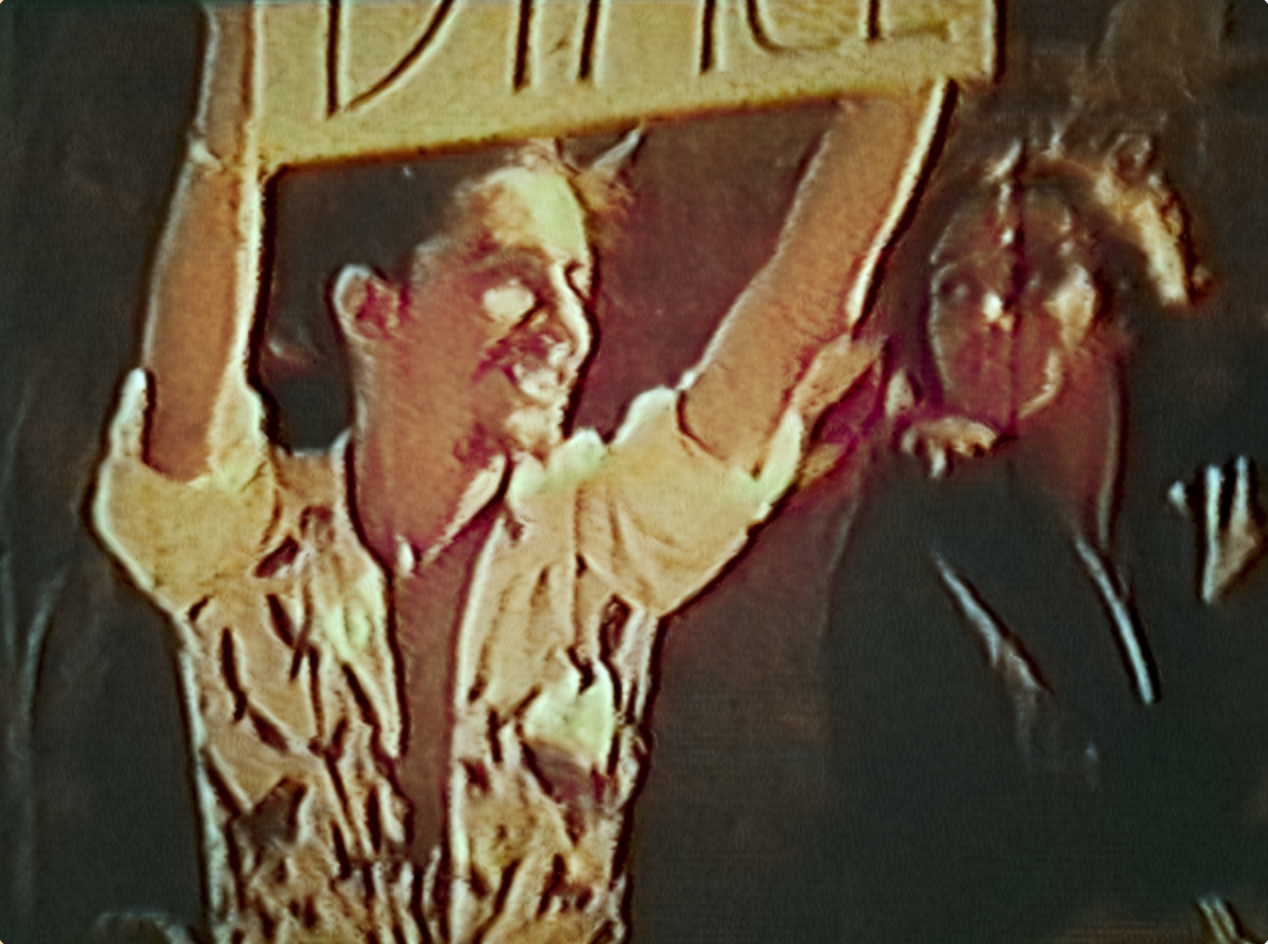
During a rare return visit to Teresina, his hometown, Torquato acted in Adão e Eva: do Paraíso ao Consumo (1972), alongside Claudete Dias. Believed lost for decades, the film was written by Edmar Oliveira and directed by Carlos Galvão. Around that same time, Torquato directed O Terror da Vermelha (1972), at 32 minutes the longest film of the cycle, about a man, played by Edmar Oliveira, who wanders aimlessly through the city streets killing men and women for no apparent reason. Identified in an intertitle as “the cowboy of the Green City,” as the capital of Piauí is known, the tireless killer roams poor outskirts and urban areas in search of victims. Chaotic and delirious, the film turns bodies in constant motion, along with the city’s different settings, into the characters of the plot. It also incorporates elements of concrete poetry: the mantra “vir ver ou vir ver ou vir ver ou vir ver...,” literally “come see or come see or come see or come see...,” becomes “ouvir ver ouvir ver...,” echoing “hear see hear see...,” until, at a certain point, it begins to sound like “viver,” “to live,” inside our heads. Torquato died in November 1972, at the age of 28, by suicide.

Torquato Neto was significantly older than his Teresina peers: he was born in 1944, while the others were born between 1951 and 1954. His national recognition certainly made him the most illustrious member of the group, but the Super-8 production continued for a few more years after his tragic death, and it is precisely the freshness of youth that most radiates from the films, since nearly all of them were barely in their twenties at the time these works were made.
Defiant and provocative, but also funny, idealistic, and passionate, these films, when taken together, suggest a desire to experiment with genres, particularly crime, suspense, and horror, and to deconstruct them. Um Sonho Americano (1973), by Arnaldo Albuquerque, and Escorpião Vermelho (1974), by Carlos Galvão, each only three minutes long, reimagine the vampire in a tropical setting. The first is about a young woman who drinks a Coca-Cola, which resembles blood, and becomes a vampire. She attacks other people, who also turn into vampires, in a mocking metaphor for the invasion of American culture. Intertitles bearing the words “Mistério” and “Suspense” jokingly cue the mood of the short, and the film ends with an illuminated sign that reads “Beba Fanta.” The second, shot in Rio de Janeiro, is an unfinished film inspired by Nosferatu (1922), from which it recreates two scenes, the vampire framed by the window bars and his shadow projected onto a door, and includes a degree of nudity and beautiful interior cinematography, seeming to engage consciously with the erotic horror that was on the rise at the time. The gothic touch comes from the shots of the Castelinho do Flamengo, a 1918 building made in an eclectic architectural blend of art nouveau, art déco, rococo, neo-Baroque, and French neo-Gothic. It was also where the filmmakers from Piauí lived during their stay in Rio. Today the building houses the Oduvaldo Vianna Filho Cultural Center, and the place carries a reputation for being haunted.

Coração Materno (1974), at 15 minutes, is one of the treasures of the cycle, because it is in itself the story of a rescue. At the beginning of 1974, the friends Arnaldo Albuquerque, Edmar Oliveira, and Durvalino Couto made a short film inspired by the melodramatic song “Coração Materno,” recorded by Vicente Celestino in 1937 and re-recorded by Caetano Veloso on the collective album Tropicália ou Panis et Circencis (1968). However, after a home screening, part of the Super-8 reels were destroyed by the family dog. At the end of that year, Haroldo Barradas decided to remake the film, incorporating in some scenes the fragments that had survived from the first version. The result becomes a “film within the film” that also seems to suggest the source of inspiration for the act of violence to be repeated: after the friends screen the reels, another “little mother” is killed by the “devil,” her own son. In 1951, Vicente Celestino himself had starred in the first film version of Coração Materno, directed by his wife Gilda Abreu, which softens the content and rules out any literal interpretation of the song’s lyrics. It fell to the Cinema de Invenção to make the song’s grotesque content explicit, in the shocking scene in which the heart is extracted from the chest. The same theme had already been adapted in the morbidly comic segment Transplante de Mãe, by Sebastião de Souza, part of the São Paulo anthology Em Cada Coração Um Punhal (1970), and later in the short film Amor Só de Mãe (2003), by Dennison Ramalho.

Porenquanto (1974), by Carlos Galvão, at 10 minutes, and Tupy Niquim (1974), by Xico Pereira, at 17 minutes, were shot in Rio de Janeiro, and both also deal with random violence and murder. In the first, a rough-looking man wielding a scythe attacks people in streets and parks, to the sound of Elton John and Jeff Beck. Set entirely in open spaces, with young people constantly coming and going, the film finds in the strange, enigmatic figure who disrupts their lives the embodiment of the implacable Reaper himself, an Exterminating Angel. The second is about an Indigenous young man, played by Rubem “Gordo” Gordim, who wanders through Rio, moving from Praia Vermelha to the Castelinho do Flamengo and to a dense botanical garden, and who inevitably becomes involved in acts of violence. The official synopsis of the film in the Cinelimite catalog for the mostra indicates that the work addresses Indigenous ancestry in the face of hostile modernity, but the short can also be interpreted as a cycle of violence, with Gordo obsessively pursuing a young woman and her boyfriend until he manages to kill the young man in an ambush and take his place, only then to begin being followed by another man, who strangles him. One of the great charms of cinema marginal lies precisely in the multiplicity of visions and readings that its works make possible. Xico Pereira, from Maranhão, the Afro-descendant filmmaker of this cycle, was involved throughout much of his life in union movements, the promotion of human rights, and the defense of the Black cause.

The group’s output also includes documentary records and films that focus on specific figures from the Piauí scene or on youth movements committed to resisting political repression. In the documentary Quadrilha da Festa Junina no Hospital Areolino de Abreu (1973), by Edmar Oliveira, running 13 minutes, the joy of the celebration is set against the conditions imposed on the inmates of the psychiatric institution. At the time, Oliveira was a medical student and a staff doctor at the hospital. A more direct political discourse appears in Marginália (1974), by Nelson Nunes, running 14 minutes, filmed in Belém do Pará and showing a student restlessly wandering the city streets. The short is accompanied by a reading of the poem “Poecine ou Marginália Nº 2,” also by Nunes, published in 1978 and based on excerpts from the film’s original script, in an emphatic defense of the poor and the forgotten. Miss Dora (1974), by Edmar Oliveira, running 13 minutes, is about Dora Brito, a real figure in Teresina at the time, simulating guerrilla movements to the sound of “Chapada do Corisco,” written by Torquato Neto, “As Sete Cidades Mortas / Sete pedras sete portas / No caminho da Chapada do Corisco / De onde eu vim” [“The Seven Dead Cities / Seven stones seven doorways / On the road to Chapada do Corisco / From where I came”], along with other songs associated with Tropicália, by Caetano Veloso, Tom Zé, and others.

Finally, the short David Aguiar (1975), 17 minutes long, initially titled As Feras and also known by the alternative titles David Vai Guiar and David A Guiar, was directed by Durvalino Couto and is about Teresina’s first hippie: David Machado de Aguiar, a young man from a traditional upper class family who became a transgressive figure in Piauí society. Although it bears David’s name, the film is an urban symphony, beginning with a car ride past historic landmarks, the Karnak Palace, seat of the state government, and São Benedito Church, as well as places frequented by the city’s youth, such as the Institute of Education, Cine Rex, and the Gelatti bar, also an important setting in the short Miss Dora. It also features a Nazi roaming the streets and shooting at those pursuing him. But the plot does not develop and ultimately becomes a fragmented, uncommitted record of loose ideas, centered on the “feras” [literally, “beasts,” the name given to the rebellious youth of the Green City]. The short is set to Side A of Pink Floyd’s album The Dark Side of the Moon.
Although Teresina’s Super-8 cycle remained confined to the circle of its own filmmakers, the city’s mythos attracted artists from other regions. Such was the case of the Rio filmmaker Carlos Bini, who in 1970-71 had shot the hippie feature film Geração Bendita in Nova Friburgo, Rio de Janeiro, and in 1972 went to Piauí to direct Guru das Sete Cidades. Shot in Teresina and in other municipalities in Piauí, Campo Maior, Piracuruca, Parnaíba, and Sete Cidades National Park, with support from the state government, it is a horror feature involving a gang of hippie bikers and a satanic cult inspired by the crimes orchestrated by Charles Manson a few years earlier. Curiously, the premise of the Rio film led the sex therapist and cultural agitator Antônio de Noronha Pessoa Filho, a patron of Teresina’s artistic scene, it was he who financed the newspaper Gramma and the city’s entire Super-8 production, to make a parody entitled O Guru da Sexy Cidade (1973).

Shot on Super-8, in Teresina and at Sete Cidades National Park, Antônio Noronha’s 10 minute short centers on the image of its protagonist, “diz que é guru” [“he says he is a guru”], making messianic gestures atop a huge rock, wearing a robe, or wandering through the woods in nothing but a speedo. In this mystical “sexy” atmosphere, at once parodying Carlos Bini’s film and evoking the imagery of Lucifer Rising (1972), couples embrace and kiss in a grove, including gay and lesbian couples, making the film another landmark of queer cinema from the period. Preserved on DVD from a worn VHS tape copy, O Guru da Sexy Cidade has now been properly digitized, although with a significant loss of image quality.
Noronha was a figure of great importance in Piauí society: a pediatrician and sex therapist, he was also a university professor and later pursued a political career. He remained active in the second phase of Piauí’s audiovisual cycle, already in the late 1970s, when he directed Tio João (1978), an 8 minute short shot on 16mm and produced by the Federal University of Piauí. Combining documentary record and popular lyricism, it tells the story of João Batista, a devotee from the city of Bom Jesus, in Piauí, who built the local church and carved the image of the saint. His story is narrated through six line cordel verses written by João José Piripiri and performed by the singer Vicente Evangelista. Antônio Noronha died in 2016, at the age of 71, in his home in Teresina.

Another singular work included in the program is the documentary Aterro (1979), 8 minutes long, directed by the cinematographer Dogno Içaiano, from Amazonas, who built his career in Teresina and Fortaleza. It shows an open air dump in the capital of Ceará, where people living in precarious conditions risk their health amid unsanitary waste, trying to collect cardboard and other recyclable materials in order to make a living. One of the terrible accounts concerns a child who became contaminated at the dump and died shortly afterward. Içaiano died in 2010, at just 56 years old, in Teresina, a victim of malaria, a disease he contracted while filming in a quilombola community in Paulistana, a municipality in Piauí.

Probably the greatest jewel of the collection is the folkloric short film Cabeça de Cuia (1979), fascinating not only for its cultural content, in adapting a local fantastic legend, but also for having itself become mythical. Missing for decades and virtually lost, it was reconstructed through a complex research effort that gathered material from various personal archives and from the Federal University of Piauí. The result is a convergence of different artistic forms: to the few fragments found from the original shoot were added behind the scenes records, production photographs, and a comic strip drawn by Arnaldo Albuquerque in 1977. The original film, directed by Lindemberg Pirajá from Ceará, was begun in 1978, at the same time that a stage production on the same theme was being mounted, with part of the cast participating in both versions.
The Piauí legend tells the story of a poor and frustrated fisherman who lives with his mother on the banks of the Parnaíba River. One day, he comes home after yet another unsuccessful day of fishing and, dissatisfied with the meager dinner his mother serves him, he kills the old woman by striking her with a piece of bone. Before dying, she curses him to wander endlessly along the banks of the Parnaíba and Poti rivers with an enormous gourd shaped head. The curse will only be broken if he devours seven virgins named Maria. According to the legend, the accursed fisherman still roams along the riverbanks.
The film’s reconstruction begins with excerpts from the cordel “A Lenda do Cabeça de Cuia,” by Pedro Costa, with a cover illustrated by Arnaldo Albuquerque. Running 20 minutes in total, the film follows the story up to a certain point, and in its final sections becomes a record of the filmmakers themselves behind the scenes, in an affectionate celebration of this creative splendor. It is also the product of a period when Super-8 had become more professional and ambitious in the state, attracting talents from different areas of audiovisual production, with larger crews handling different technical aspects.

The pioneering production of animated short films by Arnaldo Albuquerque, the driving force behind the original core of Piauí’s Super-8 movement, brings the cycle’s chronology to a close. The three shorts combine fantastic elements with incisive sociopolitical satire, each running just over two minutes. In Carcará, Pega, Mata e Come (1977), an eagle devours the entrails of a baby it stole from a stork and transforms itself into Captain America, only to then become a bird again and end up being roasted by a poor and hungry family. Vã-pirações (1980) is about a vampire thirsty for blood, who goes out into the streets looking for new victims, but gets beaten up by a prostitute and robbed by a hustler. He then decides to buy copies of a popular newspaper, the kind that, when squeezed, bleeds, in this case, A Luta Democrática, the sensationalist paper founded by Tenório Cavalcanti, the “Man in the Black Cape.” Finally, Mergulho (1980), directed by Lídia and Arnaldo Albuquerque, is the most experimental and symbolic of the three, about a suicidal man who jumps from a cliff holding a key, and underwater encounters a naked woman and her keyhole.

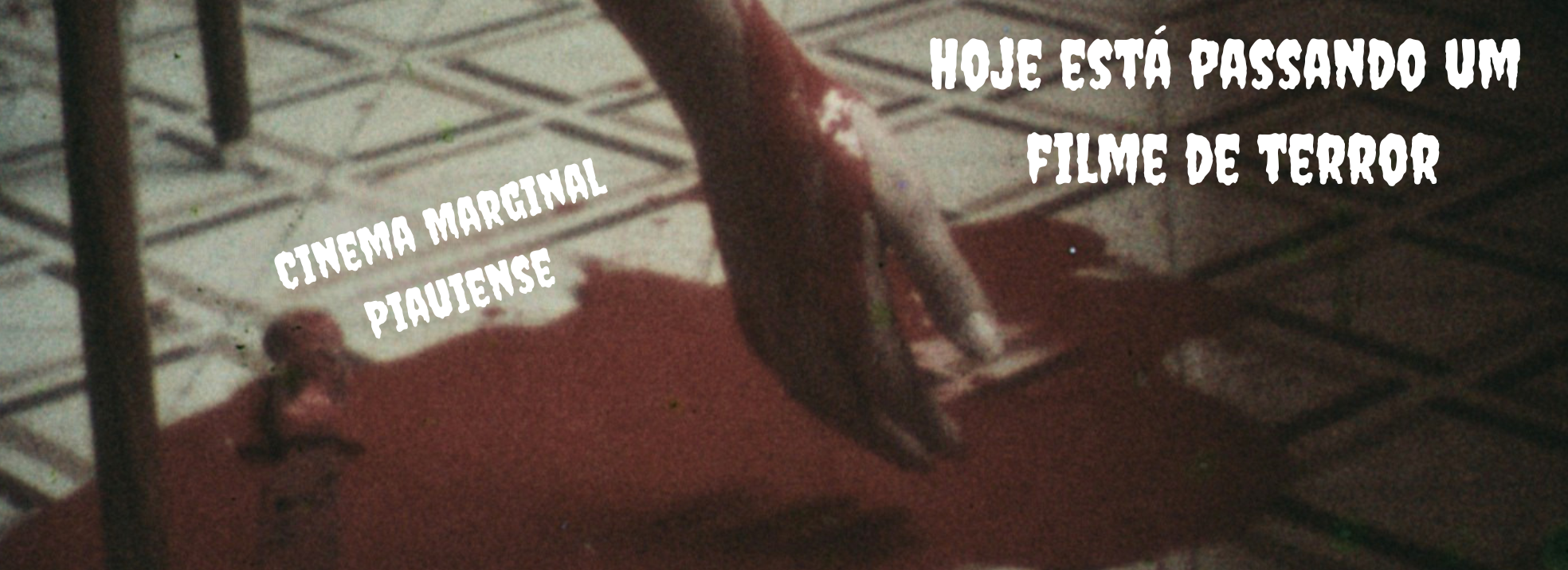
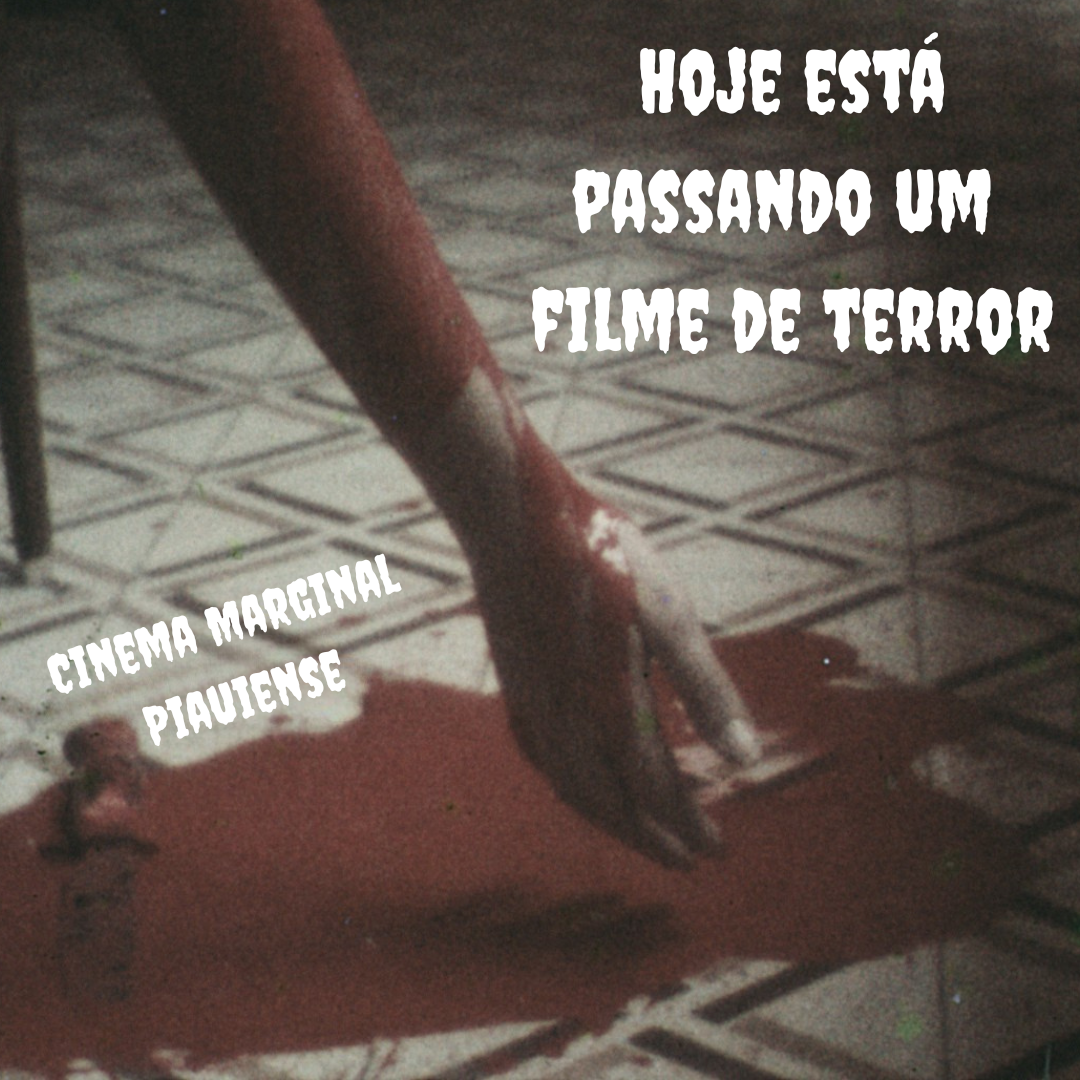
No longer merely references in books and academic articles on the historiography of Brazilian cinema, but living, pulsating images on the screen, the eighteen films from the Teresina scene, and from its occasional relationship with other geographic spaces, mentioned in this essay now make up the program of the series Cinema Marginal Piauiense, scheduled for 2026. The films underwent a rigorous rescue process through Cinelimite’s Iniciativa de Digitalização de Filmes Brasileiros. They are works of tremendous youthful freshness, driven by a desire to be cinema and by the urgency of a generation that had no other path to artistic survival than opposition. At the same time, like all cinema made in the streets and their surroundings, they are also historical records of the countryside and the city, of their urban life, their buildings and cars, and above all, of the people.
The digitized versions bear all the scars of their source materials: dirt, scratches, faded colors, everything that would at first seem undesirable in the restoration of a work to its original form, but which ultimately expands the experience of watching them by revealing their organic, marginal, and until now forgotten character. The Cinema Marginal Piauiense series returns these eighteen films to the screen in their best possible versions, honoring their makers and rewarding the Brazilian cinephile, while also helping historians better understand the complexity of our cinema in chapters still to be written, and rewritten.
For film research is much like archaeology, and finding an arrowhead, however worn it may be, is equivalent to giving an entirely new meaning to, and bringing to light, a fragment of the country’s cultural history, and to recognizing how much our past calls on us to vir, ver, ouvir, ver... e viver—to come, to see, to hear, to see... and to live.


