

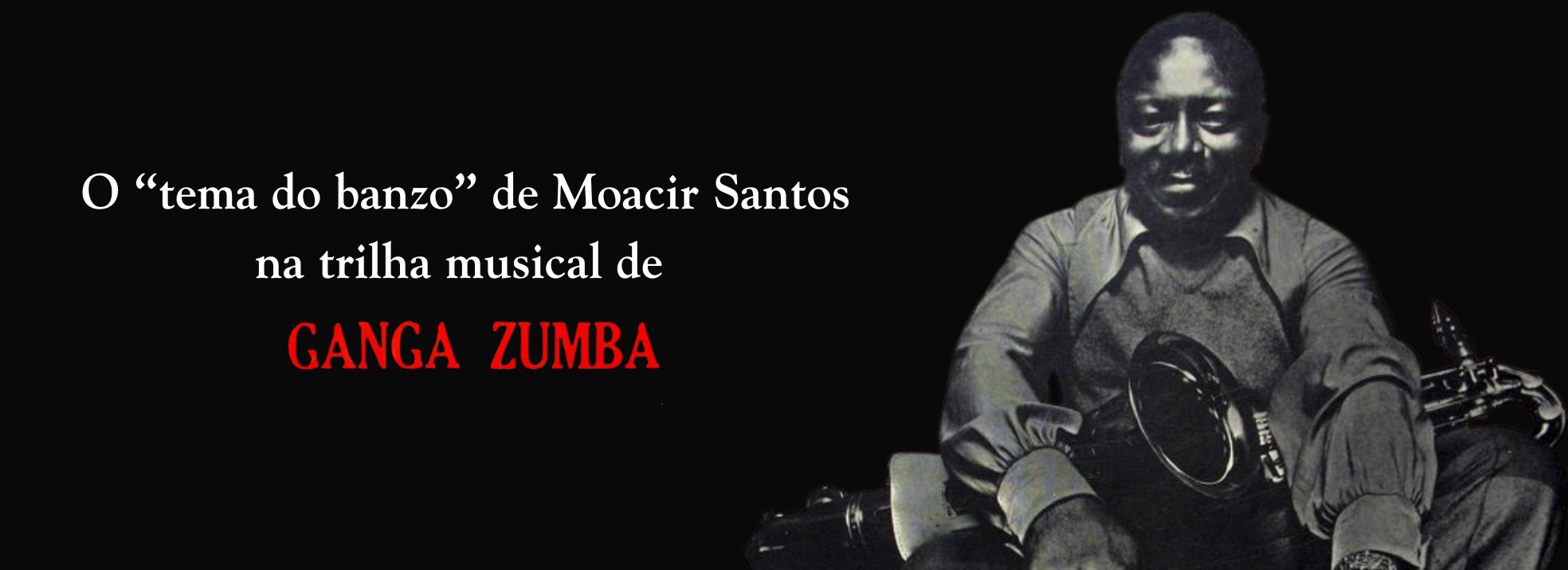
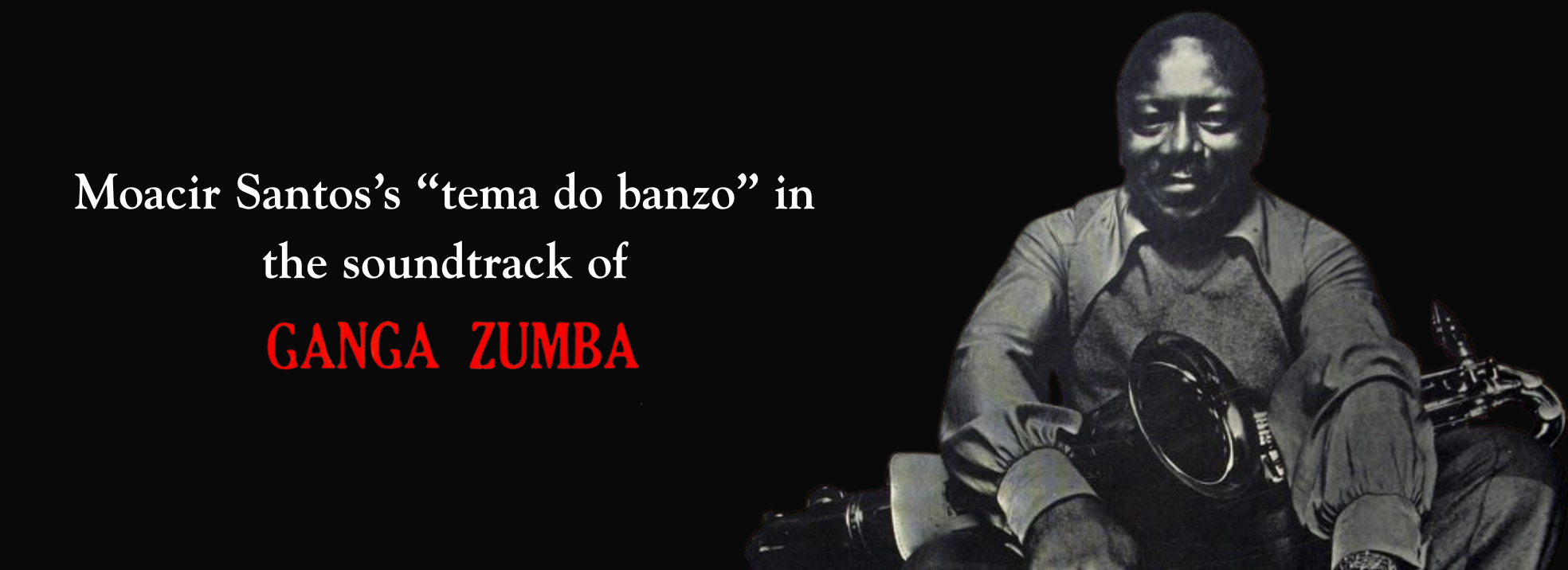
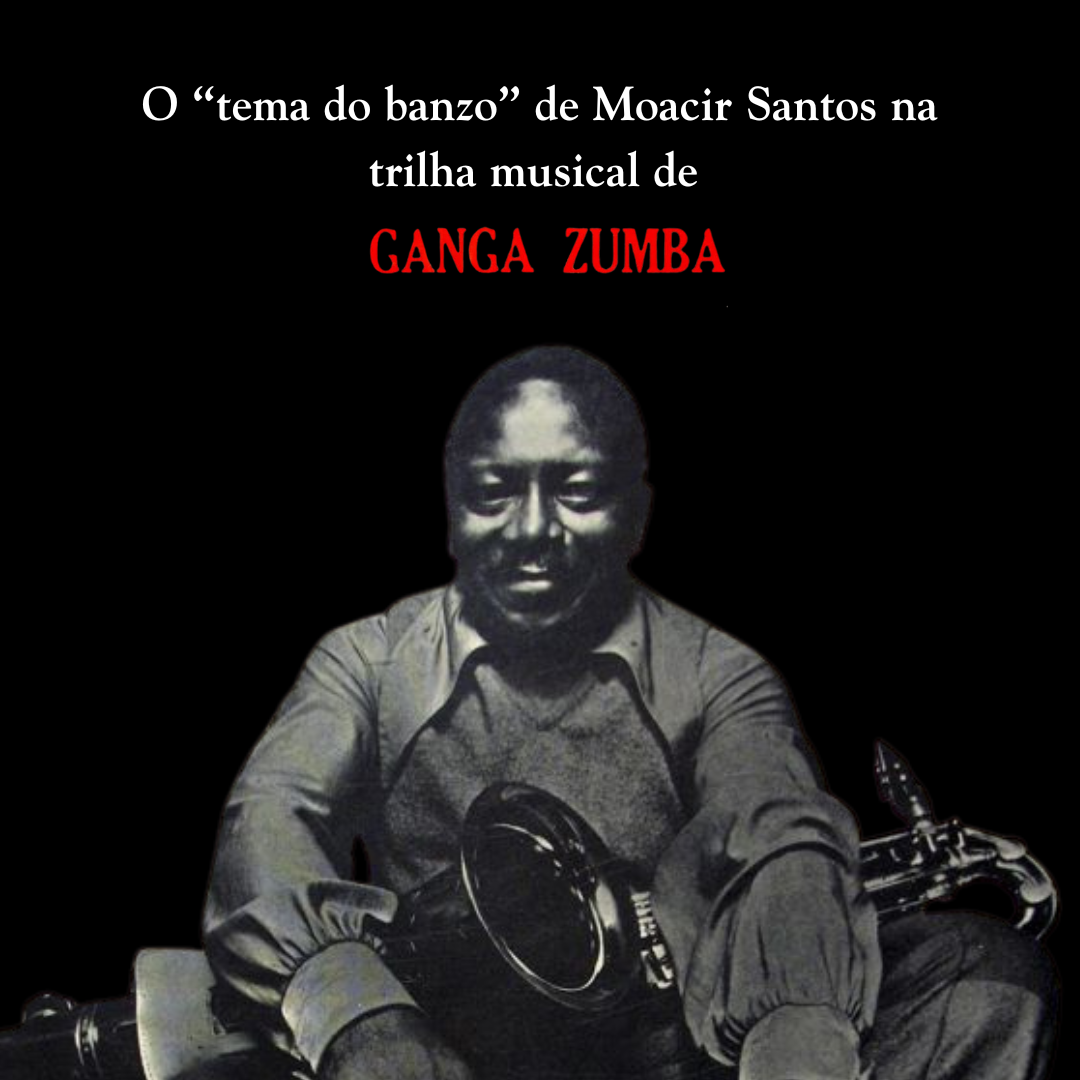
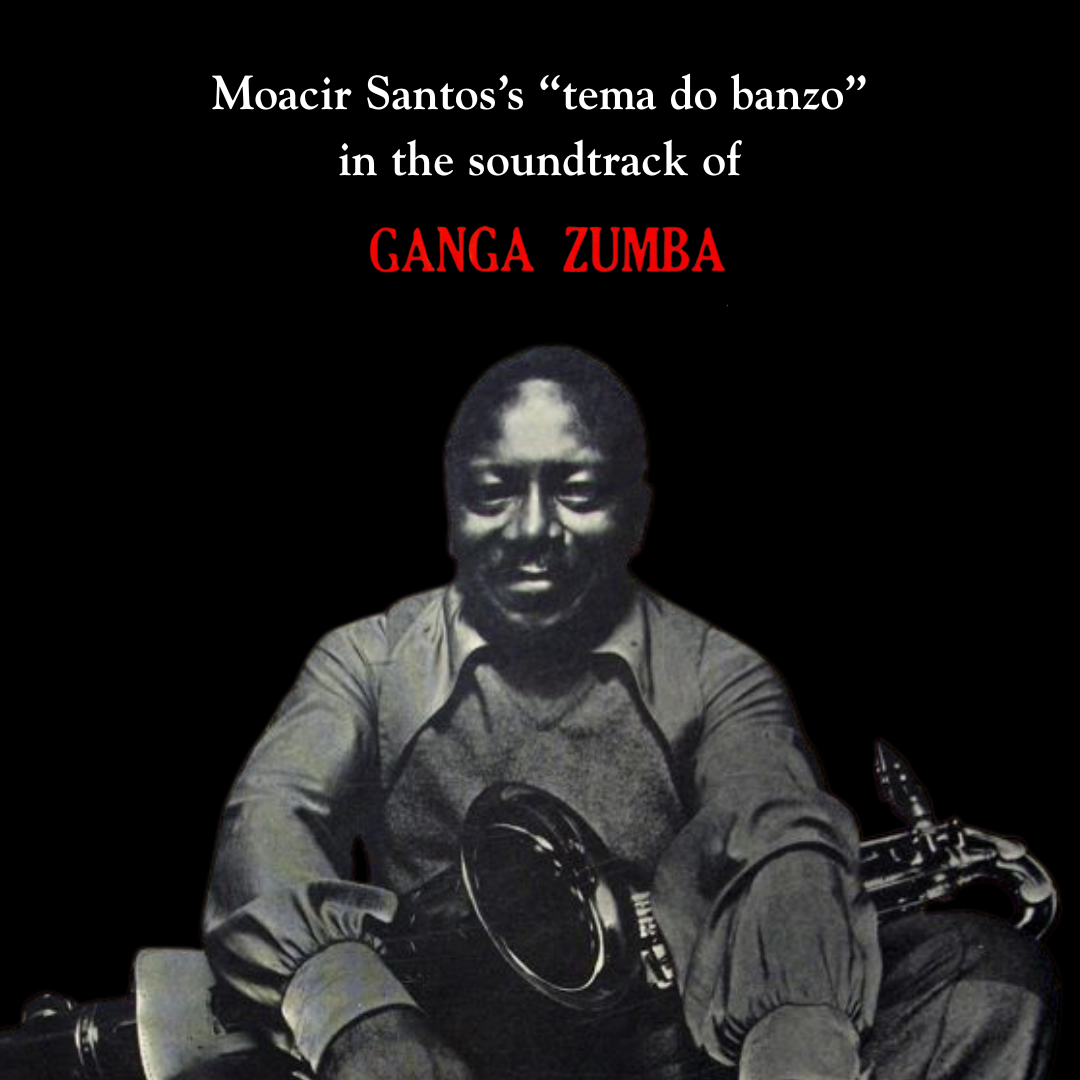
Moacir Santos (1926-2006) is a singular figure in the history of Brazilian music. He worked as an arranger, composer, and conductor during the golden age of radio in Brazil, helping to shape the sound of popular music. Beginning in the 1950s, he became the teacher of an entire generation that, around the same time, was planting the seeds of Bossa Nova. Among his most illustrious students were Nara Leão, Roberto Menescal, Paulo Moura, Eumir Deodato, Sérgio Mendes, Baden Powell, João Donato, and countless others. Santos’s work as a film composer was also highly significant. His score for Ganga Zumba (1964), for example, is a landmark in the history of Brazilian audiovisual. In 1967, he moved to the United States, where he continued his intense artistic production, recording albums for labels such as Blue Note and Discovery Records, composing for cinema, and maintaining his teaching practice. Beginning in the 1990s, and especially in the early 2000s, major efforts were made to recover and promote Santos’s work. The recording of the album Ouro Negro, produced by Mario Adnet and Zé Nogueira, along with the publication of three songbooks, definitively brought his music into the repertoire of younger musicians and encouraged numerous academic studies.
Ganga Zumba, directed by Cacá Diegues, is based on João Felício dos Santos’s book of the same name. The film depicts the escape of Ganga Zumba, grandson of Zumbi dos Palmares, from the sugarcane plantation where he was enslaved to the Quilombo dos Palmares, in search of freedom. Antônio Pitanga plays the protagonist, alongside a remarkable cast that includes Léa Garcia, Luiza Maranhão, Eliezer Gomes, Cartola, and Dona Zica. The afoxé group Filhos de Gandhy also performs African and Afro-Brazilian rituals typical of the colonial period.
Ganga Zumba is one of the most important audiovisual productions for which Santos worked as a composer, driven by his strong affinity with the film’s narrative, concept, and aesthetic. The score also became a kind of pre-Coisas laboratory, since many of the compositions included on his debut album, released in 1965, took shape within the context of the film’s music. It is notable that Santos’s music for Ganga Zumba generally presents a primarily modal harmonic and melodic conception, with instrumentation that emphasizes wind instruments and percussion, sonorities that would accompany him throughout his career.
A particularly interesting cue within the score of Ganga Zumba is the “theme of banzo.” The composer himself categorized it this way in his notebook of notes and sketches:
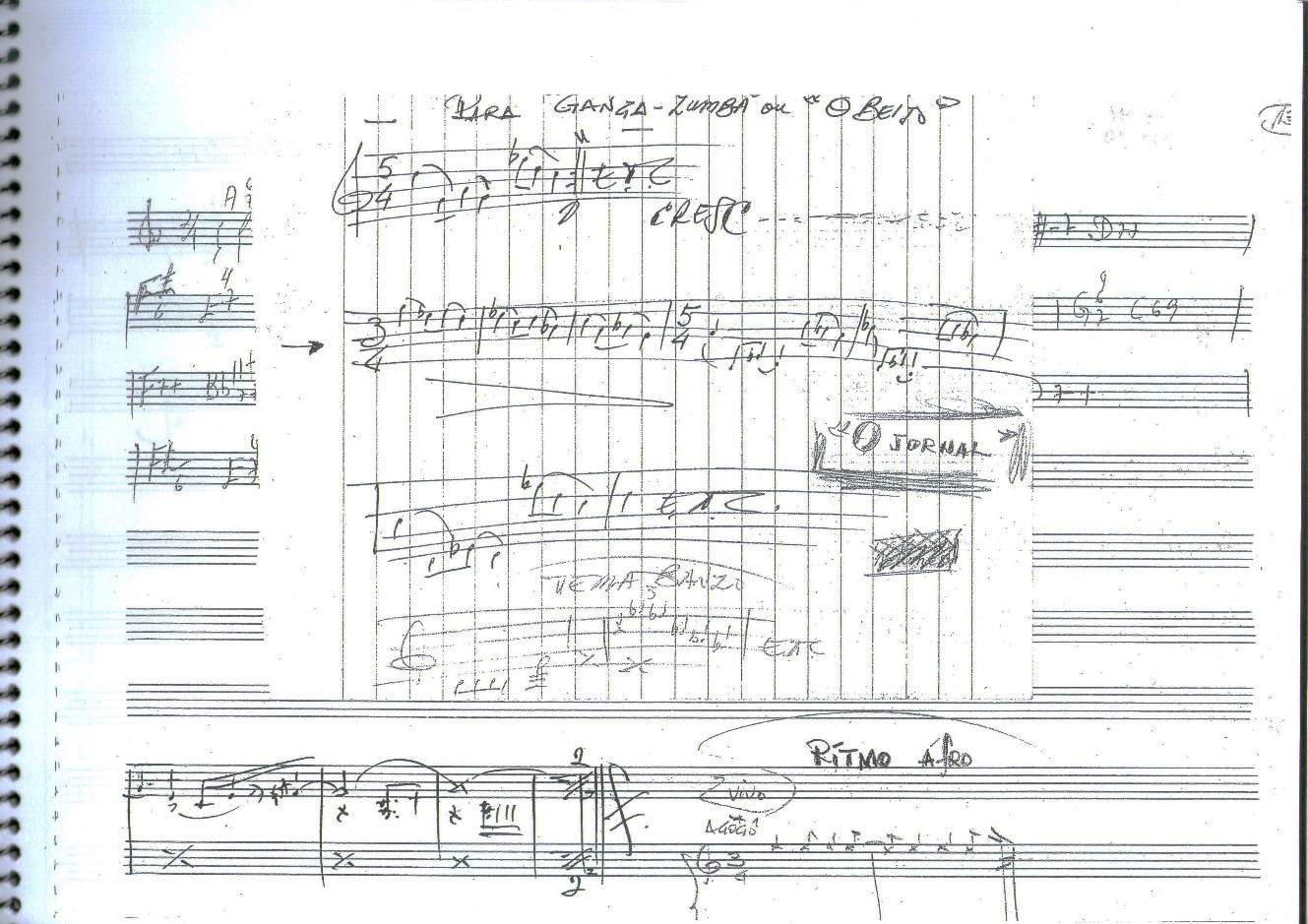
It is interesting to consider the relationship between this theme and the possible definitions of the term banzo, which allows for a more complete understanding of the score. According to Nei Lopes’s Novo Dicionário Banto do Brasil, the possible definitions of the word are:
A fatal nostalgia that afflicted enslaved Black Africans in Brazil. (...) Sad, dejected, pensive. (...) Surprised, stunned; awkward, embarrassed. (...) From the Kikongo mbanzu, thought, memory; or from the Kimbundu mbonzo, longing, passion, grief (LOPES, 2006: 39).
Banzo was also commonly referred to as an illness, since many enslaved Black people died with depressive symptoms, as if banzo were a form of “Black depression.” The two sequences in which the theme appears therefore make a great deal of sense in relation to the term’s etymological origin. In the first, Aroroba (Eliezer Gomes) is telling a story about Black people in Africa, which is represented through a flashback, as if in a dream, symbolizing this nostalgic longing for a remote time that has passed and that he himself did not experience. In the theme’s second appearance, the character Aroroba dies after being shot during the group’s flight toward Palmares.
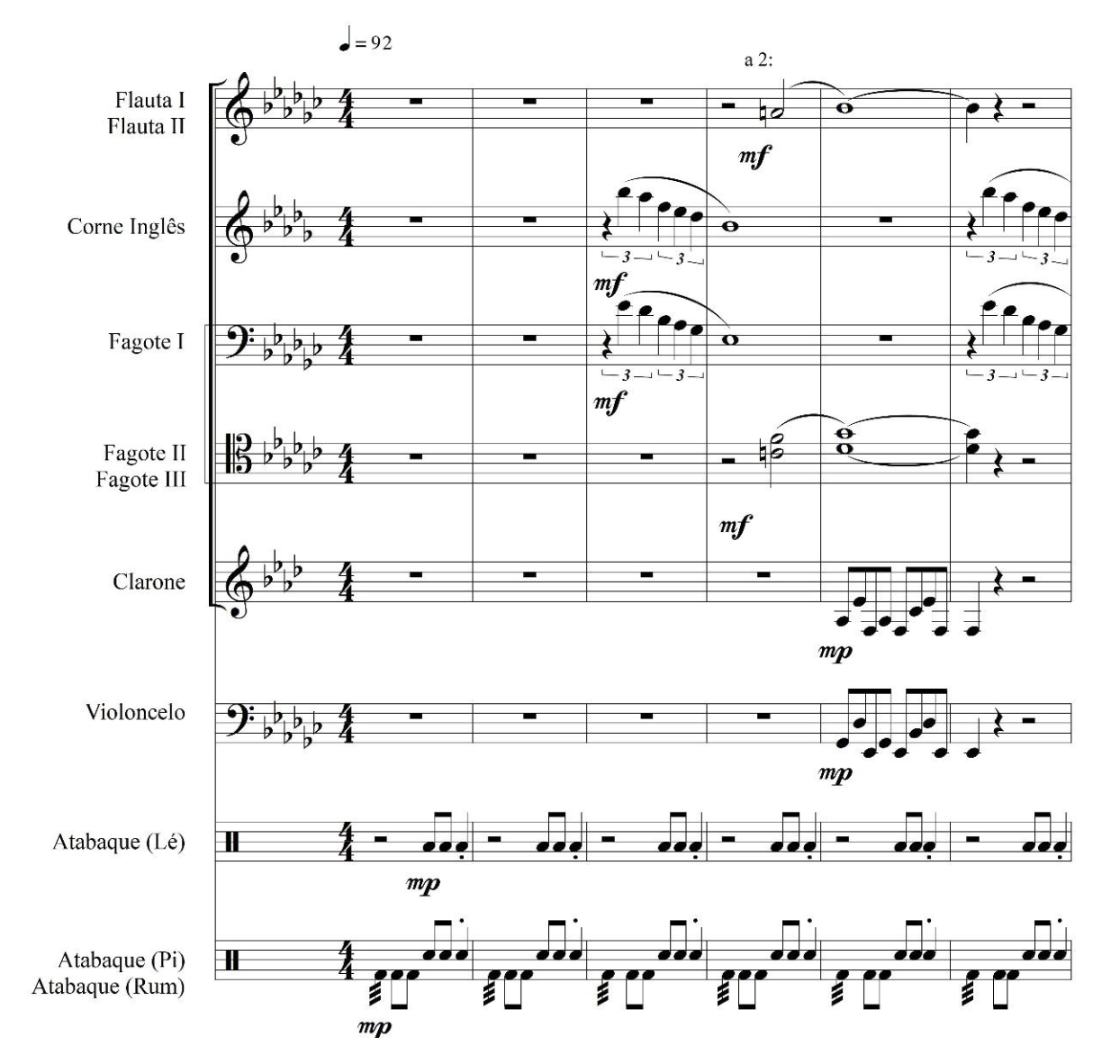
In both moments in which the “theme of banzo” appears in the film, the musical insertions are composed of the same phonogram. Small details distinguish them: the first has a musical ending, while the second is interrupted by a fade-out; the second appearance also includes an extra measure in the introduction. The excerpts are also composed of four layers: the melody in the English horn and bassoon; a harmonic “bed” of sustained notes in the flutes and bassoons; a low phrase in eighth notes in the cello and bass clarinet; and, finally, a percussive ostinato played on atabaques.
In his notebook, Santos numbered the opening excerpt of each of the Coisas, almost as a way of informally cataloguing their initial thematic material, with additional notes on their uses in cinema and in other songs. The reproduction below shows the page in question:
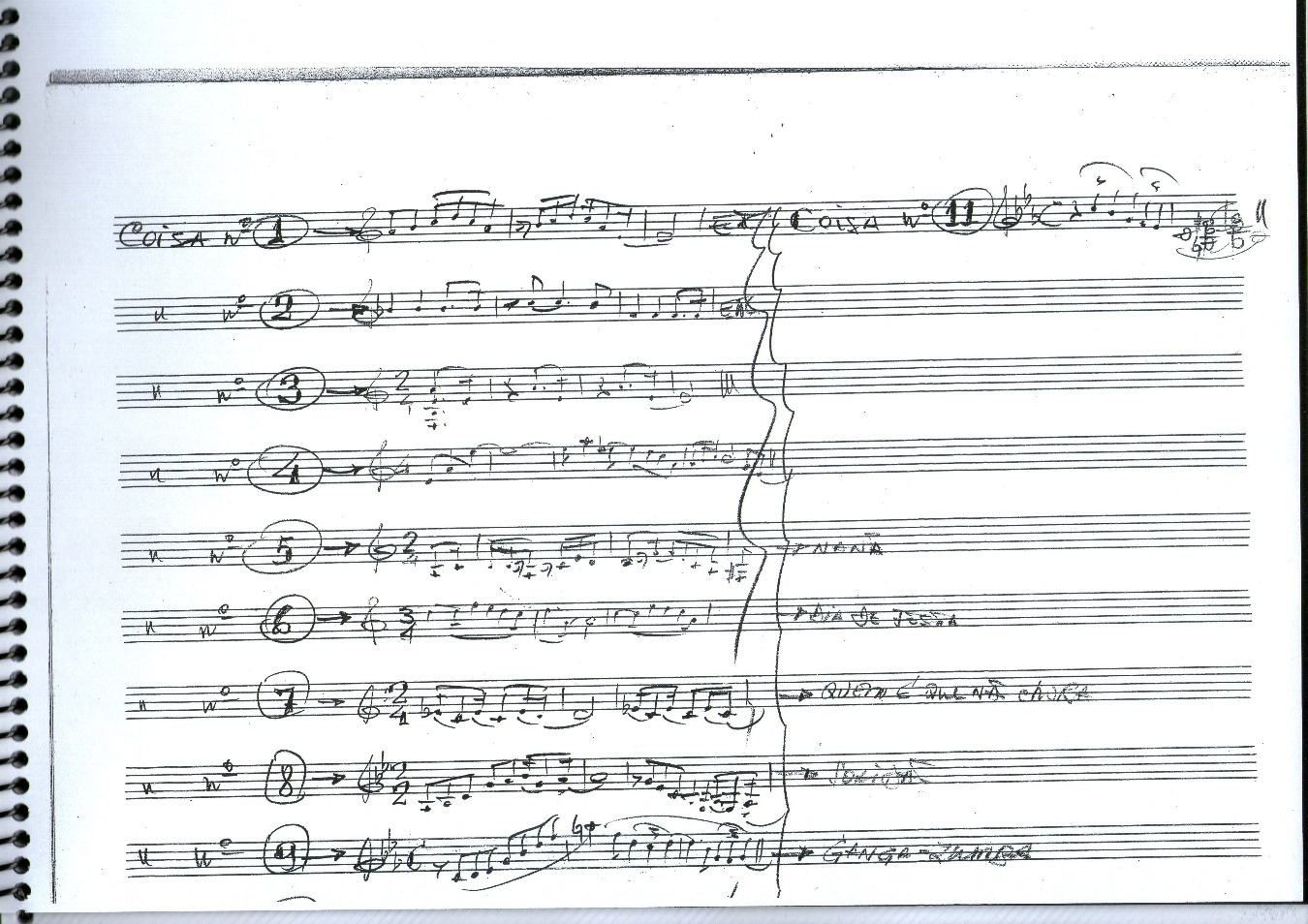
It is interesting to note how the second column begins with a “Coisa No. 11,” which was not ultimately recorded for the album Coisas. This piece is, in fact, the “theme of banzo” itself, since it presents exactly the same opening motif. The only difference is that this opening motif, in C minor, was transposed in relation to the recording of the score, in E-flat minor.
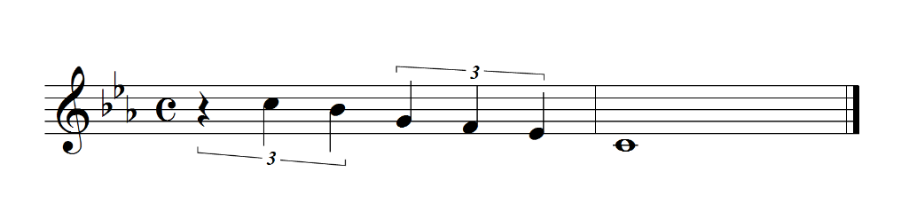
Unfortunately, we were unable to find any other record of the continuation of this piece as “Coisa No. 11,” apart from the “theme of banzo.” I say this because the pieces that had previously appeared in the score of Ganga Zumba and were later consolidated as tracks on the album Coisas underwent significant changes in structure and arrangement, meaning that they cannot simply be considered the same composition. In any case, the fact that we know Moacir began the compositional process for this piece is already highly intriguing. It is possible that the complete composition was finished and may be found in the future through research focused directly on other manuscripts by the composer.
Finally, I was able to record a version of the “theme of banzo” within the track “Themes from Ganga Zumba,” released in 2020 on the album MOA by the Ágar-Ágar Trio. To learn more about the research as a whole, I invite readers to visit the bilingual websites trilhasmoacirsantos.com.br and moacirsantosfilmscores.com, as well as my master’s thesis.
References:
DIAS, Andrea Ernest. Mais “coisas” sobre Moacir Santos, ou os caminhos de um músico brasileiro. Tese de Doutorado. Bahia: UFBA. 2010.
LOPES, Nei. Novo Dicionário Banto do Brasil: contendo mais de 250 propostas etimológicas acolhidas pelo dicionário Houaiss. Rio de Janeiro: Pailas, 2006.


