




“It's sweet to die at sea
in the green waves of the sea.”
- Dorival Caymmi
“The whole without the part is not whole,The part without the whole is not a part,But if the part makes it whole, being a part,Let it not be said a part, being the whole.”
- Upon finding the arm taken from the statue of the Christ Child, Gregório de Matos
One can find in the films of the so-called Bahian Cycle of 1953 to 1962 a touch of poet Gregório de Matos , who sighs in his most famous verse: “Sad Bahia! O, how dissimilar.” It is not a matter of judging these works to be somber or comparing them with the baroque of Bahia’s seminal poet who waits for judgment day naked, sporting a wig, among piles of bananas in his office in Colonial Brazil. What Gregório de Matos' verses and the shots in the films of almost three centuries later have in common is that they share, hovering ghostly on the horizon, what the poet calls “the merchant machine”. For Gregório de Matos, the expression refers to the foreign ships that began to dock in Salvador, sowing the dissimilarity with their voracious commerce where there was once a tranquil stable state of the colonial economy, now transformed into a sad one in the gaze of the dethroned elite that Gregório de Matos is part of. At the beginning of the last century, the merchant machine was already embodied in a new form of navigation traced with astrolabes of lenses and compasses made of celluloid. After all, to write about the Bahian Cycle and its cinema of bricolage and absolutes means to look at the same and constant voluptuousness in which Brazil covers itself, discovers itself, and communes with its invisible and mutilated body from the exterior and its imported machines that make and unmake promises.
It is in the tension between interior and exterior that Alexandre Robatto Filho’s work is organized. In a gaze that oscillates pendulously between taking part in the capoeira dance of Vadiação (1954) and the proto-scientific distance with which he analyzes and sculpts the fishermen and their nets in Entre o Mar e o Tendal (1953). A dental surgeon by profession, but a filmmaker by vocation, he was the essential pioneer of Bahia's cinema, producing countless newsreels in the 1950s and finally arriving at a cinema on the border of documentary and poetry. Robatto saw himself as a tropical Robert Flaherty, but his cinema has something that Flaherty's has always eluded — a more profound sense of communion and discovery between human and nature, sea and fisherman, filmmaker and apparatus. A primordial sense that he shares with one of the fishermen of Entre o Mar e o Tendal, who approaches the camera with the fish still trembling in his hands and covering his face, so gigantic and alive as if it were the first fish on Earth. To write about Robatto is to write about a first look that films and simultaneously falls in love and invents cinema itself amidst wide shots of immobility and close-ups of laceration where the dichotomies of language seem annulled by a certain naivety.

Robatto was never a professional filmmaker in the modern sense. According to his family in the short documentary Os Filmes que Eu não Fiz (2013), that is why he retired from filmmaking. He was first and foremost an amateur in the original etymological sense of the word: someone who does it for love. His images are images of affection, always in permanent tension with the unveiling of the otherness hidden within himself, ready to elaborate the rupture between the interior and the exterior in the body that dances capoeira, in the fisherman who rows his raft carrying his xáreu fish to be fused with the sea, to expand his gaze beyond the relations between man and fishing net. His work represents the innocence and fervor of this Brazil that urges to know itself in the poles of the vastness and the invisible, a Brazil that can be seen in the paintings of Carybé (who served as the storyboard artist for Vadiação), which, like Robatto's camera, travel on the threshold of the abstraction of the body through light and time. A Brazil of the tender freedom of an encounter, insofar as it gives itself and is found in the freedom that, as in the guiding words of Jorge Amado in his novel Capitães da Areia, “...is like the Sun. It is the greatest good in the world.”
The hot sun on the ramp of the Modelo market in Salvador, with the boats coming and going, humming to the rhythm of the berimbau and Luiz Paulino dos Santos' suffocating montage in Um dia na Rampa (1960). A film where the eye is free in this alternation and simultaneity of bodies and spaces in the soul of the city that twists and turns between the old and the new, streetcars and boats on the sea which is their lifeline but is still the home of the sacred deity Iemanjá. All this is the naked and fertile Salvador, available to the generation of Luiz Paulino, Roberto Pires and Glauber Rocha, who, organized around film critic Walter Silveira, start producing films after being confronted with the expression of the effervescent Italian, Soviet and French cinemas of the 50s and 60s, trying to respond to the Hollywood monopoly of images. That generation, through the cinema, through the very merchant machine that touches and invades it, gets ignited to graffitti the walls of the city with the question: do you believe in cinema in Bahia?
What does it mean to believe in cinema in Bahia? To believe in cinema in Bahia, to believe in cinema in Brazil, is to believe that it is possible to undo the Brazilian gordian knot between interior and exterior, that it is possible to find a Brazilian image in the midst of the infinite alterities that shape a name without a country. It is to propose a reverse engineering of the merchant machine, to dream of an end to inequality through an impossible image in a land of fragmented blindness. Perhaps it was with this in mind that Roberto Pires worked for eight uninterrupted months with the negatives of The Robe (1953) (the first cinemascope film ever made) to develop a Brazilian version of the cinemascope which he called Igluscope, a name that doesn’t reflect the climate nor his flaming appetite for the body of cinema. His first feature, Redenção (1959), the first feature film made in Bahia and in Igluscope, is a film split between the foreign and the national, which does not want to dismember the established structures of cinema but to integrate Brazil and Bahia into it. It is impregnated with the intrigues and particularities of life in Bahia: its morose bourgeoisie who seek to make money in loitering, its sand and sea that fascinate Pires' camera and fill the widescreen but remain encoded in the narrow influences of the American film noir and its search for truth and redemption amidst the echoes of an absolute evil. Redenção is a singularly delicate alchemy between the monumental, feverish, and washed-out Igluscope and such a small and simple plot.
Pires would refine this mixture of film noir and Bahia in one of the most unique films of the period: Tocaia no Asfalto (1962). In it, the ills of Brazil mix with the ambiguities and cruelties of the noir genre to weave a plot in which a hired killer is immersed between the baroque of Salvador's churches and unfathomable salvation in the love of a prostitute. And a young politician, played by Geraldo Del Rey, makes his way through the labyrinths of a country he doesn't know, between shots of hired killers. Tocaia no Asfalto, even if it establishes Pires as one of the greatest image-makers in Brazilian cinema, remains intriguing for the same reason as the much more modest Redenção. These films share the same porous body, with holes like the one on the forehead of the murdered man in the anthological opening scene of Tocaia no Asfalto - a body that, in this collage between the regional and the foreign, finds itself in "the other" by noting its own absences and silences.

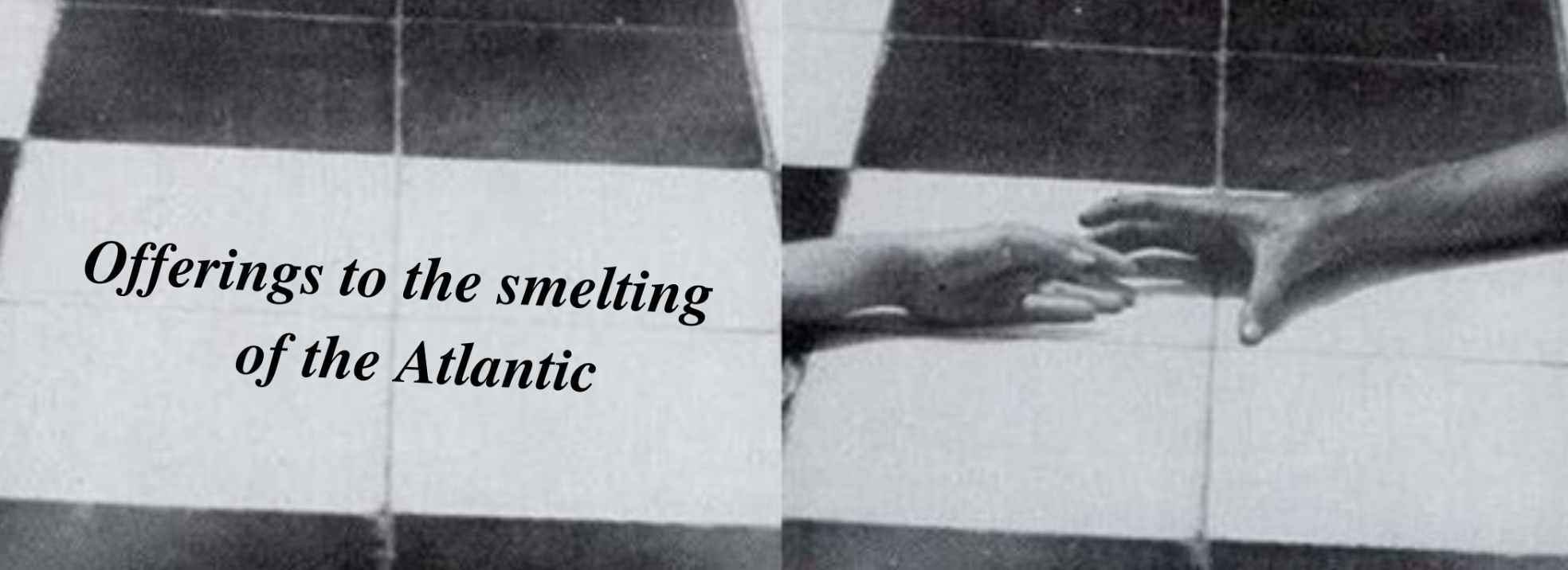
It is no coincidence that Glauber Rocha's first short film, made from leftover film stock from Redenção, deals precisely with two bodies that seek each other and move away, intersected by a chessboard soil, the fauna, the sky, the sea, and the breeze from the tropics. Pátio (1959) is a film of love. This is not only due to the presence of Glauber's first wife and the most iconic actress in the history of Brazilian cinema, Helena Ignez, but above all, due to the way the shots are chained together, hungry for one another, and how the camera moves, spellbound and sleepwalking, sometimes emulating the movement of waves. Pátio is already, like all of Glauber's filmography, set between hunger and trance in communion with the other and its becoming always overflowing in one of the most refined formal capacities in the history of cinema. Glauber would disregard this phase of his work later on because of its avant-garde ideas crossed by concretist influences, but his cinema never truly went far from that total poetry of cannibalism which merges and confuses bodies with the landscape, the human with the Earth, and Brazil with the fertile breast of filmmaking. It is mainly in Glauber Rocha's scenes, whether in the early compositions of Pátio - in the candomblé ceremonies of Barravento, or even much later in the Sun that never sets in The Age of the Earth - that Brazilian cinema finally finds its truest image: a fragmented vision, true crossroad of prayers and moans, apocalypses that devour the absolute, hidden in the merchant machine’s heart as gently as the sea of Bahia arrives on the coast bringing everlasting spells.
In the end, the whole Bahian Cycle is already in the first scene of Trigueirinho Neto's Bahia de Todos os Santos (1961), where Tônio (Jurandir Pimentel) observes and waits for the boats at the pier. The boats that die every night in the dark of the Atlantic and every morning invent that same ocean on their return. It is from the spirit of these boats and their observers that cinema was made in Bahia, and without this cinema, one could not speak of Cinema Novo or Brazilian cinema at all. Because Brazilian cinema is really a cinema of fragments, decentralized but where the parts always meet to compose a whole, to compose and merge a new Atlantic where interior and exterior, Bahia and foreign are at home. Where the merchant machine becomes a machine of the eternal and, between the waves and their images, one can no longer sigh to a sad Bahia.


