

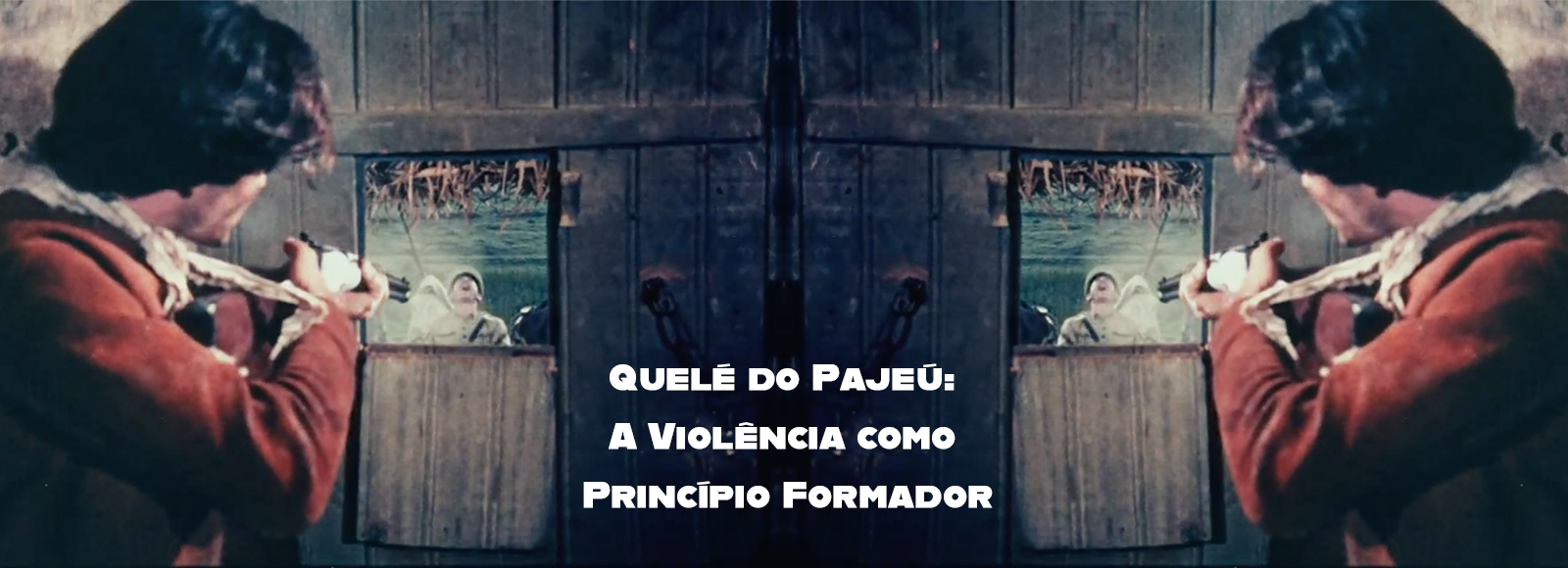


Anselmo Duarte is a unique figure in the history of Brazilian cinema. Between the late 1940s and early 1950s, he rose to fame as an actor for Atlântida Cinematográfica and Companhia Cinematográfica Vera Cruz. Duarte played the typical good guy in films from both studios and soon became a common character in Brazilian gossip magazines. Ultimately, he played the heartthrob in chanchadas and melodramas that drew a large share of audiences who were attending theaters to watch Brazilian films. His marriage to Ilka Soares was published in dozens of magazines, making them one of the most famous couples in Brazil.1

Duarte's career in film is not most discussed for his run as an actor, but for his work as a director. As early as the 1950s, he had directed his first feature film: Absolutamente Certo (1957). Duarte’s second feature film, O Pagador de Promessas (1962), made him an internationally recognized filmmaker. Duarte won several awards, including the only Palme d'Or in Brazilian cinema to date.
Anselmo Duarte claimed to be the inventor of Cinema Novo - this despite the fact that the members of the group to be called Cinema Novo, such as Glauber Rocha, Joaquim Pedro de Andrade, Leon Hirszman, Cacá Diegues, Paulo César Saraceni, among others, were not admirers of his work and did not consider him to be connected to the movement.2 In a way, Anselmo Duarte’s third feature film, Vereda da Salvação (1965), was the director's response to the criticism he had received after the production of O Pagador de Promessas, especially from the filmmakers of Cinema Novo.3
It could be said that Vereda da Salvação is the first major fiasco in Anselmo Duarte’s career. Poorly rated by audiences and critics, the film has been forgotten for many years – even though it was the film the director was most proud of. Bankrupt on account of Vereda da Salvação, he joined a project that was already under development: Quelé do Pajeú (1969). It is worth noting that, between Vereda da Salvação and Quelé do Pajeú, Anselmo Duarte acted in the film O Caso dos Irmãos Naves (Person, 1967), one of the most praised performances of his career.
Anselmo Duarte distinguished himself as an actor in chanchadas and for his role in the renewal of Brazilian cinema in the 1950s and 1960s. But the end of the (latter) decade associated him with another important period of Brazilian production: Ciclo do Cangaço.
What is the Ciclo do Cangaço?

The Ciclo do Cangaço (The Cangaço Cycle) was a cycle of films that were produced in Brazil between the 1950s and 1980s. These productions were shot in the northeastern sertão, or at least tried to represent the geographic environment where the cangaceiros once stood. The starting point for the Ciclo do Cangaço is O Cangaceiro (Barreto, 1953). Developed by Vera Cruz, and one of the company’s major box-office hits, the film was awarded the best adventure film at the Cannes Film Festival in 1953. This was the first prize given to a Brazilian film at Cannes. O Cangaceiro was shot in the countryside of the state of São Paulo and several productions have taken place in the region in the wake of its success. Cangaço films had a similar tone as North American Westerns, although they also incorporated elements that were distinctly Brazilian.
The film Dioguinho (Coimbra, 1957), produced by Sonofilms, illustrates such an interface between Brazilian history and North American cinema. The character Dioguinho was a real figure who lived in the countryside of the state of São Paulo in the 19th century and became famous for having carried out more than fifty murders. The film synopsis singles out this famous character: “The story of Diogo da Rocha Figueira, famous murderer from the interior of São Paulo: his cruelties, the beginning of his criminal career, the ambushes against the colonels, his love affair with a mistress, the persecution of Lieutenant França Pinto, and the great final fight”.4 Even though the film is impossible to access today, its synopsis clearly presents a close reference to the western by valorizing a "great final fight.". In addition to Dioguinho being the focus of Carlos Coimbra’s film, tales from his life were the subject of the 1916 film As aventuras de Dioguinho5 (Andaló). Also outstanding and worth mentioning is the film Lampião, o rei do cangaço (Abrahão, 1937), a work that features actual images of Lampião, the most famous cangaceiro in the country. Although the film ended up censored – and therefore was never publicly screened – it anticipated the interest of the Cangaço Cycle in the iconic figure Lampião. It is thus necessary to emphasize that O Cangaceiro did not jump-start Brazilian cinema’s approach towards either the Western genre or the mythology of the sertão. However, it was a significant work in the Ciclo do Cangaço as it achieved major commercial success and an international award at the Cannes Film Festival. As a result of this, a new wave of Cangaço films would be produced in Brazil.
Director Carlos Coimbra will be a fundamental name for the development of the production of the Cangaço Cycle in northeastern Brazil. He was invited by actress and producer Aurora Duarte to direct the film A Morte Comanda o Cangaço (Coimbra, 1961). The film was a huge success with audiences and demonstrated that the production of cangaço films could be financially viable.6

Deus e o Diabo na Terra do Sol (Rocha, 1964) is mistakenly referred to as a fundamental work in the Ciclo do Cangaço, or even as the film that launched the production of films in the cycle. Although Glauber Rocha's film is important, Carlos Coimbra's work predated it and achieved greater public success, thus being more crucial in the continuous production of films in the Ciclo do Cangaço. Coimbra himself later directed Lampião, o rei do cangaço (1965) and Corisco, o Diabo Loiro (1969), two other key works work tied to the cycle. The eventual recognition of Glauber Rocha as a key figure in Ciclo do Cangaço might be linked to the well-known sentence by Jean-Claude Bernardet: “For three, four decades we have been used to thinking of cinema from the 60s to the 70s in terms of cinema novo and cinema marginal – that is, cultured cinema, because it was non-commercial; we didn't think much in ciclo do cangaço etc., which was what the public saw” (Bernadet, 2001).7 Without carefully investigating the Cangaço Cycle, we may overestimate the work of Glauber Rocha, for he is the Brazilian filmmaker most acclaimed today by critics. Glauber undoubtedly made an international impact with Deus e o Diabo na Terra do Sol, but the intellectual circle in which Glauber Rocha was most influential had little dialogue with the films of the Ciclo do Cangaço.
Considering that the Cangaço Cycle was most relevant in the 1960s, it is not difficult to imagine that producers would be interested in creating a super production linked to the genre. Quelé do Pajeú is this super production, and Anselmo Duarte was hired to direct the film. Duarte was already considered to be an experienced filmmaker and one of the main figures capable of carrying out a super-production in the country. Picking him as the director, then, was an obvious choice.
Quelé do Pajeú
Vereda da Salvação, Anselmo Duarte's third film, was a failure of public and critical acclaim in Brazil, although it was well received at the Berlin film festival. Nevertheless, Duarte maintained a strong reputation in the country on account of the international success of O Pagador de Promessas. Thus, when it came to a large-scale production in Brazil such as would be the case for Quelé do Pajeú, it was imperative for producers to count on the direction of an experienced filmmaker, internationally relevant and with an awareness of the classical-narrative language. It is no coincidence that O Cangaceiro’s Lima Barreto was the first pick for Quelé do Pajeú, and as soon as Barreto abandoned the project Anselmo Duarte was signed on to direct the production.

As already mentioned, Anselmo Duarte had a conflicting relationship with the members of Cinema Novo. He was the primary film director in Brazil in line with classical cinema – which was contested by the cinemanovistas. On the other hand, Anselmo had become a key figure for a group of critics and thinkers who, overall, were unenthusiastic about the Cinema Novo movement. Not by chance, Jurandyr Noronha's feature film Panorama do Cinema Brasileiro (1968), which was produced by the Instituto Nacional de Cinema Educativo (INCE) (National Institute of Educational Cinema) – and which widely showcased Brazilian cinematographic production up to that time — concluded with a scene from the ending of O Pagador de Promessas. Moniz Vianna, one of the leading critics of that period and a challenger to the cinemanovistas, served as a consultant on the documentary.
Carlos Fonseca, the producer of Quelé do Pajeú, was a disciple of Moniz Vianna and, precisely for this reason, held a view of Brazilian cinema that was distant from the one through which the Cinema Novo filmmakers later achieved recognition. This perspective subsequently came to be regarded as the dominant view of Brazilian cinema in the 1960s.8 There is a desire for large scale production that is evident, among other things, in the fact that the film was released in 70mm, with the aim of emphasizing the grandeur of the Northeastern backlands landscape. Although the film was shot in 35mm, it was converted to 70mm during post production. As such, it is the first Brazilian film to be released in this gauge.
Following the wish to engage with a wider audience, Quelé do Pajeú’s narrative structure is simpler than that of films such as O Pagador de Promessas and Vereda da Salvação. The work awarded in Cannes depicts the Via Crucis of a man from the interior of Brazil, intent to make amends in a church in the capital of Bahia. Based on this structure, Pagador discusses countless issues of 1960s Brazil, from religious intolerance to agrarian reform. Likewise, Vereda da Salvação addresses an extremely poor rural population who come to believe in Christ’s return to Earth. Within this context, topics like homosexuality and the social position of women are dealt with.
Quelé do Pajeú, on the other hand, does not dwell on the psychological issues of its characters. There is a simplification of the film's central conflict that is wedded to the brutality of the space it portrays. It all starts when Clemente Celidônio (Tarcísio Meira), also known as Quelé, finds out that his sister has been raped by an outlander. From then on, he journeys through the Brazilian sertão to find the rapist. There is no deep dive into the his character’s psyche. Quelé’s sense of justice and the need to find the rapist, out of his code of honor, is the driving force behind the hunt that runs through much of the film.
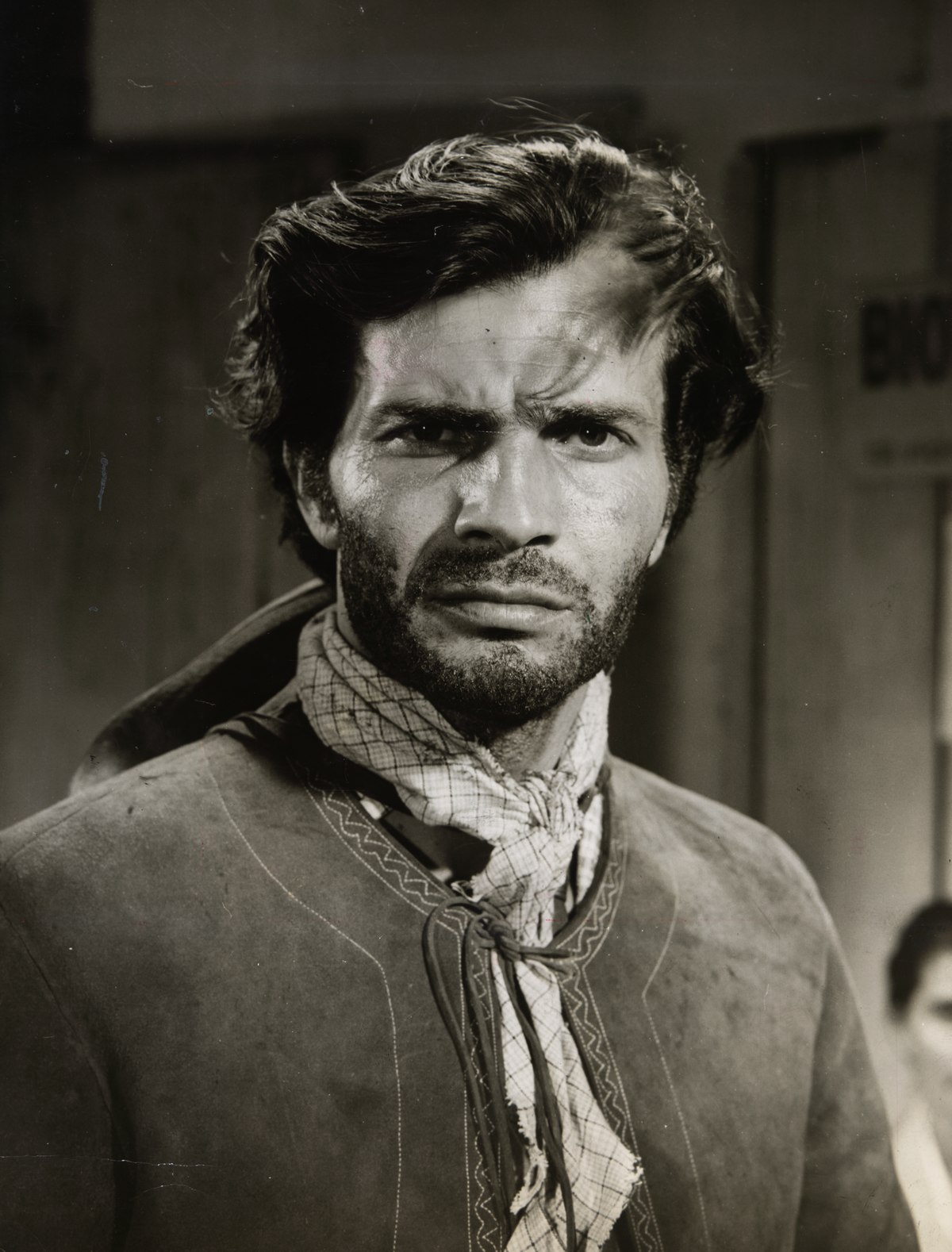
Nonetheless, is it clear that Anselmo is interested in nurturing a far-fetched achievement with Quelé do Pajeú, even though critics of the time questioned the excessiveness of Vereda da Salvação. The opening sequence reveals this characteristic. The rapist finds Quelé’s mother and sister and assaults them. Throughout the scene, the camera takes his point of view. Henceforth, an increasing tension arises on the shaken image while the character’s face remains unseen, and the feeling of anguish is reinforced. Thus, there is no possibility for the viewer to anticipate the encounter between Quelé and the rapist that awaits throughout much of the narrative.
There is another moment that highlights Anselmo Duarte's effort to create an elaborate stylistic composition that evidences an authorial mark – the shooting sequence at the end of the film, when Anselmo positions the camera facing up. The same attitude of “flipping over the world” takes place both in O Pagador de Promessas – before Zé do Burro is taken into the church – and in Vereda da Salvação, during the chase of a child.
Anselmo Duarte's ability to establish a stylistic proposal in dialogue with his previous films is not completely solidified in Quelé do Pajeú. With Quelé, the director creates a bodily cinema, in contrast with his previous works. Basic human feelings constantly surface, violence usually prevailing among them. First and foremost, it is worth commenting on a single crucial sequence of Quelé do Pajeú. In the middle of Quelé's journey across the sertão, he meets Maria do Carmo (Rossana Ghessa). The girl craves a relationship with the sertanejo, but is constantly rejected. During one of her come-ons, Quelé is rude and sternly pushes her away. She frees herself from sexual desire riding an horse intensely, dashing with it adrift. This is the opposite of Quelé’s journey, which is precise, relentless and timeless. On the other hand, Maria do Carmo rides for as long as her breath allows her. Anselmo Duarte captures this impulse with inspiration, by fixing the camera close to the horse, allowing the spectator to feel the same as the character.

This sensorial condition is essential in Quelé do Pajeú. After all, anger is the character’s drive and the film makes a point of reminding us of this throughout its run-time. Furthermore, this anger rests on a cangaço code of ethics in which one violence has to be traded for another. However, as the crime in question is of a sexual nature, Quelé understands the need for marriage, for a divine rapport to bind the aggressor and his sister, before taking his life. These sertanejo ethics will resonate among Lampião’s own gang, who frequently reveal themselves during Quelé’s journey.
The amusement park sequence is revealing. There, Quelé establishes himself as a hero, a guy who bravely stands up for others in critical situations. In this case, he stands up for Maria do Carmo, who is being harassed by Lampião’s gang. The figure of the cangaceiro, in this sense, is essential for Quelé’s heroic rise. It is the first confrontation with the gang, and Lampião states that he sees courage in the figure of Quelé. Not just any character, but the mythical figure of Lampião himself now blesses the protagonist of the story.

Lampião comes to be a recurrent character in the films of the Ciclo do Cangaço. Carlos Coimbra’s Lampião, o rei do cangaço (1964) is built upon this mythical figure of the cangaceiro. In one sequence, the character hands money out to starving people and is regarded as a hero, the population thanking him as if he were a messiah. Even in O Cangaceiro, Galdino (Milton Ribeiro), clearly modeled after Lampião, makes his subordinates give money away to a lady who has lost her only source of income – a goat that used to give milk. Since it was Lampião’s own gang that had the goat killed, he demands that the lady be rewarded.
This very persona, mythically approached in several of the Ciclo do Cangaço films, is the same one that appreciates Quelé's courage. It wasn’t the first time Lampião’s gang crossed the protagonist’s path. At a certain city where Quelé starts his hunt, the gang arrives to loot the place. They pass through like grasshoppers destroying everything around them. In Quelé do Pajeú, the gang represents social violence in an economically precarious environment.
This setting of violence turns out to be critical in establishing the universe in which Quelé stands, whether in his relentless search for his sister’s rapist, or through the social connections he builds along the way. His bond with Maria do Carmo is the best example. There are no conversations without friction, and no looks without confrontation between the two. The love relationship that is gradually built exists in tandem with a clear hostility between them. It is as if relationships, even love affairs, could not develop in any other way.
The Homecoming
In a typical hero's journey, there is a home-bound voyage. Therefore, of course, Quelé returns home with the man against whom he sought vengeance. The criminal Cesídio da Costa is recognized by the scar on his face and for lacking a finger on his hand, offering the protagonist the certainty that this is the man to be detained. It is a decisive factor that actor Jece Valadão was chosen to play Cesídio. Like Anselmo Duarte, he also claimed to be the founder of the Cinema Novo movement.8 The film he referred to as the Cinema Novo forerunner was Ruy Guerra’s Os Cafajestes (1962), a film that he produced and played a role in. The character he plays in Os Cafajestes is Jandir, a playboy who, without consent, photographs a naked woman in order to extort money from her wealthy uncle. Valadão’s image was thereafter branded as a villain type, a persona that he went on to explore in numerous films.

Jece Valadão's villainous persona is further exaggerated by the scar on his face. It is during the meeting between Quelé and Cesídio, when Quelé interrupts Cesídio's wedding, that Quelé do Pajeú becomes a different kind of film. From that moment on, Quelé do Pajeú ceases to be a film focused on a hunt and becomes a typical western of betrayal. After arresting Cesídio and a priest, Quelé returns home with the two of them and his new lover, Maria do Carmo. Similarly, just as in films like Greed (Stroheim, 1924) or Ride the High Country (Peckinpah, 1962), a growing fear of betrayal builds up a tension to be eventually released in a violent episode. Quelé always treats Cesídio coarsely. The film could bring about a narrative shift, yet it maintains the violent explosiveness that manifests itself from the beginning.
Quelé returns to marry Cesídio to his sister – who we find out to be pregnant – before challenging him to a deadly duel. However, everything changes when the police arrive at Quelé's house on an arrest warrant for the murder of a fellow police officer. Lampião's gang is soon to follow behind the police, and a long shootout sequence begins once they arrive.
Quelé and Cesídio fight together during the shootout, but Cesídio dies - like the classic villain who redeems himself but has no right to forgiveness in life. Quelé, on the other hand, survives, and realizes that joining Lampião’s gang might be his best call to get on with his life. The whole universe of violence the film itself foregrounds is epitomized by Quelé and Maria do Carmo’s admission to the group of cangaceiros, along with the final scream that conveys all the anger seemingly ingrained in those lands.
Quelé do Pajeú closely examines a social environment of tension, lacking any state intervention beyond police repression. In this sense, Lampião’s gang, continuously crossing the protagonist, ends up working as the primary index of social power in those surroundings. The work does not romanticize Lampião’s figure like other films from Ciclo do Cangaço, instead apprehending this mythical space through the lens of violence as the basis of society.

1. As Ilka Soares’ biographer Wagner de Assis points out: “Her marriage to director Anselmo Duarte had as much repercussion in the press as that of any American star.” (Assis, 2005, p.21).
2. “Filmmakers from Cinema Novo (and copywriters sympathetic to them) shortly made the effort to point out that the two most internationally well-known Brazilian films so far (O pagador de promessas and O cangaceiro), despite being part of a period of renewal Brazilian cinema aesthetics, were not ‘Cinema Novo’ films. It is even most striking to note to what extent Anselmo Duarte's dialogue with them was constantly ruled by the intransigence of those young people, who never got to recognize him as one of them, despite all the efforts the former heartthrob of chanchadas put into getting closer to them. This bias helps us read his ‘glauberian’ film Vereda da salvação (1965), which was rejected by the ‘cinemanovistas’.” (Nuñes, 2012, p.78)
3. “When it comes to art, Vereda is arguably the best film I have ever directed. One of the core moments of Brazilian cult movies. (...) It evidently wasn’t a film made for the ordinary audience, which wouldn't understand the reason for that grouping of human creatures in a forest clearing straightway. I elaborated the script inspired by the national criticism of O pagador de promessas, which some blamed for being a ‘linear’, ‘academic’ film, and Dias Gomes’ ‘subliterature’. Vereda, by Jorge Andrade, a most highly regarded playwright in the intellectual world at that time, seemed to provide potential for a more artistic result, one without commonplaces.” (Singh, 1993, p.105)
4. Cinemateca Brasileira’s website.
5. Synopsis: “Adventures of the outlaw Dioguinho, whose area of activity was São Paulo’s sertão”. Cinemateca Brasileira’s website
6. As producer Aurora Duarte points out in a statement for her biography: “I tried to get acquainted with the major cinematographic centers and, in 1959, without fully understanding the meaning of being precocious, I started a company to debut in production with the film A Morte Comanda o Cangaço. The film won dozens of awards, was a box office milestone, and caused an upheaval and change in my life.” (Duarte, 2010, p.30)
7. Bernadet, Jean-Claude. Cinema Marginal? Folha de São Paulo. São Paulo. 10 jun. 2001.
8. In 2018, the book Nova História do Cinema Brasileiro, edited by Fernão Ramos and Sheila Schvarzman, was published as an updated version of História do Cinema Brasileiro, released in 1987 and edited by Fernão Ramos. Just as the 1980s volume became a key reference in studies of Brazilian film history, the 2018 publication serves as an updated reference for the same field, now grounded in new research carried out over the last thirty years. Some features, however, remain crystallized, such as the historical account of Brazilian film production in the 1960s. This period is basically devoted to Cinema Novo and, to a lesser extent, Cinema Marginal. Despite striking exceptions, such as the case of Walter Hugo Khouri, the general picture of Brazilian cinema in the 1960s is the history of Cinema Novo and its developments (RAMOS, 1987, p. 393). Fernão Ramos’s view of Brazilian cinema in the 1960s is taken up again in Nova História do Cinema Brasileiro, since the sentence that opens the chapter on the 1960s is: Puxar o fio do novelo do Cinema Novo (Ramos, 2018, p. 17).
9. Screened at the international Film Festival in Berlin and in San Francisco, Os Cafajestes had a far international reach and made substantial profits for its producer. Further to the film’s release, the term cinema novo has begun to be used more often. Years later, in an interview, Valadão stated he was the one to have actually coined the name of the most important film movement in Brazilian cinema: “I wanted a film that would make me money. When I saw the film completed, I got astonished. It wasn't Swedish cinema [as he called the cosmopolitan Vera Cruz productions], or a chanchada. I assumed I had to find a slogan. So I called it: Cinema novo brasileiro [New Brazilian film]. I put it on the trailer.” (Valadão apud Freire, 2017, p. 169)
REFERENCES
Assis, Wagner de. Ilka Soares: a Bela da Tela. Cultura, Fundação Padre Anchieta, 2005.
Bernardet, Jean-Claude. Cinema Marginal? Folha de São Paulo. São Paulo. 10 jun. 2001. Disponível em: https://www1.folha.uol.com.br/fsp/mais/fs1006200107.htm. Acesso em: 25 jan. 2021.
De Luna Freire, Rafael. “Jece Valadão, the ‘Charming Crook’: A Star Image between Tradition and Modernity.” in Stars and Stardom in Brazilian Cinema, edited by Tim Bergfelder et al., 1st ed., Berghahn Books, NEW YORK; OXFORD, 2018, pp. 162–177.
Ramos, Fernão. Schvarzman, Sheila (Org.). Nova História do Cinema Brasileiro, vol. 1. Edições Sesc São Paulo. 2018.
Nuñes, Fabian. “Roberto Farias Em Ritmo De Cinema Novo.” Os Múltiplos Lugares De Roberto Farias, editado por Silva Hadija Chalupe Da and Neto Simplício, Jurubeba Produções, 2012, pp. 66–79.
Singh Jr., Oséas. Adeus Cinema: Vida e Obra De Anselmo Duarte ; Ator e Cineasta Mais Premiado Do Cinema Brasileiro. Massao Ohno, 1993.


