

"Pra se topar com uma encrenca, basta andar distraído
que ela um dia aparece
Não adianta fazer prece
Eu vinha ante'ontem lá da gafieira
com a minha nega Cecília
quando gritaram: Olha o Padilha!
Antes que eu me desguiasse
um tira forte e aborrecido me abotoou
e disse: 'Tu és o Nono'
Mas eu me chamo Francisco
Trabalho como mouro, sou estivador
Posso provar ao senhor
Nisso um moço de óculos ray-ban
me deu um pescoção
Bati com a cara no chão
E foi dizendo 'eu só queria saber quem disse que és trabalhador,
tu és salafra, acharcador' [...]"
- Excerpt of "Olha o Padilha", samba by Moreira da Silva1
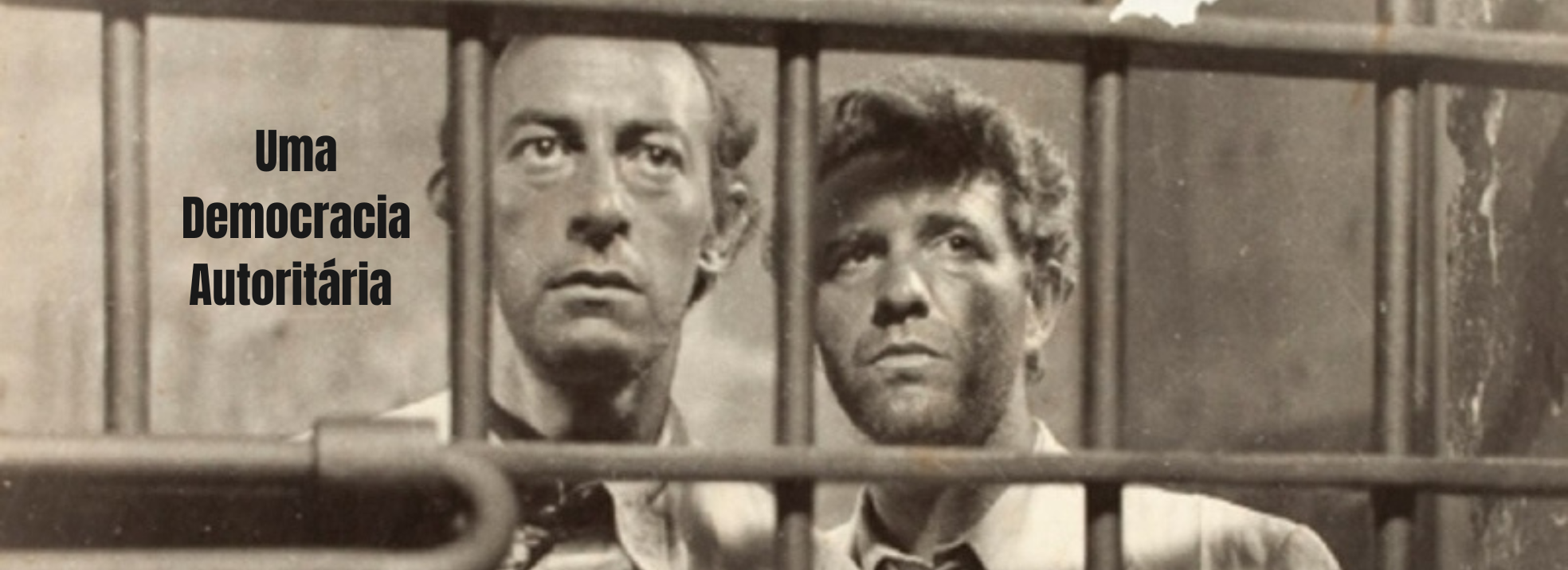
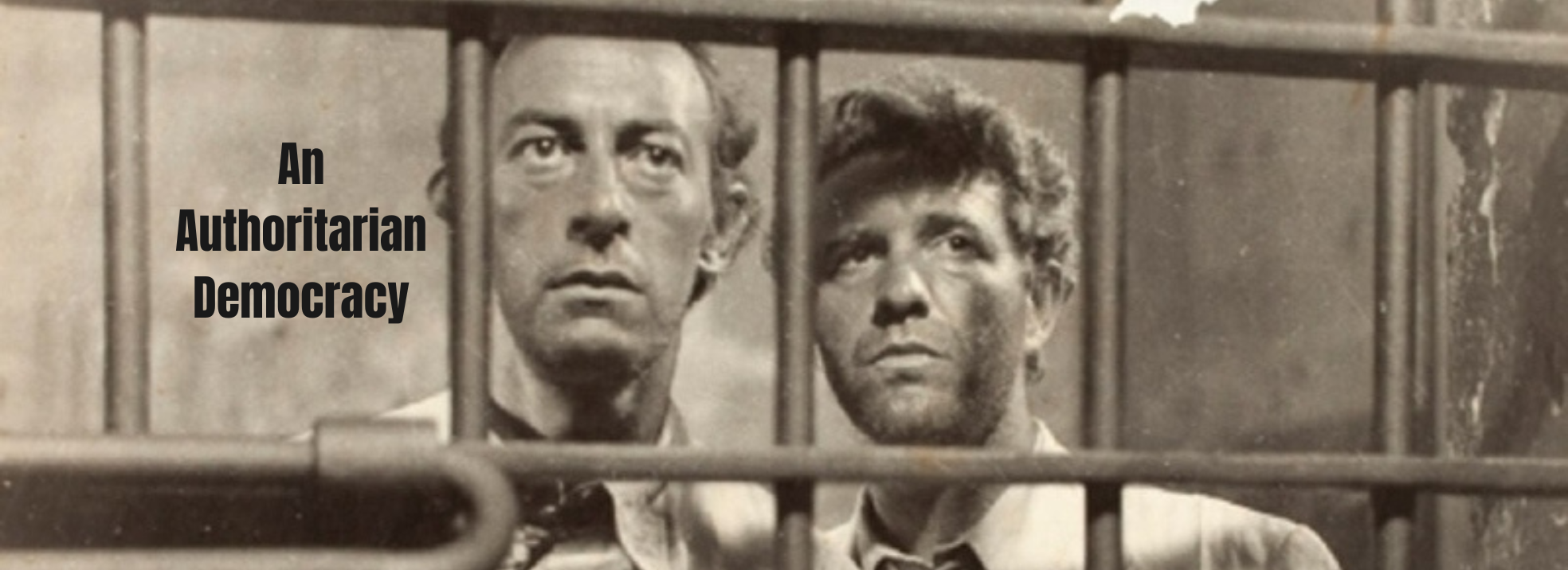
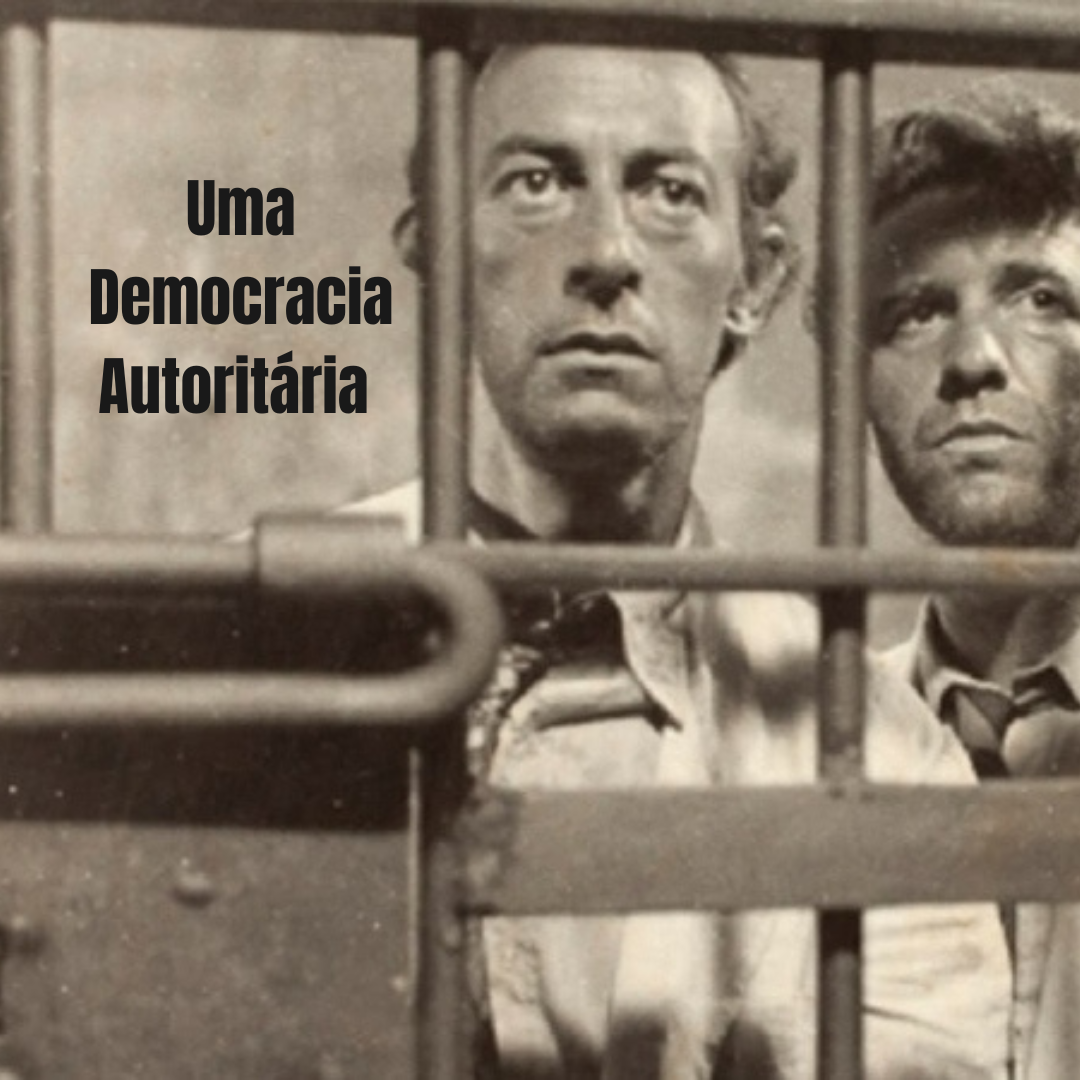
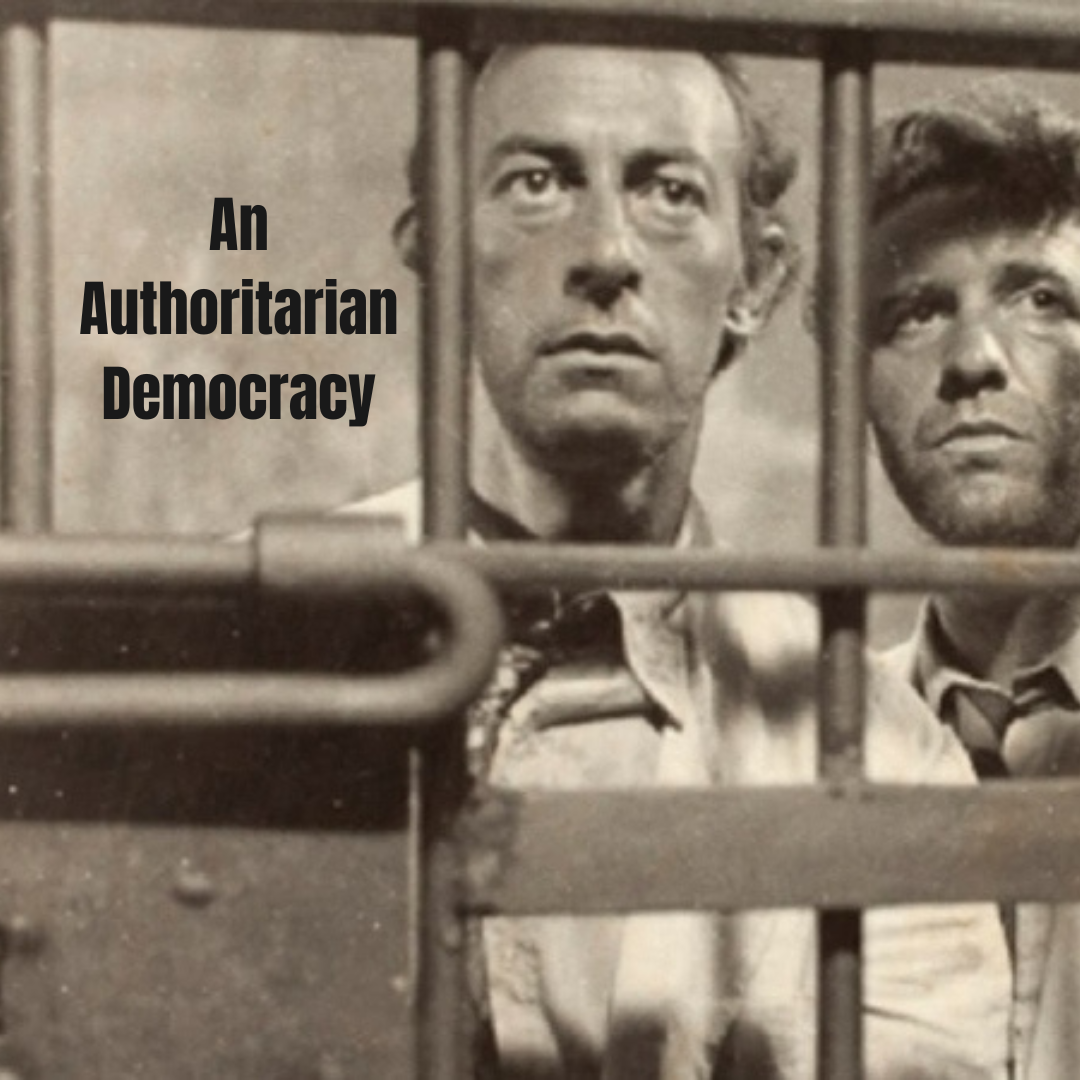
Even in the opening moments of O Caso dos Irmãos Naves (1967), by Luiz Sérgio Person, a transition lasting only a few seconds bears the weight of everything that will later unfold. Up to that point, apart from the striking, distinctive opening credits, the narrative has been presented in a thoroughly proper manner: title cards state that the film is based on a true case; Person sets the opening year of the action as 1937; a didactic voiceover explains that a man named Benjamin, a relative and business partner of brothers Sebastião and Joaquim Naves, allegedly made off with the trio’s money and fled the Minas Gerais town of Araguari, where they all lived. After his disappearance, the brothers carry on with their everyday affairs amid an atmosphere that already feels off. The initial investigation is led by the local police in more or less procedural fashion, with the Naves’ relatives and associates questioned at their homes or summoned to give statements at the station. Viewers who know Person from São Paulo, Sociedade Anônima (1965) may even find it surprising to encounter a film that begins so straightforwardly, without the radical formal and conceptual audacity of his previous feature.
Then comes the transition just mentioned: a printing press is shown churning out a run of newspapers, which tumble down and land in a neat stack. The front page of that day’s Correio de Araguari trumpets, in bold, oversized type, that the new Brazilian state is an authoritarian democracy. The date and the events conveyed on screen remove any lingering doubt: the story of the Naves brothers and their missing partner is cut through by the advent of the Estado Novo dictatorship, led by Getúlio Vargas, who had been in power since 1930.
From that point on, everything changes. The police chief leading the investigation is abruptly replaced by a lieutenant, played by Anselmo Duarte in one of the finest and most distinctive performances of his career. The sequence of his arrival in Araguari is charged with tension: the townspeople tighten at the mere sound of his footsteps, and everyday life seems to seize up in his presence. Person stages it all to echo classic western entrances, when a tyrannical outlaw rides into a dusty settlement and, simply by appearing, brings the place to heel.
In the first scene that shows the lieutenant taking over the station, we see him straightening a watchful portrait of Vargas on the wall. From that moment on, the villain played by Anselmo Duarte spends the rest of the film turning the lives of the Naves brothers, and of their relatives, friends, and acquaintances, into a kind of hell on earth. The brothers and their mother are arrested and subjected to relentless torture for a crime they did not commit: Araguari’s new police chief is determined, at any cost, to prove that the Naves murdered their partner Benjamin and made off with the money. To reach that end, he is willing to crush anyone who stands in his way, physically and psychologically, in order to wring out statements that align with his manufactured narrative.
Person’s intention in O Caso dos Irmãos Naves is clear and widely recognized: by returning to a real case that began shortly before the advent of the Estado Novo, and whose repercussions stretched into the 1960s, he draws a parallel with what the country was living through at the time, using the torture carried out by the Minas Gerais police under the sanction of Getúlio’s watchful portrait as a mirror of the torture practiced in the dictatorship’s back rooms in the 1960s. And, in fact, both in 1937 and in 1964, the two regimes showed a marked preference for relying on the DOPS for precisely these purposes.
Accordingly, Person’s feature ends up becoming a film about the 1964 military dictatorship as directly as, for instance, Paulo Cezar Saraceni’s O Desafio (1965) — except that, while Saraceni’s action truly unfolds in 1964, Person displaces his to the 1930s. It speaks of — and shows — torture as openly as Neville D’Almeida’s Jardim de Guerra (1968), and both films are intelligent enough not to tie the violence committed on screen explicitly to the military government then in power (Person takes refuge in reconstructing a historical case that predates the dictatorship of the 1960s; D’Almeida sets his narrative during it, but does not identify the torturers as government agents). It is just as brutal in the way it denounces the regime’s barbarities as José Agrippino de Paula’s Hitler, IIIº Mundo (1968) — a filmmaker who draws on the radical, chaotic language of the Cinema de Invenção to make his message cryptic, in contrast to the already noted subterfuges and the linearity that were Person’s chosen path.
The torture sequences in O Caso dos Irmãos Naves are brutal not only in narrative terms, but also in visual terms. It is not enough for the filmmaker simply to convey the characters’ suffering as a given within the story he wants to tell. His aim is to construct sequences that effectively lay bare the sadism, terror, and latent abuse of power, both in the martyrdom of the Naves and their associates and in what was, routinely and notoriously, happening under the regime that governed the country at the time of the film’s release.
Shortly after the lieutenant takes over the Araguary police station, Person shows the victims in a basement that doubles as a jail (and soon evokes the DOPS), gagged, with their hands and feet bound for sessions of beatings, an image that, in the context he establishes, inevitably recalls the pau-de-arara, one of the best known torture methods of the dictatorship of the 1960s. The director, however, does not limit himself to the most immediate analogy. He goes further, showing just how far Anselmo Duarte’s character can go in his insatiable quest to validate his own version of events. The Naves are taken out of town, where they are subjected to violence in the open in several forms. One of the brothers, for instance, is hung from a tree, beaten while upside down, and then left on the ground. The other is subjected to a form of torture that also viciously targets the psyche: the lieutenant and his subordinates beat him until he admits that the money supposedly stolen by the partner is buried in an open field, then force him to spend an entire day moving on all fours, like an animal, digging holes with his bare hands until he finds a supposedly hidden sum – which, of course, never happens. Person builds tension and grips the viewer through the tormentors’ cruelty in both sequences (as in so many others), but especially in the second, which is long, carefully orchestrated, and edited in a way that underscores just how repetitive and agonizing the ordeal becomes.
One of the director’s main concerns, a persistent theme that runs through O Caso dos Irmãos Naves from the fateful headline transition in the Correio de Araguary to the film’s final moments, is to give a face to official tyranny, to violence in uniform, to a kind of evil that seems wicked simply for its own sake and that occupies positions of authority. The lieutenant may appear, in a sense, to be a minor functionary, but in the station he is always framed against, in addition to the calendar that helps mark the passage of time, Getúlio’s portrait with its sparkling eyes. Anselmo Duarte’s character is the emissary of a greater power, of a dictatorship; he is little more than a pawn in the president’s service. And yet, within the microcosm of Araguary, he is nowhere near a minor authority; on the contrary, he is among the most powerful figures in town. Citizens submit completely to his will because they know what will happen if they defy it, and even judges and other prominent figures within that hierarchy of public power hesitate to confront him. In the film’s second half, largely taken up by the successive legal proceedings and trials surrounding the Naves case (and here the brothers’ lawyer, played by John Herbert, comes to the fore), the lieutenant’s mere presence in the courtroom produces tension and intimidation to such a degree that it becomes untenable for the defense attorney to remain silent about the man’s deliberately frightening, coercive posture, coming from the very figure who tortured his clients and forced them, along with the others involved in the case, to give false statements.
The documentary aspect of O Caso dos Irmãos Naves – that is, its proposal to reconstruct a police case from the 1930s – is, in fact, an attestation to a longstanding evil in Brazil, one whose origins many mistakenly attribute to the dictatorship of 1964. It is, of course, official torture, carried out by agents of the law in government facilities for shady ends, disguised as a sense of justice.
Brazil has a tradition of torture. Torture has always been practiced in Brazilian police stations, long before the military coup. The country’s armed apparatus (here, the term loosely gathers police officers, army officers, and the like) also carries a long tradition of massacres, etched across the whole of national history. What was the Paraguayan War? What was the destruction of the Arraial de Canudos? Massacres, the first still under the Empire, the second already in the Republic’s early years. If death itself has been carried out on such a merciless scale, what is there to say about torture? It, too, has been widespread, often with elaborate cruelty (one thinks of the sequence in Person’s film in which Anselmo Duarte’s lieutenant, already completely blinded by rage, comes perilously close to running a knife through a baby, in front of the child’s mother, if she does not testify against the Naves).
It is no accident that Person chose the Naves brothers’ case to speak about torture in the midst of the military regime of the 1960s, and it is no accident that this text opens with a quotation from Olha o Padilha, a samba by Moreira da Silva originally released as a single in 1952. Torture has always been present in the depths of the Brazilian police. What the dictatorship did was refine it: it took courses from the Americans, learned new, more brutal methods in those lessons, and established official violence as a weapon for an ideological struggle that was, at times, as nebulous as the lieutenant of Araguary’s certainty that the innocent brothers were responsible for the murder of their missing partner. O Caso dos Irmãos Naves is perfectly effective in all these senses. It is a great film in its own right, a great allegory of the 1964 military dictatorship, a great re-creation of a distinct historical period and of the workings of social relations in a particular place, a great recovery of an emblematic case of official injustice in the country, and, perhaps above all, a powerful attestation that the roots of torture run deep in what we know as Brazil.

1. To run into trouble all it takes is walking around distracted / and one day it shows up. / There’s no use saying a prayer. / The day before yesterday I was coming back from the dance hall /with my girl Cecília, / when they shouted: Look, it’s Padilha!
Before I could even slip away, / a tough, nasty cop grabbed me / and said: You’re Nono. / But my name is Francisco. / I work like a mule, I’m a dockworker. / I can prove it to you, sir.
Then a young guy in Ray Ban glasses / grabbed me by the neck, / I hit my face on the ground, / and he said: I just want to know who told you you’re a worker / you’re a scoundrel, a freeloader. [...]


