.jpg)
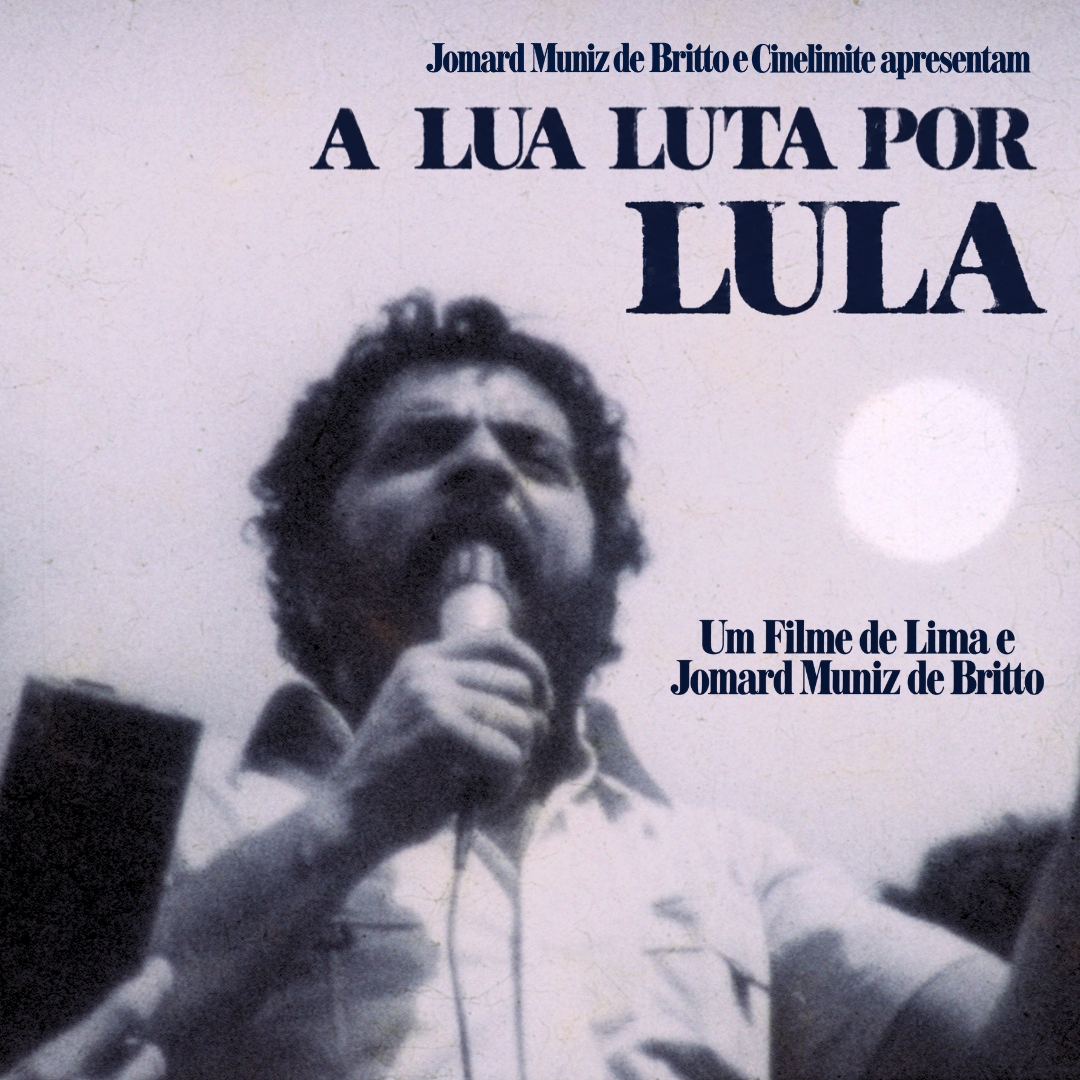
Jomard Muniz de Britto apresenta, em colaboração com a Cinelimite, uma nova cópia em 2K de A Lua Luta por Lula (1981), quarenta e cinco anos após sua realização. Codirigido por Jomard e Eduardo Lima, creditado apenas como Lima, o curta reúne fotografias de Lula e imagens das greves e assembleias do ABC. A lua gira diante da câmera e dá lugar aos faróis dos carros que atravessam a noite, pontos luminosos que repetem sua forma. O rosto de Lula reaparece ao longo do filme, associado às palavras “lua” e “luta” e ao letreiro “O povo quer votar”.
Professor, filósofo, poeta e crítico, Jomard trabalhou com Paulo Freire e foi preso e afastado da universidade após o golpe de 1964. A partir de 1974, encontrou no Super-8 um meio para desenvolver uma produção independente entre Recife e João Pessoa, cruzando cinema, poesia, política e performance. Eduardo Lima, cinegrafista, fotógrafo e montador muito requisitado pelos realizadores do Ciclo do Super-8 no Recife, participou ativamente dessa produção. Em A Lua Luta por Lula, a montagem também retoma imagens de outros filmes de Jomard: os corpos nus que caminham em Toques e uma cena de Experiência Didática: O Corpo Humano, na qual um homem de barba longa, semelhante à de Lula, vira o rosto em direção à câmera sob uma iluminação dramática. A canção resume essa aproximação entre política e corpo: “a luta de classes não é mais dialética do que a luta dos corpos”.
Em 1981, Lula ainda não havia concorrido a um cargo eletivo. Depois de liderar as grandes greves metalúrgicas de 1979 e 1980, havia sido preso pela ditadura e participado da fundação do PT. O país vivia uma abertura controlada, e a Presidência continuava fora do alcance do voto popular. Como registra Gabriel Bandeira Alexandre em sua dissertação Super-8 e resistência micropolítica no Recife (1973–1983), defendida na UFPE, a censura vetou a exibição de seis filmes na abertura da II Mostra de Cinema Independente, em João Pessoa, em novembro de 1981, entre eles A Lua Luta por Lula. Em um comentário publicado no projeto História da Ditadura, o historiador Arthur Lira examina um relatório de nove páginas produzido pelo SNI em julho de 1983 sobre a circulação de mais de setenta filmes considerados indesejáveis. O documento destaca o curta de Jomard e menciona suas imagens de Lula junto aos metalúrgicos e do povo reivindicando eleições diretas.
Em 2026, Lula volta a disputar a Presidência. O líder sindical filmado em 1981 reaparece como um presidente em seu terceiro mandato, agora em busca de um quarto. A energia das greves e assembleias daquele período alcança a eleição de 2026. Diante do autoritarismo bolsonarista, o filme recorda a força das mobilizações populares que ajudaram a reconquistar o voto direto e a construir a democracia brasileira. De 16 de setembro a 19 de outubro, a nova cópia em 2K estará disponível em cinelimite.com, celebrando a trajetória histórica de Lula e a permanência de uma esperança política nascida entre os trabalhadores e sustentada pela ação coletiva.
Jomard Muniz de Britto presents, in collaboration with Cinelimite, a new 2K copy of A Lua Luta por Lula (1981), forty-five years after it was made. Co-directed by Jomard and Eduardo Lima, credited simply as Lima, the short film brings together photographs of Lula and images of the strikes and mass assemblies in Brazil’s ABC industrial region. The moon spins before the camera and gives way to car headlights moving through the night, points of light that echo its circular shape. Lula’s face returns throughout the film, connected to the words “lua” and “luta” and to the intertitle “The people want to vote.”
A professor, philosopher, poet, and critic, Jomard worked with Paulo Freire and was imprisoned and removed from university teaching after the 1964 coup. Beginning in 1974, he used Super-8 to develop an independent filmmaking practice between Recife and João Pessoa, bringing cinema, poetry, politics, and performance into the same body of work. Eduardo Lima was a cinematographer, photographer, and editor frequently sought out by filmmakers associated with Recife’s Super-8 cycle. A Lua Luta por Lula also incorporates images from other films by Jomard: the naked bodies walking through Toques and a scene from Experiência Didática: O Corpo Humano, in which a long-bearded man resembling Lula turns toward the camera under dramatic lighting. The song summarizes this connection between politics and the body: “class struggle is no more dialectical than the struggle of bodies.”
In 1981, Lula had not yet run for elected office. After leading the major metalworkers’ strikes of 1979 and 1980, he had been imprisoned by the dictatorship and had participated in the founding of the Workers’ Party. Brazil was undergoing a controlled political opening, and the presidency remained beyond the reach of the popular vote. As Gabriel Bandeira Alexandre records in his UFPE dissertation, Super-8 e resistência micropolítica no Recife (1973–1983), censors prohibited the screening of six films at the opening of the II Mostra de Cinema Independente in João Pessoa in November 1981, including A Lua Luta por Lula. In a commentary published by the História da Ditadura project, historian Arthur Lira examines a nine-page report produced by Brazil’s National Information Service in July 1983 concerning the circulation of more than seventy films considered undesirable. The report singles out Jomard’s short and refers to its images of Lula among the metalworkers and of the people demanding direct elections.
In 2026, Lula is once again running for the presidency. The union leader filmed in 1981 reappears as a president serving his third term and now seeking a fourth. The energy of those strikes and mass assemblies reaches into the 2026 election. Against Bolsonarismo and its authoritarian project, the film recalls the strength of the popular movements that helped win back direct elections and build Brazilian democracy. From September 16 through October 19, the new 2K copy will be available at cinelimite.com, celebrating Lula’s historic trajectory and the endurance of a political hope born among workers and sustained through collective action.
Agradecimentos especiais: Paulo Cunha, Cláudio Machado, Manoela Machado, Luiza Machado e toda a família de Jomard Muniz de Britto.