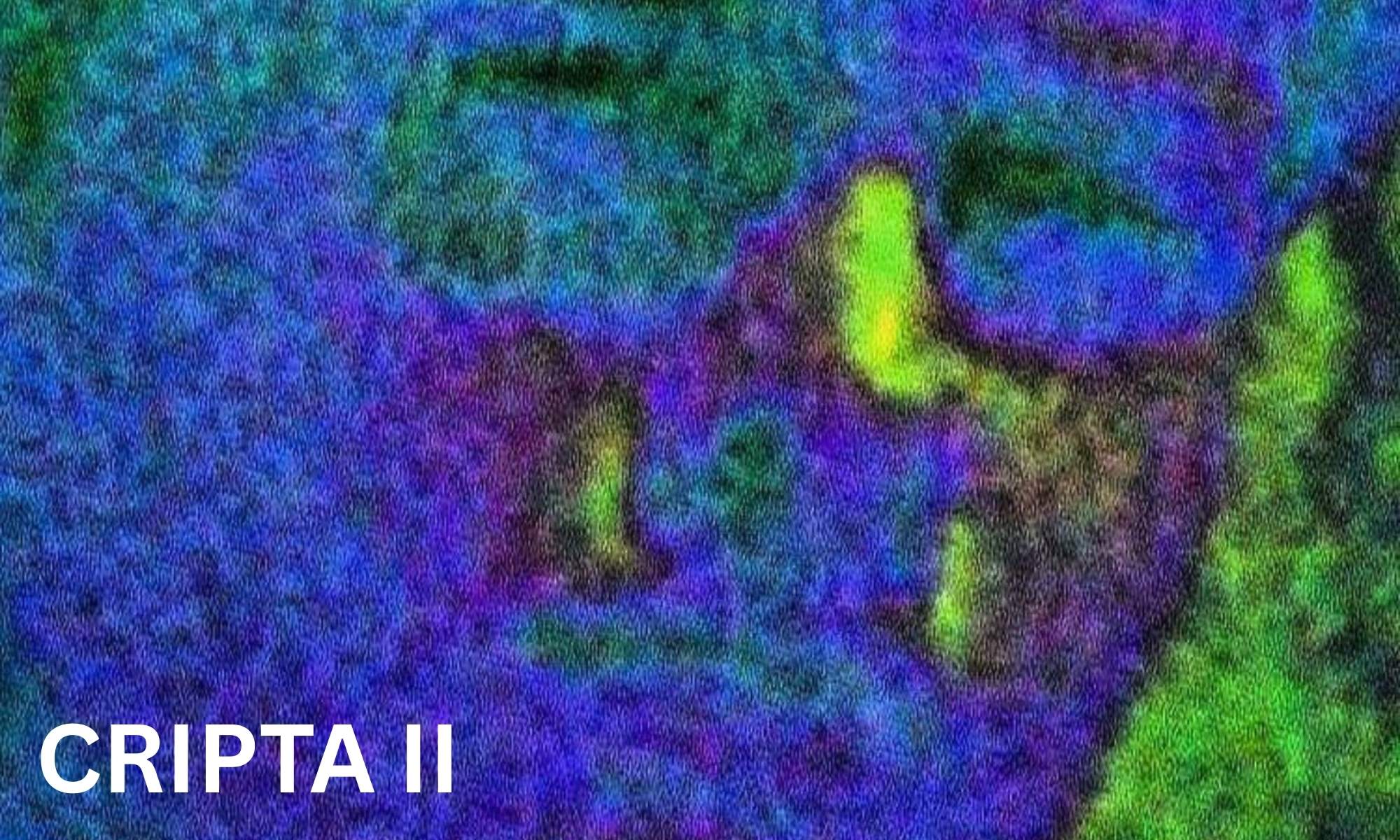

With Cripta II, João Pedro Faro continues to translate the historiographic displacement of Brazilian pornographic cinema, reflected in its almost ubiquitous low-resolution state, into his own aesthetic form - that is, embracing the pixels, or even looking beyond them to see what kind of beauty may lie there. Cripta II sees João beginning to explore certain iconographic elements that interest him in these films, such as the prevalence of boats, young teenagers, and water. João's ability to create powerful images from these symbols is almost overwhelming, and here he introduces a sonic soundscape that heightens the garden of saturated pixels morphing and dancing on the screen. But there is clearly an underlying ideological significance behind the symbology we see in Cripta II: namely, reemergence and coming-into-being. Cripta II reveals the means by which Brazilian pornographic cinema stills lives - maybe as fodder for aesthetic experimentation, but also, perhaps, taking a larger role in our understanding of Brazilian film historiography through means such as restoration.


